





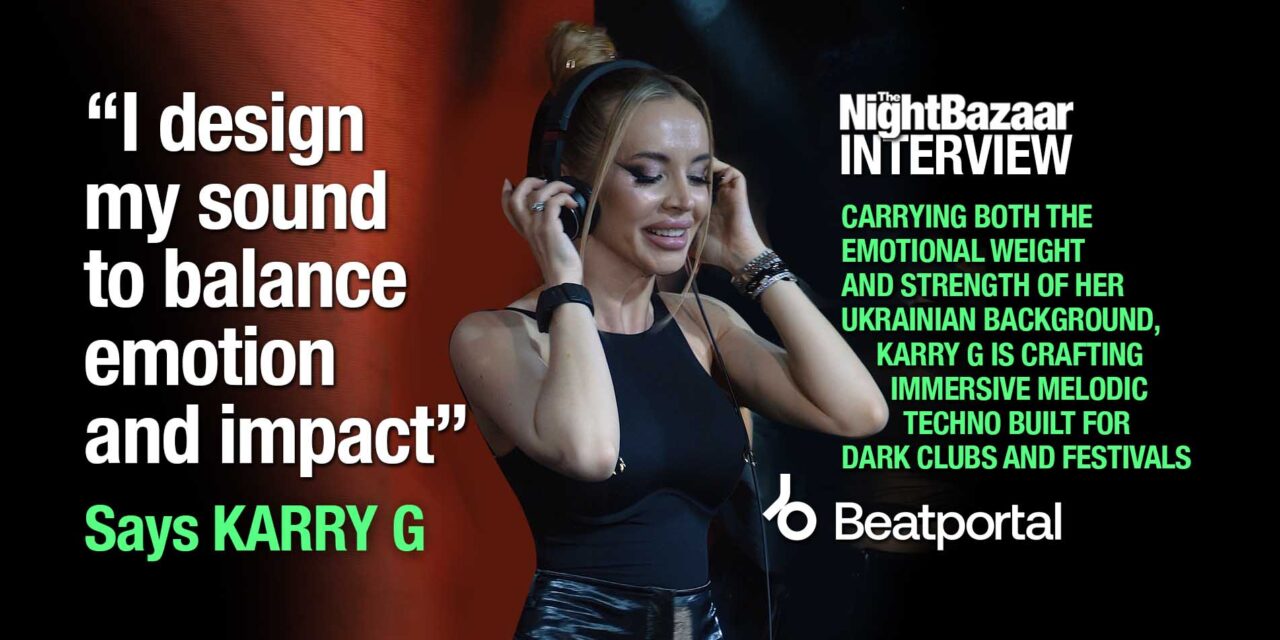
Ukrainian DJ and producer Karry G is carving out a distinctive space within the global melodic techno and progressive scene.
Blending hypnotic melodies, deep basslines and cinematic atmosphere, her music is designed to resonate emotionally while still delivering the kind of energy that commands both intimate club floors and major festival stages. With her tracks played at global events such as Tomorrowland and Zamna Festival and support from artists including Tiësto and Paul van Dyk, Karry G’s sound is gaining momentum far beyond the studio.
Yet beneath the scale of those stages lies a creative approach rooted firmly in emotion and storytelling. Her productions often unfold like journeys, balancing tension, vulnerability and release while maintaining the driving pulse of the dancefloor. In this conversation, Karry G discusses her creative process, the emotional core behind her music, the making of her recent track Afterglow, and how her Ukrainian identity continues to shape her perspective as an artist.
Your sets sit in that space between emotional melody and physical impact, music that works at 3am in a dark room but also on a festival mainstage. How consciously are you designing your sound for both of those environments and where do you feel most creatively free within that spectrum?
It’s very intentional. I design my sound to balance emotion and impact, intimacy and power. Whether it’s a dark club at 3am or a festival mainstage, the core feeling stays the same. I feel most creatively free in that space between vulnerability and strength. That contrast really defines my sound.
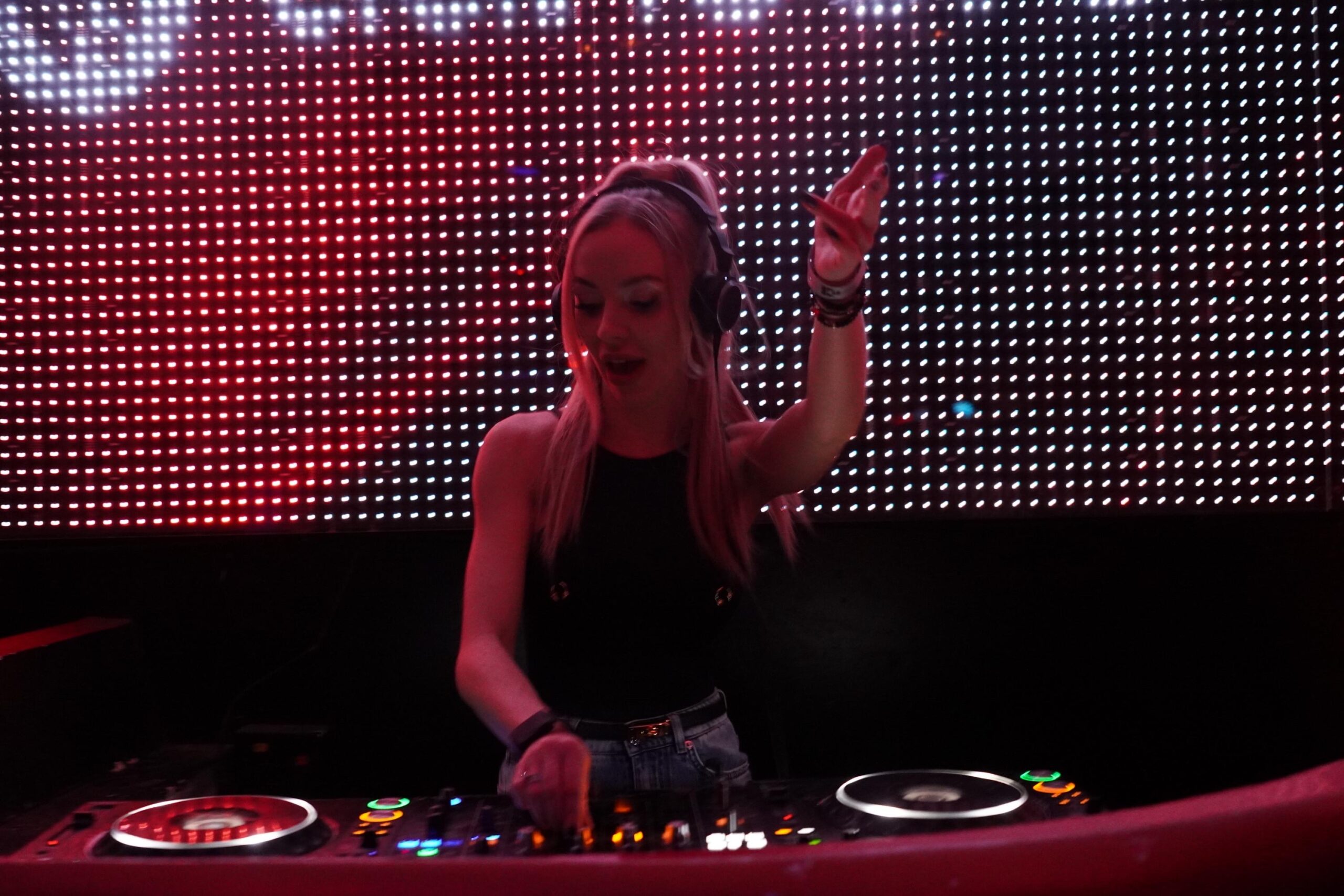
Karry G
There’s a strong sense of tension and release in your productions, those hands in the air moments feel earned rather than formulaic. When you’re in the studio, how do you build that emotional arc without losing the driving club energy?
I always start with emotion. The tension has to feel real rather than programmed. The groove keeps the club energy alive, while the atmosphere builds the story. I also work closely with a sound producer who helps translate my vision into strong, detailed production. That collaboration helps preserve the emotional arc while making sure the track still hits hard on the dancefloor.
Melodic techno and progressive sounds have become hugely global but also quite saturated. What do you think still makes a track feel personal or distinctive in that landscape and how are you carving out your own sonic identity within it?
The genre may feel saturated, but authenticity never is. A track feels personal when the emotion and intention behind it are genuine. Trends come and go, but identity remains. My focus is on making my sound instantly recognisable and translating my emotional ideas into precise production.
When you start a track, do you usually begin with a melody, a groove or a feeling you want to translate? Walk us through how an idea becomes a fully realised Karry G record.
I always start with a feeling. Before the melody or groove, I need to understand the emotional direction and energy the track should carry. Then the groove builds the foundation and the melody gives it identity. From there I work closely with my sound producer to shape the details and structure, making sure the emotional core stays strong as the track develops into a full Karry G record.
Your music feels very cinematic at times. Are you thinking in terms of storytelling or visual imagery when producing and how important is narrative in your tracks?
Yes, I often think in terms of images and atmosphere. For me, every track is a journey with movement, tension and resolution. Narrative is important because it gives the energy direction. Even in a club context, I want people to feel as if they are inside a story rather than simply listening to a beat.
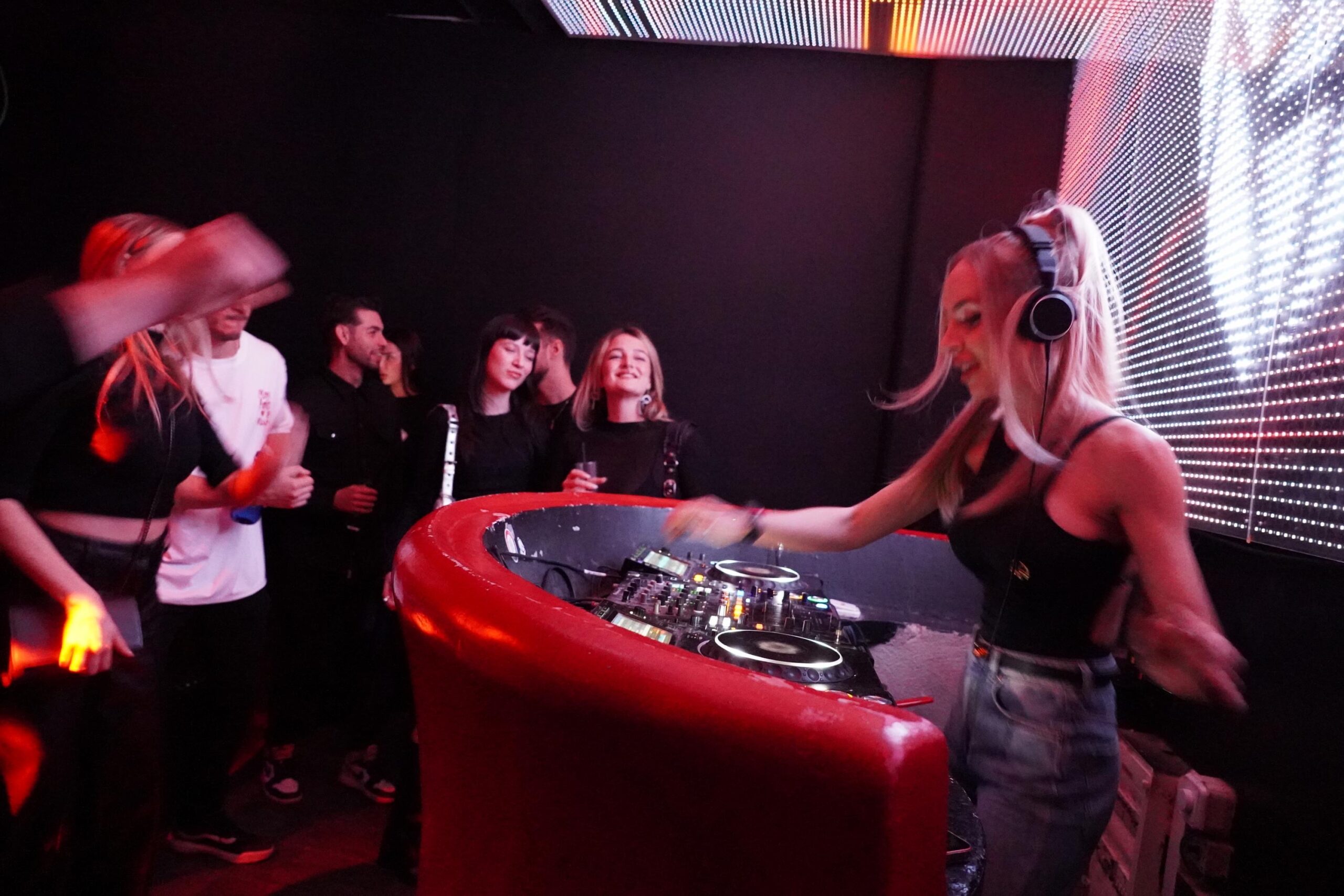
Karry G
How do you test whether a track truly works? Is it about the reaction on a big system, a specific dancefloor moment or something more intuitive in the studio?
It starts with intuition in the studio. If the track doesn’t move me, it won’t move anyone else. After that, the real test is the dancefloor. A big system reveals everything, from tension and dynamics to emotional impact. When you see the crowd truly connect with the moment, not just dancing but feeling it, that’s when you know the track works.
Your recent track Afterglow suggests a moment that comes after intensity, reflection, release or even nostalgia. What emotional space were you exploring with this record and how does it represent where you are creatively right now?
This record explores the emotional space after the peak moment, reflection, release and a quieter kind of intensity. It reflects where I am creatively right now. I feel more intentional, more focused on depth, and more confident in letting emotion guide the music.
How did Afterglow evolve from its initial idea to the final version? Were there any key turning points in the production where the track suddenly “clicked” for you?
It began with a simple emotional idea and a core atmosphere. The turning point came when the groove and melodic tension finally locked together. That was the moment it clicked. After that it became about refining the details with my sound producer and allowing the emotional flow to guide the final structure.
Your music has reached stages like Tomorrowland, Zamna and major Ibiza venues. How does your approach to building tracks or DJ sets change when you know they might be played on those massive systems and in front of huge crowds?
When you know your music might be played at places like Tomorrowland, Zamna or major Ibiza venues, you naturally think on a bigger scale in terms of dynamics and space. The emotional core remains the same, but the structure becomes more deliberate. Stronger drops, clearer transitions and tension that translates well on large systems. It’s about expanding the energy without losing the soul of the track.
When you’re playing a festival versus a more intimate club, how does your approach to each set differ?
At festivals I think in broader strokes. The dynamics are bigger, the drops are clearer and the energy needs to connect with thousands of people at once. In a more intimate club I can go deeper and be more subtle. There is more room for tension, longer builds and emotional detail. The goal is always connection, but the scale changes how I deliver it.
You’ve had support from artists like Tiësto and Paul van Dyk. How does that kind of support influence your confidence or direction, and what have you learned from observing artists with that longevity?
Support from artists like Tiësto and Paul van Dyk definitely gives me more confidence. When artists with that kind of legacy recognise your music, it reassures you that you’re on the right path. What I’ve learned from watching artists like them is the importance of consistency and evolution. Trends change, but identity, discipline and a genuine connection with the audience are what last.

Karry G
Looking ahead, what’s your long-term vision for where you want to take your sound and career? As progressive and melodic styles continue to evolve, where do you see yourself pushing things next?
My long term vision is to keep refining a sound that is instantly recognisable, emotional, powerful and timeless. As progressive and melodic styles evolve, I want to push further into cinematic tension and create stronger contrasts between intimacy and impact. I’m not interested in chasing trends. I want to keep expanding my own musical language while building a global presence and staying emotionally authentic.
You’re part of a generation of Ukrainian artists who’ve continued creating and touring while the world’s attention has been on your country for very difficult reasons. How has your connection to Ukraine shaped your perspective as an artist and the emotions behind your music over the past few years?
Ukraine has shaped my emotional perspective very deeply as an artist. The past few years have intensified everything, resilience, vulnerability and strength. Those contrasts naturally live inside my music. For safety reasons I’m not currently living in Ukraine, but my connection to my country is constant. I always try to support and help my people in any way I can. Being Ukrainian today means carrying both pain and strength, and that duality is something you can feel in my sound.
Browse our archive of interviews HERE and visit our Beatportal page HERE.

![<span class="entry-title-primary">Carl Cox on collaborating with rock icon Perry Farrell, live evolution and reigniting his Ibiza legacy at [UNVRS]</span> <span class="entry-subtitle">Carl Cox reflects on his explosive collaboration with Jane’s Addiction frontman and rock icon Perry Farrell, his renewed commitment to live electronic evolution and the spiritual reignition of his Ibiza legacy at hyperclub [UNVRS] as he enters one of the most energized and creatively transformative chapters of his career</span>](https://thenightbazaar.co.uk/wp-content/uploads/2025/12/CARL-COX2-copy-440x264.jpg)