




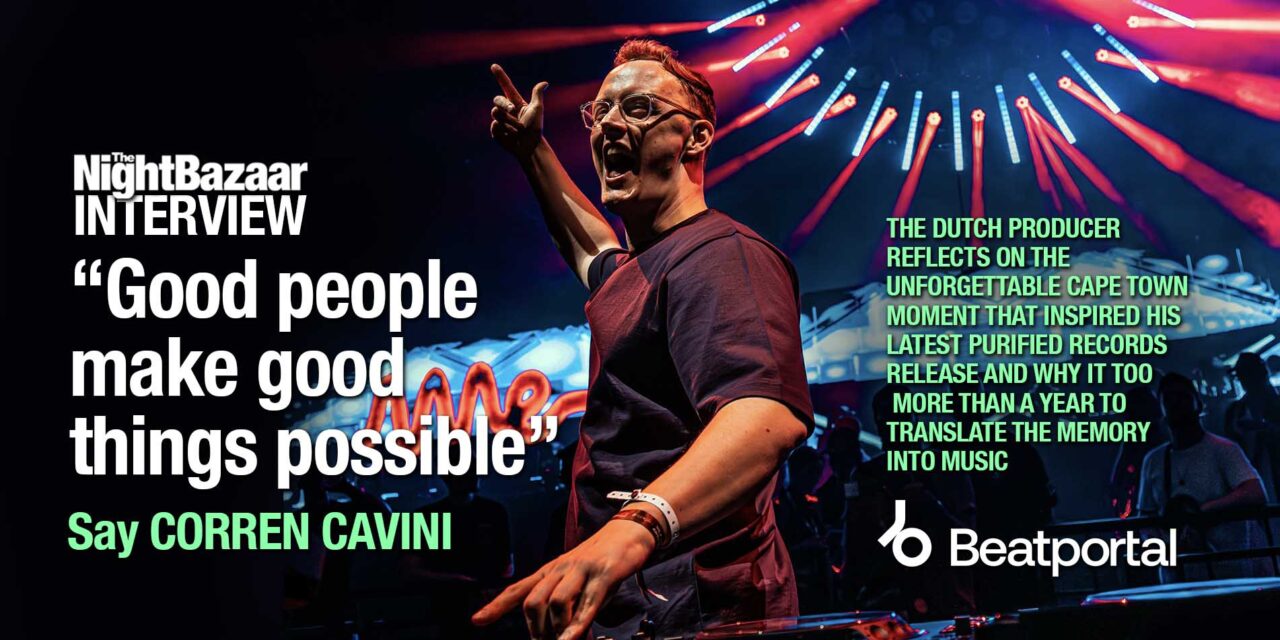
Some of the most meaningful music begins long before the studio. It starts with a moment, a place, or a feeling that refuses to let go.
Corren Cavini’s latest single, Lion’s Head, is rooted in one such experience. Inspired by his first visit to South Africa and a sunset climb up Cape Town’s iconic Lion’s Head, the track became an attempt to capture something almost impossible to put into words. The vast landscapes, the fading light and a chance glimpse of whales surfacing on the horizon left a lasting impression on the Dutch producer, who spent more than a year refining the record until it reflected the memory that inspired it.
The release arrives during a period of remarkable growth for Cavini. Following the release of his debut album A Place To Call Home and a rapidly expanding international touring schedule that has taken him from Utrecht to cities including Johannesburg, São Paulo, London, New York and Berlin, he continues to establish himself as one of melodic electronic music’s most compelling emerging voices.
We caught up with Corren to discuss the unforgettable South African experience behind Lion’s Head, the challenge of translating memory into music, life on the road, and why he believes home is something you can find far from where you started.
When you think back to that sunset hike in Cape Town that inspired Lion’s Head, what specific moments or images were you trying to translate into sound?
It was one of my first times touring internationally, and my first time visiting South Africa. Nora suggested we hike Lion’s Head at sunset and I had mainly heard of Table Mountain, so I didn’t quite know what to expect. What I found up there was unlike anything I’d experienced before. As you walk upwards and circle the mountain, you get this extraordinary 360-degree view of the capes, Table Mountain , and on the other side, the ocean stretching all the way to the horizon. And as the sun set while we were climbing the mountain, I saw whales surfacing in the distance. Standing at the highest point, watching that happen, it felt larger than life. If I had to pick one image, that moment of seeing a whale come up for air while surrounded by all of that beauty and that light… that was it. That’s what I was trying to hold onto when I made this record.

Corren Cavini – Lion’s Head, South Africa
You mentioned it took over a year and many different versions before the track felt complete. What was missing in the earlier versions that you eventually managed to capture?
It wasn’t so much that the earlier versions were wrong, some of them were actually quite good musically. The challenge was that they didn’t feel like this memory. I had a few different ideas, all of which I gave that name at some point, but none of them connected to the memory the way I needed them to. Finding the right melody, the right chords, the right textures to evoke that specific feeling was a long process. The production side, refining every detail, that takes time too. But the real work was writing something that, when I heard it back, took me straight back to that moment.
You’ve described South Africa as a transformative experience. What impact did that first visit have on you personally and creatively?
It was a genuinely special trip. One thing that made it particularly meaningful was that during the Purified South Africa show, I played almost my entire debut album for the first time. I had never played most of it before, and those tracks are deeply personal to me. That’s a vulnerable moment. Seeing that the music did what I’d imagined it should do, that it resonated with people who were hearing it for the first time… That meant a lot. And of course, discovering such a beautiful country and making friends along the way is also something I’ll carry with me.

Corren Cavini – Lion’s Head, South Africa
Nora En Pure played a role in introducing you to Cape Town and Lion’s Head itself. Did that shared experience influence how you approached creating the record?
South Africa is Nora’s home. She loves it so much and knows it so well, and she carries that across strongly. She knew Lion’s Head was worth the climb, chose exactly the right moment to go, and by doing that, she showed me one of the most beautiful sides of the city. I think if I had visited Cape Town by myself, I might not have seen all of these sights. That part, the way she carries across her love for the country and city, mattered enormously. As for how it influenced the actual music: from that point on, it was really just me and the memory. What I express in my own way will almost always quite naturally fit into Nora’s musical world. But I wasn’t consciously writing towards that, it just flows that way.
The track is built on classical foundations and a stripped-back approach. Why did you feel that simplicity was the right way to convey such a powerful memory?
I’d actually push back a little on the idea that it’s stripped-back, at least in terms of how it’s made. I do believe that any good song should hold up when played on just a piano, and that’s the foundation I always start from. But in the production, I’m almost the opposite of minimalistic. I layer a lot of different elements together. What might read as restraint is really just the result of building something up carefully until it evokes the right feeling. I don’t think about it very consciously, it’s the combination of how I’ve learned to translate emotion into sound and the technical toolkit I’ve developed over the years. For this track, I got to a place I’m genuinely proud of.
Many producers talk about writing music inspired by places. What makes Lion’s Head different from simply naming a track after a location?
For me, music and memory are both deeply emotional, almost primal things, not something you can rationalise too neatly. It’s never about writing a track and then choosing a fitting title afterwards. It’s about finding the melody, the chords, the feeling that genuinely connects to a specific moment. I’ve done this before, for example with my track ‘Valinhos’, from my debut album, which is a tribute to the people and places of Valinhos in Brazil, where I’ve played many times and built a real connection. There too, it wasn’t a name for a random track; it was an attempt to find the right energy, the right emotion to honour what that place means to me. Lion’s Head is the same. The name only works because the music earns it.
When you’re trying to recreate a feeling rather than tell a literal story, where do you usually start – melody, harmony, atmosphere, or something else?
There’s no fixed structure to my creative process. Different things work at different times. One thing I do quite often when I’m travelling is make field recordings. I’ll bring those back into the studio, drop them into Ableton on a loop, layer some drones underneath, and start improvising on piano or synthesiser on top. That can be a very natural way into something. But really, it changes every time. I’m lucky that I’ve learned to play a few instruments over the years and have built up different ways to approach a track, so there are multiple routes in. None of them is guaranteed. It’s mostly just time, experimentation, and trusting the process.

Corren Cavini – Purified – Picture: Igor Tuzuki
Has your production workflow changed since releasing your debut album A Place To Call Home?
Technically, not that much, if I’m honest. Of course, there’s always a new plugin or something, but the way I actually produce has stayed pretty consistent. What did change was the creative process. After finishing something as big and as personal as that album, there’s a period of recalibration. You’ve told this whole story with a lot of emotional weight, and then you have to figure out what comes next without just repeating yourself. I went into my head a lot during that time, started overthinking things, which is never great for creativity. But I’ve been doing this long enough to recognise when that’s happening and not fight it too hard. It’s a natural thing to go through after a project like that. Even now, as Lion’s Head comes out, it’s still a process, letting go of one chapter and figuring out what I want to come next.
Were there any artists, composers, or sounds that subconsciously influenced Lion’s Head during its creation?
Nothing I consciously reached for. But I really believe that what makes an artist who they are is the entire archive of musical memory they’ve built up over their life. Everything they’ve listened to deeply, everything that’s moved them. That shapes your taste, your instincts, your sound, often without you even realising it. For me, that archive is very broad. I was obsessed with Red Hot Chili Peppers as a kid. More recently, artists like Bicep, Bonobo and Joris Voorn have been important to me. Back in the day, trance DJs like Paul van Dyk were a big part of how I fell in love with electronic music and I even have had some obsessions with Dutch hiphop. It’s a wide spectrum. When I’m actually in the studio making something, I’m not thinking about any of it. But all of those influences are in there somewhere, working quietly in my subconscious.
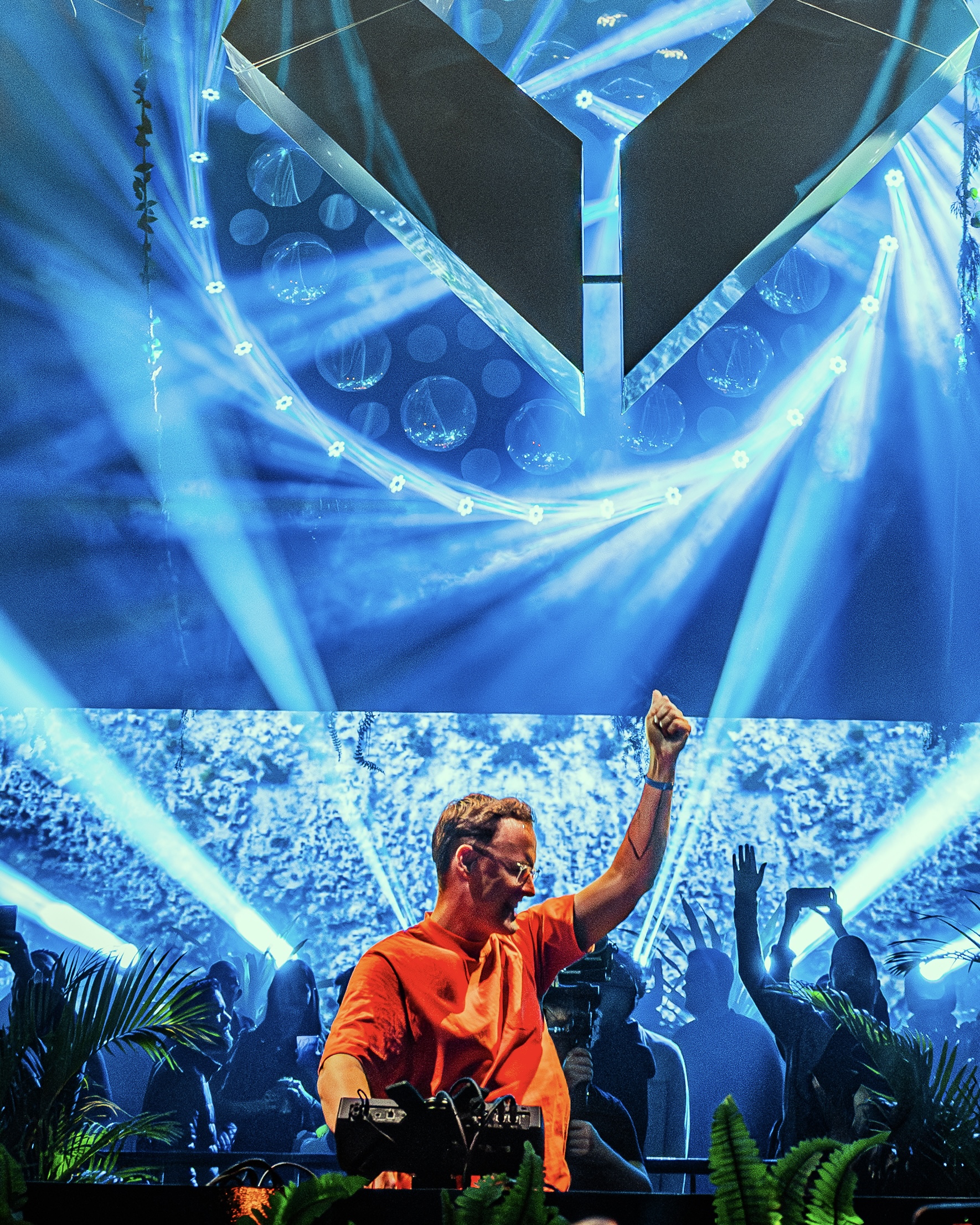
Corren Cavini – Purified – Picture: Igor Tuzuki
In just over a year you’ve gone from a local standout in Utrecht to performing in cities across Europe, Africa, North and South America. What’s been the biggest surprise about life as an international touring artist?
It’s the people, more than anything. And I keep realizing, that’s why I do music in the first place. Seeing people genuinely feel something at a show, that’s the thing I work towards. But it’s not just in the room. Whenever I visit a new city, I try to find the local food places where local people go. Not fine dining or tourist spots, just the real places. I try to talk to people, learn something about how they live. The more I tour, the more I realise that people are the whole point. Every city has its own energy, its own kind of warmth, and there are always moments that stay with you. One place that’s genuinely surprised me is Montreal. I’ve been twice now, and both times something almost inexplicable happened with the crowd. I’ve heard other artists say the same. I can’t fully explain what the magic is there, but it’s real.
South Africa was one of your first major international tour experiences. How did that trip shape your confidence moving forward?
Honestly, in terms of confidence on stage, I was already in a good place. Being a DJ, performing, that’s the thing I know best. The moment I step on stage, something shifts. In daily life I can be a bit introverted, but up there I’m completely present. What South Africa did give me was confidence as a traveller. I hadn’t toured extensively before that, and figuring out how to navigate new cities, new environments, by yourself, was a learning curve for me.
I also realised I can be quite naive coming from a very safe country. I nearly stepped on a venomous adder and genuinely thought it was just a beautiful animal. And there was a moment where someone was trying to rob me and I had no idea, a friend just had to pull me away. I’ve learned to be a bit more aware. Though I think assuming the best of the world around you isn’t the worst way to be, either.
You’ve now played Johannesburg, São Paulo, London, New York, Berlin, Prague and many more cities. Have you noticed differences in how audiences connect with your music around the world?
Every crowd is different and that’s very logical. That’s just a reflection of the fact that cultures are different and people have different musical references. But I always find a connection. I think that’s the real job of a DJ: to read what’s in front of you and find the thread between where you want to take people and where they are right now. I’m not going to change my musical identity to fit a room, but I will adapt how I tell the story. And if I manage to get on that wavelength with the people in front of me, whether it’s in São Paulo, New York, or Johannesburg, music does the same thing everywhere. It connects.
How does the energy of a Purified event compare to other shows you play?
Purified crowds are something else entirely. The people who come to those shows know exactly what Purified is about; they understand the music, they know the artists, they know the language we’re speaking. That means I can go deeper. I can be more surprising, take more risks, go to more unexpected places in a set, because the room is ready for it. And when I play something people already know and love, the response is something I rarely find elsewhere. People sing along to melodies. They recognise details. There’s a real dedication in that crowd, a genuine love for this type of emotional, melodic music, and that creates something very special.
You’re returning to both Purified New York and Purified London this year. What excites you most about coming back to those events?
Honestly, the simplest answer is the most honest one: getting back in front of those crowds. Both cities have given me incredible nights, and the feeling of returning somewhere you’ve already built a connection is always exciting. The Purified shows also always feel like a reunion. The artists, the crew, the people; it always has that quality of coming home to family. That’s rare, and I don’t take it for granted.
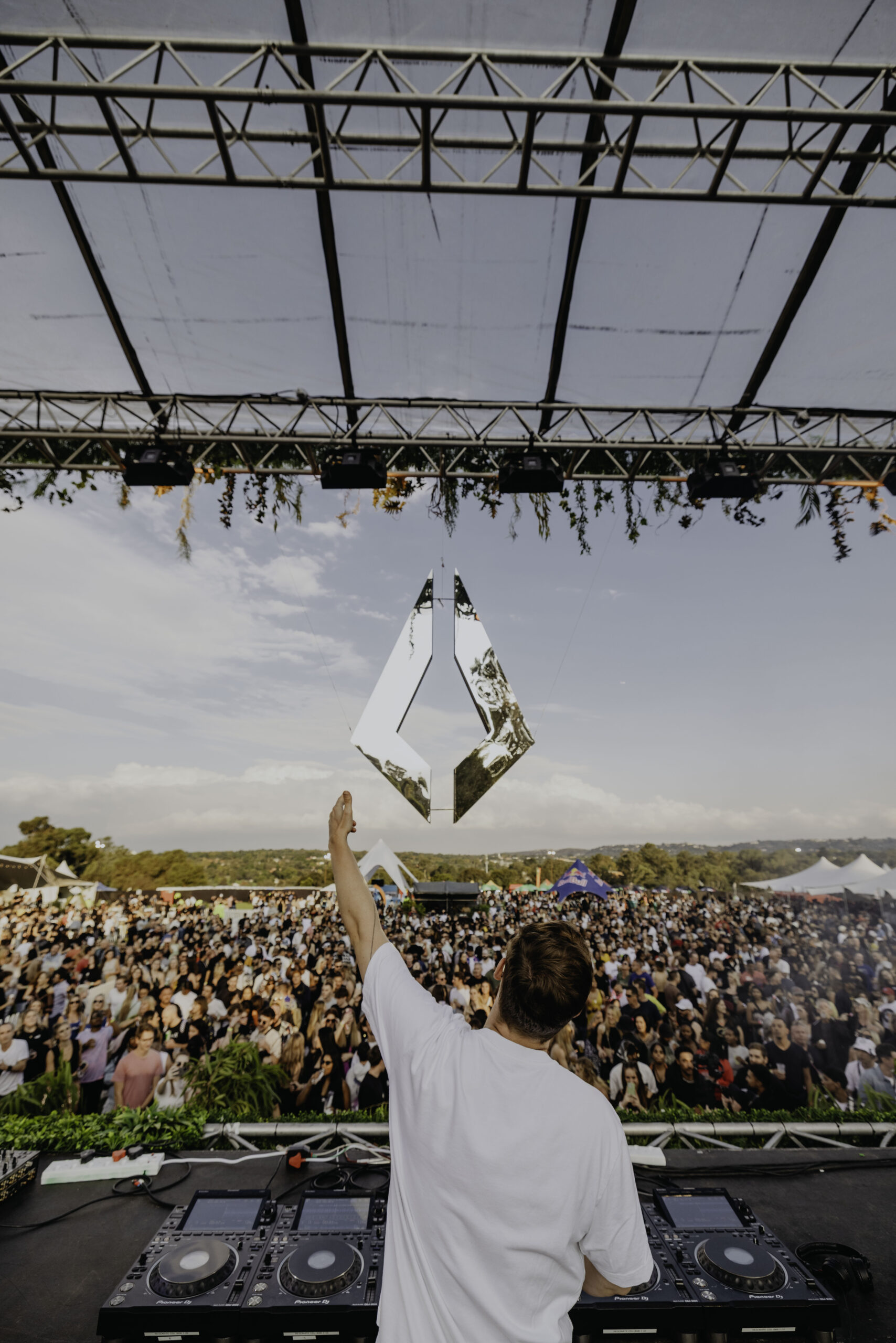
Corren Cavini – Purified
Your debut album A Place To Call Home marked a major milestone in your career. Looking back, what did that project teach you about yourself as an artist?
I’m not sure ‘taught’ is quite the right word. It felt less like a lesson and more like the completion of something I’d been working towards for most of my life. I’ve wanted to do this since I was about twelve years old. And the road to becoming a mature artist, not just technically, but emotionally, with a genuine and personal story to tell, is a long one. At some point the technical skills are there, but you still have to grow into yourself enough to be willing to express something truly vulnerable through music. I laid that bar of becoming a mature artist very high for myself, and A Place To Call Home was that final step for me. It felt like the last piece of becoming the artist I’d always wanted to be. That doesn’t mean the journey is over, as a human and as an artist, you never stop growing. But that album was a milestone I’d been moving towards for a very long time. So I’d say it was more of the completion of a very long learning journey.
The album title suggests belonging and connection. In some ways, Lion’s Head seems inspired by finding a sense of wonder in a place far from home. Do you see a connection between those ideas?
Absolutely. And I think it goes beyond the album, it’s become a thread running through everything I make. The idea that home isn’t a fixed place, but something you find in moments: in a memory shared with a friend, in a crowd that opens up to your music, in the view from a mountain at sunset on the other side of the world. Lion’s Head is one specific expression of what that can look and feel like. You can find beauty, wonder, and belonging far from where you started, and music is how I try to hold onto those moments.
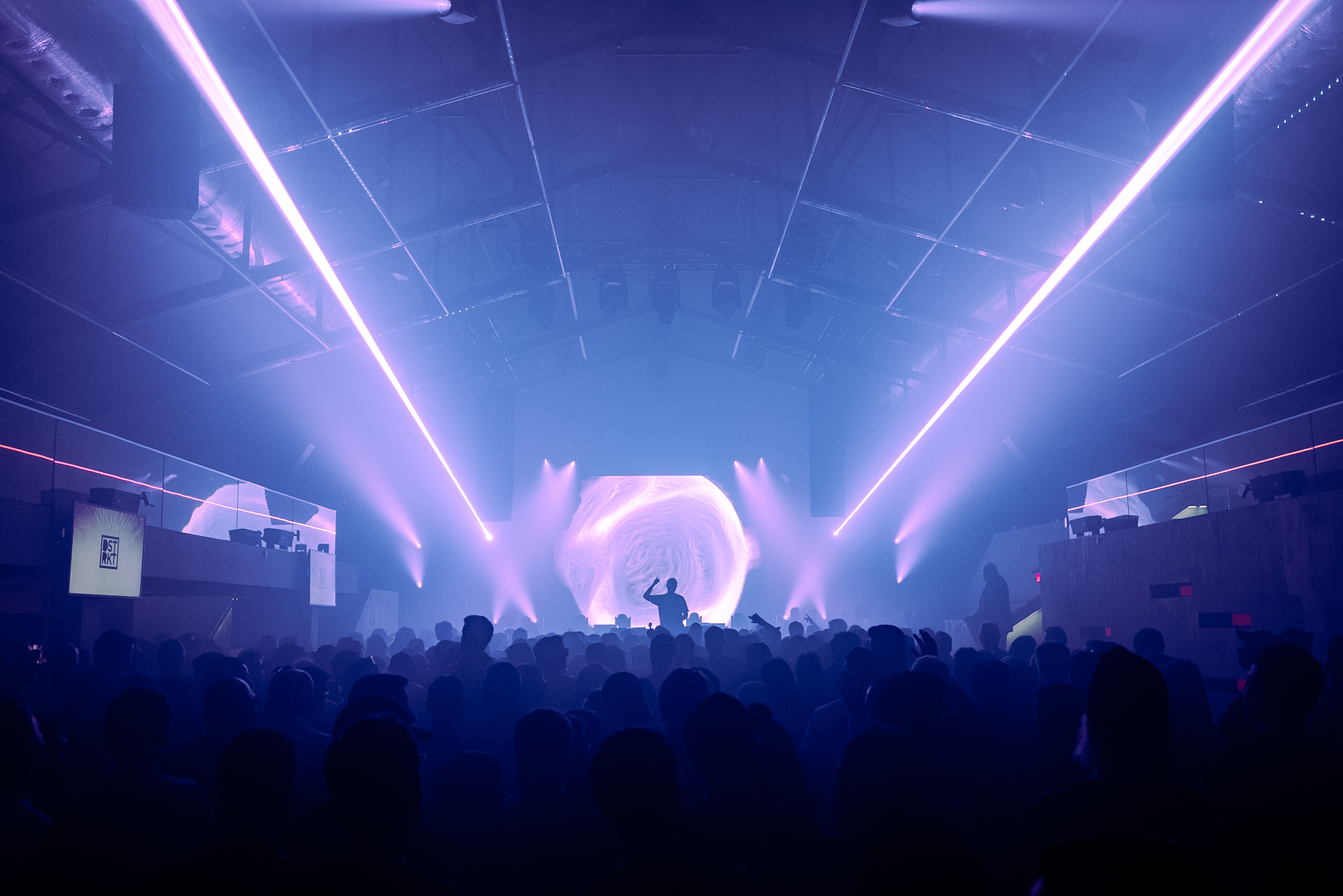
Corren Cavini – Purified
You’ve become a regular presence on Purified Records. What makes the label such a natural creative home for you?
It comes down to a very real and natural connection, both personally and musically. The people at Purified share a lot of the same values I have, about what matters in music and in life. And musically, the alignment is just there. Any lineup they put together tends to feature artists I’d book myself. The music Nora plays in her sets consistently includes things I select too. It’s that kind of connection which is rare in life where you align on so many different levels.
How important has Nora En Pure’s mentorship and support been in your development over the past few years?
The support has been huge and I don’t want to understate that. The shows, the visibility, being part of the Purified world. All of that has genuinely helped me reach people I wouldn’t have reached as quickly otherwise. But what means more to me than any of that is the human connection. I always say I do music for what it does to people, including myself. And Nora is a real example of that. The emotional connection, the mutual support, the fact that we genuinely understand each other on a personal and musical level, that’s the foundation of everything.
What have you learned from being part of the wider Purified family, both musically and professionally?
More than anything, it reinforces something I already believed but keep being reminded of: how much the people around you matter. Everyone in the Purified world, from the crew to the artists to the crowds, is warm, genuinely positive, and without ego. That’s not just a nice thing personally; it’s what allows everyone to do their best work. When I’m at a Purified event watching other artists play, I notice how the environment itself creates the conditions for something special to happen. Good people make good things possible.
Corren CavIni – Lion’s Head it out now on Purified Records. Grab it on Beatport HERE.
Head to Beatportal to read The Night Bazaar exclusive interviews in partnership with Beatport HERE.