




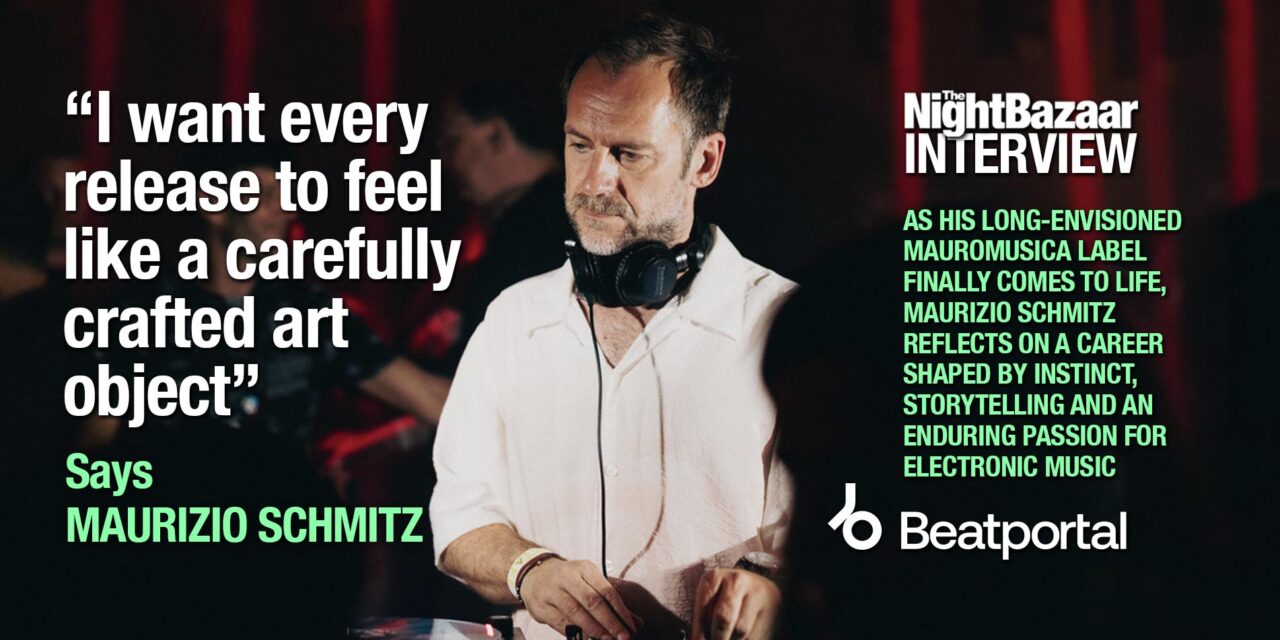
Mauromusica isn’t just the beginning of a new chapter for Maurizio Schmitz, it’s the manifestation of a vision he had more than three decades ago.
The name itself has existed since the early 2000s as a party series that quietly built a loyal following through intimate dancefloors and carefully curated nights. But the idea behind it stretches back even further. Long before mauromusica became known for its parties, Maurizio had envisioned it as a record label. Only now, after years spent immersed in every corner of electronic music, has that vision finally become reality.
In this conversation, Maurizio reflects on the journey that led him here, the philosophy behind mauromusica, the significance of its debut releases and the passion that continues to shape his approach to electronic music after more than three decades behind the decks and beyond.
You’ve said mauromusica was originally conceived many years ago. Looking back, do you think delaying that dream made the label stronger?
Absolutely. Back then I was young, full of passion and energy, but I simply didn’t have the experience and the network and the confidence I have today. Over the years I’ve worked as a DJ, promoter, music manager, agent – I met incredible artists and built relationships all over the world.
After more than twenty years of collecting music, promoting parties and DJing, what does launching mauromusica now allow you to express that wasn’t possible before?
It’s actually been more than thirty years now, and somehow I still feel like the curious kid who bought his first records. That excitement has never disappeared.
With mauromusica I can finally bring together everything I love: music, vinyl, design, art and creating experiences that connect people. It’s not an ego project. It’s much more like hosting a great party—you bring together people who share the same passion, and together you create something bigger than yourself.
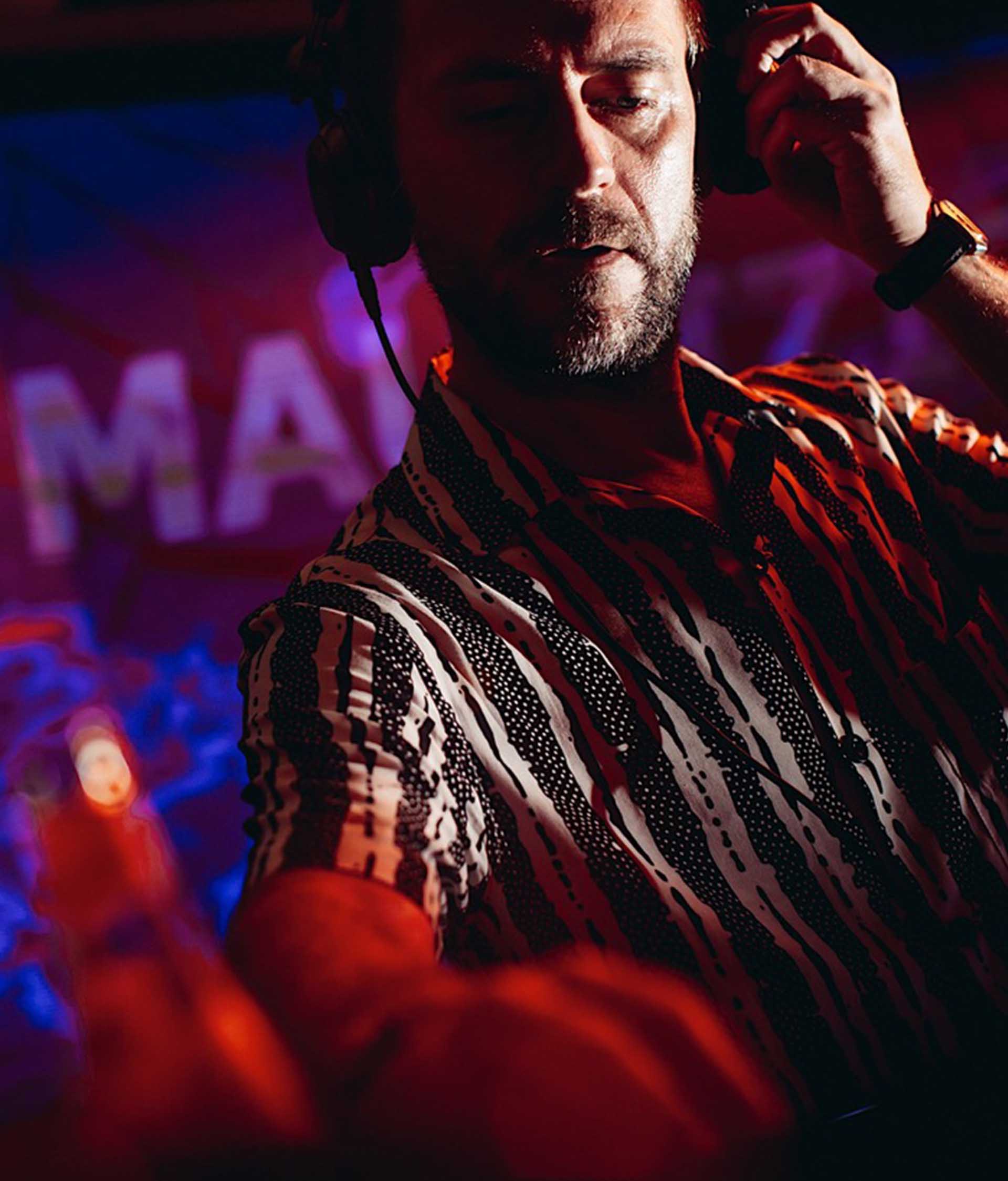
Maurizio Schmitz
A lot of labels today are built around algorithms and streaming visibility. Yours feels almost deliberately old-fashioned in its emphasis on storytelling, artwork and curation. Is that a conscious reaction against the way electronic music has evolved?
To be honest, I don’t spend much time looking at what everybody else is doing or what the latest trend is. I trust my intuition.
Everything released under my name has to feel right first. It’s not a reaction against streaming or algorithms, it’s simply the way I approach music. If you feel its an old school approach, then I’m totally fine with it.
I believe that, as a creative person, it’s important not to follow trends or market expectations. The world doesn’t need another copy of what’s already successful. It needs people with their own perspective, their own taste and the courage to stand behind it.
The phrase “EINER REIN. EINER RAUS.” almost sounds like a DJ philosophy rather than simply a compilation title. What does that phrase mean to you beyond its literal translation?
You’re probably right.
The phrase actually came from a conversation with my friend Tobias Rehberger. We had been drinking, I was enthusiastically explaining the concept behind the label, and after listening to me for a while he simply said: “Einer rein. Einer raus.”
That was it.
The more I thought about it, the more meaningful it became. As a DJ you’re constantly replacing one record with another—one in, one out. But it’s also a philosophy for life. New people arrive, others leave. New ideas replace old ones. Everything keeps moving, and that’s exactly what electronic music has always been about.
You’ve spent many years close to one of electronic music’s most respected institutions, Cocoon and Sven Väth. Can you describe when you first encountered Sven and how you became part of the Cocoon family?
I started following Sven in the mid-’90s. The first time I saw him play was at Pulverturm in Munich, around 1994, when I had just started collecting records myself.
From 1999 onwards I worked for a music marketing company in Hamburg, where I was responsible for sending promo records to DJs. I always took extra care with Sven’s selections because I wanted him to receive only the records I genuinely believed suited his taste. I even contacted his management once to make sure he received a brand-new Underworld promo in Ibiza because we had managed to get it before almost anyone else. Looking back, maybe that was my first unofficial management job.
I was resident DJ at “FrequenzBerater” Hamburg, where Sven played regularly. 2005 & 2006 I booked Sven for the first two “Sensation White” events at the Arena in Gelsenkirchen. Couple of years later his then-manager Talida called and asked if I’d like to join Cocoon as Event Manager. That was in 2008, and I’ve been proud to be part of the Cocoon family ever since.
Was there a particular moment when your professional relationship became a genuine friendship?
It wasn’t one defining moment. Friendship grows through shared experiences, trust and spending a lot of time together. After almost eighteen years we’ve travelled the world together and have seen each other in just about every situation imaginable.
Sometimes it even feels a bit like a marriage, haha. We both have our little quirks, but our relationship has always been built on mutual respect and trust. Without that, you simply couldn’t work together this closely for so many years.
Watching Sven build Cocoon over decades, what impressed you most that people outside the scene probably don’t appreciate? What has working with Cocoon taught you about building something that lasts rather than chasing trends?
For me, Cocoon has never been just a label, booking agency or a party brand. It’s a family, a culture and a way of thinking.
What has impressed me most is Sven’s consistency. He never chased trends. He always trusted his own musical instincts while continuing to evolve. That’s much harder than people realise.
“Stay true to yourself , but accept changes” might sound like a simple phrase, but I genuinely believe that’s one of the main reasons why Cocoon has remained so respected for decades.
Cocoon was never just a label, it represents a particular philosophy about music, parties and community. Which parts of that philosophy have influenced mauromusica?
I’ve learned an incredible amount during my years at Cocoon, and I’ll always be grateful for that. But I actually don’t like comparing the two.
What Sven and the whole Cocoon team have built over several decades is unique.
Mauromusica is much more personal. It’s simply my own interpretation of electronic music. I have no interest in recreating something that already exists. Every meaningful project deserves its own identity.

Maurizio Schmitz and Sven Väth at Akasha, Ibiza
Equally, are there aspects where you deliberately want mauromusica to follow its own path rather than becoming associated with Cocoon?
See my previous answer.
I hope people ultimately see mauromusica for what it is: an honest reflection of my own passion for electronic music.
The story around Raxon’s limited vinyl release feels unique. Why did “Based In Space” become the perfect record to introduce the label?
Over the years I’ve listened to thousands of unreleased tracks, many of them submitted to Cocoon. Some were excellent but, for one reason or another, never found a home.
“Based In Space” was one of those tracks. The moment I heard it, I knew it deserved to be released. At the same time, I realised I had been sitting on many other incredible unreleased tracks for years. Suddenly everything came together. What started with one track quickly became the foundation for the first mauromusica compilation. Raxon is also a good friend, and the trust he placed in me to launch the label with his music means a great deal to me. Sven chose that one from all the tracks I gave him on a dubplate, that helped so much !
You clearly place huge emphasis on presentation, from Tobias Rehberger’s artwork to premium packaging. In an era of streaming and digital playlists, why is the physical object still so important to you?
Because I think the music deserves it.
Producers invest an enormous amount of time, creativity and emotion into their work, yet today it’s often reduced to a thumbnail and a stream worth fractions of a cent. I wanted to give the music the presentation it deserves.
Of course beautiful packaging doesn’t make a great record any better. Some of my favourite records are old white labels with handwritten titles or just stamps on it. But since I have complete creative freedom with my own label, I want every release to feel like a carefully crafted art object.
Have you always collected vinyl for the music or were you equally fascinated by sleeves, typography and design?
It always started with the music. If I don’t love the track, I won’t buy the record, no matter how beautiful the sleeve is.
That said, I’ve always admired labels that treat every release as a complete work of art. Labels like “Warp” showed that music, design and visual identity can become inseparable. I have enormous respect for that level of care and consistency, and it’s definitely something that inspires me.
When an artist sends you music, what makes you stop after the first thirty seconds and think, “I need to hear the rest of this”?
Usually, I know within the first ten seconds if the track is not fitting my sound spectrum.
That might sound harsh, but after so many years your instincts become incredibly fast. Sometimes it’s the kick drum, sometimes it’s the groove, and sometimes it’s just one tiny detail that catches my attention. If something immediately grabs me, I’ll keep listening. On the other hand, a single sound that doesn’t feel right can make me lose interest just as quickly.
As a label owner I’ve also learned that not every great track is completely finished. If I hear real potential, I might suggest a few adjustments—but only if the artist is open to it. I never want to take away their identity.

EINER REIN. EINER RAUS.
Is mauromusica ultimately about discovering new artists, celebrating established names or creating unexpected combinations of both?
For me it’s never about the name. It’s about the music. I honestly don’t care whether a track comes from an internationally respected artist or from someone releasing their very first record. If it fits the spirit of mauromusica, it deserves the same chance.
Has launching the label changed the way you think about your own DJ career?
Not really. DJing and running a label are simply two different ways of expressing my passion for electronic music.
Is there one record you’ve played throughout your career that quietly influenced the philosophy behind mauromusica?
No, I could never reduce it to a single record. One of the reasons I love the compilation format is that it allows different musical personalities to exist alongside each other.
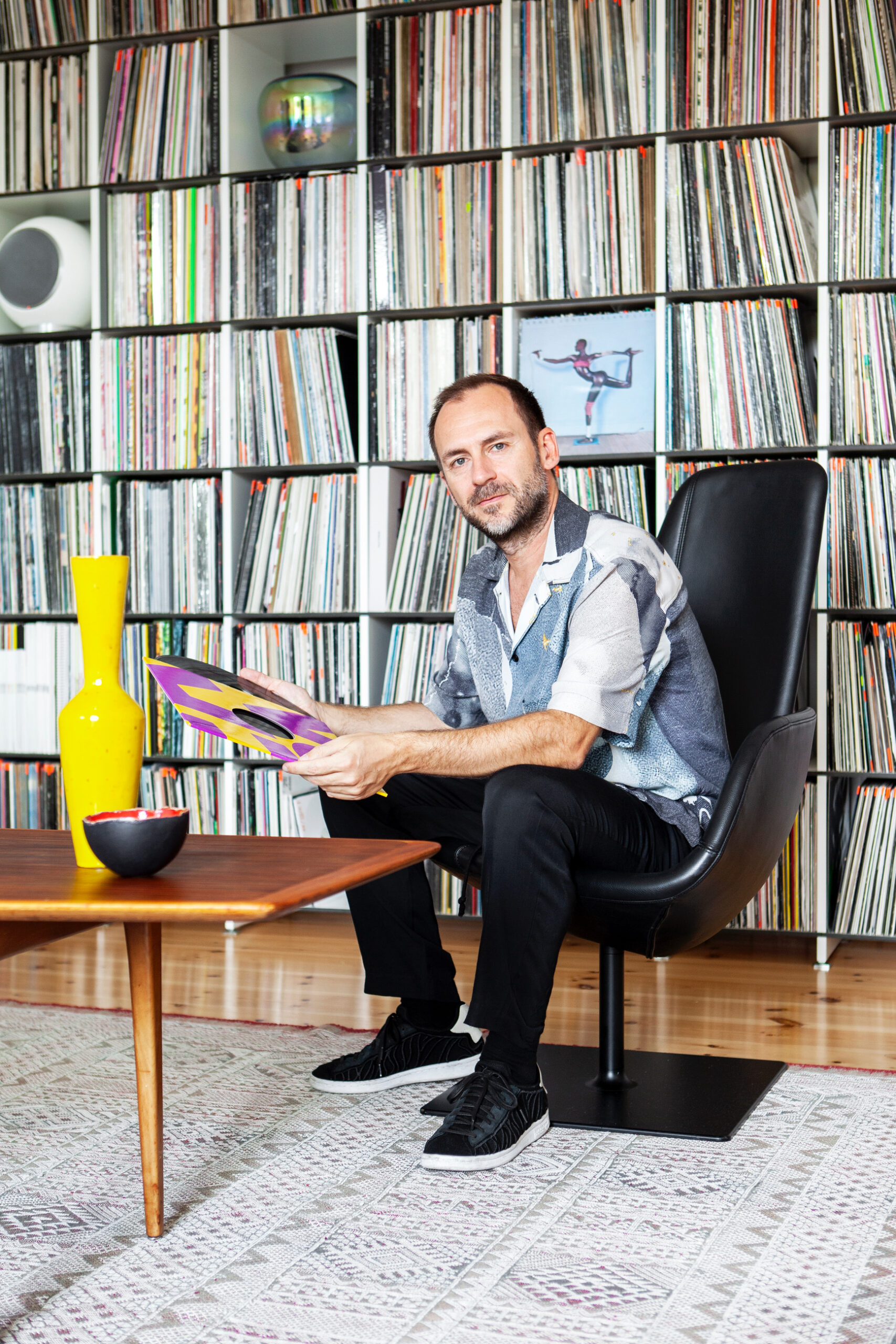
Maurizio Schmitz
If you could go back to the Maurizio who started the first mauromusica parties in 2002, what advice would you give him?
I’d tell him to make sure he has a solid financial foundation before organising his first parties. In the beginning I lost a lot of money because I was driven almost entirely by passion. It was an expensive education, but I never lost faith in my own vision. Looking back, that persistence was worth it. What started with empty dancefloors and financial losses gradually grew into a respected party series with a loyal community—something I’m genuinely proud of today.
So yes, I’d definitely give myself better financial advice. But I wouldn’t change the journey itself.
After decades in electronic music, what still gives you goosebumps?
A record that truly moves me. It doesn’t matter whether I’ve known it for twenty years or I’m hearing it for the very first time. If the right track is played at exactly the right moment, on a great sound system, in a club full of people completely lost in the music—that feeling is impossible to describe.
That’s why I fell in love with electronic music in the first place. And thankfully, that feeling has never left me.
Raxon – Based in Space and EINER REIN. EINER RAUS featuring RE-ST, JA:CK, Fedele, Radu Dracul, Sublee are out now on mauromusica. Grab them on Beatport HERE.
Head to Beatportal to read The Night Bazaar exclusive interviews in partnership with Beatport HERE.