




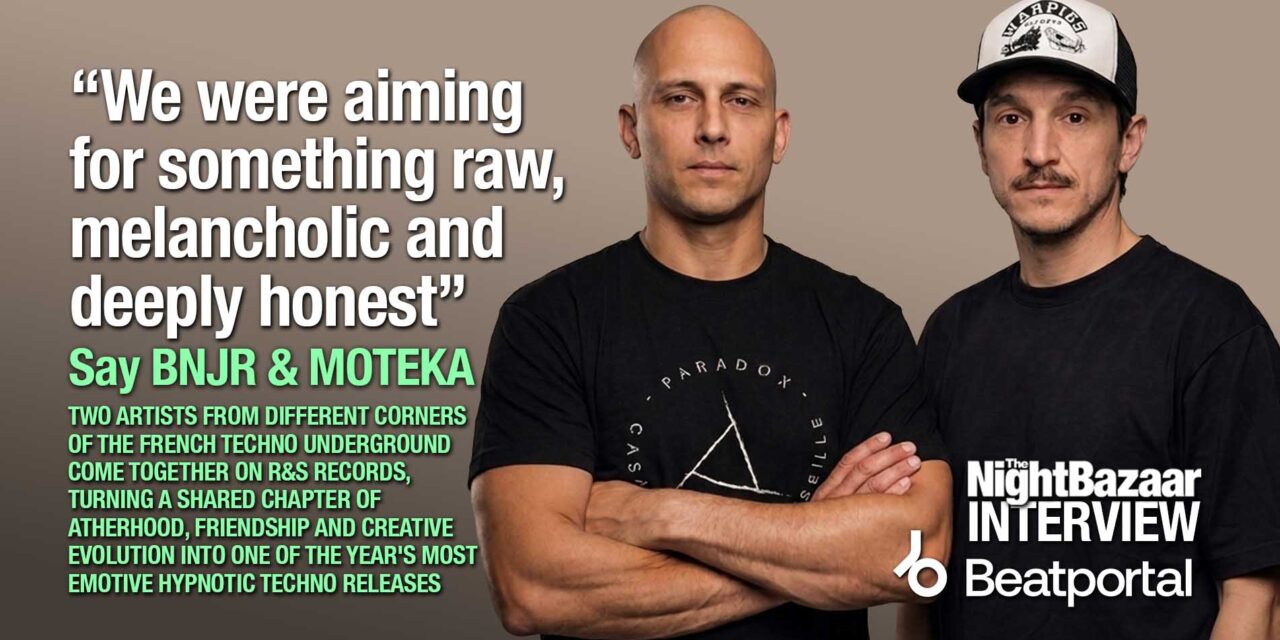
Their new collaboration, Similar Sundays, arrives via R&S Records and captures the qualities both artists have become known for: powerful grooves, emotional depth and a commitment to timeless techno over passing trends. Yet the track is also shaped by something more personal—a shared transition into fatherhood that has transformed their lives away from the dancefloor.
We caught up with BNJR and Moteka to discuss the making of the track, their creative partnership, the evolution of their respective careers, and the ideas that continue to drive their music forward.
Similar Sundays feels both driving and hypnotic, with a strong emotional undercurrent. What was the first idea or feeling that sparked the track?
The initial spark was the intention to capture the specific atmosphere of a warehouse after-party. We were aiming for something raw, melancholic, and deeply honest. Technically, we wanted to build a fast-paced foundation, around 140 BPM, that remained highly minimalist, allowing a massive, sweeping pad to dictate the emotional narrative.
The title Similar Sundays is intriguing. What’s the story behind it, and what does it mean to each of you?
The title is a direct reference to our current personal lives. We have known each other for 10 years through the Paradox collective, but recently, we both became fathers almost at the same time. Our children are the same age. While Sundays in our past might have been dedicated to recovering from gigs or attending after-parties, our Sundays are now remarkably similar, structured around the identical routines of raising a child. The track reflects this shared transition.
You’ve both developed your careers within different corners of the French techno landscape. What did each of you bring to this collaboration that the other perhaps wouldn’t have arrived at alone?
Moteka: BNJR has spent years immersed in the cultural and event side of the scene, both as a promoter and a DJ. He brought an undeniable dancefloor instinct and a clear curatorial vision. On my end, having stepped back from DJing to focus purely on production and live performance, I brought the technical architecture. I provided the studio workflow, the hardware, and the engineering required to translate his ideas into a dense, finished sonic product.
The track balances classic techno sensibilities with a contemporary sense of atmosphere. Were there any shared reference points or influences that guided the production?
We didn’t really sit down and list specific artists or projects as references. Instead, we started with a raw, hypnotic bass loop. From there, the idea was to add a sweeping pad to soften the edges and create this floating, “cotton-like Sunday” sensation.
Both of your music often explores tension between intensity and emotion. Is that something you consciously discuss when working together, or does it emerge naturally?
It emerged naturally from our workflow during the session. Rather than a conscious discussion, it was more of a happy accident while jamming over the basic loop we had built. We realized we needed to add that emotional layer to a track that was otherwise becoming a bit too mental and functional.
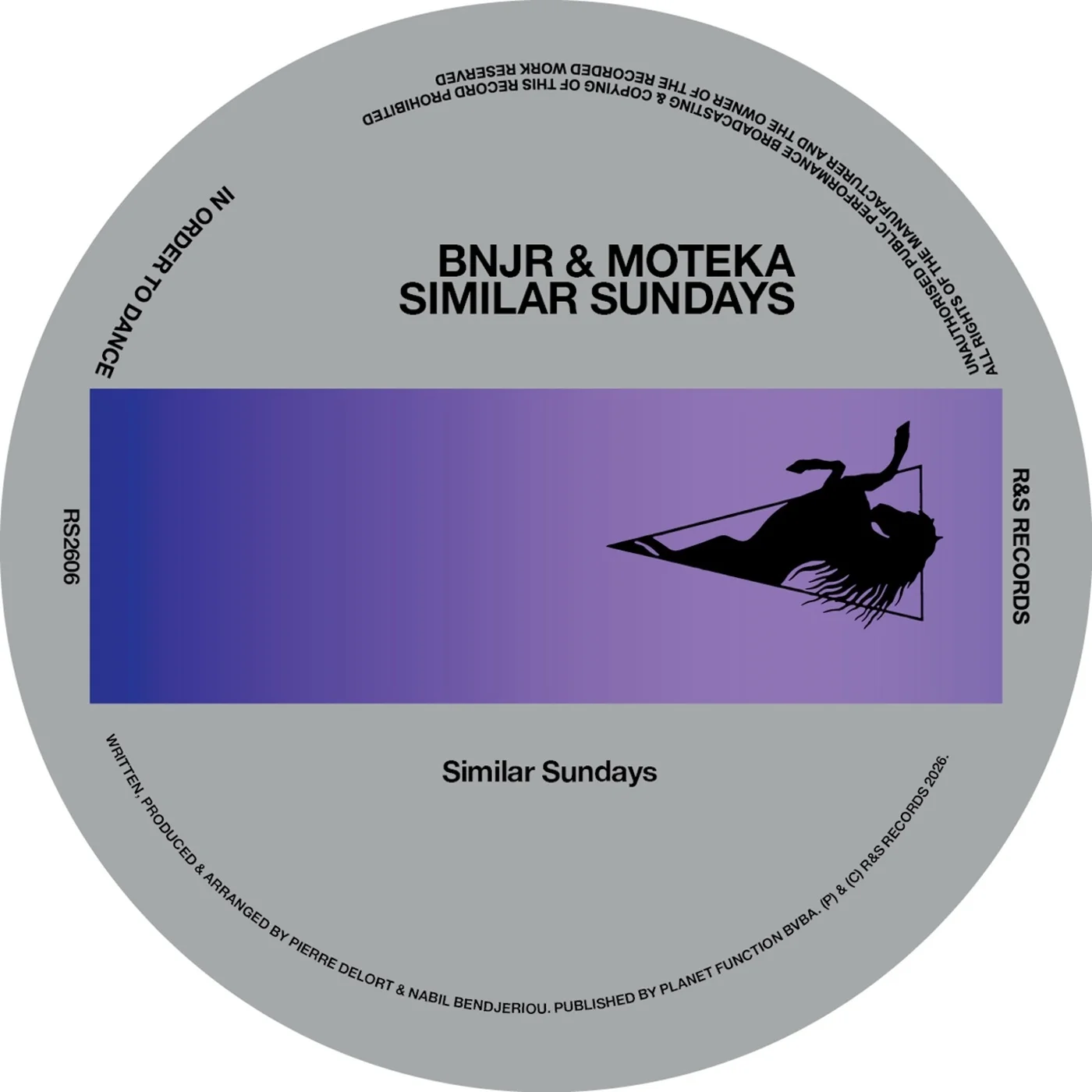
BNJR & Moteka – Similar Sundays – Out now on R&S Records
How did the collaboration actually happen? Was this a long-distance exchange of ideas, or were you working together in the studio?
Moteka : It happened in person. BNJR had recently started exploring production, so I invited him to spend a day at my studio in Marseille to demonstrate my workflow and show him some production tips. He arrived with his ideas and a few loops on his Analog Rytm. We plugged it into my setup, and the track was essentially laid down during that single studio session. I only did some minor corrections to the final mixdown a few weeks after. I often do that: once a track is finished, I leave it aside for a few days, then I’ll rework it to polish the mix with fresh ears.
R&S Records has such a rich history of championing forward-thinking electronic music. What does it mean for each of you to release on the label?
R&S Records is an absolute pillar of electronic music history. To release on a platform that has cataloged the defining works of this genre is a profound validation of our artistic and technical approach. We are so honored and happy!
Do you see Similar Sundays as a one-off collaboration, or has the process opened the door to more work together?
The workflow was really fluid and productive. We are highly satisfied with the result and absolutely intend to produce more music together in the future. New sessions are planned, and I’m always happy to share some time in the studio with friends.
The French techno scene has evolved significantly over the last decade. What excites you most about where it is heading now?
Moteka: Historically, small clubs and local collectives shaped a very cohesive scene here in Marseille. However, the post-COVID landscape shifted significantly with the rise of “hard techno,” and I found myself somewhat disconnected from the contemporary club ecosystem. What excites me now is that the hard techno trend finally seems to be fading, and we are returning to a more classic, timeless techno sound that resonates much more with me. This shift, combined with the fact that my son is getting older and I have a bit more free time, is hugely motivating and pushes me to produce even more. What excites me most is the isolation of the studio itself—the freedom to disregard current trends, stop digging for DJ sets, and focus strictly on live performance and uncompromising sound design.
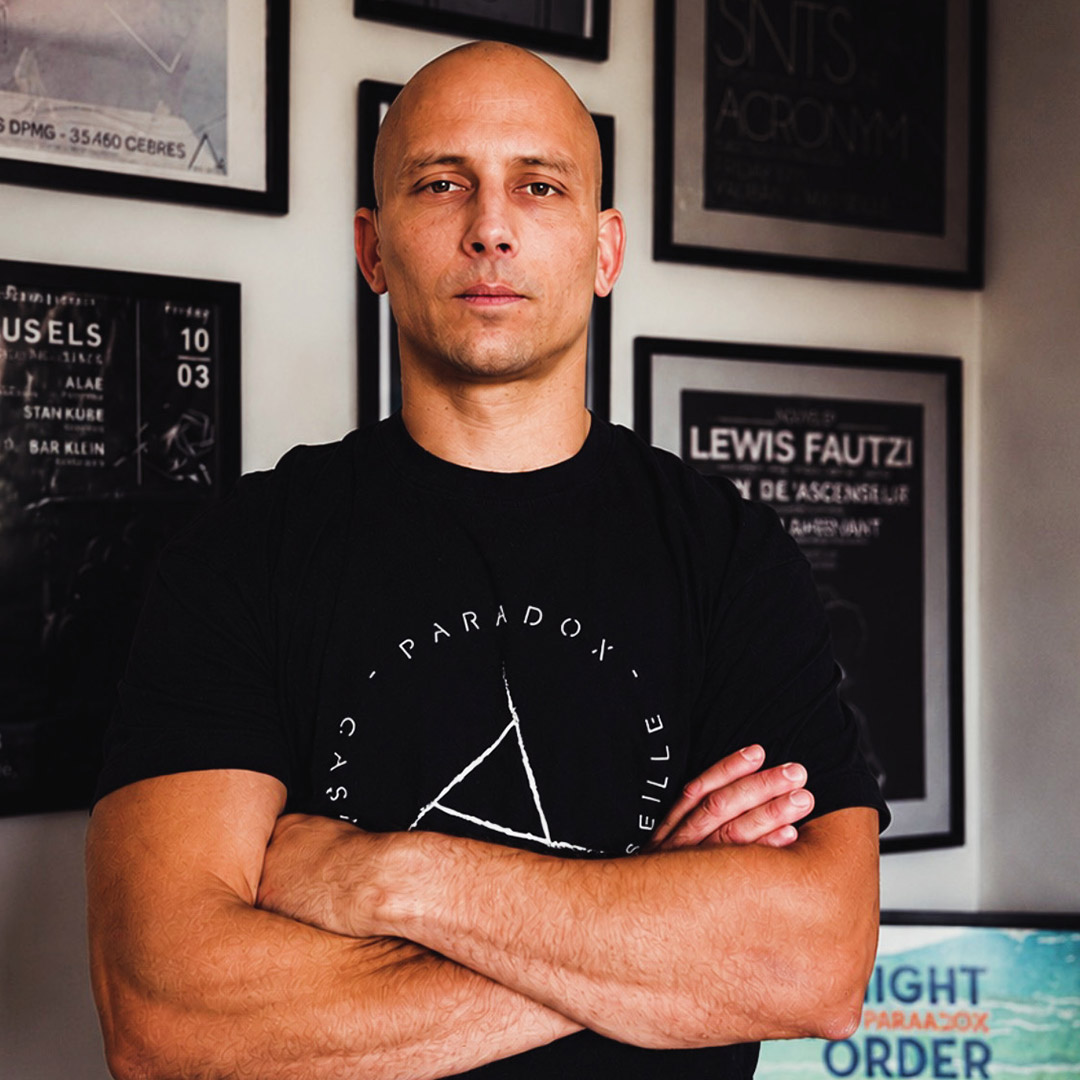
BNJR
Questions for BNJR
Your work sits at the crossroads of French and Moroccan electronic culture. How have those two worlds shaped your perspective as an artist and curator?
I never saw them as two separate worlds that needed reconciling ,they are simply both part of who I am, and the tension between them is precisely where my voice emerges.
France gave me access to club infrastructure, the discipline of the European circuit, and a way of approaching sound as a craft. Morocco, on the other hand, gave me a sense of rhythm that feels inherited rather than learned, as well as a connection to melody that predates any club culture.
As a curator, this dual perspective is a real strength. I am never satisfied with a single reference point. I constantly question how a track or an artist would resonate on both sides of the Mediterranean and, more often than not, the most compelling work is the kind that holds meaning in both contexts.
You cite influences from Berlin, Tbilisi and London. What specific qualities from those cities continue to resonate in your productions today?
From Berlin I took patience ,the confidence to let a track breathe, to build slowly and trust restraint instead of constant payoff. Tbilisi taught me intensity and stakes, there’s a scene where the music genuinely matters, where it carries something political and personal at once, and that rawness stayed with me.
London gave me rhythmic literacy ,the bass culture, the syncopation, the refusal to stay inside one genre’s lane. When I produce, I’m usually chasing a balance between those three, the space of Berlin, the urgency of Tbilisi, and the rhythmic detail of London.
Your music often combines raw energy with a dreamlike melancholy. Why are you drawn to that contrast?
Beyond DJing and production, you’ve spent years supporting artists through Culturalis, Paradox and Sotor Records. How has nurturing other talent influenced your own creative development?
Because that’s how the dancefloor actually feels to me. There’s the physical, almost aggressive drive of the kick, and then there’s this undertow of something fragile, nostalgia, longing, a kind of beautiful sadness that hits you at 4am. I don’t think those two things are opposites, I think they need each other. Pure energy gets exhausting and pure melancholy gets static. The tension between them is where emotion lives. I want a track that makes your body move while quietly breaking your heart a little.
It made me a better listener, and honestly a more honest artist. When you spend years helping someone else find their voice , A&R’ing a record, shaping a release, pushing an artist to go further , you develop a sharp ear for what’s authentic and what’s imitation. That ear turns back on your own work. I can’t pretend with myself anymore. Supporting others also taught me patience and generosity: that a scene isn’t built by one person, and that what you give to other artists eventually shapes the whole environment you create within.
You’ve helped spotlight a new generation of artists through Paradox and Sotor Records. What qualities are you looking for when you discover new talent?
A point of view, first of all. Technical skill is everywhere now ,what’s rare is an artist who actually sounds like someone, who has a signature you’d recognize blindfolded. I look for that, and for a certain hunger and seriousness about the craft. I’m also drawn to artists who carry something specific to where they come from rather than copying whatever’s trending in the big capitals. At Sotor especially, the whole idea is bridging worlds , so I’m always looking for people who have their own lines to draw, their own territory to map.
2026 is described as a turning point with the launch of your own production projects. What does this next chapter look like for BNJR?
After years of mostly putting my energy into other people’s work, 2026 is about turning the focus back onto my own music. The R&S single with Moteka was a real marker for me , a sign that the productions are ready to stand on their own. This next chapter is about committing fully to that: more releases, a clearer artistic identity under my own name, and projects that let me explore the contrast I keep coming back to ,the raw and the dreamlike. It’s less a reinvention than finally giving my own voice the room it’s been waiting for.
How has operating between Paris and Casablanca influenced your understanding of community and scene-building?
It taught me that scenes aren’t infrastructure, they’re people and trust. Paris has the institutions — the clubs, the agencies, the established networks. Casablanca has less of that scaffolding, which means everything depends on relationships, on showing up, on people building something out of almost nothing. Moving between the two, I learned not to take any of it for granted. A scene is fragile; it has to be cared for. And I learned that the most exciting energy often comes from the place with fewer resources, because necessity makes people inventive and loyal in a way comfort never does.
As someone deeply involved in cultural development, what do you think electronic music can contribute beyond the dancefloor?
It creates spaces where people meet who otherwise never would , across class, across borders, across language. That’s not a small thing. Electronic music has always been a culture of the margins building its own world, and at its best it offers belonging to people who don’t find it elsewhere. Beyond the night itself, it can be an economy, a reason for young artists to stay and create where they are instead of leaving, a way of putting a city or a region on the map. For me the dancefloor is the beginning, not the end ,what matters is the community and the possibilities that grow around it.

Moteka – BNJR & Moteka – Similar Sundays – Out now on R&S Records
Questions for Moteka
You’ve moved from psytrance with Principles of Flight to the hypnotic techno of Moteka. Looking back, what elements of that earlier period still inform your music today?
In terms of direct musical influence, I haven’t kept much from that period, apart from perhaps the mental, floating aspects or the dreamlike, journey-oriented qualities found in some tracks. However, on a technical level regarding mixing and sound design, it was incredibly formative. My workflow has completely changed since then—I work much more on feeling now, testing combinations on my machines and embracing happy accidents rather than producing with a strict initial intention. But when it comes to the final assembly and mixdown, I still apply the exact same rigor and technical discipline I learned during those years.
Your transition into techno happened at a time when many artists struggled to redefine themselves. What helped you successfully make that shift?
I started making techno for a few reasons. I no longer recognized myself in the psytrance scene at the time, and my music had naturally taken a techno influence, which wasn’t very well received by that audience. Psytrance is a genre with a massive amount of technical and artistic rules, constraints, and audience expectations. Freeing myself from all of those rules by making techno was crucial. I did it without overthinking, just following what I genuinely loved deep down. I was also fortunate to meet the right people at the right time, notably Electric Rescue, the boss of the French label Skryptöm, who has supported me for over 15 years now.
Artists like Surgeon and Planetary Assault Systems have been cited as influences. What lessons have you taken from that lineage of British techno?
The primary lesson is the physical weight of sound. Those artists demonstrated that a track does not need complex arrangements to be devastating; it needs sonic density. They taught me to treat every single element, a kick drum, a hi-hat, as a physical object in a three-dimensional space, utilizing aggressive saturation or textures and unyielding repetition to induce hypnosis.
Your catalogue often balances dark, percussive functionality with moments of unexpected onirism. Why is that dreamlike quality important to you?
The percussion acts as the physical anchor to the dancefloor, but the oniric elements provide the psychological depth. I need both, which is why they coexist in my music. I also value variety on the dancefloor, and well-introduced pad or melody creates a sense of journey and a loss of bearings. That is exactly the effect I try to evoke with my music. It creates an effect of surprise and friction.
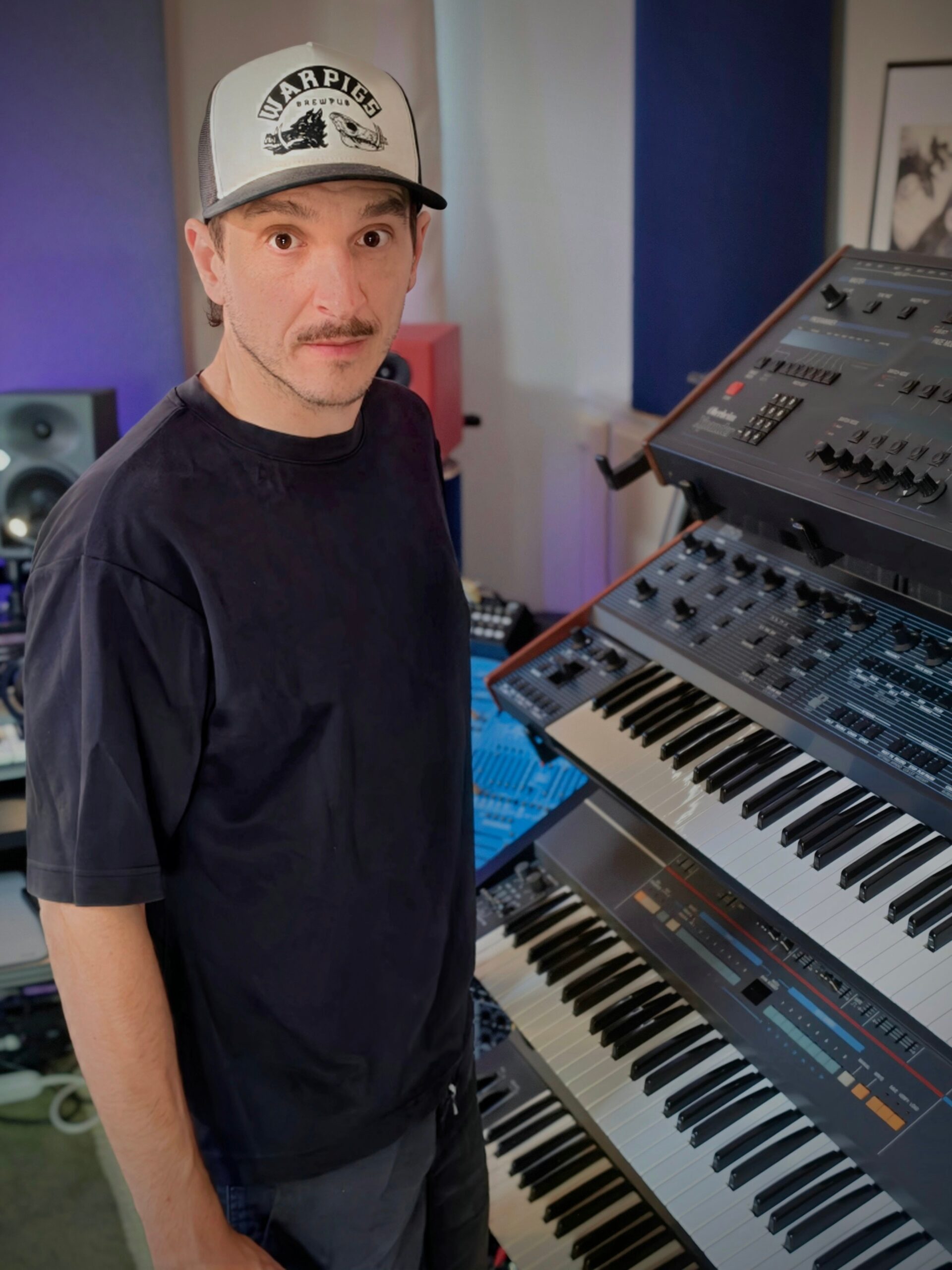
Moteka – BNJR & Moteka’s Similar Sundays is out now on R&S Records
As We Fought Iron Giants was conceived almost like an imaginary soundtrack. Do you approach individual tracks and EPs as storytelling devices?
Absolutely. I value the album format because it acts as an imaginary soundtrack. For me, music is a journey that must convey a story. Even within the functional constraints of techno, every release requires a narrative arc. I approach EPs as conceptual frameworks: the sound design serves a distinct narrative purpose, allowing the listener to visualize specific environments and emotions instead of simply hearing a sequence of beats.
Many heavyweight DJs have championed your music over the years. Has hearing your tracks played by artists such as Paula Temple or Ben Sims changed your perspective on production?
Seeing artists of that caliber play my tracks is ultimately about peer validation and recognition. There is simply an immense joy and satisfaction in knowing that these respected figures connect with what I’ve made, and in seeing a crowd dance to music I created in my studio. It is incredibly rewarding.
You’ve built a reputation as a live performer. How does your experience performing live feed back into the way you write music in the studio?
When I play live, I often create new patterns that I then introduce into tracks in the studio. I have this massive live project on my laptop, and it expands every time I play. When I get back home in the studio, I use it as a sketchbook to start new tracks. Playing live is also a great way to see firsthand what people like or don’t like in my music.
BNJR & Moteka – Similar Sundays is out now on R&S Records. Grab it on Beatport HERE.
Head to Beatportal to read The Night Bazaar exclusive interviews in partnership with Beatport HERE.