




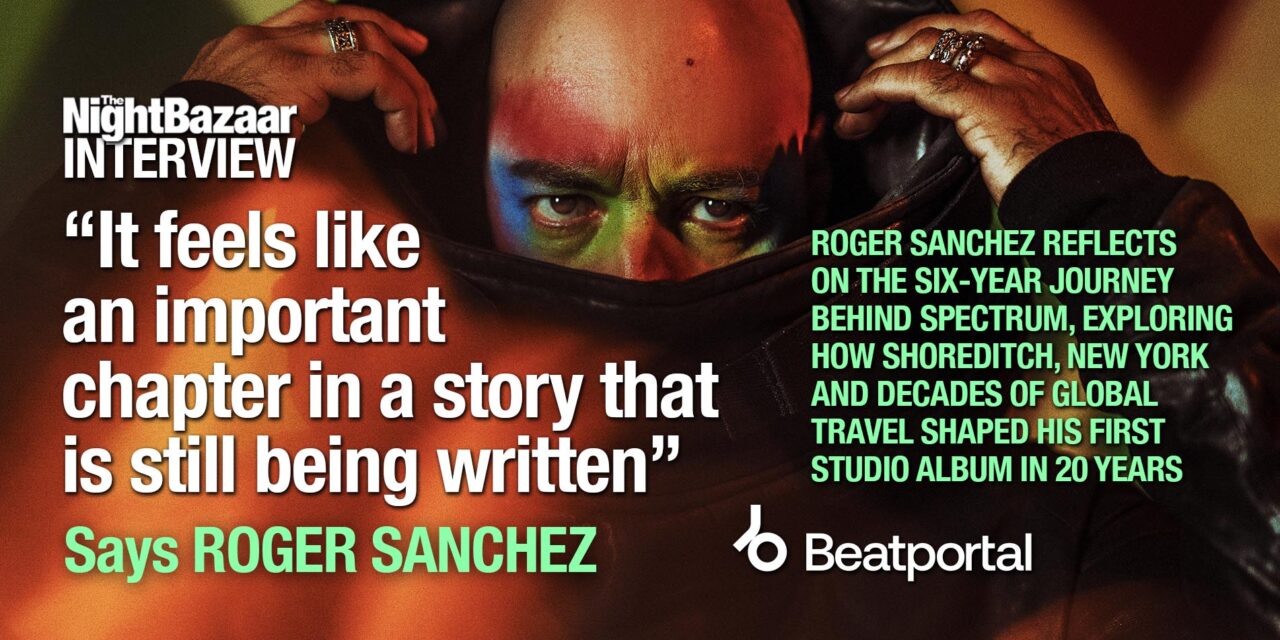
More than two decades after his last studio album, Roger Sanchez returns with Spectrum, a project that reflects the breadth of a career spent at the forefront of global house music.
Six years in the making, the album brings together club-ready productions, deeply personal songwriting and an eclectic cast of collaborators, all shaped by the people, places and experiences that have influenced him along the way.
In this conversation, the Grammy-winning DJ, producer and Stealth Records founder discusses how Shoreditch’s creative energy rekindled memories of New York’s golden years, why colour has always influenced the way he hears music, and how Spectrum became a body of work rather than simply another collection of singles. He also reflects on the enduring influence of the UK house scene, the importance of physical music in the streaming era, and why, after more than three decades behind the decks, the dancefloor remains his ultimate guide.
Spectrum is your first studio album in twenty years. Was there a particular moment where you realised this wasn’t just becoming another collection of singles, but something that deserved to be a complete body of work?
I started out writing individual tracks but almost from the beginning of the project, I knew I wanted to create another body of work. As the roughs of the tracks came together, they began to form a picture in my mind that ultimately turned out to be Spectrum
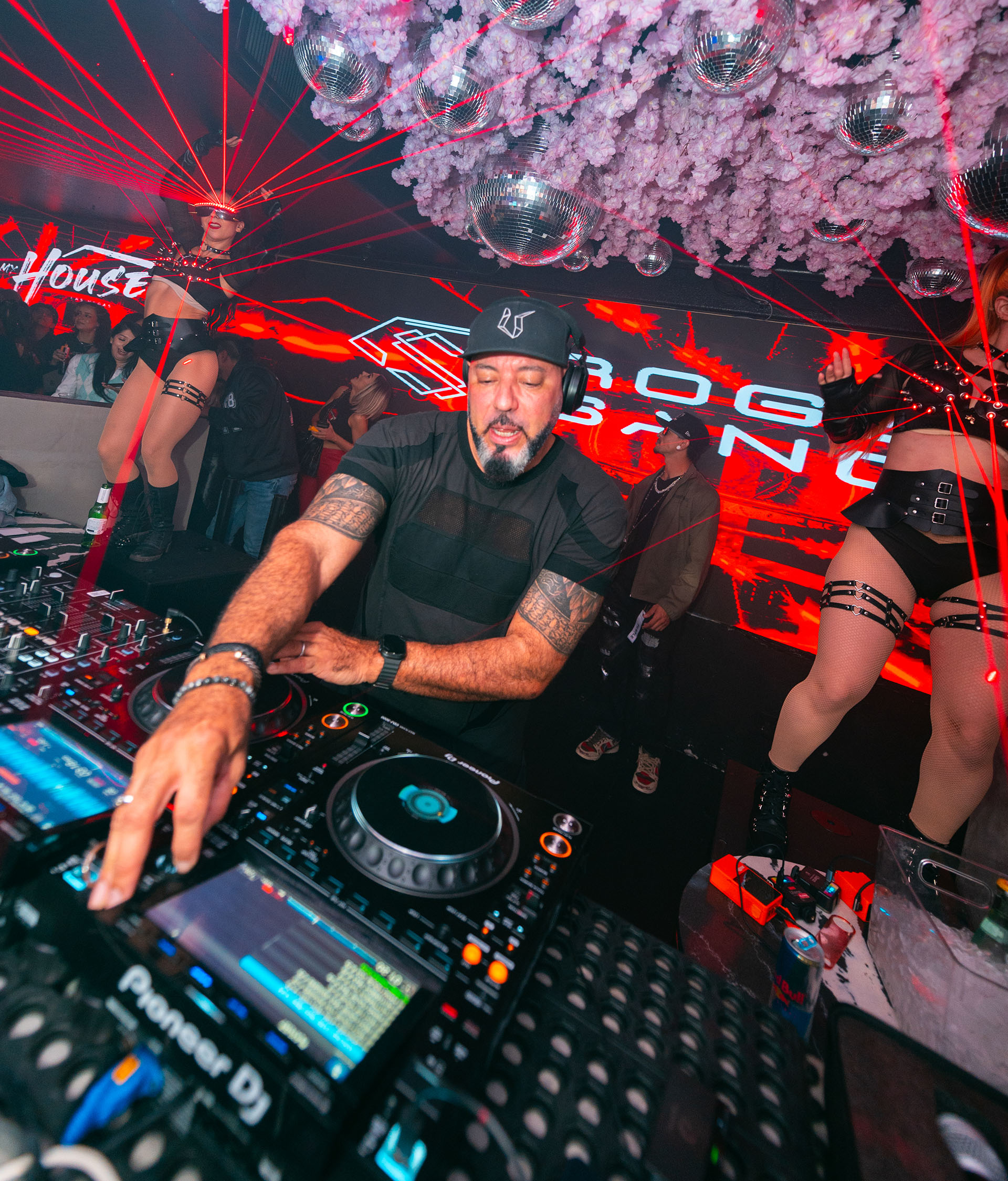
Roger Sanchez
You describe the album as moving from “club-ready infrared” to “emotionally weighted ultraviolet.” Was that concept there from day one or did you only realise afterwards that all these different musical colours belonged together?
I have always seen music in colors in my mind, however, this time as I was writing ideas for these tracks, I began to see the range of colors they evoked in my mind. It was this array that gave me the idea of Spectrum
Some tracks are clearly designed for peak-time dancefloors, while others feel much more reflective. Was balancing those two sides of Roger Sanchez one of the biggest creative challenges?
Each track captures an emotion for me as well as lyrically, each song tells a story. I allowed myself the freedom to explore these concepts and each track took on a different tone and weight. I think my biggest challenge was knowing when to say “Let’s stop here, I think I have an album”
You mention that much of Spectrum was written while you were living in Shoreditch. What was it about that part of London that found its way into the music? For me having lived in Shoreditch for a number of years myself that area of London has always felt super creative.
Shoreditch really feels like Soho in New York to me when I was growing up in the city, I found it to be one of the most creative spaces I’d ever experienced. Shoreditch brought me back to that vibe and time and that is reflected in the beats and baselines on the album.
Shoreditch has always been a melting pot of underground music, art and culture. Did living there remind you of New York in its earlier creative years?
Absolutely – its almost a mirror in time of New York in many ways- but with British accents and slang 😉
You’ve spent decades travelling the world, yet this album seems to have a particularly strong UK heartbeat. What does Britain still do differently when it comes to house music?
I think House Music has taken root firmly in the soul of the UK across all ages and walks of life. This naturally draws me back to the UK creatively.
The UK scene has always embraced soulful house, garage, progressive and underground sounds without worrying too much about genre boundaries. Did that freedom influence Spectrum?
It definitely did. I wrote over 50 tracks for the album, many of which were very different in tempo, beats and feel. This is definitely a signature concept influenced by being in the UK.
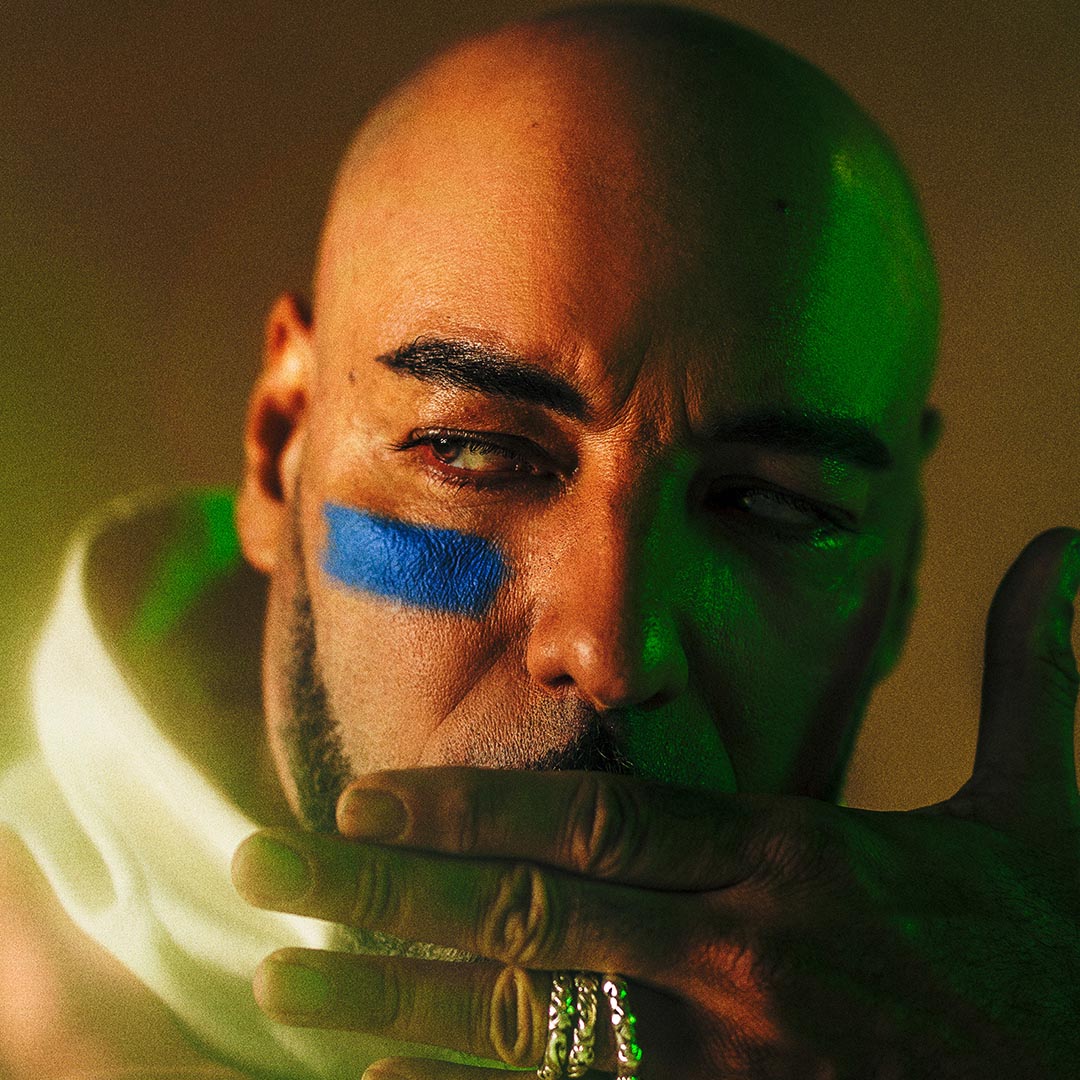
Roger Sanchez
When people hear this album years from now, are there moments where you’ll instantly think, “That was Shoreditch”?
I think songs like Caught Feelings and I Don’t Wanna Know will definitely bring me back to writing them in the studio in Shoreditch and the friends and moments that I experienced there.
In our last interview for Beatportal, you spoke about how culture and environment naturally become part of an artist’s music rather than something that can be manufactured. Spectrum almost feels like the full musical version of that conversation.
I like that analogy – Spectrum draws these influences together for me in a very real way and I’m happy that connects with others the same way.
Back in January, you said narrative and identity matter more than ever in dance music. Does Spectrum feel like the record where you’ve finally told your own story?
I have always taken my own experiences and put them into my music. To me, Spectrum is another chapter in this overarching story.
We also discussed how different cities leave fingerprints on music. Previously it was Miami and Latin influences; now you’re talking about Shoreditch, Spain, the US and the UK all existing on the same record. Has travelling become your biggest instrument in terms of influencing your sound?
Travel has opened my mind and ears to other cultures and sounds which I have absorbed and reflected in my own productions. I think travel is essential to our growth as humans and expands our perspective.
You mentioned that you’re constantly inspired by unfamiliar sounds blended into familiar house music. Is Spectrum your own attempt at pushing that philosophy further?
I think Spectrum is a continuation of my interpretation of sound viewed through the prism of light. Much in the ay that unfamiliar sights can influence our perspective, these sounds also resonate with me and help me to move my own art forward in a richer way.
The guest list ranges from Melanie C to Karen Harding, Kelli-Leigh, Donae’O and Chico Castillo. Did you deliberately look for voices that represented different corners of dance music?
I looked for voices that could bring different depths and colors of emotion to each of the songs. It’s much like adding different colors on a palette to achieve a tone. Each of the vocalists brought something unique that truly brought the album to life.
After thirty-plus years behind the decks, are you producing records differently because you know exactly how they’ll feel in a club, or do you have to forget the DJ entirely when you’re in the studio?
Being a DJ really helps understand how a track will work on the dance floor. When I’m writing tracks for the clubs, this is very important. Other times, I’m focused on a story or a melody or a mood which is independent of the club and I don’t focus on my DJ intuition.
Has social media changed what audiences expect from DJs, or does the dancefloor still tell you everything you need to know?
I think social media has changes what promoters expect more than anything. The dance floor always lets me know what I need to give it to create moments and memories in real time.
You’re releasing Spectrum as a triple transparent red vinyl complete with bonus material. In an age of streaming, was that as much about preserving dance music culture as selling an album?
I have always been someone who wants to hold something that physically connects me to the artists I admire. My most vivid memories of the albums I loved was what the artwork looked like, how the album felt in my hands. I wanted to provide this form to fans and anyone who fell in love with my album.
You’ve spoken about this album almost as if it’s a complete artistic statement. Does finishing Spectrum feel like closing a chapter or opening another one?
It feels like an important chapter in a story that is still being written, but I’m not sure if that feels like a closed chapter or the segue into the next one yet.
Roger Sanchez – Spectrum is out now on Stealth Records. Grab it on Beatport HERE.
Head to Beatportal to read The Night Bazaar exclusive interviews in partnership with Beatport HERE.