




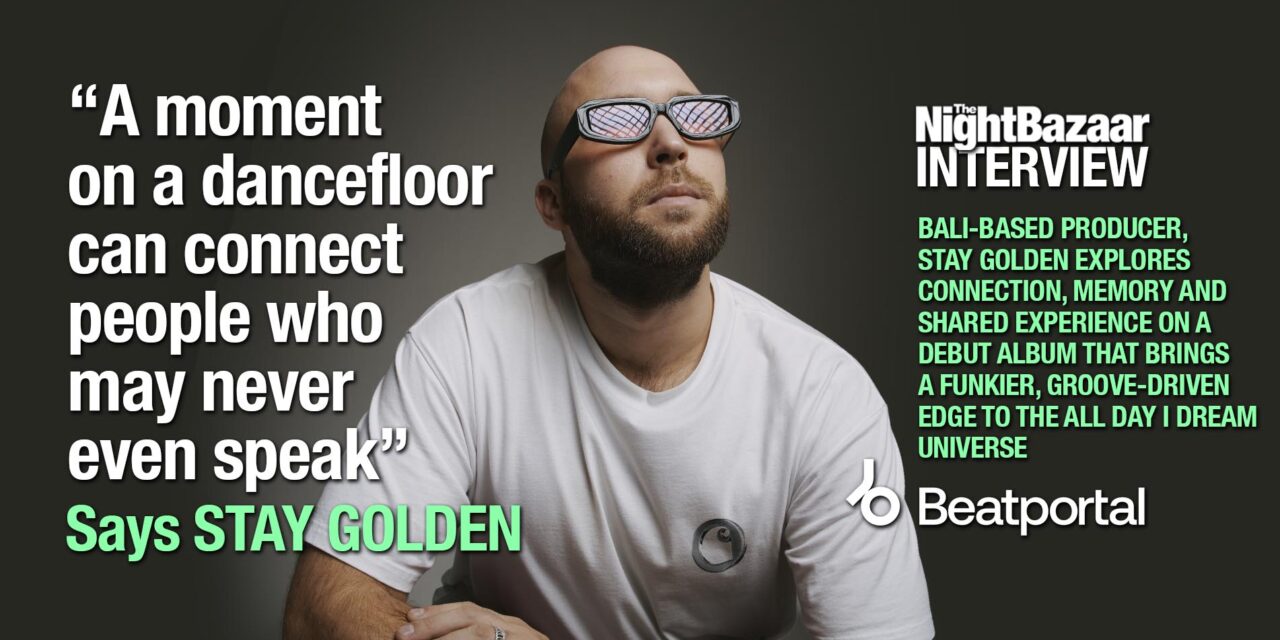
STAY GOLDEN opens a significant new chapter with Silent Covenant, his debut album and first release on Lee Burridge’s All Day I Dream. Across seven tracks, the Bali-based producer explores the unspoken connections created through memory, trust and shared experience, while bringing a funkier, groove-driven and indie-dance edge to the label’s famously emotive sound.
The album also brings together many of the threads that have shaped STAY GOLDEN’s unconventional journey, from a former career creating immersive AR/VR experiences and discovering All Day I Dream in Moscow a decade ago to rebuilding his life around music in Bali, founding TOTEM Society and performing at Burning Man.
We caught up with STAY GOLDEN to discuss the meaning behind Silent Covenant, finding his own space within the All Day I Dream universe, the collaborations that shaped the record and why he sees his debut album as a beginning rather than a destination.
You describe a “silent covenant” as the invisible bonds that exist through shared moments, memories and emotions without needing to be spoken. Where did that idea originate and was it already in your mind when you began making the record?
The idea came from reflecting on the relationships that have shaped my life. The strongest connections are not always the loudest or easiest to define. Sometimes they exist through trust, a shared experience, a memory, or simply the feeling that another person understands you without an explanation.
I didn’t begin the first track with a fully formed album concept or title. The music came first. As the tracks accumulated, I recognised that they were expressing different sides of the same idea: connection without words. Silent Covenant became the phrase that brought the emotional meaning of the record into focus.
The album is presented as a seven-track journey rather than simply a collection of individual club records. How important was sequencing in creating that journey?
Sequencing was very important because I wanted the album to behave like one continuous experience. Each track needed to work independently, but its position also had to reveal another part of the story.
The record moves between melodic textures, introspection, hypnotic rhythms, stronger grooves and more open dancefloor energy. I was thinking about emotional pacing rather than only tempo or club functionality.
The sequence gives the listener time to enter the world of the album, understand its musical language and then experience how that world expands through the collaborations. That arc is what makes it an album for me rather than seven separate records placed together.
The opening four tracks are entirely your own before the album moves into a series of collaborations. Was that structure intentional, almost establishing your own musical language before inviting other voices into it?
Yes, although it became fully clear during the process rather than being imposed from the beginning. Opening with four solo tracks allowed me to establish the emotional and musical vocabulary of Silent Covenant in a very direct way. The title track, “Fragments of a Dream,” “Ritual Pause” and “Stay With Me” introduce the atmosphere, melodies and groove entirely from my perspective.
Once that foundation is in place, the record becomes more communal. Other personalities enter the story and the sound grows wider without losing its centre. That transition from an individual voice towards a shared experience also reflects the concept of the album itself.
STAY GOLDEN
All Day I Dream has such a distinctive musical identity, yet Silent Covenant introduces funk, indie dance and a much stronger emphasis on groove. Did you feel a responsibility to respect the label’s heritage while also challenging people’s expectations of what an All Day I Dream record can sound like?
I have enormous respect for the world All Day I Dream has created, but I didn’t want to imitate its catalogue. I think the best way to respect a label with such a strong identity is to understand its emotional core and then contribute something honest of your own.
Silent Covenant retains the emotion, melodic depth, atmosphere and sense of escape that I have always associated with All Day I Dream. At the same time, my current musical instinct is leading me towards stronger rhythms, funk, indie dance and more playful physical energy.
For some listeners, that combination may initially feel unexpected or even contradictory, but that is exciting to me. A living musical universe should be able to evolve, and I’m grateful that Lee and the label were open to this new direction.
Rather than moving away from organic house, the album stretches its boundaries. What elements of that sound did you want to retain and where did you deliberately explore new territory?
I wanted to retain the warmth, emotional openness and organic sense of movement. I still love music that unfolds patiently, creates an atmosphere and allows a melody or texture to stay with you after the track has finished.
The new territory is mainly in the rhythm and attitude. I pushed the basslines and percussion further forward, introduced more funk-influenced details and allowed the arrangements to feel more direct and playful.
There is more indie-dance energy and a stronger physical response, but it remains connected to an introspective emotional world. I see it as broadening the vocabulary rather than changing languages completely.

STAY GOLDEN
You attended your first All Day I Dream party in Moscow back in 2016. What do you remember about that experience and does releasing your debut album on the label a decade later give this moment additional significance?
What stayed with me was that the event felt like a complete world rather than simply a line-up of DJs. The music was emotional and immersive, but the atmosphere and the community surrounding it were equally important. It showed me that electronic music could be gentle and introspective while still creating a very powerful collective experience.
At that time, I wasn’t yet living as a professional artist. I was still working in AR, VR and multimedia, so I couldn’t have predicted that my debut album would eventually appear on the label. That history gives this release a real full-circle feeling. It connects who I was in Moscow, my decision to move to Bali and commit to music, and the artist I have become.
Lee Burridge is obviously a big supporter of your music, but how did the conversation about Silent Covenant becoming an All Day I Dream album begin?
It developed organically through sharing music and building trust over time. There wasn’t one dramatic moment when I arrived with a completed concept and announced that it had to become an album.I was creating and sharing music, and the conversation developed as it became clear that several of the tracks belonged to the same emotional world.
What mattered was that Lee and the team could hear both the connection to All Day I Dream and the individual direction I was bringing into it. Their openness gave me the confidence to complete the project as a coherent album without softening the elements that felt new or unexpected.
Titles such as “Fragments of a Dream,” “Ritual Pause” and “Stay With Me” feel particularly evocative. How closely are those titles connected to specific experiences or emotions behind the music?
They are closely connected to emotional states, but I prefer not to reduce each title to one fixed autobiographical event.
“Fragments of a Dream” is about the incomplete images and feelings we carry with us, when a memory feels vivid but can’t be reconstructed completely.
“Ritual Pause” reflects the need to step outside constant movement and create a moment of intention and stillness.
“Stay With Me” is more direct. It contains the vulnerability of wanting a connection, a person or a particular moment not to disappear.
I like titles that open a door without closing the meaning. The listener should be able to bring their own memories and experiences into the music.
With only seven tracks, Silent Covenant feels deliberately concise. Was there music you left out because it didn’t belong to this particular story?
Yes. I was producing other music during the same period, but not every strong track belonged on this album. The decision wasn’t simply about quality; it was about emotional continuity. If a track pulled the listener into a completely different universe, including it would have weakened the journey, even if it worked very well on a dancefloor.
Seven tracks felt complete. I would rather leave people with a focused experience than extend an album simply for the sake of duration. The music that didn’t fit still has its own future and may appear in another context where its character makes more sense.

STAY GOLDEN
The second half of the album brings in Alexey Union, Broken Hill, Kinky Sound, ÜNAM, ANTICALM and David LeSal. What were you looking for in collaborators and what could each of them bring to the record that you couldn’t necessarily create alone?
Beyond talent, I look for honesty, curiosity, open communication and a genuine desire to build something meaningful together. I also rely strongly on intuition. The strongest collaborations happen when the shared vision makes sense intellectually, but the human connection also feels right.
Each artist brought a different musical instinct and changed the direction of the creative conversation. Alexey Union, Broken Hill and David LeSal helped give “Synth Lines” its layered personality. Alexey and Kinky Sound brought a distinct emotional and rhythmic character to “In Your Heart,” while ÜNAM and ANTICALM expanded the ritualistic and organic atmosphere of “Everything Sacred.”
Collaboration is valuable precisely because another person makes choices you wouldn’t make alone. My role wasn’t to remove those differences, but to bring them into the same album world.
“Synth Lines,” “In Your Heart” and “Everything Sacred” each involve multiple creative personalities. How do you retain a coherent STAY GOLDEN identity when several different artists contribute to a track?
I don’t try to protect the identity of STAY GOLDEN by controlling every detail. The coherence comes from having a clear emotional compass: a sense of journey, an immersive atmosphere, melodic feeling and a groove that creates a physical response.
If those elements are present, there is space for every collaborator to remain recognisable.
During production, I pay close attention to arrangement and the balance between emotion and movement. I keep asking whether each sound serves the story of the track and whether the track still belongs in the wider journey of the album. That process gives the collaborations a common frame without forcing them to sound identical.
Did those collaborations begin as sessions specifically intended for the album or did you realise later that these records belonged within the Silent Covenant story?
They weren’t all created under a rigid instruction to fill a particular position on an album. Like much of Silent Covenant, the collaborations developed naturally through experimentation and creative exchange.
The identity of the album became clearer as the material developed. When I eventually listened to the records together, I could hear that the collaborations were extending the same emotional idea from different perspectives. They didn’t interrupt the story; they opened it outwards. That was when their role in the second half of the album became obvious.
Before focusing on music, you ran an AR/VR and multimedia business creating immersive experiences. How much of the way you learned to think about space, storytelling and audience experience in that world still informs the way you make music today?
It informs almost everything.
In multimedia, I learned to think beyond an individual image or technical effect and consider the complete experience: how someone enters a space, where their attention moves, what they feel and what they remember afterwards.
I now approach tracks, DJ sets and events in the same way. A track should create its own world and contain an internal narrative, even without words. A DJ set needs pacing, contrast and a sense of movement. With TOTEM Society, sound, setting, visuals and community all become parts of one experience.
I left the technology business, but that way of thinking never disappeared. It simply found a new expression through music.

STAY GOLDEN
Was leaving the technology business behind for music a gradual transition or was there a particular moment when you realised STAY GOLDEN needed to become the centre of your creative life?
My connection with electronic music had been developing for years. From around 2010, I was going to techno parties, discovering downtempo and travelling to festivals and Burning Man-related events around the world.
In 2019, I began studying DJing seriously and treating it as a profession, although I was still running the multimedia business at the time.
The decisive change came when I moved from Moscow to Bali and stepped away from that business. I understood that music could no longer remain something I pursued around the edges of another career. I wanted to learn the craft deeply, develop an original voice and give the project my full attention.
The preparation was gradual, but the commitment was a real turning point.
How has living in Bali influenced the music you make?
Bali gave me both space and contrast. It is an international meeting point where musicians, artists and creative people arrive with very different cultural references. At the same time, it offers nature, stillness and distance from the intensity of nightlife. That balance between outward energy and inward reflection is present throughout my music.
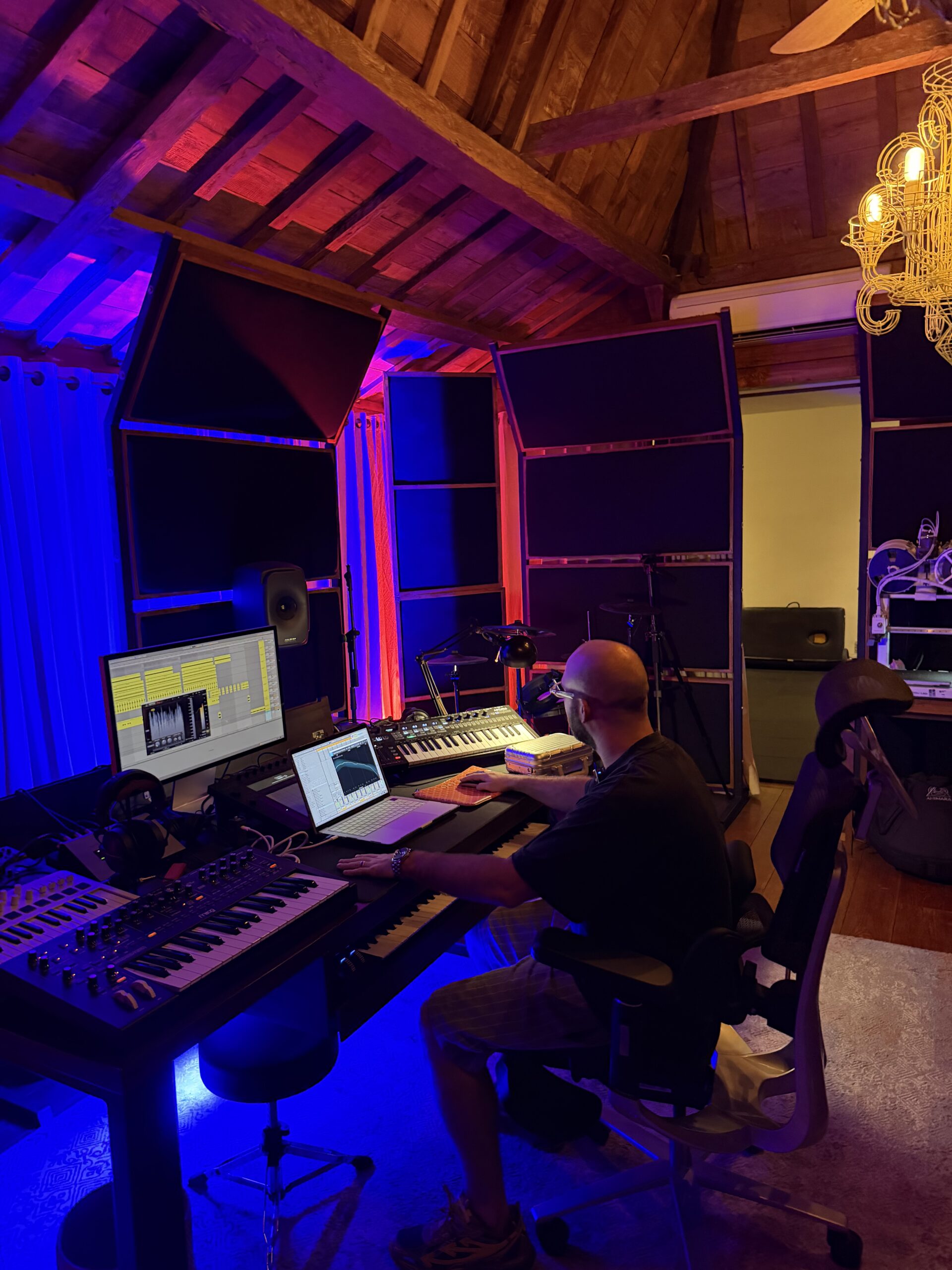
The island has also allowed me to test ideas in very different environments, from intimate gatherings to major venues such as Savaya. I can spend long hours alone in the studio and then immediately understand how the music communicates on a real dancefloor.
More importantly, Bali is where I had the freedom to rebuild my life around music, so it is inseparable from the identity of STAY GOLDEN.
Through TOTEM Society you’ve moved beyond being simply the DJ on the bill to creating the entire environment around an event. What did you feel was missing from conventional club experiences that made you want to build something of your own?
I didn’t create TOTEM Society because I believed conventional clubs were fundamentally wrong. I wanted a platform where the experience could be considered as a whole rather than beginning and ending with a DJ booking.
My multimedia background and my time at Burning Man had shown me how powerful music becomes when the space, atmosphere, visual language and community all support the same intention.
TOTEM gave me the freedom to build that complete journey and create a recognisable feeling across different venues. I want people to remember not only which tracks they heard, but how the environment changed their relationship with the music and with one another.
TOTEM Society has appeared at venues including Savaya, Desa Kitsune and Café del Mar. How much does the character of a location influence the music, artists and atmosphere you build around each event?
The location is never simply a container. Architecture, scale, time of day, the landscape and the way people move through a venue all change what the event needs.
Savaya has a dramatic open-air energy and a sense of scale, while a more intimate space allows for a different kind of tension, detail and closeness between the artist and audience.
The identity of TOTEM remains consistent, but it should respond to its surroundings. We consider the musical arc, artists, visual language and pacing in relation to the venue rather than applying exactly the same formula everywhere.
For me, a successful event feels as though it could only have happened in that place on that particular night.
You’ve also performed regularly around Burning Man. Has experiencing music in that environment changed your understanding of what a dancefloor can be and the kind of connection that can exist between strangers?
Absolutely. Burning Man taught me that a dancefloor can become a temporary community rather than a crowd consuming entertainment. People travel together, build camps and stages from the ground up and contribute to an environment that only exists because everyone takes part. That changes the relationship between artist and audience.
In that setting, music can create trust and connection between strangers very quickly. Status becomes less important than participation and shared presence. It influenced the way I perform, but also the kind of situations I want to create: moments where people feel that they are inside the experience together rather than simply observing it from the outside.
Given that Silent Covenant is fundamentally about invisible human connections, is there a relationship between that philosophy and what you’ve experienced through Burning Man and TOTEM Society?
Yes, very directly. Burning Man and TOTEM Society both showed me that some of the most meaningful relationships are formed while people are creating or experiencing something together. A moment on a dancefloor can connect people who may never even speak, but the emotion and memory remain real. Those people have shared something that can be difficult to communicate in words.
That is the essence of Silent Covenant. The album is personal, but its central idea is collective: trust, shared experience and the nonverbal understanding that can pass through music. The record translates into sound what I have repeatedly witnessed in those communities.
STAY GOLDEN
Your music has already received support from artists across quite a broad spectrum, from Lee Burridge and Black Coffee to Richie Hawtin and Marco Carola. Does that diversity reassure you that you don’t necessarily need to fit neatly within one genre?
It does. I’m grateful that artists with very different musical languages can find something in my work. It suggests that emotion, atmosphere and groove can communicate across genre boundaries. That diversity gives me confidence to continue developing rather than reducing the project to one easily explained category.
At the same time, I don’t want outside approval to become the definition of the music. Trends and genre labels move very quickly. What makes a release recognisably STAY GOLDEN is the internal feeling: it should create a world, tell a story and produce both an emotional and physical response. The form can continue evolving as long as that centre remains honest.
After arriving on All Day I Dream with a debut album that deliberately pushes at the edges of the label’s established sound, where do you want to take STAY GOLDEN next?
Silent Covenant feels much more like a beginning than a destination.
I want to continue exploring the intersection between the emotional depth of organic and melodic house and the stronger groove, funk and indie-dance energy that has emerged through this album. I’m already thinking about the next chapter with All Day I Dream and how far this new direction can develop.
There is also a collaboration with KANT and Tube & Berger planned for Armada, as well as a release on Serge Devant’s label, This Moment, featuring a remix by Serge himself.
Each project explores a different side of my sound. I don’t know exactly where that evolution will lead yet, and honestly, that uncertainty is one of the things that excites me most.
What else is coming up for STAY GOLDEN in terms of releases and performances?
Alongside Silent Covenant, I have several new releases and collaborations in progress. The Armada collaboration with KANT and Tube & Berger shows a different side of my production, while the release on This Moment and Serge Devant’s remix take the music into another emotional space.
On the performance side, shows in Bangkok and Singapore are being planned, as well as a performance with Lee Burridge at Savaya Bali. I’m also hoping to return to Burning Man and perform there again.
For me, all these projects are connected by the same intention: to keep developing the STAY GOLDEN universe through music, events and collaborations without limiting it to one genre or format. I’m more excited than ever about what is coming next.
STAY GOLDEN – Silent Covenant is out now on All Day I Dream. Grab it on Beatport HERE.
Head to Beatportal to read The Night Bazaar exclusive interviews in partnership with Beatport HERE.