




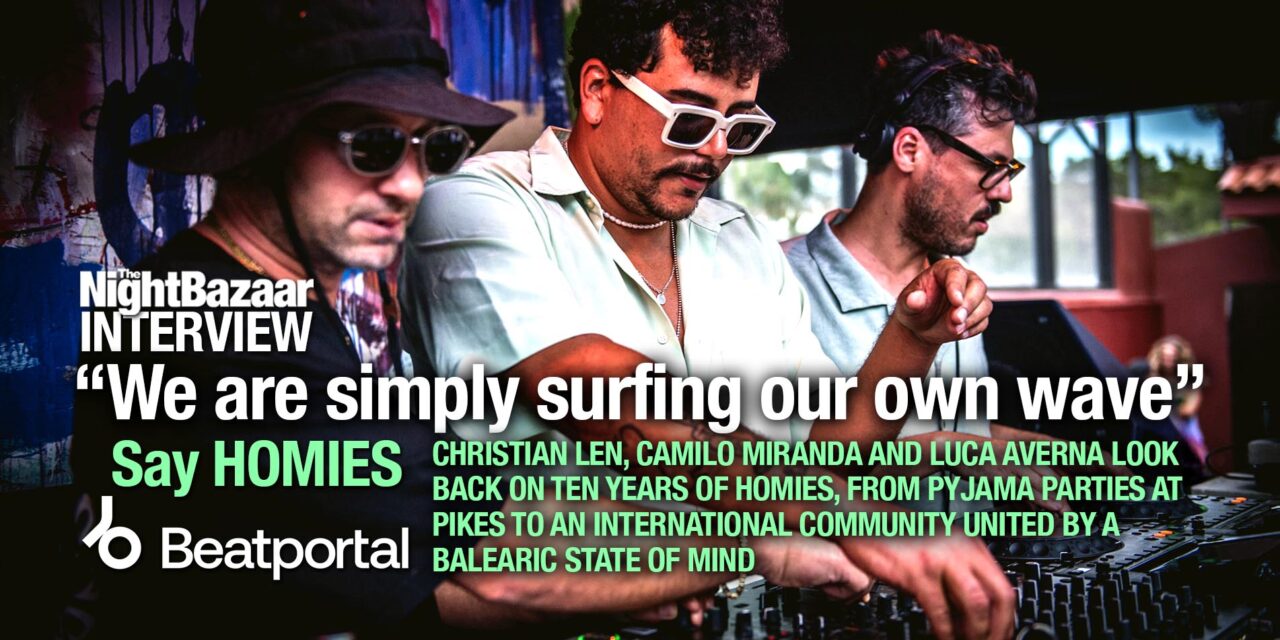
What began as a pyjama party at Pikes has evolved into a decade-long celebration of music, friendship and the open-minded spirit of Ibiza.
Founded by Christian Len and Camilo Miranda and later joined by Luca Averna, Homies was created as an alternative to conventional club culture, a place where people, connection and musical discovery matter more than the DJ booth.
Ten years on, that philosophy has grown into an international Balearic community, celebrated through parties around the world and the three-part compilation series that concludes with Homies Vol. 3. We caught up with Christian, Camilo and Luca to discuss the collective’s beginnings, what Balearic means to them today, the changing face of Ibiza, the importance of friendship and why the best parties should always make you feel at home.
Looking back over the last ten years, what does the word “Homies” mean to you today compared to when you first started
CHRIS: It means something slightly different today, although the spirit remains the same.
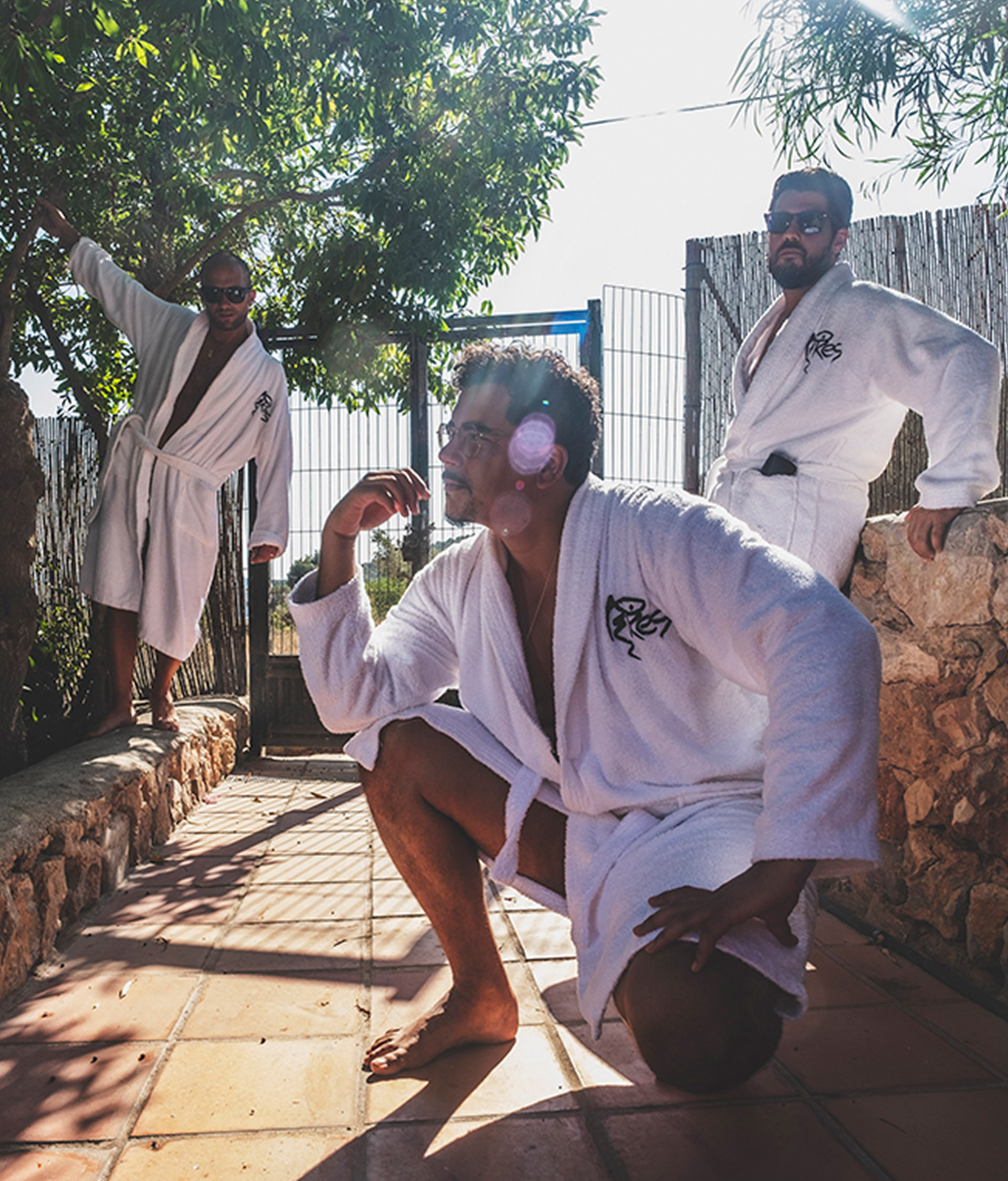
At the beginning, we wanted to recreate the feeling of being at home: the comfort of a house party, where you do not need to show off, where you can be honest, sincere and express yourself freely. We translated that idea quite literally into the events, using domestic elements such as beds, pillows, pyjamas and slippers—everything that could make the space feel like a real home.
Over time, we learned to express that feeling through our attitude, our way of being and our relationship with the international Balearic community: the fans, DJs and people who share this Balearic state of mind. They became our homies, whether they were in Los Angeles, Bali or London.
So the feeling is still the same, but it has evolved. At the beginning, Homies was more about creating a real house party. Today, it represents an international community of like-minded people. Balearic Homies.
The idea of recreating the feeling of a house party in club spaces is central to Homies. What was missing from Ibiza’s nightlife that inspired you to create that experience?
CHRIS: Personally, I was already bored with the traditional dynamics of Ibiza’s clubs eleven years ago, and even more so now. There was often something too serious about them, too much showing off, and too much focus on everything surrounding the party rather than the party itself.
For us, the most important element of any party is the people. The music matters, of course, but you need both. We wanted everyone to feel genuinely welcome—to come as they are, express themselves freely, have fun, be playful, childish, sexy or whatever they felt like being, but always within an honest, warm and intimate atmosphere.
That was what we felt was missing. In a way, we simply created the kind of experience we wanted to feel and live again. That is how many things begin: when something does not exist, you have to invent it for yourself.
CAMILO: Like Chris, I had also become quite disillusioned with what was happening in many of the bigger clubs. But for me, it was also a personal search. I was trying to find a sound and a way of expressing myself that felt more in tune with the ideas I had—and still have—about music and parties. What was missing was a place where that vision could actually exist.
Everything changed the first time I came to Pikes. I went to see DJ Harvey during the first season of Mercury Rising, and something clicked immediately. Musically, it felt like I had found what I had been looking for. Then there was the venue itself. It had a completely different energy from anything else on the island.
At the beginning of that summer, we had been organising rooftop parties in Barcelona. They were real house parties, often in private homes, with that slightly illegal feeling that made them exciting and unpredictable. When we arrived at Pikes, it felt like the natural evolution of that idea. We looked at each other and thought, this is home.
The more time we spent there, the more we realised we had found the right place and the right people. What had started as a search for a different way of expressing ourselves suddenly became a reality. Personally, that feeling became even stronger when I started playing regularly at Pikes. Homies had found its home there, and so had I.
Your first event was a pyjama party at Pikes. Did you know from that night that you were onto something different?
CHRIS: It was clearly something different, but we were not trying to be different just for the sake of it. We were thinking about what people might need in order to enter a party and immediately shift their mindset—to feel that they were participating in something rather than simply attending it.
Asking someone to put on pyjamas already changes their attitude. You become more comfortable, more exposed in a way, and perhaps more sincere. It breaks down certain barriers and invites you into another state of mind.
So yes, it was different, but that was not the objective in itself. We created it because it was something we genuinely felt we needed. The difference came naturally from that need.
CAMILO: The original idea partially came from my ex-wife, Marina, who was deeply involved in the visual identity and production concept of those early Homies parties. She was always thinking about how we could create an environment that felt surprising, immersive and a little mind-blowing from the moment people walked through the door.
From the very beginning, it felt like we had discovered something special. Interestingly, we never organised another pyjama party after that first one. We launched Homies in October 2014, during the quieter winter season, then followed it with a Christmas party, and from there we kept evolving, finding new ways for people to interact with the space and with each other.
That was always the goal: to make people feel like they weren’t just attending the party, but actively contributing to it. We wanted everyone to feel they had their own role in creating the atmosphere, that the party belonged to them as much as it belonged to us.
I still remember putting a bed in the middle of the dancefloor and filling it with feather pillows. By the end of the night, the entire room was covered in feathers. Looking around at that scene, it was impossible not to think, something really special just happened here. It’s still one of the most memorable parties I’ve ever experienced.
The Balearic sound is often described as impossible to define but instantly recognisable. How would each of you explain what Balearic music means in 2025?
Homies
CHRIS:I always remember something the cheeky DJ Harvey told me when I first interviewed him: “Balearic is the music played in the Balearic Islands, and that’s it.” Over the years, I realised there was much more truth and ambition in that statement than it first seemed.
Almost any kind of music, when played in the right setting and with the right approach in Ibiza, can suddenly sound different. It can sound Balearic. It is less about a specific genre or tempo and more about the attitude behind the selection: challenging, playful, cheesy, obscure, colourful, bright, slow or fast.
Lately, for example, I might play music at 140 BPM alongside tracks that are close to pop, electro or psychedelic rock. That diversity is essential. We are all made up of different influences, emotions and tastes and Balearic music allows us to express all those different sides of ourselves honestly. For me, that openness, freedom and diversity are what Balearic means today.
LUCA: For me, Balearic has never been a genre—it’s a mindset. It’s the freedom to play disco, house, new wave, afro, dub, rock or anything else, as long as it creates an emotion and fits the moment.
In 2025, I think the true meaning of Balearic is still about being open-minded and not following trends. It’s about digging for timeless music, trusting your taste and taking people on a journey instead of worrying about genres or BPMs.
Ibiza has changed a lot over the years, but I still believe that spirit is alive. For me, Balearic means keeping that original curiosity alive, respecting the island’s musical heritage while continuing to discover and share music that has soul, regardless of when or where it was made.
CAMILO: Balearic when it first emerged, it was something very niche that was happening on the island. But, there were other movements developing around the world at the same time, like Afro/cosmic in Italy or New Beat in Belgium. There were probably many others too. I also think about stations like WGPR – FM that was very influential for people like Juan Atkins and Derrick May, because there was an incredibly eclectic selection of music being broadcast. When you’re exposed to that kind of diversity, your mind expands, and suddenly your choices as a DJ become much broader.
What connected all of these scenes wasn’t a genre but a shared mindset. They brought together like-minded people who were trying to think differently, to explore music without boundaries.
Today, I think Balearic means something similar, but on a global scale. It defines an international community of people who share that same open-minded approach to music and life. Personally, Balearic music has connected me with people from all over the world in a very authentic way, and those human connections have expanded my horizons just as much as the music itself
Homies
Homies Vol. 3 completes your compilation trilogy celebrating ten years. What story does this final chapter tell that the previous two couldn’t?
LUCA: Honestly, I see all three volumes as one continuous story. The decision to split them into three releases wasn’t part of the original concept—it simply happened because we ended up with too many great tracks to fit into a single compilation. So Homies Vol. 3 doesn’t tell a completely different story; it completes the journey. It’s the final piece of a bigger picture, bringing together the artists, the sound, and the spirit that have defined these ten years.
Luca, you curated this compilation. What guided your selection process and what emotions or journey did you want listeners to experience from beginning to end?
LUCA: I wanted every artist to feel completely free, so I simply asked them to send me the music they genuinely felt represented them, without giving too many directions. From everything I received, I selected the tracks that felt the most Homies. Some artists only sent me one track, but it was perfect from the start—there was no need to ask for any changes.
The people involved in this compilation are all part of the Homies family, so they already understand our universe and the identity we’ve built together over the years. That’s what made the selection process feel so natural.
With this compilation, I wanted to capture the full spectrum of our sound and our community. It’s a journey that moves from downtempo and more introspective moments to energetic, club-driven tracks, reflecting the different moods and atmospheres that define Homies. More than a collection of songs, it’s a snapshot of who we are and what we’ve created together over the last ten years.
The compilation features artists like Lovefingers, DJ Pippi, Rune Lindbæk and Laurence Guy alongside emerging producers. Was it important to balance established Balearic names with newer voices?
CHRIS: This question is probably more for Luca, but I think that balance came quite naturally. We brought together people who are close to us and who share the same state of mind and approach to music.
That naturally includes different generations: younger artists, older artists, people deeply connected to Ibiza, and even people who may have visited the island only once but immediately understood this way of being, selecting and playing music.
It was less about deliberately balancing established and emerging names, and more about bringing together people who genuinely share the Homies spirit.
Homies – www.laskimal.com
LUCA: Christian answered this question perfectly, and I couldn’t agree more. The balance happened very naturally because Homies has always been about people rather than status or popularity.
For us, it’s never been about whether an artist is established or emerging. What really matters is having a genuine connection, sharing the same musical vision, and understanding the spirit behind what we do. That’s why you’ll find artists from different generations and backgrounds on the compilation. They all bring something unique, but they all share the same passion for discovering and playing timeless music.
In the end, that’s what Homies has always represented: a community of like-minded people connected by music, curiosity, and a shared love for digging and musical discovery.
The collection feels designed as much for sunsets, beaches and road trips as dancefloors. Were you intentionally creating a soundtrack to a lifestyle rather than simply a club record?
LUCA: You said it perfectly: it’s really about a lifestyle. Homies has never been just about the dancefloor. It’s about the moments that surround the music—the sunsets, the beach, long drives, afterparties, mornings after, and all the memories created along the way. I wanted this compilation to reflect that feeling.
Of course, there are tracks made for clubs, but I also wanted people to be able to listen to the compilation anywhere and feel connected to the Homies universe. It’s a soundtrack for different moments of life, not just for one place or one time of day. That’s always been the spirit of Homies.
You’ve described the artists on the compilation as part of the “true Ibiza community”. What defines that community today, especially as the island continues to evolve?
LUCA: Yes, I really see it as a community. It’s a side of Ibiza that feels quite separate from the direction the island has taken in recent years. Personally, I think the club scene has lost some of the essence that made Ibiza world-famous in the first place. But I’m only talking about the club culture—the island itself is still an incredibly beautiful place, full of energy, creativity, and a unique spirit that continues to inspire people from all over the world.
This compilation is also a statement that says: we’re still here. There are still artists and people creating music with passion, authenticity, and a strong sense of identity, outside of the island’s mainstream sound.
We’re not trying to follow trends or fit into what’s popular at the moment. We want to stay true to who we are and to the values that Homies has always represented. For us, protecting that identity is essential, and this compilation is our way of saying that there’s still another side of Ibiza, one that remains authentic and true to its roots.
Homies
Ibiza often gets reduced to its superclubs, but Homies champions another side of the island. What do you hope visitors discover beyond the headline venues?
CAMILO: I hope people who come to Ibiza discover the full spectrum of the island’s talent, its underground scene, and the smaller venues that give Ibiza so much of its character. There are so many different sides to the island, but what is usually broadcast to the world is the image of the superclubs, the huge parties, and the big-name DJs.
So much of what makes Ibiza special goes untold. There is a whole creative community that exists just outside that spotlight, quietly shaping the island’s musical identity. In many ways, that side of Ibiza has lived in the shadow of the bigger clubs.
I think that’s slowly beginning to change, thanks to the work of many artists, promoters and communities who have continued to believe in a different vision of the island. I hope visitors become curious enough to explore beyond the obvious, because that’s often where they find the most authentic experiences, the most memorable moments, and the people who truly make Ibiza what it is.
Many people first encounter Ibiza through nightlife. What keeps you inspired to stay connected to the island after all these years?
CAMILO: Ironically, one of the things that keeps me connected to Ibiza is leaving it from time to time. Anyone who has lived here for a while will probably tell you the same. I love spending the winter on the island, reconnecting with its quieter side—the crystal-clear water, the nature and the slower rhythm of life—but travelling is equally important.
Going around the world, meeting new people and discovering new ideas constantly brings me fresh inspiration. Every trip gives me something that I can bring back to Ibiza, whether it’s music, friendships or new collaborations. It also allows me to connect the island with people who share the same state of mind, wherever they come from. I think that’s one of the most beautiful things about this community.
I’ve lived here since 1998, so I’ve seen Ibiza change many times. Some things have improved, others have disappeared, but the island has never stopped inspiring me. Even after more than twenty-five years, I’m still discovering new places to eat, new corners of the island, and, most importantly, new people to welcome into my community and share life with. That’s what keeps Ibiza alive for me.
You’ve said you’re tired of the traditional club dynamic where everyone faces the DJ booth. What makes a great party for you, beyond the music?
CHRIS:A great party is always about the people first. You can have an amazing DJ playing great music, but sometimes the crowd does not know how to interact with it, or the venue does not create the right conditions. Ultimately, it is the people who generate the energy.
What makes a party truly memorable are those honest moments of connection: a conversation with a close friend, or with someone you have just met at an afterparty, when suddenly you find yourselves talking about transcendental philosophy. That unexpected energy you feel with another person for the first time is what can make a party, a conversation or any shared experience feel special.
This only happens when clubbers are made to feel like the real protagonists. Simply watching a DJ and taking photos turns people into passive spectators. We want active participants. We want the people on the dancefloor to feel like the stars.
Of course, the right music and the right selection can make people lose themselves, connect with their own emotions and return that incredible, joyful energy. But without the clubber as the protagonist, everything else becomes meaningless.
Some of your favourite venues like Pikes, La Terrrazza, Renate and Sisyphos share a certain atmosphere. What qualities make a venue feel like a Homies venue?
CAMILO: The common denominator is the people. These places attract a genuinely mixed crowd in every sense: different ages, backgrounds, sexual orientations and walks of life. I think that’s what makes a place truly special. Everyone arrives with their own way of understanding music or connecting with the experience, but once they’re on the dancefloor, they’re all speaking the same language.
For me, that’s essential. A great party is about creating a space where people who would probably never meet anywhere else can dance together, talk to each other and share something genuine.
It reminds me of the early days of Ibiza, before VIP culture became such a defining part of clubbing. There were no exclusive areas separating people. You could have Mick Jagger chatting to a gardener, standing next to the owner of a local bar and nobody cared who was who. That melting pot was what made those places magical and I think venues like Pikes, La Terrrazza, Renate or Sisyphos still preserve a little of that spirit.
The other thing they have in common is that they encourage people to experience the night in different ways. They all have different rooms, different corners, different spaces where the music changes and the atmosphere evolves. You spend time on the dancefloor, then you step outside, start talking to someone, and suddenly realise you share the same outlook on music—or even on life. Those moments of connection are just as important as what happens behind the DJ booth, and they’re a big part of what makes a venue feel like a Homies venue.

Homies – @GabiEscalofrios
Friendship is mentioned throughout your story. How important are trust and personal connection when building a collective like Homies?
CHRIS: Trust is the most important value in any partnership or community. You can disagree with your business partners, your friends or the people on your team, but trust is what allows the relationship to keep working.
A team functions through trust. To use a football analogy, Spain can compete against a team full of French superstars because every player knows where their closest teammate will be. They trust that, when something goes wrong, someone will cover them. They do not even need to look.
That kind of trust takes time to build, but it is the most valuable capital a community can have. It is not money. It is the human ability to understand one another, including each person’s fears, insecurities and different ways of seeing things.
A sense of humour is also essential, as is not taking everything too seriously. That is one of the reasons we have stayed together for so long. We are different, we understand things differently and we do not always share the same perspective, but the trust between us holds everything together.
CAMILO: From the very beginning, working with Christian has been one of the easiest and most natural professional relationships I’ve ever had, and it still feels that way today. Maybe it’s because Balearic is more than a musical style—it’s a state of mind—and we’ve always shared that way of seeing things. Even now, as we’re thinking about how Homies can continue to grow, it feels like we’re still navigating in the same direction. I really cherish that, and I’m incredibly grateful for it.
The same applies to the relationships we’ve built with other communities, crews, venues and promoters over the years. They have never started as business opportunities. They always begin with a feeling, with a genuine understanding of each other, and only then do they become professional collaborations.
For me, that’s the most fulfilling way to work. When you already share the same values and the same vision, everything else becomes much easier. You don’t have to convince people of what you’re trying to do, because they already understand it instinctively. You’re simply expressing something together, and that creates a much deeper and more meaningful connection.
Vinyl culture has clearly influenced Homies’ identity. How has collecting records shaped your approach to DJing and discovering music?
LUCA: I grew up with vinyl records—they’ve been part of my life for as long as I can remember. I learned to DJ on vinyl, and even today I still buy records regularly. For me, collecting isn’t just about owning music; it’s about the thrill of discovering it.
I love spending hours digging through flea markets, second-hand record shops, or buying entire collections just to uncover hidden gems, forgotten tracks, or labels I’ve never come across before. That sense of discovery is something you simply can’t replicate with algorithms or streaming platforms.
Digging has shaped the way I DJ. It has taught me to be curious, patient, and always search for music with personality and a story behind it. I enjoy surprising people with records they don’t expect rather than just playing what’s popular. That’s a big part of Homies’ identity too—sharing timeless music and creating connections through unexpected discoveries.
Is there a track on Homies Vol. 3 that perfectly sums up the spirit of the collective?
LUCA: It’s really difficult to choose just one track. I’d say that every record on Homies Vol. 3 represents a different side of the Homies musical universe. Each artist brings their own personality and influences, but together they create a cohesive journey that reflects what Homies is all about.
The compilation was carefully curated to showcase the diversity of sounds we love, from Balearic and house to disco, new wave, and leftfield influences, while maintaining a strong identity throughout. Rather than having one track that defines the collective, I think it’s the combination of all of them that truly captures the spirit of Homies. The compilation is meant to be experienced as a whole, with each track playing an essential role in telling our story.
Looking back over the past decade, is there one night, one sunrise or one unexpected moment that captures everything Homies is about?
CHRIS:I think the very first party already established so many of the things that Homies would later become, even if at the time we did not fully realise it. It was almost like a vision taking shape before we even understood it ourselves.
We put a bed on the dancefloor, filled the space with pyjamas and pillow fights, and created this atmosphere of total joy and freedom. There is one image I always remember: a girl surrounded by feathers, with a look of pure happiness on her face. That says a lot about what Homies is.
Another very special moment for me was Renate. In the end, it is a house, so bringing Homies there felt incredibly natural. It was like finding, in Berlin and with Berlin’s own spirit, a place that could also hold the sweet, intimate spirit of Homies. That was one of those moments when you suddenly think: yes, this is it.
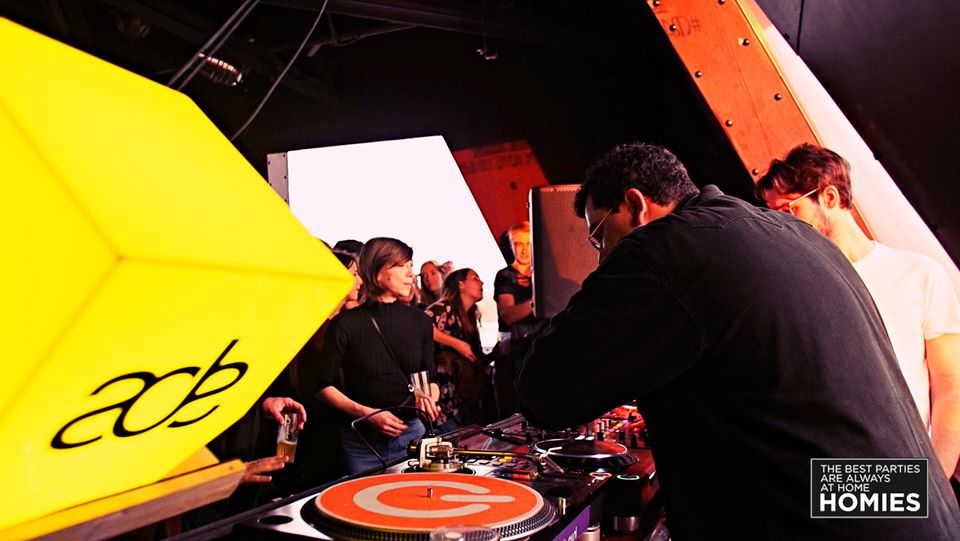
Homies
CAMILO: The very first pyjama party will always be one of the most unforgettable nights we’ve ever had. It set the tone for everything that followed. There have also been many incredible nights at Pikes since then, especially over the last couple of seasons, when the musical level across all the different spaces has been exceptional. Seeing every room complement each other and create one continuous journey has been really inspiring.
But one moment that stands out happened in Berlin, at Studio 1111, where we organised a special tribute to the late DJ Alfredo together with his son, Jaime Fiorito. Rather than simply putting on a party, we wanted to bring a little piece of Ibiza to Berlin.
We cooked for everyone, shared tortillas, gildas and food with friends, held a conversation about Balearic music, Alfredo’s legacy and the origins of what we do, and then spent the rest of the day playing music together. It became much more than a club event. It felt like a genuine cultural exchange, where music, food, conversation and friendship all came together in the same spirit. For me, that’s what Homies is really about
After celebrating ten years, how do you keep evolving while staying true to the ethos that people have fallen in love with?
CHRIS:I would say that we are curators of ethos more than curators of DJs or music. Of course, we are deeply moved by music. We are passionate about it; we breathe music. But what we have always fallen in love with first is the ethos of the person. We fall in love with the person, and that is why it is a Homies thing.
In the end, we want to have fun, enjoy ourselves and feel excited about sharing something together. That is why, even as the party evolves, the ethos remains the same. It is about this Balearic state of mind, about openness, connection and sharing.
We are simply surfing our own wave. The project is becoming bigger and more serious, but ethically and emotionally, we are still doing the same thing and acting with the same intentions: to have fun and enjoy life.
Finally, if someone has never experienced a Homies party before, what do you hope they feel when they walk through the door, and what do you hope they’re still thinking about when they leave?
CHRIS: We hope that the moment people cross the door and enter the dancefloor, they feel a click in their minds: “I want to be friends with all these people. I want to share, I want to dance, and I know I am going to have a smile on my face because I can already feel it in the air.” That would be amazing. That is our intention.
And when they leave, we hope they feel that they belong to something. Maybe they even leave thinking that one day they would like to sit down have a drink, speak about life and invite us to a paella.
CAMILO: I completely agree with what Christian said. That’s exactly the feeling that makes everything worthwhile
For me, the perfect ending to a Homies night is when someone you’ve only just met wants to sit down with you afterwards and keep the conversation going. It could turn into a deep philosophical discussion, or it could just be a lot of nonsense and laughter. It doesn’t really matter. What matters is that you leave feeling connected, alive, and completely at ease.
There’s a word we use a lot in Ibiza: “a gustito”. It’s that feeling of being exactly where you’re supposed to be, surrounded by people who make you feel comfortable. If someone walks away from a Homies party feeling that, then we’ve done our job
Homies 10 Year Anniversary album is being released on Beatport across three parts. Volume 1 is out now. Grab it HERE.