




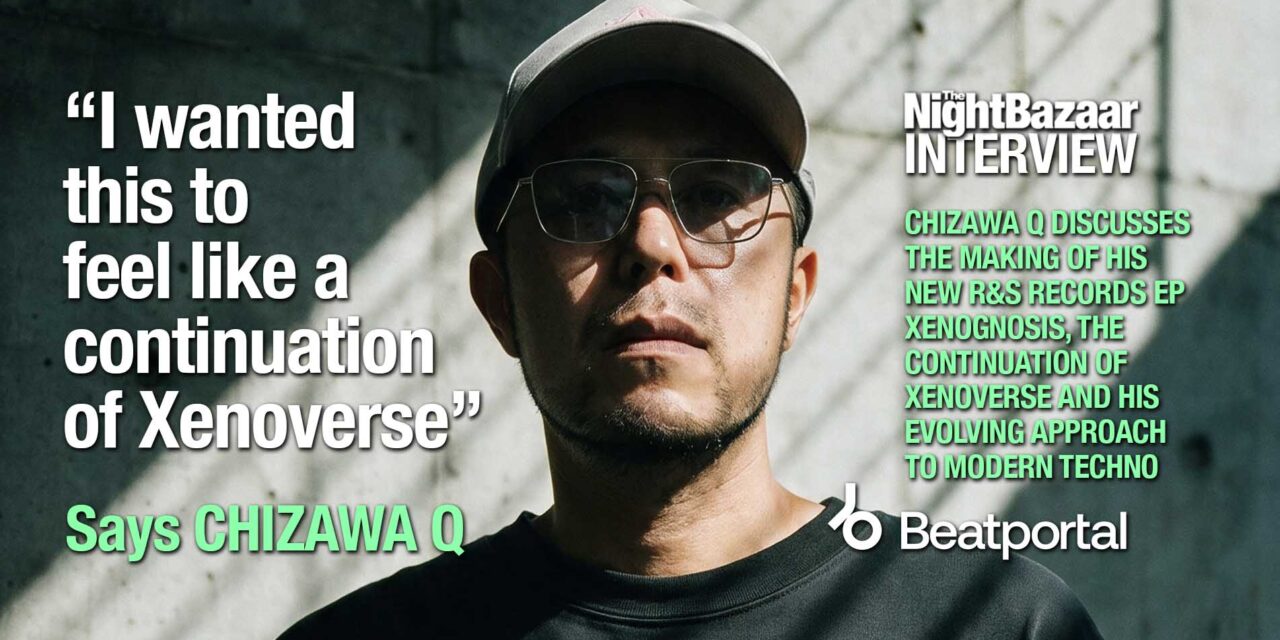
Blending dub-infused atmospheres, subtle jazz influences and echoes of Detroit techno, the release further cements his reputation as one of the label’s most distinctive contemporary voices.
We caught up with Chizawa Q to discuss the ideas behind Xenognosis, the importance of restraint, his evolving creative philosophy and why making timeless music will always matter more than following trends.
Your previous album was titled Xenoverse and now we have Xenognosis. Both titles suggest an imagined world, but “gnosis” implies a deeper form of knowledge or understanding. What does Xenognosis represent to you and how does it expand on the universe you began exploring with Xenoverse?
I wanted this to feel like a continuation of Xenoverse. The album was almost a soundtrack for imagining landscapes no one has ever seen, and with Xenognosis I wanted to go a step further inward, from the scenery into the mind itself. It’s music that works on your consciousness rather than just painting a picture. If people feel a new kind of acid sensation in it, something emotional but at the same time wide awake, that would make me really happy.
The three tracks were actually born separately, each with its own story behind it. But at some point I had this feeling that they belonged to the same world, and as I kept refining them they naturally settled into a set of three. So it wasn’t planned as a single story from the start. It’s more that the story revealed itself along the way.
You’ve spoken before about making music that feels timeless rather than chasing contemporary trends. Has your definition of timelessness changed since releasing Xenoverse, or has this EP reaffirmed those principles?
If anything, it’s been reaffirmed. I can tell that the people who connect with my music aren’t listening to it because it’s fashionable right now. As long as those listeners are out there, I don’t want to get too caught up in the times or trends. An artist I really look up to, someone like an older brother to me, once told me: “Music like yours will always find people who love it, whatever the era.” That stayed with me. I want to keep making music that can’t be measured by any particular yardstick.
There’s a remarkable sense of restraint throughout your productions. Even when the arrangements become intricate, there’s always room for the music to breathe. Is leaving space in a track something you consciously compose or does it emerge naturally during the writing process?
Leaving space is something much deeper than it first appears, I think. When I was younger I had far too much energy to leave anything alone, so it’s something that came gradually with experience. In Japan, the sensibility of Zen is always somewhere close by in daily life, and I feel there may be a connection with that sense of space and balance.
Dub has always been a big element of another side of me as an artist, and lately that side has been growing, so it’s probably more audible now than before. “Ocean 9” is a kind of bridge from Xenoverse. You can still see a landscape in it, but it leads toward that unknown consciousness beyond. It might sound strange coming from me, but when I listen back to this track, something deep inside gets stirred. I felt that even while I was making it.
Jazz has always shared DNA with techno through improvisation and rhythm, yet “Squeaker” approaches those influences in a subtle way rather than borrowing them outright. What attracts you to weaving these musical languages together?
Techno has this inorganic coolness and pleasure, in the best sense of the word. Jazz is the opposite: emotion and humanity expressed directly through the music. They seem like polar opposites, but there’s a line where the two interact in an incredibly cool way. If the balance is off, it easily turns into something dull. But along that line, I think there’s still so much left to explore.
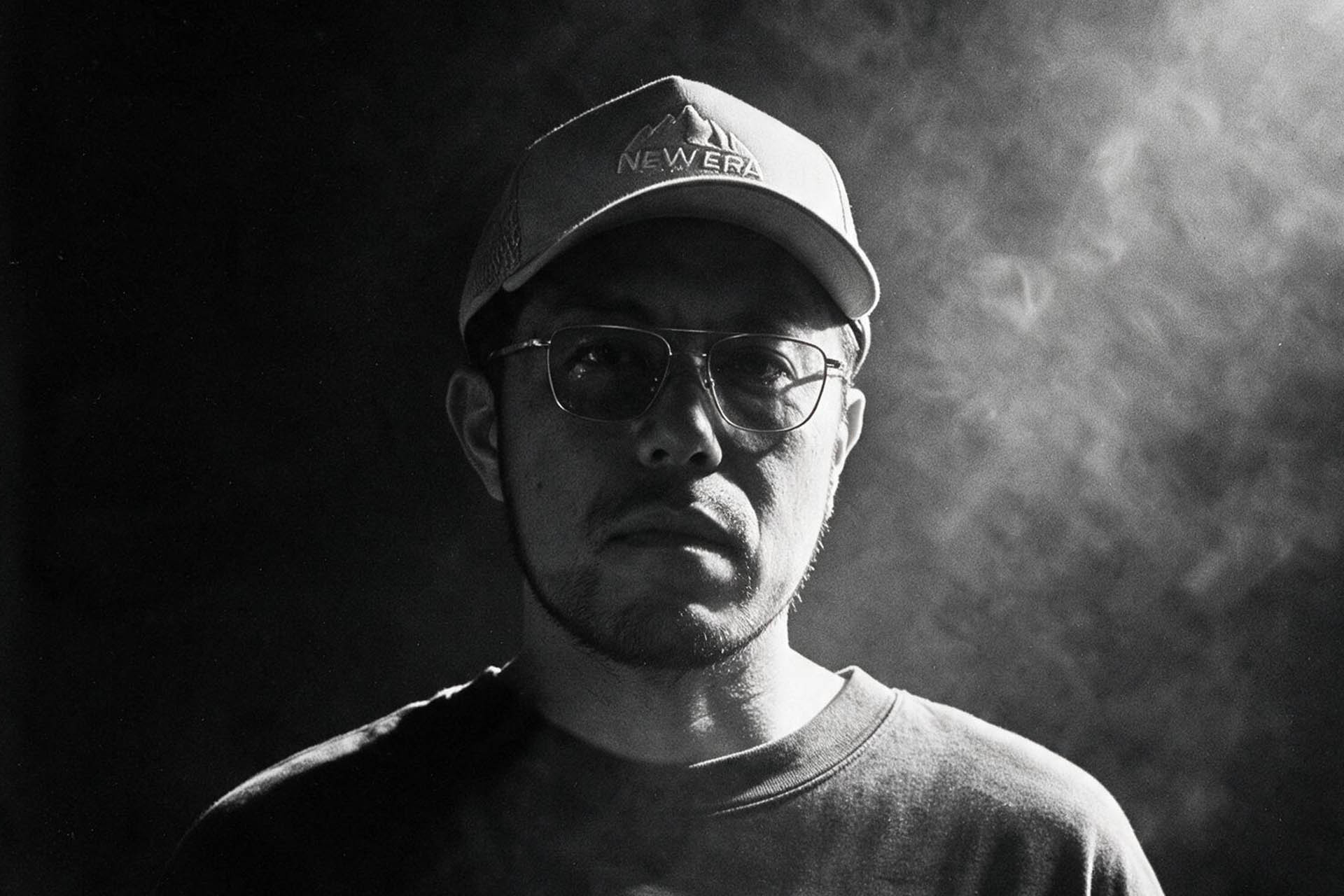
Chizawa Q
The closing track, “Moiré”, carries echoes of classic Detroit techno without feeling nostalgic. How do you pay tribute to the genre’s origins while still making something all of your own?
All the incredible music and styles I’ve absorbed from the pioneers have spent years maturing inside me, becoming nourishment for my own expression. The best balance, I think, is being able to see your own identity from just the right distance, not clinging to it too tightly but never losing sight of it either. And if that’s happening naturally now, without me forcing it, then maybe this is the best period I’ve had.
When you’re composing, are you imagining people dancing in a club, listening alone at home or do those distinctions disappear for you?
Both, really. With the more dancefloor-driven tracks I do picture the floor, and the deeper ones feel closer to something personal, almost one-on-one. But going forward, I’d like to make music that isn’t too conscious of any of that, including the track’s own sense of time, and just let it exist more freely.
Since signing with R&S Records you’ve become part of a catalogue that has long championed artists who challenge techno’s conventions. Has working with the label encouraged you to take greater creative risks?
To be honest, I still can’t quite grasp how I fit into the image of techno that R&S represents. That’s probably something for a later era to judge. What I do know is that I’ve been taking on challenges here that I wasn’t attempting anywhere else. And maybe that’s a good thing: making whatever you please is one kind of freedom, but having a context and history like that around you creates a different kind of challenge.
Compared to your earlier work, do you feel you’ve become more deliberate as a producer or more intuitive? Has experience taught you to think harder about your decisions or to think less?
Experience naturally makes you more deliberate; planning becomes second nature as your career goes on. But the real danger is that intuition quietly slips away in the process. There are things that can only be born by not overthinking and simply trusting your gut. So maybe it’s less about choosing between the two, and more about knowing when each one should lead.
The title “Moiré” refers to visual patterns created when two structures overlap. Was that concept something you explored musically, through rhythm, harmony or texture or did the title emerge after the composition was complete?
The title came early, when the track was still in its prototype form. From the beginning I was conscious of things overlapping, not only sounds but different elements and ideas layering on top of each other. When things overlap, they create waves, a kind of undulation. This track is about believing those waves can become good ones.

Chizawa Q
Many producers speak about developing a recognisable signature sound, yet your catalogue continues to shift between different moods and tempos. Is maintaining a fixed identity important to you, or do you see evolution itself as your signature?
I don’t think “my sound” has to mean the same mood, tempo or style every time. I love metal and rock, gritty old funk, dub. All of that is me too. Right now techno is the language I’m expressing myself in, but one day I might make something completely different. In that sense, change and diversity are also part of my identity.
You’ve described your creative process in the past as being driven by curiosity. What are you most curious about now that perhaps wasn’t occupying your mind two or three years ago?
Lately I find myself drawn more and more towards analogue sensations, almost as a reaction against everything becoming digital. At the same time, cutting-edge technology fascinates me just as much. So what I’m most curious about now is how to strike that new balance between the two. That wasn’t really on my mind a few years ago.
Looking back at the release of Xenoverse, is there anything you learned from listeners’ reactions that unexpectedly influenced the direction of Xenognosis?
Xenoverse came right after a long blank period when I hadn’t been making music at all, so it was almost pure initial impulse. I couldn’t really imagine who would be listening. What’s changed is that now there are people out there who heard that album, and I find myself wondering how they’ll react to what comes next. Making music with that in mind feels like a challenge in a good way. And that’s something I simply couldn’t have done before.
The word “technology” is often central to discussions around electronic music, but your records tend to feel profoundly human. How do you preserve that emotional quality while working with machines?
For me, every track needs to carry some kind of atmosphere or resonance that moves your feelings somewhere, even if only slightly. And that doesn’t change just because it was made with machines.
Chizawa Q – Xenognosis is available to pre-order now on Beatport HERE.
Head to Beatportal to read The Night Bazaar exclusive interviews in partnership with Beatport HERE.