





JUDGE Jules embodies the spirit of dance music.
Since first stepping behind the decks in 1987, he’s been a defining force in club culture, from shaping generations through residencies on Kiss FM and BBC Radio 1 to selling out the world’s biggest festivals and clubs. His weekly Global Warm Up show reaches listeners in over 50 countries, cementing his role as one of electronic music’s most trusted tastemakers.
But in 2025, Jules is far from resting on a legacy. With a calendar packed from Ibiza to UK festivals, orchestral performances to his 10-piece live band project, he continues to push the boundaries of what a DJ can be. We caught up with Jules recently and he speaks with the same passion that’s fuelled him for nearly four decades, the thrill of travel, the craft of curation and the joy of connecting with crowds both familiar and new.
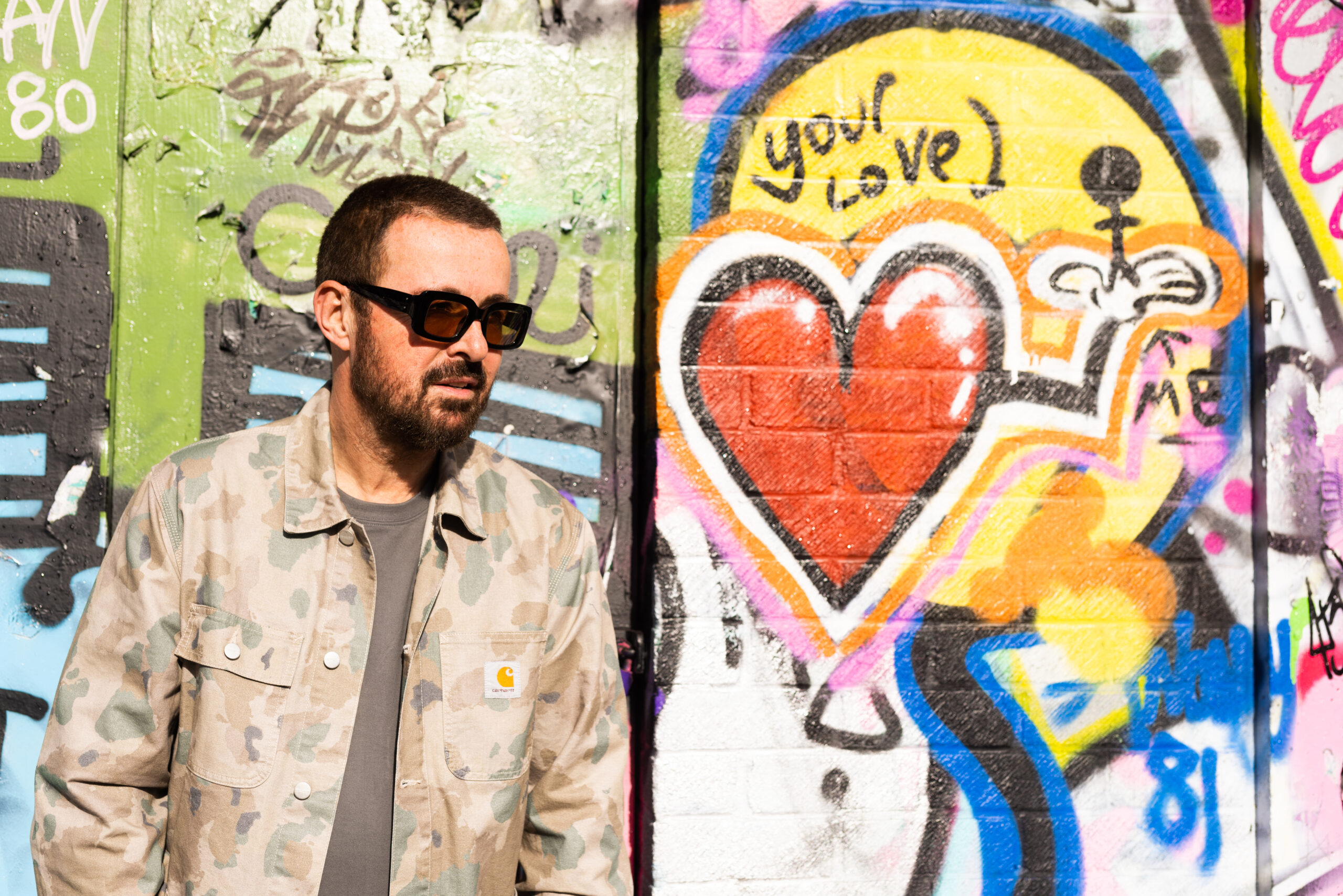
Judge Jules
We discussed the changing face of Ibiza, the evolving nature of radio in the streaming era, the legal pitfalls facing young artists and the delicate balance between the creative and business sides of the music industry. For Judge Jules, it’s not about reinvention, but evolution and staying true to his roots while adapting to a faster, more fragmented musical landscape.
You have a packed 2025 schedule, from Ibiza to a myriad of UK festivals, your live band and orchestral shows. What’s keeping you energised and inspired after all these years?
Firstly, I’m still very grateful that I’ve made a lifelong career out of something that, for many people, is only a hobby. For me, the excitement, the thrill of DJing, isn’t just about the gig, which, of course, is amazing, it’s the traveling. It’s the getting there. It’s the expectation. It’s the sitting in your record room, listening to tunes, thinking about what you’re going to play in your set, working out the travel arrangements, whether you’re flying somewhere, getting the train or being driven the journey to the gig, particularly so if you’re with friends or with a tour manager; it’s the whole big night out. If you remember the movie Human Traffic, which was essentially about a big night out, and the anticipation and the excitement of that big night out – that, I think is in part, what keeps DJing so very exciting because no two Friday or Saturday nights are ever the same as one another. There are always intricacies to them.

Judge Jules
You recently smashed a sold-out tour in Australia and played Dreamscape in California. How do international crowds compare to the UK and Ibiza scenes in 2025?
It’s difficult to talk about one country as a whole. I think if you look at Australia, it’s had a dance scene almost as long as the UK, and musically and culturally, I think Australia reflects the UK. I don’t want to be so bold as to suggest that we don’t reflect certain cultural influences from Australia as well – I mean, Dom Dollar is one of the biggest DJs in the world, as is Fisher, both from Australia. So as far as Australia is concerned, it very much mirrors the UK.
In the US, there are certain real strong epicenters of dance culture that have existed for longer than in other parts of the US. And the entirety of the west coast, from San Diego in the south to Seattle in the north, is hugely strong in terms of dance music. So, one can’t really talk about a comparison of the international scene in general, because everywhere has got its own strengths, and certain places aren’t quite as strong. But I think the greatest joy of being a DJ is going somewhere and not being a tourist, always being invited as the guest of people who really know the scene in their local city.
Tell us more about the live band project. How did it come about? And how do you describe the experience?
I’ve done a lot of orchestra shows, DJing before the shows and curating a couple of them myself. I did my first orchestra show more than five years ago and I was also involved in the curation of the Ministry of Sound orchestra show. But the one thing about orchestra shows is the orchestra can only play what is on the musical score in front of them, whereas what I wanted to do was combine the magic of live musicians playing tracks that people know with more DJ culture, so every track that the band plays is a mash up of different bits of different tracks, mashed together in DJ style. But also, each musician of the 10-piece band has their own moment to shine. They have multiple moments where they can do solos and really be themselves. And that’s what an orchestra can’t do, because orchestras are wedded to the musical score sheet that sits in front of them.

Judge Jules and his live band
You’re still a regular in Ibiza, with upcoming shows at Eden and Ibiza Rocks. What does Ibiza mean to you today compared to your early days on the island? Ibiza has changed so much and is now super charged with UNVRS opening this year and many free parties now unable to take place. The cost of everything has become so inflated too, is this sustainable?
Clearly, Ibiza is a different place now from the way it was then. I don’t want to say a victim of its own success, but certainly it is a bit more corporate than it once was. When I was first going there, it was freer and easier, nothing really closed – it was a 24-hour party place. Drinks were always a bit more expensive than they would be here, but the difference in prices between Ibiza and other locations – whether it’s my home city London, or the neighbouring island of Majorca – are quite enormous in certain cases. Restaurants in particular are quite expensive in Ibiza compared to elsewhere in Spain.
Is it sustainable? I guess the arrival of UNVRS adding an extra capacity to the island of 10,000 people per night, particularly in July and August where there is no additional capacity for people to stay there; all the hotel beds are nigh on taken so there will be no more tourists during the peak moments of the season, yet there are more nightclub spaces. That’s an interesting conundrum. I think some of the clubs in recent years have been too busy, too full, so hopefully it spreads the load a little bit.
You’re playing Hannah Laing’s Doof In The Park this year, how does it feel sharing line-ups with a new wave of talent making waves in the scene?
I use the expression loosely, but it’s nice to be shown respect by Hannah for booking me as being somebody who is very much wedded into the same scene that she’s part of. Dance music is split into myriad different sub genres, and the harder and faster genres have always been my thing. Hannah Lang is the absolute Doña of that world now – one of the biggest crowd pullers in the harder dance music scene. To be invited to do it was a hugely proud moment.
Your Global Warm Up show is heard in over 50 countries. How has your approach to radio evolved over the years, especially in today’s streaming landscape?
I think the fundamental philosophy of being a radio presenter where you are in a specialist field is nonetheless not to be arrogant in your choices, or up yourself in your choices. “Freedom with responsibility” I think should be the mantra of all specialist radio DJs, where you almost think like you’re a club DJ – if you’re out doing a show in a festival, an event, or a club, you can’t simply go off on a tangent of your own without looking at the crowd. You’ve got to be mindful of what works, I think that philosophy should apply to radio as well. That philosophy has flowed through my entire radio career. I’ve been a radio presenter for most of the time, although I’ve always considered myself sort of 51% a live event DJ, and 49% a radio DJ.
Kisstory Legends sees you alongside some of the most iconic names in dance music history. What’s the creative angle behind that show and how do you keep it fresh?
It’s a classics station and show, so not far from the majority of my DJ shows based around playing classics, and similar to my philosophy with radio in general. You want to play stuff that people will sort of remember, but if I was to simply come on board and play Robin S followed by Delirium silence, followed by the most obvious anthems, there will be no personality to it. The trick lies in playing stuff that has familiarity, has hair on the back of the neck stand up moments, but has some thought put into it. And most importantly, that big C word, which is so essential to all DJs: curation.

Judge Jules
How do you balance your two worlds as a DJ and an entertainment lawyer?
I’m a music lawyer, first and foremost, and the majority of the people I represent are in the electronic music world. My legal practice and my life as a DJ are far more connected than you’d imagine. In legal capacity I look after some of the world’s biggest DJs, and lots of interesting up and coming talent. Whilst my practice isn’t wholly devoted to electronic music – I’d say it’s probably 80-90% – there are many DJs who have different business interests, whether that’s running their own labels, running their own music publishing companies, running their own management businesses. So, this is my business interest. I think it’s good to use both halves of your brain; the creative side, and the more sort of logical, thoughtful and contemplative side, and the two go together very well. The only corollary of it is that I do a lot of working hours every week, probably 70 or 80 hours, but I love it. I’m not complaining.
AI and copyright are big issues in music right now. What’s your take on how the law is catching up with AI-generated content and remix culture?
In terms of the law, there isn’t a lot of dedicated Acts of Parliament-style law. At this point we are having to take pre-existing law that surrounds copyright and – up to a point – Law of personality and shoehorning it into the situation with AI.
AI is clearly coming into music making a lot. The jury’s out whether AI is capable of writing the more niche tracks that the world I inhabit is involved in. But can AI write great pop songs which are slightly more throw away? I don’t know necessarily, because I’m not so involved in that world, but I suspect there are plenty of people trying right now.
What’s one legal pitfall you see newer artists falling into that you wish more people knew about? Have you ever had to represent yourself in a legal issue tied to your own music career?
I think the biggest legal pitfall is people being scared of the cost of getting a lawyer to review things. People are so desperate to get into the music industry, and sometimes a not very good contract is thrust into their hands, and they simply sign it without reviewing it or asking a lawyer to review it. If I get young, up and coming artists without a great deal of money coming to me and saying, I really need some help here, I’m either not going to charge them, or charge them really reasonably, because this for the long term. Any stereotype about lawyers will not apply to me of being into it for the short term, charging huge money and then moving on – that’s not my mentality. Unfortunately, I often have to pick up the pieces after people have signed terrible contracts and try and see what I can do to help. Occasionally it’s impossible to help when they’ve signed really binding agreements, when they should have taken advice.
I haven’t had to represent myself in legal claims, but I’ve looked at my own contracts in the music business on multiple occasions. The irony is that I’m probably more hardcore in my fortitude in negotiating on behalf of my clients than I am when I negotiate on behalf of myself. Where I am concerned, I can decide which points I’m prepared to concede upon, but where my client’s concerned, I am fighting the good fight on their behalf and have to be far more hardcore.
Judge Jules: “Vocal positivity rolled into a harmonic masterpiece”
From Radio 1 to the global stage and now to law and live bands, how do you define this current chapter of your career?
I count myself lucky. I work hard, I do a lot of hours, but I wouldn’t still be as busy as I am, certainly on the live front, if I didn’t work hard and really think hard about what I’m doing. You’re only as good as your next gig as opposed to being only as good as your last gig. You’ve got to treat every gig as if it was your first. And how do I define this moment in my career? Unexpected, I suppose.
What’s been your proudest evolution as an artist over the past decade?
The ability to try and maintain some appeal to a legacy crowd who might have been into me for a number of decades by making my own versions of things, meanwhile retaining personality and not simply playing the same records over and over again – that’s the bottom line of it.
Are there any moments where you’ve had to reinvent yourself to stay relevant, and how did you approach that?
I don’t think reinvention per se is correct, rather evolution. You evolve with the industry in a number of different ways. One example is the fact that all tracks now are far shorter. If you go back 20 years, a typical dance music 12-inch single was six and a half to seven minutes long, and now very few tracks are over four minutes long. One has to follow through on that in terms of one’s own production. It also means that as a DJ, you have to play significantly more music per hour than you would have done before, which for me, isn’t a problem, because I’ve always been quite an impatient bastard.
Find out where you can catch Judge Jules behind the decks at a club or festival near you or just to keep up with his weekend antics head to his website or Instagram.
Get more electronic dance music news on The Night Bazaar HERE