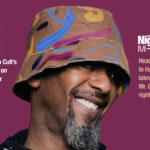






For more than three decades, Paul Loraine has occupied a unique position within electronic music. Equally respected as a DJ, producer, promoter and label owner, his career has been defined not by chasing trends but by cultivating lasting connections through music.
From his formative years playing legendary marathon sets at Golden Monkey Club to founding Rhythm Cult in 2014, Paul has consistently approached the industry with a long-term vision rooted in community, creativity and authenticity.
Today, Rhythm Cult has evolved into far more than a record label. It has become a multifaceted platform encompassing events, artist development, consultancy and creative projects, reflecting Paul’s belief that music culture should extend far beyond the confines of a release schedule.
As he prepares for the next chapter of Rhythm Cult and celebrates the release of Halo, his latest collaboration with DCLVIII OFC on Cubism Records, The Night Bazaar caught up with Paul to discuss the evolution of the brand, the changing landscape of underground music, the importance of groove and storytelling and why genuine artistry will always outlast algorithms.
When we last spoke on The Night Bazaar, you described Rhythm Cult as something you wanted to grow into a much bigger cultural platform rather than simply a record label. How has your vision developed since then?
Rhythm Cult has always been much more than just a record label to me. From day one, the vision was to build something that reflected every part of my life and journey within music and culture. It’s a label, but it’s also an events brand, a promo agency, a consultancy platform, and most importantly a community built around shared passion and connection through music.
It’s taken a huge amount of hard work, sacrifice, belief, and dedication to get to this point, but I’m genuinely grateful for how far it has come. We’re continuing to grow organically, step by step, and the next exciting chapter is our merchandise line, which will include clothing and other creative projects connected to the Rhythm Cult identity.

Paul Loraine
How has your vision developed since then?
The vision itself hasn’t really changed because I always knew where I wanted Rhythm Cult to go from the very beginning. What has evolved is the scale and the development of the brand over time. These things don’t happen overnight. Building something meaningful takes patience, investment, consistency, and complete dedication.
I’ve always believed in growing things naturally and making sure every step feels authentic to what Rhythm Cult represents.
Rhythm Cult now feels as much an ecosystem as a record label. Was that always intentional?
Yes, absolutely. That was always the vision from the start. I never wanted Rhythm Cult to feel limited to just releasing records. I wanted it to become a platform where music, events, creativity, artists, and culture could all exist together under one identity. For me, music has always been about connection and community, so creating an ecosystem around that felt like the most natural thing in the world.
How has your vision developed since then?
The vision itself hasn’t really changed because I always knew where I wanted Rhythm Cult to go from the very beginning. What has evolved is the scale and the development of the brand over time. These things don’t happen overnight. Building something meaningful takes patience, investment, consistency, and complete dedication. I’ve always believed in growing things naturally and making sure every step feels authentic to what Rhythm Cult represents.

Paul Loraine
Rhythm Cult now feels as much an ecosystem as a record label. Was that always intentional?
Yes, absolutely. That was always the vision from the start. I never wanted Rhythm Cult to feel limited to just releasing records. I wanted it to become a platform where music, events, creativity, artists, and culture could all exist together under one identity.
For me, music has always been about connection and community, so creating an ecosystem around that felt like the most natural thing in the world.
What have been the biggest lessons from running an independent label for over a decade?
One of the biggest lessons is understanding that relationships and communication are everything. Running an independent label involves a huge amount of personal investment, emotionally and financially, and sometimes people don’t always see the risks happening behind the scenes.
I’ve learned that trust, loyalty, and mutual respect are incredibly important. Not every relationship works out, and sometimes you have to make difficult decisions for the good of everyone involved. But ultimately, I still believe strongly in supporting artists and building genuine long-term connections. That sense of family and community is a huge part of what Rhythm Cult stands for.
Do you think underground electronic music has become harder to preserve authentically?
In some ways, yes. I think the pandemic interrupted an important cultural cycle for a younger generation that maybe didn’t get to experience those formative underground moments and intimate parties that shape your relationship with music and club culture.
But at the same time, I’m optimistic. Recently I’ve played some great venues with amazing energy, and I can feel that deeper connection slowly returning. There will always be people searching for meaningful musical experiences, and that gives me a lot of hope.
Has your relationship with groove changed over time?
Not at all, and I don’t think it ever will. For me, everything starts with groove. Rhythm is emotional, spiritual, physical, it connects people instantly without needing words. I’ve always been drawn to tribal energy and music that feels connected to something deeper and more human.
That connection to groove is at the core of everything I make and everything I play.
Do you consciously resist music designed for algorithms or short attention spans?
I’ve honestly never paid much attention to any of that. I’ve always followed feeling rather than trends, algorithms, or categories. The same goes for genres. I come from an old-school DJ mentality where it was simply about great House and Techno music, regardless of labels or marketing.
For me, authenticity and emotional connection will always matter more than chasing attention spans.
What do you hear in today’s underground scene that genuinely excites you?
I love hearing younger producers taking inspiration from older sounds and reinterpreting them in fresh ways. There’s definitely a renewed appreciation for groove, depth, and musical storytelling and that really excites me. It feels like people are searching for something with more soul and timelessness again.
What do younger DJs miss by not having marathon sets and residencies?
Long sets teach you patience, storytelling and how to truly connect with a dancefloor. Some of my favourite recent gigs have been four and five-hour sets because you can really take people on a journey emotionally and musically.
With shorter sets, sometimes you barely have time to settle into a groove before it’s over. I understand the realities of modern lineups, especially for newer DJs, but if you ever get the opportunity to play longer, embrace it. That’s where you really learn who you are as a DJ.
Do you think modern DJs are under too much pressure to become “brands” rather than selectors?
I think there’s more pressure now than ever before to build an identity outside of the music itself. Social media has changed the landscape massively. But I still believe great selectors, great storytellers and people with genuine musical identity will always stand out in the long run. Quality and authenticity never disappear.
How has Barcelona shaped your sound and mindset?
Barcelona influenced me in the early years, especially through the daytime culture and open-air events, which at the time felt very unique and inspiring.
Over the last few years the scene has become more commercially repetitive in some ways, but there are still amazing people here doing great things. What I’ve learned most from living here is the importance of staying true to your own path creatively rather than following trends or expectations.
Do environments and architecture influence your productions?
Absolutely. I’ve always been drawn to music that feels cinematic and transportive, music that takes you somewhere emotionally and mentally.
A lot of my productions are connected to personal moments, memories, emotions, heartbreak, happiness, or periods of reflection in my life. I can’t really make music without an emotional connection behind it. Even the titles often reflect those feelings and moments, whether consciously or subconsciously.
Which shift has had the biggest impact on underground music culture?
Without question, social media. It completely transformed how music is discovered, consumed, promoted and valued. There are positives of course, artists can now reach people all over the world instantly, but it also changed attention spans and the way people engage with music and culture. It’s probably the single biggest shift I’ve witnessed during my time in the industry.

Paul Loraine
What concerns you most about the future of club culture?
I think sometimes genuine talent, individuality, and deeper musical knowledge can get overlooked in favour of what feels immediately marketable or visible online.
There are so many great young artists and passionate underground people out there who deserve opportunities. I’d love to see the industry continue creating more space for authenticity, risk-taking and real musical discovery.
Conversely, what gives you hope?
Quality always survives. Trends come and go, but timeless music, genuine artistry, and real connection never disappear. People will always search for something deeper and that belief gives me hope every single day.
What would the 19-year-old Golden Monkey resident DJ version of Paul think of where you are now?
I think he’d be really proud. Probably not surprised, because even back then I was completely obsessed with music and determined to dedicate my life to it, but definitely proud. And living in Barcelona would probably make him laugh a little as well.
What drew you and DCLVIII OFC together creatively?
Interestingly, DCLVIII OFC reached out to me just before I was about to contact him myself about releasing on Rhythm Cult. He already had a three-track EP prepared and I was blown away immediately by the quality and emotion in the music.
I’ve got a huge amount of respect for his productions. His deeper work especially is really special and connects with me emotionally. When the opportunity came up to remix a track for Lunacity Sound Division, it felt natural to collaborate, and the chemistry worked instantly. I’m really proud of what we created together and the response it received from people within the scene.
Was there a particular atmosphere or emotion you were trying to capture with “Halo”?
The idea was really to continue the energy and emotion we found together on the remix project. I had already started the foundations of the track and sent it over to DCLVIII OFC, and from there we built it together by exchanging stems and ideas back and forth.
It’s a very natural process between us creatively. There’s a strong understanding there musically, and I think that comes through in the final result. We’ve worked on a lot of music together already, and there’s still plenty more to come.
What made Cubism Records the right home for “Halo”?
Following on from the remix collaboration, Cubism felt like the perfect home for the next chapter. I’ve had a connection and respect for the label for many years, especially after remixing Saytek previously, so there was already a strong creative understanding there. Cubism has always represented quality and musical integrity to me, so it felt like a very natural fit for “Halo.”
Where does “Halo” sit within the broader direction of Rhythm Cult and your current sound as a producer?
For me, collaborations are their own world creatively. Over the years as a producer, I’ve been fortunate enough to work with many different artists, and each collaboration brings out different emotions, ideas and directions musically.
I always have my core sound and identity, but working with other producers is a bit like being in a band, you create something together that probably wouldn’t exist individually. That process still excites me massively, and “Halo” is a beautiful reflection of that creative exchange.
Paul Loraine & DCLVIII OFC – Halo is out on June 12th on Cubism. Pre-order on Beatport HERE.
Read the full interview with Paul Loraine on The Night Bazaar HERE.