




There are only a few current acts in British electronic music whose story is as intertwined with modern dance culture as Orbital. For more than three decades, brothers Phil and Paul Hartnoll have travelled a remarkable path from improvised home recordings in Kent, UK to headlining some of the world’s most revered festivals, helping reshape perceptions of electronic music along the way.
Yet speaking to Phil Hartnoll today, there is little sense of self-mythologising. Instead, there remains the same restless curiosity, humour and enthusiasm that first drew him towards music as a teenager growing up on the outskirts of Sevenoaks. As Orbital prepare for a rare joint DJ appearance at Good Vibrations Society 2026, Phil reflects on rave culture, creativity, technology, politics, brotherhood and the unlikely twists that have sustained one of electronic music’s most enduring careers.
Having only recently returned from Bearded Theory Festival when we speak, Phil is clearly still buzzing from the experience. “I’ve just got back from Bearded Theory, which is brilliant. It’s one of my favourite festivals. I’ve done it three years in a row in the Coda tent. It’s such a great laugh.”
The festival’s eclectic nature clearly appeals to him. “They have such a mixture and blend of different sorts of bands and they tend to be a little bit more punky as well.”
One particular performance left a lasting impression. “There’s this brilliant drumming lot that are always there in the Coda tent called Drum Machine. They’re a drumming troupe and they were absolutely amazing. They blew me away.”
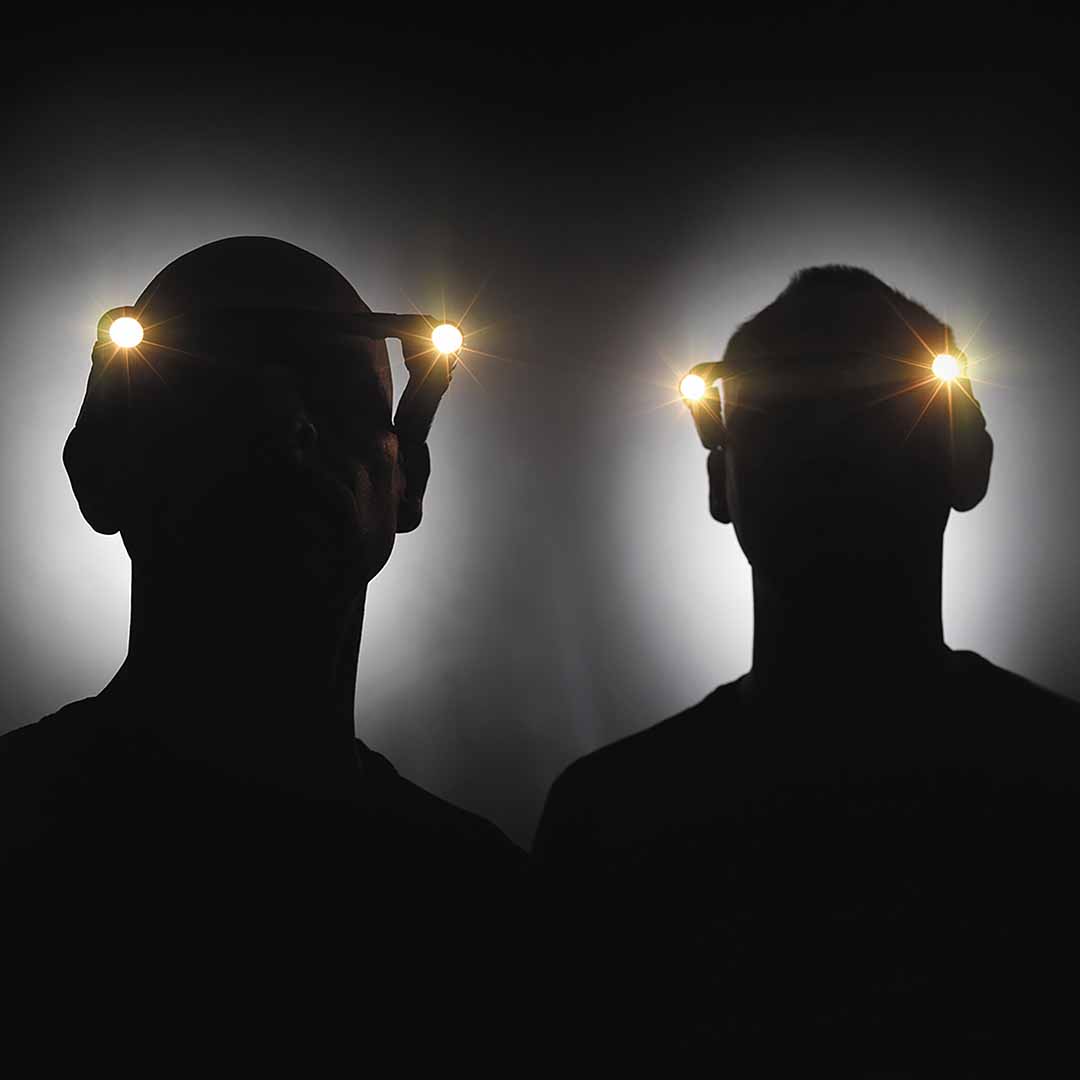
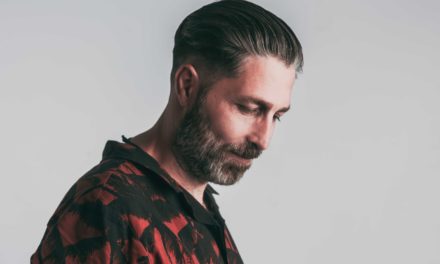
Paul and Phil Hartnoll – Orbital
Even now, after decades on stages around the world, Phil remains a genuine fan of live music. That sense of wonder has never really left him. From Trojan Reggae to Kraftwerk
Long before Orbital became synonymous with British electronic music, Phil’s musical education came through family gatherings and sound system culture. “My mum’s cousins used to run all the music at Christmas parties, weddings, funerals, everything. They were both DJs. One used to DJ Tamla Motown and the other used to DJ Trojan reggae, so that’s what we were brought up on.”
Phil speaks passionately about the often-overlooked influence of the Windrush generation on British music and culture. “They brought their dancing, their movement and their whole vibe with them. They brought a sort of movement to it. Not sex exactly, but a sexiness to the way people moved. It was very different from the stiff English style of dancing.”
For him, that cultural influence continues to ripple through contemporary music. “The influence of the Windrush community was massive. It influenced the whole music industry, but it’s not really shouted about enough.”
Then came the moment that changed everything. “One day I heard an electronic sound and just thought, ‘What the hell made that sound?'”
Unlike many musicians, Phil’s path wasn’t shaped by formal education. “I didn’t do very well at school. I’m 62 now, dyslexia wasn’t even a word then. It genuinely wasn’t.”
Instead, music became the vehicle through which he discovered himself. “I left school and didn’t really know what to do. My dad was a plasterer and suggested I get an apprenticeship. I ended up doing a bricklaying apprenticeship. Then I started earning money, so I bought a synthesizer. Then I bought a drum machine.”
His brother Paul was already musically inclined. “My brother was always quite musical. He played guitar and things like that. So, we ended up getting together and heavily influenced by Kraftwerk and people like that.”
From there, Orbital slowly began to take shape in spare rooms and bedrooms rather than professional studios. “We’d say, ‘Let’s try and copy that,’ or ‘Let’s try and copy this.’ And it all just started from there really.”
The story of Orbital cannot be separated from the rise of rave culture. The band’s name famously references London’s orbital motorway, but for Phil, its significance became something much bigger. “People say it’s named after the M25 and it’s true to a point. We basically lived right by the M25. Then suddenly it became this strange artery connecting all these different underground scenes and parties.”

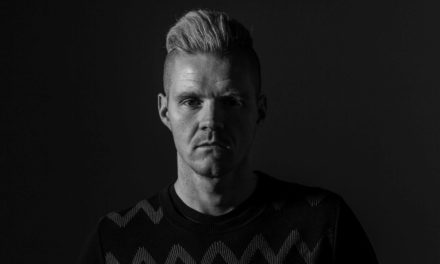
Paul and Phil Hartnoll – Orbital
For a generation of young people, those parties represented something profoundly different. “People would go out into a field, take ecstasy, dance all night, love each other and there was very little violence.”
Phil remains convinced that rave culture fundamentally altered Britain. “Ecstasy changed British social culture massively.” He witnessed the transformation first-hand. “Football hooligans were going clubbing on a Friday night instead of fighting each other.”
Yet he remains critical of how the movement was treated politically. “Instead of looking at the positive social impact, the culture became heavily demonised and politicised.”
That tension between authority and underground culture remains a recurring theme throughout his reflections. “I’ve honestly never had a huge amount of faith in British governments generally. Politicians often seem more interested in protecting systems of power than understanding culture or people.”
Like many pivotal moments in music history, Orbital’s breakthrough arrived unexpectedly. “We’d hear something and think, ‘Let’s do a track like that.’ Then you’d get it wrong, and it would end up becoming something else.”
Eventually those experiments accumulated into a collection of recordings. “We suddenly thought, ‘Oh, we’ve got ten tracks there. What should we do with them? Let’s go and try and get a record deal.'”
The resulting track, Chime, would become one of the defining records of its era. “I never thought anybody would like it. Honestly. I didn’t think anyone would.”
Yet something connected. “Tunes can be like photographs. They remind people of a place, a time, where they were when they first heard them. And Chime became one of those tunes.”
What followed helped define not only Orbital’s future but electronic music’s place within British culture. “We were trying to convince them that we were an electronic band. We weren’t producers. We weren’t DJs. We weren’t dancefloor producers.”
Their ambition was broader. “We wanted to be like Kraftwerk. Not copy Kraftwerk, but in the sense that they were a band. That was how we saw ourselves.”
Few moments in Orbital’s story carry as much significance as Glastonbury 1994. Electronic music was still viewed with suspicion by many within mainstream festival culture. “There was still this attitude that ‘the computer makes the music’ and all that sort of thing.”
Then Orbital took the stage after Björk. “We went on after Björk on a Saturday night and it just exploded.”
The performance is now widely regarded as a turning point. “People wanted to hear those sounds. They wanted the boings, the doings, the bleeps. And they got them. And they loved it.”
Even now, Phil recalls one deeply personal memory from that night. “When we played Chime, I had my kids standing at the side of the stage watching. Every time I looked over and saw them standing there, it was a moment.”
Then came an unexpected callback to his own childhood. “Right at the end, hanging onto one of the keyboard racks, Paul and I did the Shiskabum dance.” A dance invented in the bath when they were children. “We were standing there thinking, ‘What is going on here?’ There were all these beautiful people, all this energy, and it was just incredible.”
The relationship between Phil and Paul has become almost as famous as the music itself. They have split up, reunited and reinvented Orbital multiple times. “We’ve split up four times, after all.” Phil laughs at the comparisons made recently at Brighton Music Conference. “They called us the Oasis brothers of the techno world because we’ve split up so many times.”
Yet beneath the jokes lies a creative partnership built on contrast. “I’m like the Tasmanian Devil. I come into the studio going, ‘I want to do this! I want to do that!'” Paul occupies the opposite end of the spectrum. “He’s the controlled one. Very controlled. Very nerdy. He’s the one who reads the manual.”
Despite occasional friction, Phil sees the bigger picture. “If you think about it, we’ve only split up about four times in nearly forty years. That’s about once a decade. That’s not bad, really.”
What perhaps stands out most is that Phil remains as fascinated by music as ever. Whether discussing synthesizers, drum machines or emerging technology, curiosity drives him forward. “The Roland TR-909 drum machine and the Roland TB-303. The acid box. They’re the staples really.”
Yet he remains sceptical about outsourcing creativity. Discussing AI-generated music, he laughs: “I want to come up with it. I don’t want somebody else to come up with it. What’s the point?”
His perspective remains grounded in creativity as a fundamentally human pursuit. “We’ve never really thought, ‘Let’s make a tune like this.’ We can only do what we do. And that’s all we’ve ever done.”
Perhaps one of the most revealing parts of the conversation arrives when Phil reflects on longevity. For many artists, surviving nearly forty years in music would be achievement enough. Yet he still sounds faintly surprised by it. “The biggest pinch-yourself moment is simply still being here. Still having a career. Still making music. Still getting to do this after all these years.”

Phil and Paul Hartnoll – Orbital
There have been extraordinary moments along the way, remixing Madonna, working alongside Stephen Hawking, performing at Olympic ceremonies, but survival itself remains the greatest achievement. “I’m very happy to still be here.”
That enduring enthusiasm is exactly why Orbital’s appearance at Good Vibrations Society this summer feels so special. Set amongst the magical surroundings of Ashdown Forest from 31 July – 2 August 2026, Good Vibrations Society has quietly established itself as one of the UK’s most distinctive festivals, a three-day celebration of music, wellbeing, ecology and community.

Phil Hartnoll – Orbital
Far removed from the frantic pace of modern life, the festival offers a chance to dance from dawn until dusk, reconnect through nature, explore workshops and yoga sessions, enjoy the wild spa, engage with inspiring talks and create lasting memories with family and friends.
For Phil, the festival’s ethos feels entirely aligned with the values that first drew him into dance culture. And this year brings something particularly rare. “Me and Paul very rarely DJ together.”
While Orbital’s legendary live performances are meticulously choreographed experiences, this set offers something different. “We’re actually going to do it together. We haven’t completely worked it out yet, but we’ve got lots of different mixes of Orbital tracks and things like that.”
The brothers recently tested the waters with a joint DJ appearance before Brixton Academy. “We’ve kind of got our toe in the water already. We’ve had a little warm-up for Good Vibrations.”
The prospect clearly excites him. “We’re getting on really well at the moment and it’s going to be good fun.”
As for exactly what they’ll be playing? Phil remains characteristically mischievous. “I’m not going to give away the set. I’m not telling you exactly what’s in it. Come and see.”
And perhaps that invitation captures the spirit of both Orbital and Good Vibrations Society perfectly. A festival built around connection, wellbeing, creativity and community feels like a natural home for artists whose career has always been rooted in bringing people together through music.
Good Vibrations Society takes place between 31st July and August 2nd at Pippingford Park in the Ashdown Forest. For more information head HERE.
Listen to Orbital’s discography on Beatport HERE.
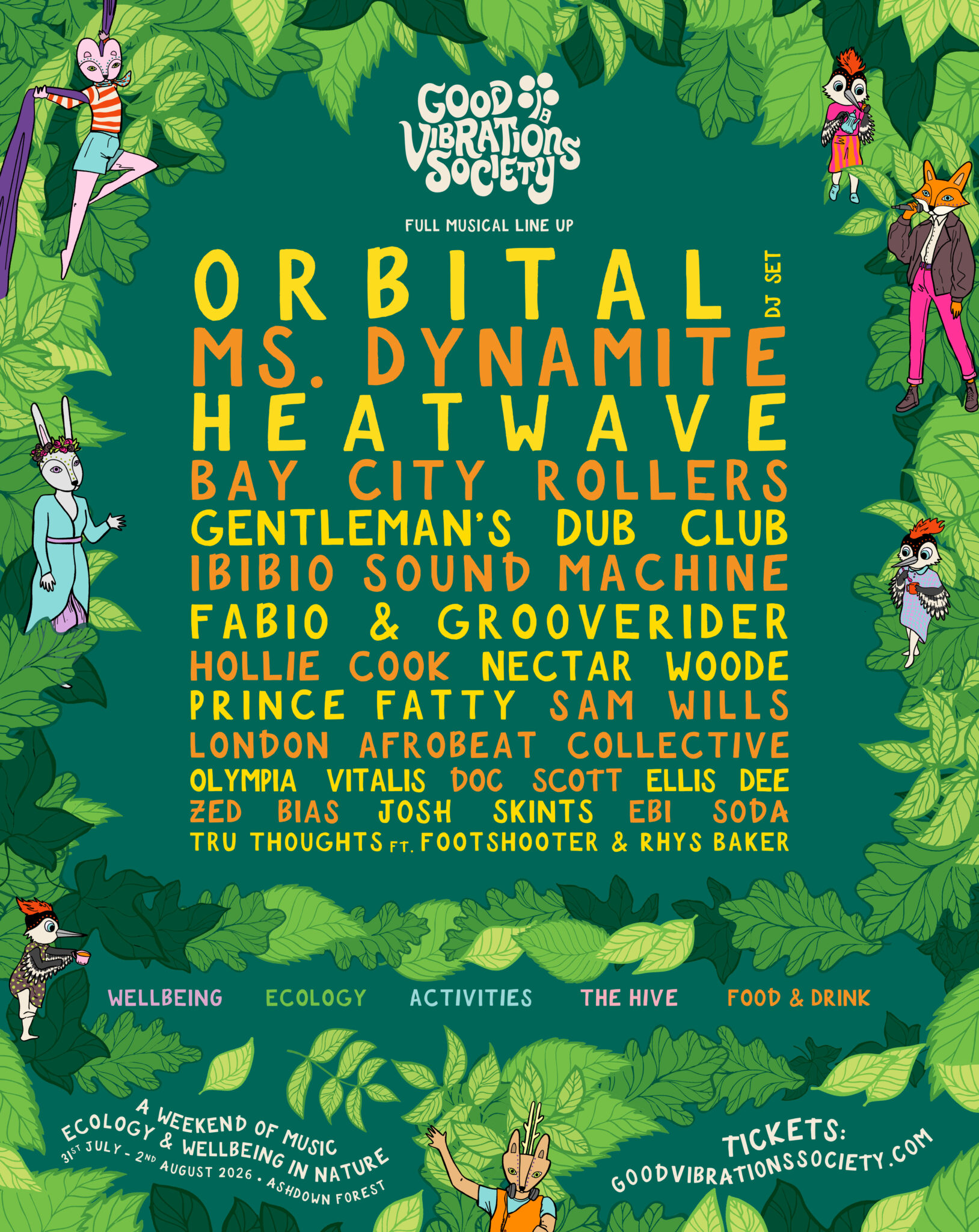
CLICK poster for more information