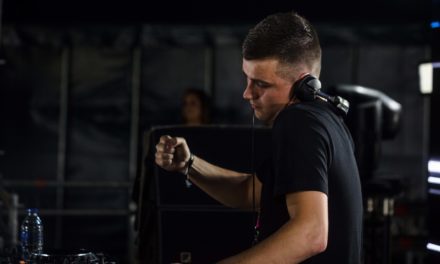





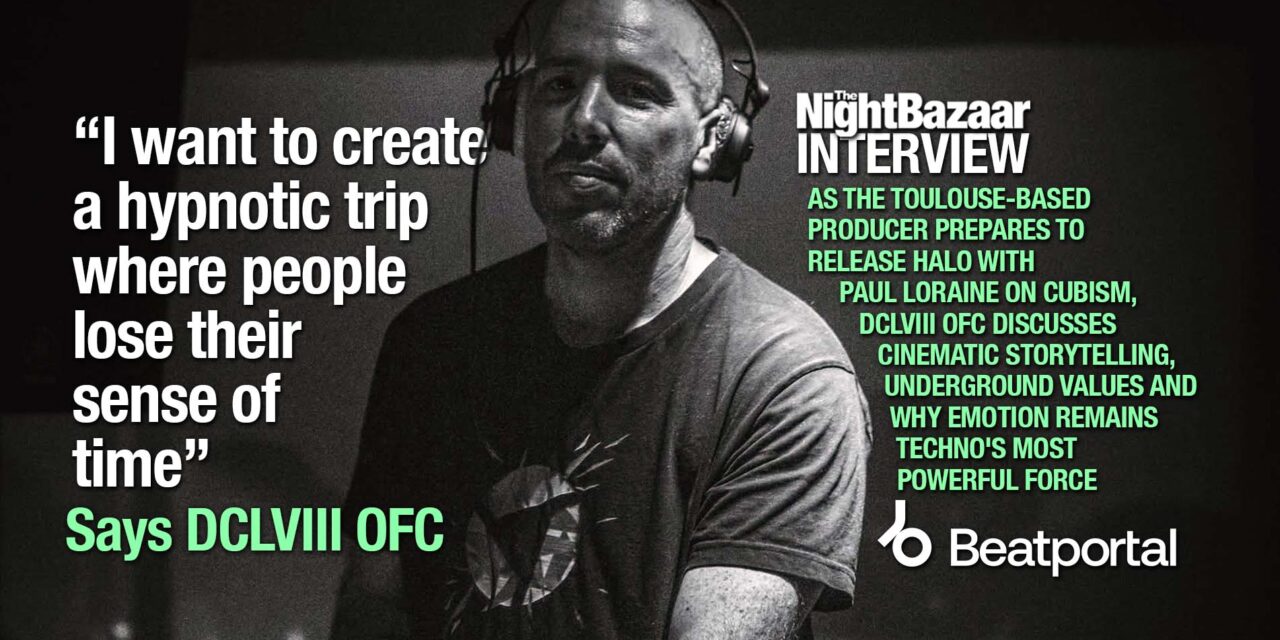
Based in Toulouse, his productions blend hypnotic grooves, cinematic atmospheres, and emotional depth, earning support from respected figures including Laurent Garnier, Hernan Cattaneo, Karotte, and Dimitri Kneppers. With releases on labels such as COD3qr, Rhythm Cult and Sudbeat, DCLVIII OFC has established a reputation for creating immersive journeys that prioritize storytelling as much as dancefloor functionality.
As he prepares for the release of Halo, his new collaboration with Paul Loraine on Cubism, DCLVIII OFC continues to refine a sound rooted in authenticity, community, and a deep respect for underground culture. We caught up with the Toulouse-based artist to discuss the origins of his distinctive sonic identity, the influence of Laurent Garnier and COD3qr, his creative process in the studio, and why emotional connection remains at the heart of everything he creates.
Your sound combines deep hypnotic grooves with emotional and atmospheric textures. How did your sonic identity first develop and what drew you toward that particular strain of electronic music?
It developed naturally from listening to early electronic pioneers and dark cinema soundtracks. I’ve always been fascinated by music that makes you travel while your feet are glued to the floor. What drew me to this specific strain is the freedom it offers: hypnotic grooves lock the body in a trance, while emotional textures allow the mind to escape. It’s the perfect balance between darkness and light.
Growing up in Toulouse, how has the local electronic scene shaped your approach to music production and DJing?
Toulouse has a fierce, historical activist spirit when it comes to electronic music, heavily rooted in alternative culture, sound systems, and a raw underground ethic. Growing up here taught me that electronic music is first and foremost a community experience, not a commercial product. This scene taught me to respect the crowd, to appreciate the power of a raw bassline in an intimate room, and to always stay true to the underground ethos.
DCLVIII stands for 658 in Roman numerals. It’s a code, a cipher. OFC stands for “Official”, but it’s also a nod to my roots and the inner circle. The philosophy behind it is to let the music speak first. In a world obsessed with image, faces, and social media numbers, the name acts as a shield. It’s minimalist, industrial, and mysterious. It forces the listener to focus on the sound waves rather than the persona.
Your tracks often feel cinematic and immersive rather than purely functional club tools. When starting a new production, do you focus more on rhythm, mood, or storytelling?
I always start with the mood and storytelling. I don’t want to make disposable club tracks that people forget the next morning. For me, a track needs to feel like a short film. I usually start with an atmosphere, a texture, or a modular synth line that tells a story, and then I build the rhythm around it to carry that emotion through the sound system. The kick drum is there to drive the story forward, not to replace it.
It’s everything. Without emotion, techno is just math and machinery. It becomes cold and functional. Driving energy can make people dance, but emotional connection is what makes them remember that specific moment on the dancefloor for years. It’s about creating collective goosebumps. I want people to feel vulnerable and powerful at the exact same time.
What does your studio workflow typically look like? Are you someone who experiments freely, or do you approach tracks with a clear vision from the start?
It’s a mix of both. I usually start with a vague emotional concept or a specific feeling I want to capture. From there, I let myself experiment freely with hardware and analog synths, looking for that “beautiful mistake.” Once I capture a texture or a groove that triggers an emotion, my workflow becomes very focused. I carve the track with a clear vision of how it will translate on a heavy club system.
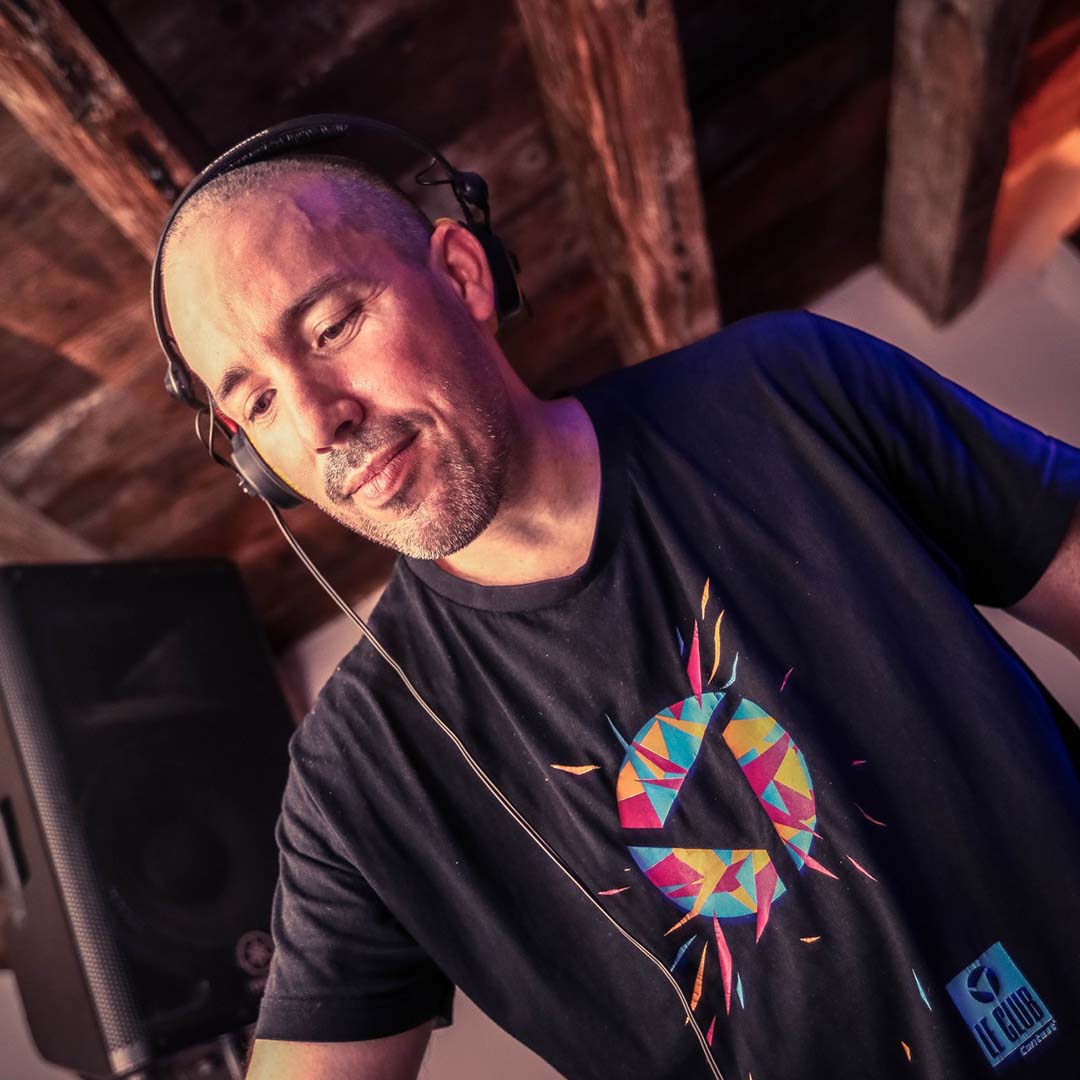
DCLVIII OFC
You’ve earned support from respected names like Laurent Garnier, Hernan Cattaneo and Karotte among many other luminaries. What did it mean to receive recognition from artists of that calibre? Was there a particular moment when you realised your music was beginning to connect internationally?
It’s deeply humbling and validating. When legends like Laurent Garnier or Hernan Cattaneo play your music, it tells you that you’re on the right path. They are the definition of integrity in this scene. The turning point was seeing my tracks played on huge international stages and getting feedback from DJs worldwide. That’s when I realized that the music I created alone in my studio was traveling far beyond my own borders.
Being involved with COD3qr was a game-changer. The label’s concept—releasing music anonymously at first based purely on quality—completely resonates with my vision. The relationship developed out of mutual respect for the music. What I learned from Laurent and the COD3qr family is that consistency, humility, and passion always win in the long run. They showed me that you can achieve international success while remaining completely uncompromising with your art.
Your music has found a home on labels like COD3qr, Rhythm Cult, and Sudbeat, all of which have very distinct identities. How do you decide which tracks belong on which label? What attracts you to a label when considering a release?
Each of these labels represents a different side of my musical spectrum. Sudbeat is perfect for my deeper, more hypnotic and melodic storytelling. COD3qr and Rhythm Cult fit my rawer, sleek, and techno-driven edge. When considering a label, I don’t look at their follower count; I look at their curation and their soul. I need to know that the label owners genuinely love the music and aren’t just looking for a quick hit.
Paul and I have been in touch through the scene and sharing music for a while. We realized we shared a very similar artistic vision. The idea for “Halo” came naturally, and because Paul has a deep history with Cubism, we wanted to create something tailored for their specific aesthetic—something deep, hypnotic, but with a sharp dancefloor edge. Cubism felt like the perfect, natural home for this specific piece of our combined minds.
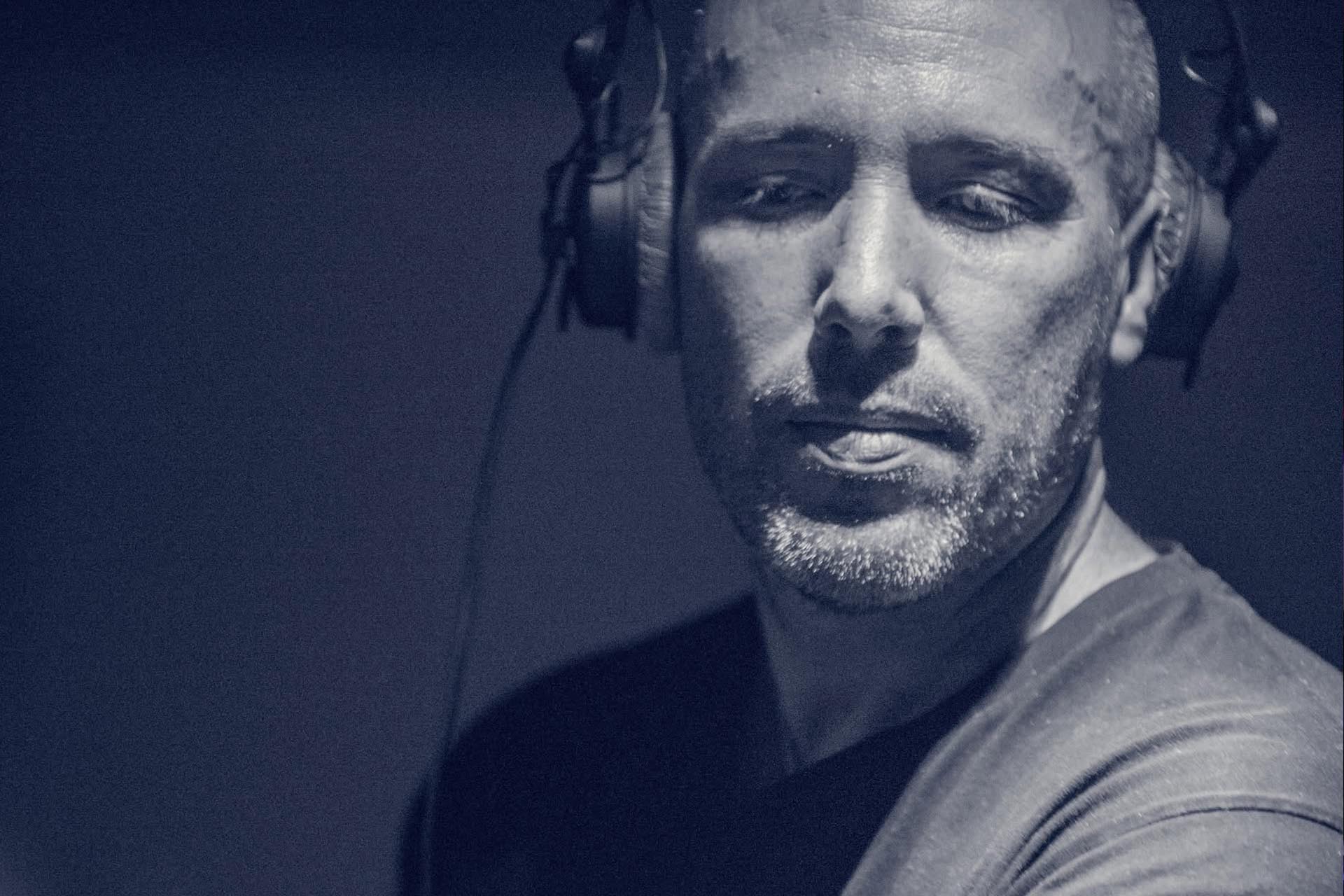
DCLVIII OFC
What was the creative chemistry like between you and Paul Loraine while making Halo?
The chemistry was effortless and very fluid. Sometimes collaborations can feel forced, but with Paul, it felt like a continuous conversation. We balanced each other out perfectly: I brought my raw atmospheric textures and hypnotic drive, and Paul brought his incredible sense of groove and arrangement. We pushed each other out of our comfort zones in the best way possible.
The release also includes a remix from Magnetik Source. What did you think when you first heard their reinterpretation of the track?
I was blown away. When you give your track to another artist for a remix, you want them to take it somewhere you couldn’t. Magnetik Source did exactly that. They took the core DNA of “Halo” and twisted it into something beautifully fresh and unexpected, adding their own signature depth. It complements the original track perfectly.
I want to create a hypnotic trip where people lose their sense of time. To balance hypnotism and energy, it’s all about tension and release. I like to build long, deep, atmospheric segments that lock the crowd into a groove, and then subtly layer driving baselines or shifting hats to increase the physical energy without breaking the trance. A good DJ set shouldn’t just be banger after banger; it needs shadows to make the highlights shine.
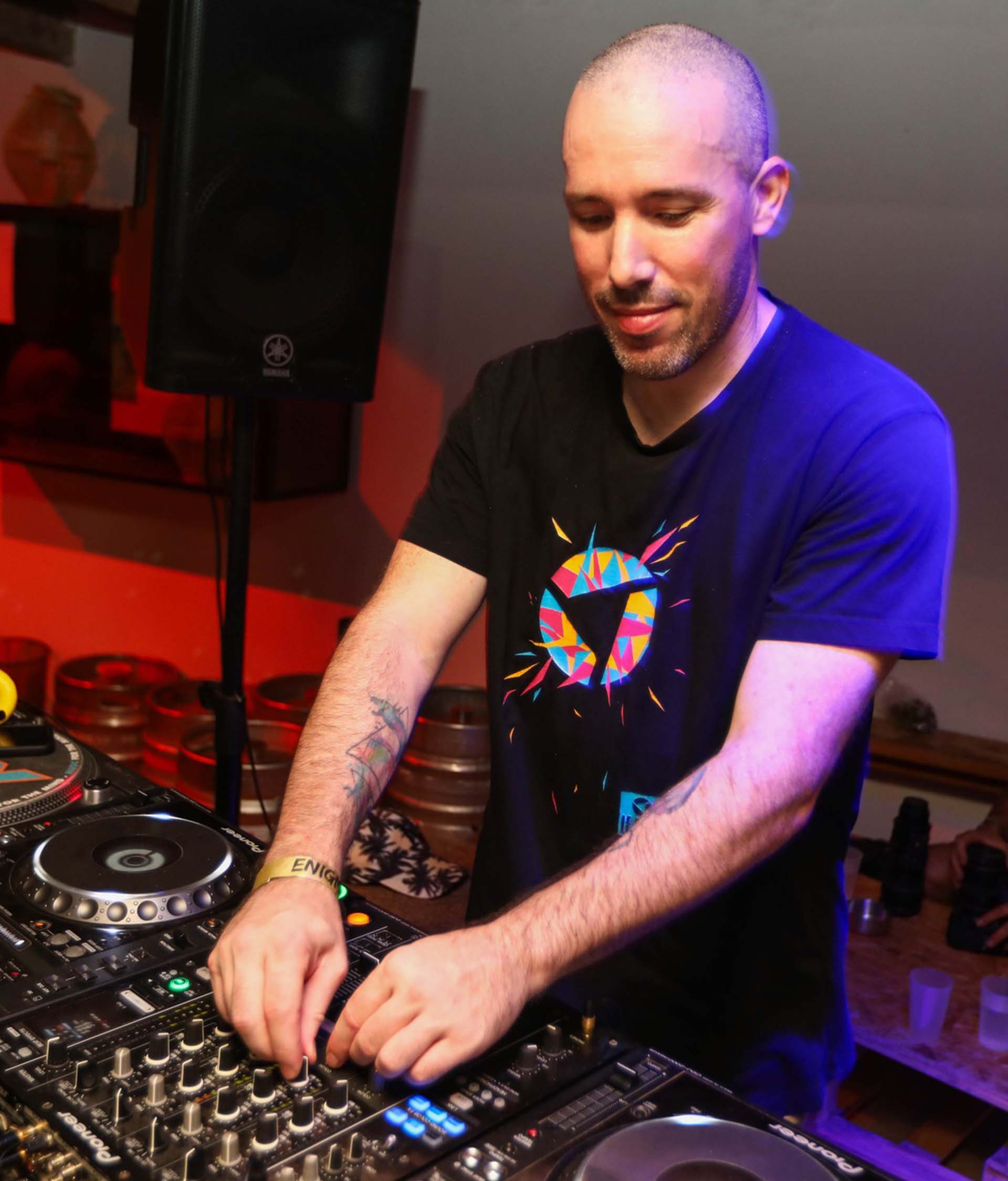
DCLVIII OFC
Has your approach to DJing changed as your production career has evolved?
Yes, absolutely. Producing music makes you listen to frequencies and track structures differently. Now when I DJ, I think more like a producer in real-time. I layer tracks more extensively, using loops and tools to create entirely new arrangements on the fly. It also made me more patient; I’m no longer afraid to let a track breathe and do its work on the crowd.
With upcoming releases and growing international support, what’s the next chapter for DCLVIII OFC?
The next chapter is about radical authenticity and going back to the core. Alongside my upcoming releases on Sudbeat and Cubism, I am shifting my live/DJ approach. I’ve chosen to step away from the commercial business side of the scene and make myself available on a “pay-what-you want” basis for the independent collectives, non-profits, and underground spaces that keep the real culture alive. The next chapter is about sharing music, not chasing profit.
I want them to feel disconnected from reality and deeply connected to themselves and the people around them. Whether you are alone in your headphones in the dark or lost in a packed, sweaty basement at 4 AM, I want my music to feel like a safe haven where you can let go of everything, release your demons, and just get carried away by the sound.
Paul Loraine & DCLVIII OFC – Halo is out on now on Cubism. Grab it on Beatport HERE.
Head to Beatportal to read The Night Bazaar exclusive interviews in partnership with Beatport HERE.