




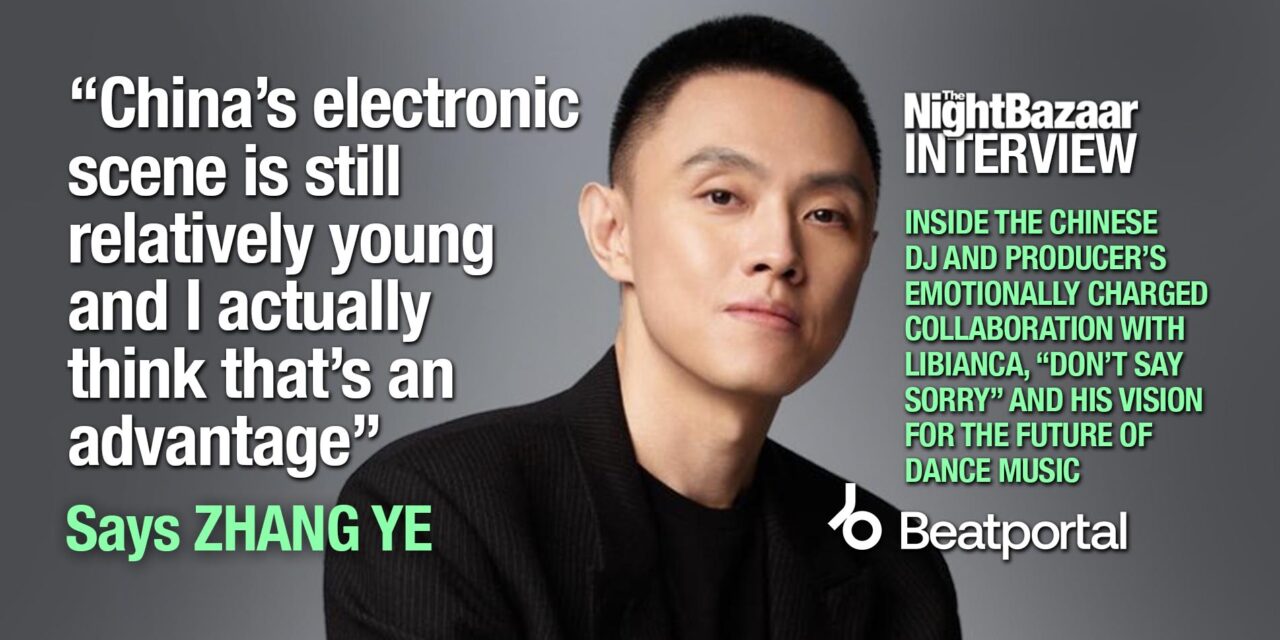
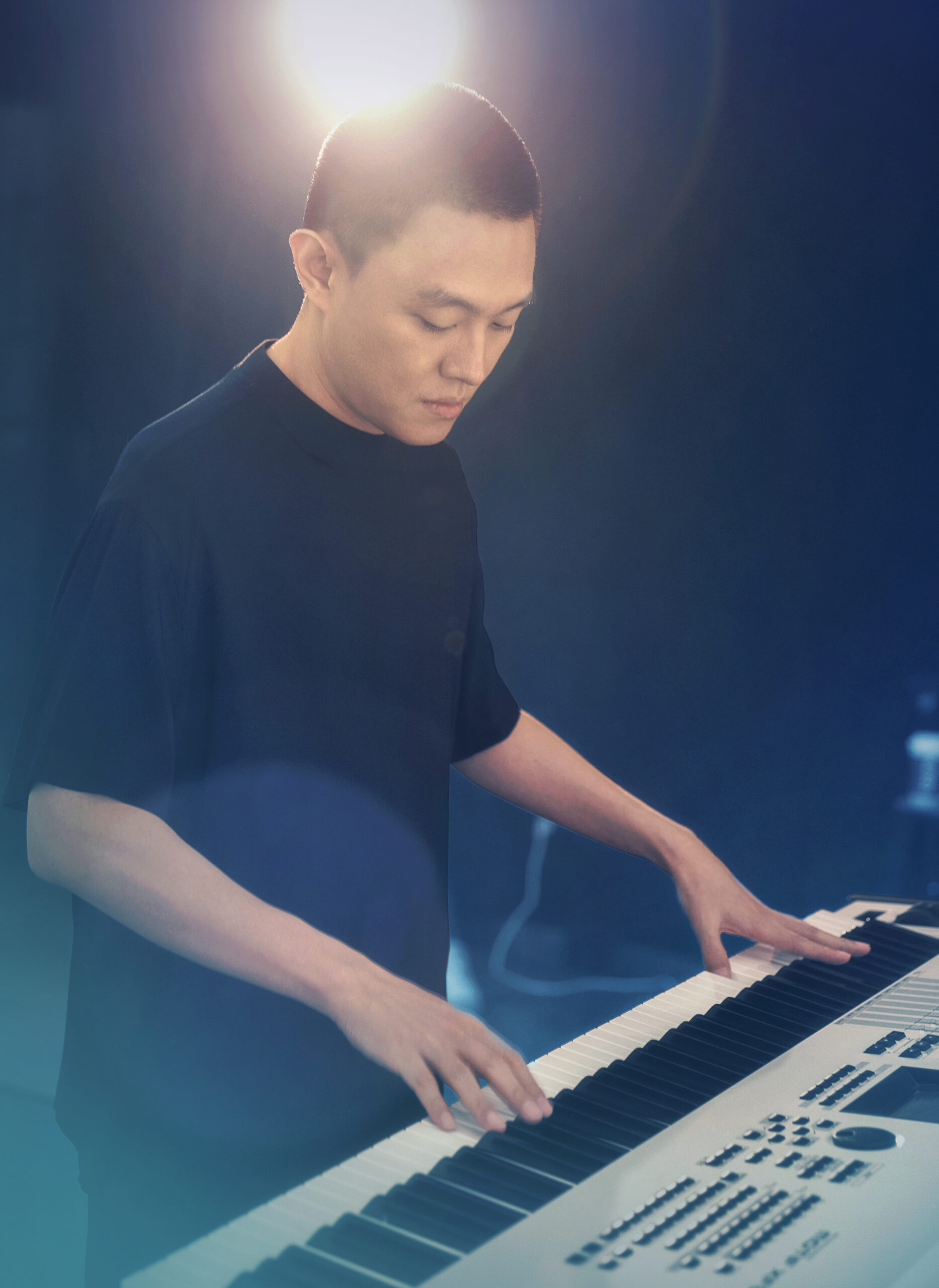
Chinese DJ, producer and Cyanhill Music founder ZHANG YE occupies a unique position inside the global electronic music landscape, balancing the emotional depth of his classical composition training in Moscow with the scale and energy of modern EDM culture, while simultaneously using his platform to champion the next generation of emerging Chinese electronic talent.
Deeply rooted in cinematic storytelling and emotional architecture, ZHANG YE has become one of the key figures helping shape a new global vision for Chinese electronic music.
But for ZHANG YE, the future of Chinese electronic music is not about imitation, nor is it about leaning into superficial ideas of “East meets West.” It is about building something entirely new.
We caught up with him to find out more as he releases his new collaboration with Libianca, “Don’t Say Sorry.”
You’ve spoken often about bringing Chinese electronic music onto the global stage. What do you think international audiences still misunderstand about China’s dance music scene?
A lot of international listeners still assume that Chinese electronic music is simply imitating the West. But in reality, this new generation of Chinese producers is developing its own language and identity.
China’s electronic scene is still relatively young, and I actually think that’s an advantage. Because it hasn’t been locked into rigid genre traditions yet, there’s a huge amount of experimentation happening right now. You see producers blending traditional influences, internet culture, pop references, emotional storytelling, and completely different sonic worlds into electronic music in ways that evolve incredibly fast.
There’s a very raw creative energy in the Chinese scene at the moment.
And I think the next step for Chinese electronic music isn’t just about “going global.” It’s about building a real artistic identity on the global stage, not through cliché East-meets-West aesthetics, and not by copying existing Western formulas, but by creating a sound that feels genuinely contemporary, personal, and reflective of this generation of Chinese creators.
You’ve been called the “Godfather of Chinese EDM.” Is that a title you embrace or does it come with pressure?
I’ve always had mixed feelings about that title.
On the one hand, I understand why people say it. Over the years, I’ve spent a lot of time trying to push Chinese electronic music forward, through my own releases, international collaborations, and projects like CHINA EDM. So, I’m grateful that people recognise the long-term work and passion behind that.
But at the same time, I don’t really want Chinese electronic music to become the story of one person. A real music scene is never built by a single individual. It grows through countless DJs, producers, labels, clubs, festivals, visual artists and audiences evolving together over time. And honestly, Chinese electronic music is still very young. It’s far from being fully defined.
There are already producers in their early twenties whose taste, technical ability and global awareness are incredibly advanced. Sometimes I even feel that the people who will truly reshape Chinese electronic music may not be my generation at all.
So compared to being called a “godfather,” I’d rather see myself as a bridge or maybe a connector. A lot of what I do is really about connecting different worlds: China and the international scene, established artists and emerging talent, music and culture, creativity and business.
Of course, labels like that also come with pressure. Because once people turn you into a symbol, they expect you to continuously represent something larger than yourself.
But electronic music, at its core, has always been a culture that rejects rigidity and authority. If one day I became too attached to an identity instead of continuing to evolve and create, I think I would actually be moving further away from the true spirit of electronic music.
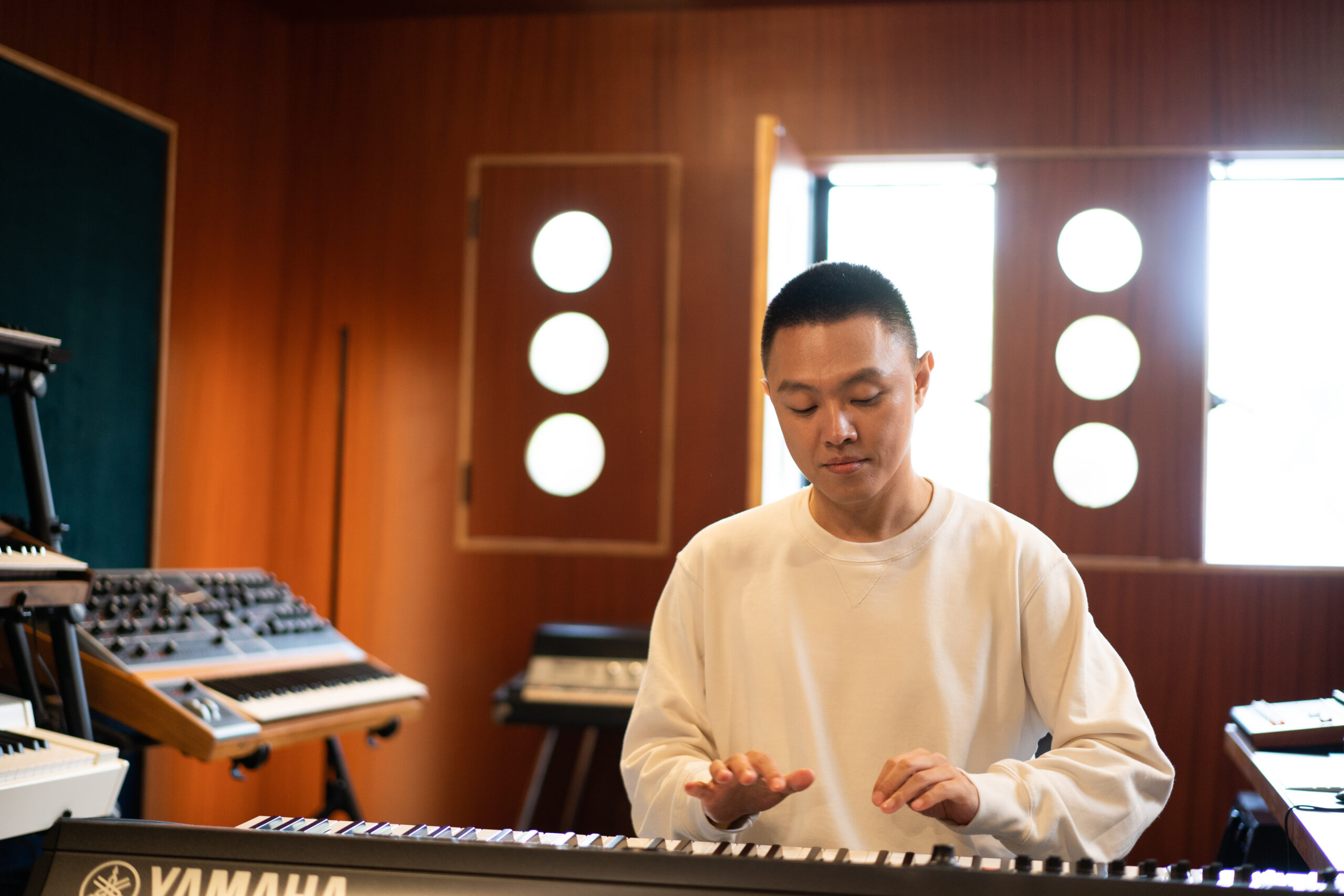
ZHANG YE
Do you feel a responsibility to represent Chinese culture in your music, or do you prefer to approach music from a more borderless perspective?
I think the most powerful music always holds two things at the same time: it feels deeply personal, but it also feels universal.
That’s why I’ve never seen “representing Chinese culture” as a responsibility or a mission. In fact, I think the moment an artist tries too hard to “represent” something, the work can start losing its authenticity.
A lot of people instinctively associate Chinese identity with recognisable symbols, traditional instruments, opera, dragons, calligraphy, things like that. But to me, culture isn’t decoration. It’s more like a subconscious language. It’s not something you intentionally add into the music, it’s something you can’t escape from.
I grew up in China, shaped by Eastern emotional structures, language rhythms and aesthetics. Even when I’m making very global dance music, those influences naturally exist in the work. Asian creators, for example, often approach emotion differently. There’s usually more emphasis on restraint, emotional space, atmosphere and gradual tension rather than direct emotional release. Even the way we think about melody, loneliness, regret or relationships can feel subtly different from Western songwriting traditions.
So, I’ve come to believe that the strongest form of cultural expression isn’t constantly telling people, “This is Chinese.” It’s when people hear your work and immediately feel a certain emotional identity or atmosphere that could only come from you and naturally, your cultural background exists inside that.
At the same time, I also don’t want music to become a kind of cultural exhibition.
Electronic music is already an incredibly global language. A kick drum, a bassline, a groove, they travel across borders faster than almost any traditional cultural symbol. Whether you’re in São Paulo, London, Shanghai or Tokyo, people physically respond to rhythm in the same way. Music has this unique ability to bypass translation entirely.
So, I don’t see “representing China” and “being borderless” as opposites.
To me, true globalism isn’t about erasing your culture. It’s about being authentic enough that your culture naturally reveals itself through your work.
For a long time, a lot of Asian artists entering the global market felt trapped between two extremes: either trying to sound Western, or over-emphasizing “Eastern” aesthetics. But I think the next stage is no longer about trying to resemble anyone else. It’s about building your own contemporary artistic language.
That’s why I’m less interested in exporting “Chinese elements” to the world and more interested in letting the world hear the real emotions, experiences and aesthetics of this generation of Chinese creators.
How do you see the Chinese electronic scene evolving compared to five or ten years ago?
If I look back at Chinese electronic music ten years ago, I’d say that period was really about building the infrastructure.
At the time, the most important thing was simply introducing electronic music to a wider audience. International DJs were constantly touring China, festivals and club culture were expanding rapidly, and for many young people it was their first exposure to EDM. The entire scene was growing at an incredibly fast and outward-facing pace.
The key words back then were scale and spectacle. Bigger drops, bigger stages, bigger energy.
In many ways, the rise of Chinese electronic music happened alongside consumer growth, nightlife culture and the mobile internet boom. But there was also a very obvious limitation during that era: we were mostly consuming global electronic music culture rather than building our own artistic language.
Around five years ago, I think the scene entered a second phase.
The biggest shift was that local producers really started coming into their own. In the early days, Chinese DJs were often placed in opening slots or secondary positions on festival lineups, while the headliners were almost always international acts. But gradually, a new generation of Chinese producers emerged, artists capable of creating original work, touring independently and developing distinct sonic identities.
There was also a major shift in how people understood electronic music itself. Ten years ago, a lot of people associated electronic music purely with energy and intensity. But over time, more artists and listeners began realizing that electronic music could also be emotional, cinematic, deeply personal and narrative-driven. People started paying more attention to sound design, visual systems, world-building, stage language and even the artist’s personality and emotional perspective. I think Chinese electronic music is slowly evolving from functional music into cultural music.
Another huge change is confidence.
In the past, many Chinese artists instinctively believed that being “international” meant sounding Western. But now, more and more young producers are realising that the most global work is often the most personal and the most rooted in your own perspective.
And over the last few years, I can genuinely feel Chinese electronic music developing its own identity and emotional atmosphere.
Of course, we’re still far from a fully mature ecosystem. International label networks, copyright structures, long-term artist development systems and global media storytelling are all still evolving. There are already many Chinese producers with world-class creative ability, but what’s still missing is sustained international cultural presence and long-term influence.
As someone who studied classical composition in Moscow and now works in global dance music, how have those different cultural experiences shaped your artistic identity?
Classical training taught me to respect structure. Electronic music taught me how to break it.
When I was studying composition in Moscow, the training was extremely rigorous. You constantly think about harmonic movement, melodic development, orchestration, how a theme evolves emotionally over time and how a musical idea can sustain narrative tension across an entire piece. It’s a very long-term way of thinking about music. You begin to realise that music isn’t just emotional expression, it’s architecture built through time.
A lot of Russian classical music carries this incredible emotional weight and tragic depth. It forces you to think about things like human nature, fate, loneliness and existential tension. I think the biggest thing that experience gave me was an obsession with depth.
So even after I entered the electronic music world, I never viewed electronic music as purely functional dance music. I’ve always believed electronic music can also be literary, cinematic, philosophical. It can make people dance, but it can also make them reflect, immerse themselves emotionally or even feel a certain kind of emotional pain.
At the same time, electronic music completely transformed me as well.
Because the classical world is fundamentally built around structure, hierarchy, tradition and technical discipline. Electronic music comes from a completely different place, underground culture, club culture, internet culture. There’s something inherently rebellious about it.
You suddenly realise that someone sitting alone in a bedroom with a laptop can create a sound that reaches the entire world. It doesn’t rely on the same centralised systems that classical music historically depended on.
Those two worlds created a very deep tension inside me creatively. Part of me naturally gravitates toward structure, emotional progression and narrative cohesion. But another part constantly wants to break those systems apart, to leave room for freedom, unpredictability and accident. And honestly, I think that tension itself became part of my artistic identity.
Living in different countries also changed the way I understand culture.
When I was younger, I probably thought of culture more as a national identity. But over time, I realised that deeper culture is really about emotional psychology, how different societies process feeling.
Russian music, for example, often carries a strong sense of fate and tragedy. Western dance music tends to emphasize release, self-expression and energy. Asian creators, on the other hand, often work more through restraint, emotional space and subtle emotional movement.
So, when I make music now, all of those influences exist inside me at the same time.
I don’t consciously try to “blend cultures,” but those experiences have already become part of my instinctive creative language.
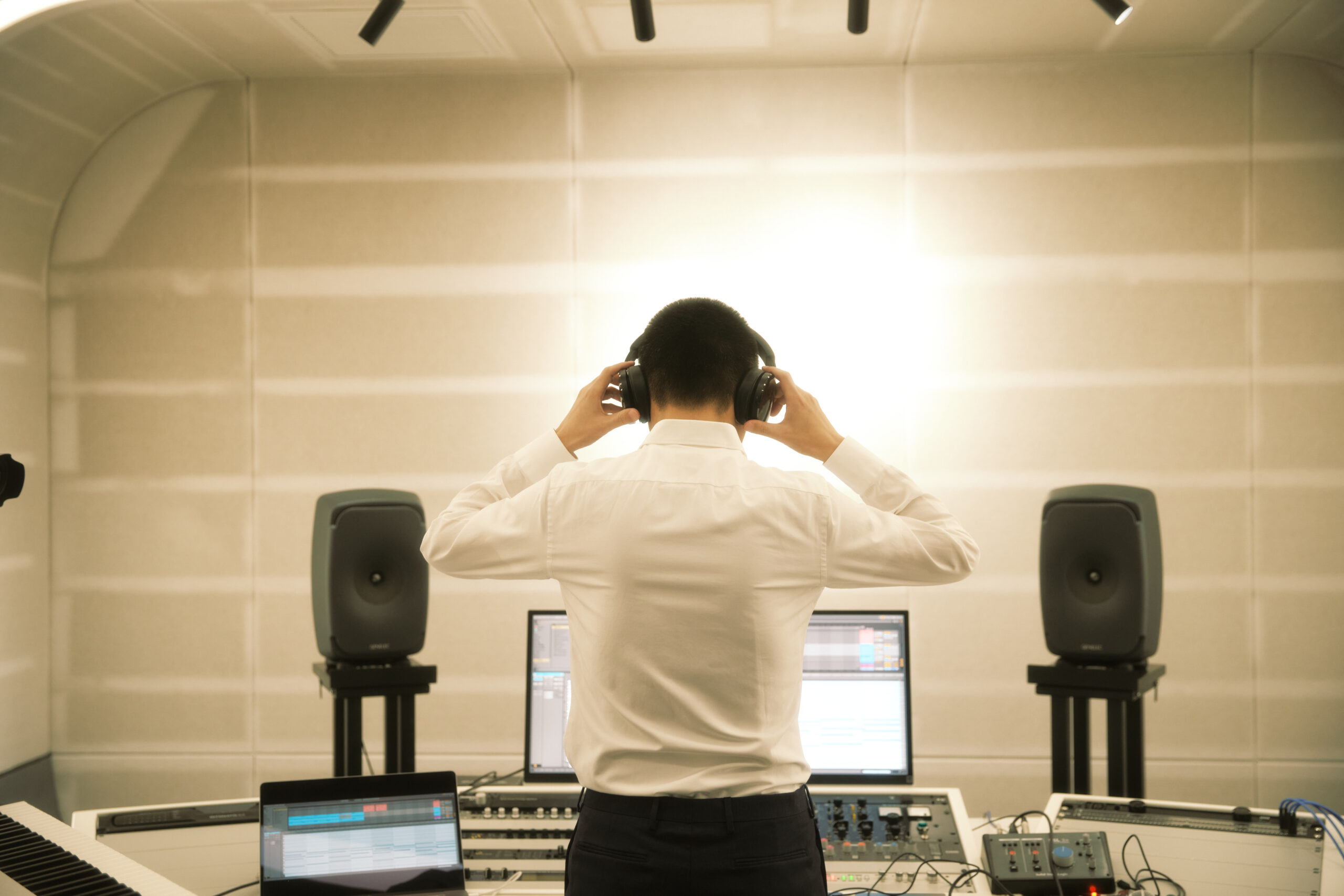
ZHANG ZE
You’ve collaborated with artists from very different musical worlds, from Steve Aoki to Zhou Shen to now Libianca. What do you personally look for in a collaborator?
What I value most in a collaborator isn’t technical skill or fame, it’s individuality. Something that can’t be replicated.
Because today, it’s actually very easy to make “correct” music. Technology has become incredibly advanced, and with AI, plugins, and modern production systems lowering the barrier constantly, the problem is no longer that music sounds unprofessional. The problem is that too much of it sounds the same. A lot of tracks are polished, efficient, even impressive, but they don’t have a personality.
What stayed with me most about Steve Aoki, for example, wasn’t his success or reputation. It was his energy. He makes you realise that music isn’t just a finished product, it’s a live emotional connection between people. He understands exactly when a crowd will react physically, emotionally, psychologically. And he knows how to push that collective energy to its absolute limit.
Zhou Shen is the complete opposite kind of artist. His voice is incredibly delicate, but more importantly, it has this rare emotional transparency. Some singers perform emotion through technique, but when Zhou Shen sings, it feels like he’s handing you the emotion itself. So, when working with him, you naturally start paying attention to different things: the melody, breathing, emotional space, the subtle emotional layers inside a vocal performance.
Libianca was another completely different experience. What struck me most about her was how emotionally honest she is. She doesn’t try to polish or dramatize her feelings. She allows vulnerability, contradiction and emotional tension to exist very naturally inside music. And because of that, during this collaboration I actually found myself doing more subtraction than addition, creating space for her voice rather than competing with it.
Over time, I realised that the artists I’m most drawn to are rarely the “most standard” ones. They’re usually people with a very strong personal world and emotional identity. Because the most interesting collaborations happen when two completely different worlds collide and together, they create a third thing that didn’t exist before.
What did you learn from working with global superstar Steve Aoki?
After working with Steve, my biggest realisation was that truly world-class artists are no longer just people who make music, they create entire energy systems.
A lot of people think Steve Aoki’s greatest strength is his influence or commercial success, but after actually working with him, I realised what makes him truly exceptional is his understanding of emotional flow.
He knows exactly how an audience’s psychology shifts during a performance, when people need release, when they need suspense and when everyone in the room should enter the same emotional state together. Steve understands this deeply. He constantly reminds you not to get so focused on proving how much you can do that you forget what music is ultimately supposed to reach: the human body and human emotion.
Another thing that really stayed with me was his openness. A lot of globally successful artists become more fixed over time because they already have an established system that works. But Steve still maintains a strong curiosity toward new cultures, new sounds and younger artists.
He never looked at me with assumptions just because I came from China. What mattered more to him was whether you had something of your own artistically.
Did working with Libianca on your new track “Don’t Say Sorry” challenge you creatively in any new ways?
Yes, for example, learning how to make the music “feel less like electronic music.”
A lot of my previous work naturally came from an energy-driven structure. As an electronic music producer, you instinctively think about momentum, crowd reaction, emotional release points, even when the drop should arrive.
But Libianca’s way of expressing emotion is completely different.
A lot of her emotions don’t explode, they linger. She can hold a lyric in this state where it feels like something is about to be said, but never fully released. And that kind of feeling is actually very difficult to create musically.
Another challenge was figuring out how to truly merge emotions from different cultures, rather than just combining styles on the surface. It’s very easy today to put Afrobeats, Dance-Pop, and electronic elements into the same track. But the real challenge is whether those elements actually belong to the same emotional world.
ZHANG YE
Libianca’s music is deeply rooted in storytelling and emotional honesty. How did her vocal approach influence the production choices you made on this track?
Libianca’s voice makes you realise very clearly that emotion is the real main character of this song.
Her vocal approach doesn’t feel overly “designed.” She’s not trying to make every line sound technically perfect. Instead, she keeps a lot of very human details in her performance, the breathing, the emotional friction in the tail end of a phrase. And honestly, those details can be far more moving than technique itself.
So, during the production process, a lot of my decisions came down to one question: how do I bring the listener closer to her voice?
There were many moments where I intentionally pulled the arrangement back. Some of the drums were softened, certain sections were left less dense and I tried to leave enough space and silence in the track so the production wouldn’t become an “emotional filter.”
I wanted the listener to feel very close to her emotionally when hearing the song.
The song blends dance-pop, Afrobeats textures and Caribbean-inspired rhythms. Were there any unexpected musical discoveries that happened during the collaboration process?
One very clear feeling I had during this collaboration was that global music has entered a decentralised era.
In the past, the path of global pop music was very clear. Most of the time, trends would emerge from the US or Europe and then spread outward to the rest of the world. Whether it was Pop, Hip-Hop, or EDM, many countries were mainly “receiving” those sounds. But that structure is starting to change.
The rise of Afrobeats, Latin Music, K-Pop and even Asian electronic music over the past few years all points to the same thing: global music is no longer going to have only one centre. Different regions are now genuinely influencing each other and that influence is becoming increasingly two-way.
In the past, people would clearly separate Western, Asian, African, or Latin sound systems. But this generation of artists has really grown up inside the same internet environment. People listen to Afrobeats, K-Pop, House, Hyperpop, Dancehall, and R&B all at the same time, so a lot of these influences already exist together naturally.
So, when I worked with Libianca, I realised that even though we come from completely different cultural backgrounds, a lot of our emotional understanding, loneliness, relationships, emotional tension, was actually very similar.
And I think the most interesting thing about “Don’t Say Sorry” isn’t that it blends Afrobeats, Dance-Pop, and Caribbean elements. It’s that these sounds are already beginning to coexist naturally.
The track explores the tension between holding on and letting go. Was there a specific emotion or moment you wanted listeners to walk away with after hearing it?
I don’t want people to walk away from this song with an answer. I want them to leave with a sense of release.
Because a lot of the time, we already know we can’t go back. But the body, the memory, the habits, even the emotional inertia, are still there. And I think that’s what “Don’t Say Sorry” is really about.
It’s not about a dramatic breakdown. It’s about a very quiet, long-lasting emotional tension. A lot of real human emotions work that way. They don’t suddenly end, they slowly fade over time.
So, I don’t want listeners to come away from the song feeling only sadness. I want them to feel that maybe some emotions don’t need to be solved immediately in order to exist.
In some ways, the song is really about acceptance. Not complete healing but reaching a point where you stop fighting your own emotions.
ZHANG YE
The ending of the music video strips everything back to piano and voice. Why was it important to close the story in such a raw and intimate way?
Throughout the song, the emotions feel like they’re constantly moving through the body, there’s rhythm, low-end, atmosphere, this sense of emotional tension pulling back and forth inside a relationship. But the ending was designed to slowly strip away all of that external energy, leaving only the most essential thing behind.
Because I’ve always believed that the core of music isn’t really the production, it’s the genuine emotional connection between people.
Most of the time, we’re surrounded by rhythm, information, social media, live energy, constant stimulation. Sometimes we even lose touch with what we’re actually feeling. So, in that final moment, I didn’t want to keep adding layers or pushing the emotion further. I wanted the music to return to something completely raw and honest.
No drop, no driving drums, no atmosphere trying to “tell” you what to feel. What’s left is just a person’s breathing, pauses, vulnerability and the emotions that were never fully spoken out loud. And I think real human connection often happens exactly in moments like that. Not during the loudest moments. Not during the biggest emotional release. But in the moment when someone finally lets their emotional guard down.
Because a lot of the time, we don’t listen to music just because it sounds good. We listen because it reminds us that somewhere in the world, someone else has also experienced the same love, loneliness, regret or loss that we have.
And I think it’s in moments like that that music truly fulfils its purpose, creating emotional resonance between people.
ZHANGYE
Do you approach making music differently now that your audience has become increasingly global?
Yes, but the biggest change actually isn’t the music itself, it’s the way I understand identity.
In the past, I instinctively saw myself as a “Chinese electronic music artist,” and I spent a lot of time thinking about how to bring Chinese electronic music onto the global stage. But as more and more people from different countries started listening to my music, I slowly realised that music doesn’t really connect people through nationality, it connects people through shared human emotion.
So now, when I make music, I think less about whether something sounds right for a certain market, and more about whether it carries real humanity and emotional truth. Because truly global music, in the end, always comes from something deeply human.
At the same time, I’ve also become much more open when it comes to genre. I’m no longer obsessed with clearly defined styles. A lot of the most alive and exciting music happens in places where boundaries start to blur, and I’ve been exploring more different kinds of sounds because of that.
Are there producers outside of dance music who have influenced your approach to sound design and storytelling?
Very much so. I’ve never limited myself to listening only to electronic music. Because I’ve always felt that sound design is not really a technical question, it’s an emotional one. And honestly, many of the people who influenced me most weren’t electronic musicians at all.
For example, when I was studying composition in Moscow, Russian classical composers had a very deep impact on me. They had an incredible understanding of melody. Electronic music often emphasizes rhythm, energy, and atmosphere, but Russian classical music made me realise that the things that stay with people for the longest time are often melodies.
So now, when I make music, I care a lot about what I would call the “humanity” of a melody. I’m not very interested in melodies that are purely functional. I want them to feel like a real person, something that breathes, hesitates, carries emotional movement, instead of existing only to serve a drop.
Another thing that deeply influenced me about Russian classical music is the way it handles long-term emotion.
A lot of modern pop music is built around instant stimulation, but many classical composers allow emotions to grow slowly. They don’t rush toward release. Instead, they let a feeling accumulate, circle around itself, and linger over time.
I think that really shaped the emotional structure of many of my own works today, including the sense of suspension, emotional space, and restraint in my music.
More and more, I see music as a kind of “cinema in time.”
So now, a lot of my inspiration doesn’t actually come from a specific EDM track. It comes from other kinds of music, films, architecture, literature or even the atmosphere of a city itself.
ZHANGZE
With streaming and TikTok changing how music spreads globally, do you produce differently knowing songs can take on lives far beyond the dance floor?
Of course. Because music today is completely different from the old idea of “single-environment music.”
A lot of Dance Music used to be designed specifically for live settings, you would think about when the drop should hit, when the crowd should jump, how to control the energy of the room. But now, a song might be played in a club, become the soundtrack to someone’s emotional TikTok video, or accompany a stranger through a late-night headphone moment on the other side of the world.
So now, I pay much more attention to the emotional memory points inside a song.
When I’m making music today, I care more about whether there’s a moment that can immediately pull someone into an emotional state. But at the same time, I constantly remind myself not to become completely trapped by algorithmic thinking. Because the music that truly lasts over time still needs emotional depth, not just a single viral moment or “highlight.”
So my creative process now is really about finding a balance: making music that can be instantly felt in today’s world, but can also still emotionally hold up years later.
“Own Way” surpassed billions of plays on TikTok China. Did that kind of success change your relationship with music or success itself?
It was the first time I truly realised that once a song really spreads into the world, it no longer belongs entirely to the creator.
Before, I used to think music was mainly about expressing something from myself. But later, when I saw “Own Way” being constantly reinterpreted through different people, different videos and completely different life situations, I suddenly realised that a song can take on a life of its own.
Some people used it to document relationships. Others used it to express loneliness. For some, it became connected to travel, nighttime, youth or certain personal memories.
And that’s when you realise that the most magical thing about music isn’t necessarily what you originally intended to say, it’s how other people choose to reinterpret it through their own lives.
That experience also changed my understanding of success. Before, I might have cared more about streams, charts, or numbers. But now, I care more about whether the music has truly entered people’s lives. Because data eventually disappears. But if years later, someone still hears a melody and instantly remembers a certain chapter of their life, I think that’s the real value of music.
In the past, the music industry was much more centralised. But today, songs are constantly being redefined by ordinary people. In some ways, creators no longer fully control their own work anymore. But honestly, I think that’s also something very beautiful.
CHINA EDM Vol.2 focuses on spotlighting female DJs and producers. Why was that initiative personally important to you?
Over the past few years, I’ve increasingly felt that Chinese electronic music is evolving very quickly. And to me, the real sign that a scene is maturing isn’t how loud or popular it becomes, it’s whether more diverse voices are starting to emerge within it.
During that process, I realised that many incredibly talented female Chinese DJs and producers have been consistently underestimated. For a long time, electronic music has been a heavily male-dominated industry. Whether it’s music production, label systems, festival lineups or the overall power structure of the scene, male creators have occupied the majority of the space.
But after actually working closely with many female producers, I noticed that their understanding of emotion, space, atmosphere, and sonic detail can be incredibly unique. A lot of their work feels more delicate and emotionally fluid, rather than being driven purely by energy output.
So, for me, CHINA EDM Vol.2 was never simply a “female-themed project.” It was really an attempt to expand the emotional and creative dimensions of Chinese electronic music itself. I’ve always hoped that CHINA EDM could become more than just a compilation series, I want it to become a real platform. Because China doesn’t lack talented people. What’s often missing is the opportunity to be seen.
And female producers, in particular, often face more industry bias while growing their careers. There’s still an assumption in many people’s minds that DJ culture and electronic production are “male spaces,” which means many female creators have a harder time accessing resources, visibility and long-term support.
So, I think what’s truly important about CHINA EDM Vol.2 isn’t simply the all-female lineup itself. It’s that the project reflects something bigger: Chinese electronic music is beginning to develop more new faces, new forms of expression and new possibilities.
ZHANG YE
What gaps still exist in the global music industry when it comes to Asian electronic artists receiving recognition?
I think the biggest gap is that the global music industry’s cultural power structure hasn’t truly changed yet.
For decades, the centre of global pop music discourse has largely been controlled by Western systems. Whether it’s international labels, festivals, media, awards, management structures or even the idea of what gets defined as “cool,” most of it is still built on the foundation of the Western music industry.
So even when Asian electronic artists already have world-class production ability, they can still easily be placed into a kind of “regional” category. People often look first at where you come from, rather than what you’ve created.
But today, Asian creators are no longer just “participating” in global music, they’re actively influencing global culture. From K-Pop and short-form content culture to visual aesthetics, internet language and even new forms of emotional expression, Asian youth culture has already started influencing the world in reverse. The issue is that the music industry’s narrative system hasn’t evolved as quickly as culture itself.
So, I think the next stage isn’t just about getting more Asian artists heard. It’s about Asia beginning to build its own global narrative power.
What excites you most right now, technology, live performance, global collaborations or discovering new artists?
Discovering new artists.
Because every time you hear a genuinely new voice, it reminds you that music is still far from being fully defined.
What’s especially exciting about this era is that technology, AI and the global internet are constantly breaking apart the old industry structure. A young producer sitting alone in a bedroom today can create a sound that reaches the entire world.
And I feel that some of the most vital things in the future may not come from the traditional music industry at all, but from people who haven’t been fully defined yet.
That’s also why I’ve always wanted to create projects like CHINA EDM. What truly interests me isn’t only my own music, it’s whether I can help more new creators be heard by the world.
And of course, I’m also very excited about international collaborations. I think when different cultures genuinely exchange ideas and influence each other, completely new things can emerge and those kinds of collaborations can give people entirely new experiences.
ZHANG YE and Libianca – Don’t Say Sorry is out now. Grab it on Beatport HERE.
Head to Beatportal to read The Night Bazaar exclusive interviews in partnership with Beatport HERE.