




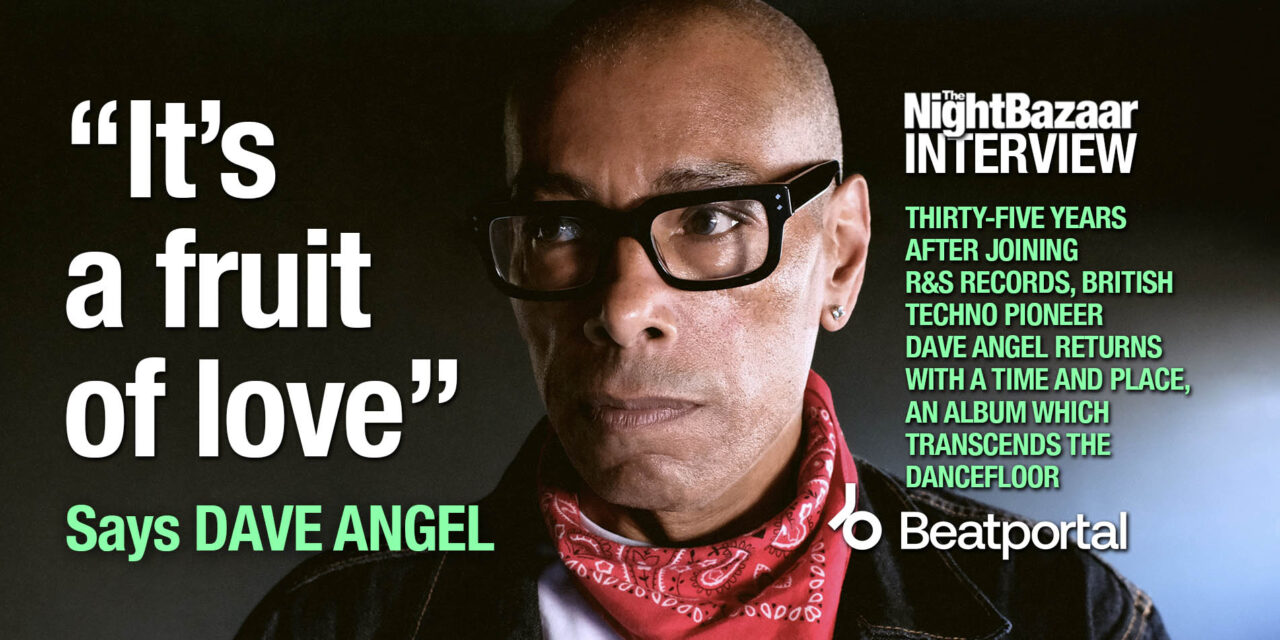
More than three decades after emerging as one of the techno’s pioneering figures, Dave Angel’s passion for musical exploration remains undiminished. Now, 35 years after beginning his relationship with the legendary R&S Records, Dave reunites with the Belgian imprint for A Time And Place, an ambitious 15-track album that reveals perhaps his most personal and musically expansive work to date.
Drawing on a lifetime immersed in jazz, soul and electronic music, A Time And Place moves far beyond the confines of the dancefloor. Featuring collaborations with acclaimed trumpeter Steve Waterman, house music icon Robert Owens, guitarist Merv Carswell and Dave’s daughter Aurii Sky, the album reflects an artist whose creative outlook has been profoundly shaped by family, loss, nature and the passage of time.
For Dave, this is much more than another album. It’s an opportunity to reconnect with his musical roots, embrace new perspectives and create something with genuine longevity. In an open and candid conversation with The Night Bazaar, he reflects on his enduring bond with R&S, his lifelong love affair with Miles Davis, the stories behind the album’s collaborations and his concerns about the world we’re leaving for future generations.
Along the way, he reveals why making A Time And Place became an all-consuming obsession, why he refused to compromise his creative vision and why, after more than three decades at the forefront of electronic music, his enthusiasm for what comes next remains as strong as ever.
A Time And Place is a mind-blowing piece of work. You must be so proud of it.
Thank you so much, Mark. A lot of love has gone into it. A lot of love, and you know, a lot of it is kind of family orientated. As you are getting older. You tend to see things completely different. I mean, after my illnesses and losing my brother and being blessed with grandchildren and discovering nature again. Do you know what I mean? Those things just kind of like went over my head before. It was all about machines and fucking music and that was it. That’s all I had in my head, you know, like a fucking dog with a bone. I was just rabid.
The album arrives 35 years after you first joined R&S. R&S a big label for you and you have described the album as a continuation of a conversation left unfinished. What reconnected you with R&S and did it generally for you know feel as though that creative conversation that you started say five years ago had never really ended with them?
The connection and the relationship that I have with R&S Records is it runs deeper than just music. It’s a friendship, it’s a bond, it was a movement at that time when we first connected back in the 90s. Making an album like this, for me, you want to go to a place where you know that you’re loved, and you know how they operate. You know you can trust them. You know they believe in your music.
We had loads of other offers on the table, but with these people it’s like going down a dark alley. I don’t know these people. Do you know what I mean? Do they believe in my music? Do they love me? Do they want to push this project forward? Whereas with working with R&S I know all of those factors are ticked. And that’s the reason why I signed the album to R&S.
Looking back now, how important was R&S in giving you the freedom initially to develop a version of electronic music that didn’t necessarily conform to what other people thought it should be? R&S are all about the broad spectrum and very forward thinking.
Absolutely. Renaat (Vandepapliere) has a very open minded approach to music. He’s a music lover just like myself. You know it’s the horrible thing about today in terms of music is if you aren’t in a certain pigeonhole, then it doesn’t work for some people. Do you know what I mean? But the beauty of R&S is that they are open. Renaat is open to anything that is good. If it’s good, then we can work together. You’re not in a cage. You know you can push your shit forward and this album really is a representation of me and how I feel at this time and place within my life. So, yeah, man. I mean, back in the day, yeah, okay we all want to make DJ tools so that we can make a new track and play it out and stuff like that. But it’s gone beyond that now. It’s gone way beyond that. It’s a different mindset. It’s a different way of thinking in terms of musicality and making something that has longevity and to be appreciated as well is paramount.
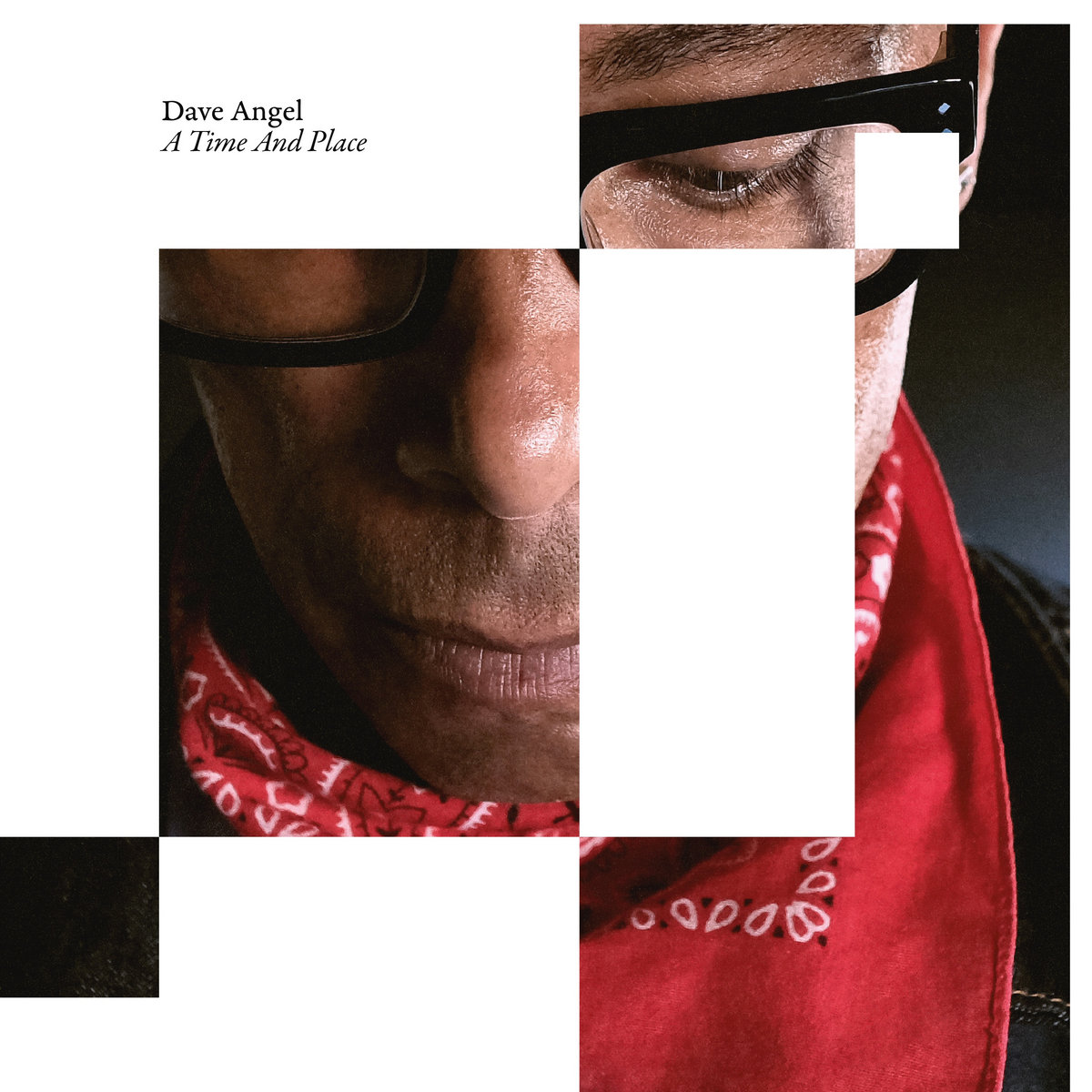
Dave Angel – A Time And Place
You say it’s a time and a place and where you are in your life right now, but it is to me very forward thinking throughout the whole journey of the of the album and it’s obvious you didn’t want the album to be an exercise in nostalgia with R&S Records. I suppose that’s another great reason why R&S was a great, great stable for it to land on?
Yeah, I didn’t want that. not at all. You know, It’s like a boxer. If you’ve got a good team behind you that it helps you believe in yourself. There wasn’t like a buildup of sending tracks to Renaat. I didn’t submit it to him until I had the full picture and then I sent it to him to listent and he was like, “Oh man, I’ve listened to it, you know, constantly for days”.
Yeah, that’s what he told me.
He was even like, “you know, it’s becoming an obsession now because I’m listening to it too much. I need to step back.” And that was the beautiful thing about it, you know. It’s not like with major labels like Island Records or whatever, they pop in, they want to hear, so they know all the tracks as you’re working. I mean, working with a label like Island Records which I was signed to, and they would come down and okay, right, this track, this track, they listen to this track, they listen to that track, and they’re like, yeah, cool. Next week they come down and do the same thing again. And whereas with this, I had the freedom just to be me and just to express myself. And you know, I did. I did kind of shut myself off. I shut myself off, locked myself down, and just totally focused on working on the album.
I also refused a lot of remixes and requests from people and to make an EP or whatever. You know, club stuff and that. My mind wasn’t there. My mind’s not there. My mind is totally focused on this album and I got consumed with it. I’d just I go to bed and I’m thinking about the album. I’d wake up, I’m thinking about the album. So that was the way. It’s really weird because when I’m working on an album, especially this album, I just shut everything off. Even my wife, she’s like, “you’re in a studio again”. Yeah, I’m in a studio again, and the good thing is that the studio is just a few steps away from my house.
I converted the double garage when we bought this house. My wife went out looking for houses after we was renting this place when I moved to Swindon and she found this house. It was like a new build on a new estate and very few houses were there. And I walked into the master bedroom, and I went, “Yeah, this will do. That’s my studio.” I didn’t care about anything else. Do you know what I mean? Because I only had two boys at that time and then I had my daughter! So, I said, “Pat I’m going to go and rent a unit”, and she went, “No, you’re not. You’re gonna have to convert that garage” They would never have seen me otherwise. Do you know what I mean? I’d have been there day and night. I’d even have put a bed in there knowing me.
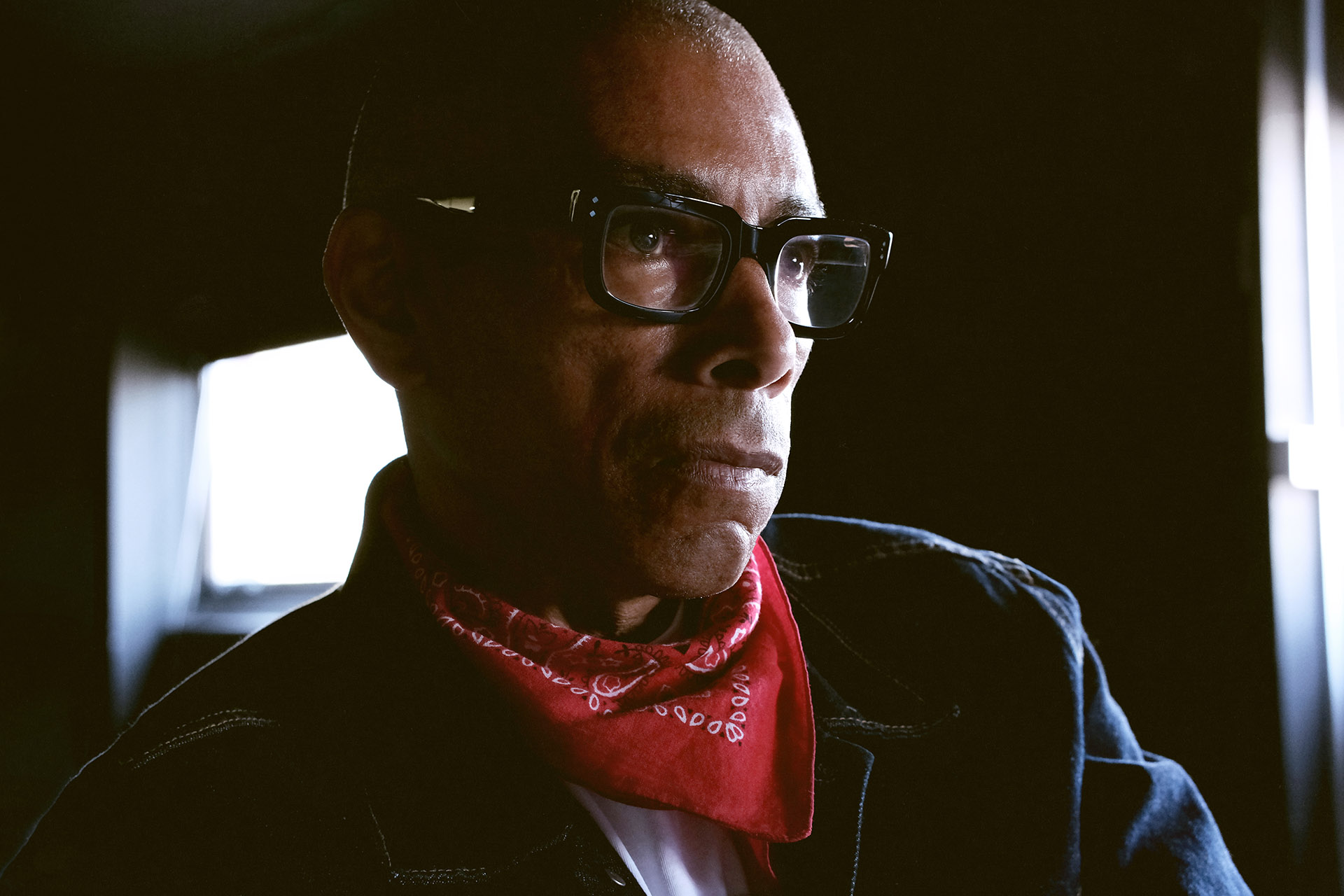
Dave Angel
How long did it take you to make the album?
Two years. I’d make a track, and I’d step back for a bit, and you know seek more inspiration, and then I go back into it, so it was a slow process, and there was loads of other tracks as well that didn’t actually make the album. I’m a Tory and I try to be very thorough, we’re known for being pretty slow at what we do, but thorough.
You grew up in a in a household immersed in live music and jazz, didn’t you?
Absolutely, man.
So, was this album about reconnecting with your earliest influences as well and your musical foundations?
Well, the thing is I didn’t want to make a club album because I tend to see them as quite disposable. If you make an EP of dance tracks or club tracks or whatever DJ tools, you know, you play those DJ tools for a month, and then the next month it’s gone, it’s disposable. So this album, I really wanted it to be something that could be a bedrock in your collection, something that you that you could revert to five years from now and still enjoy it. So that was the beauty of it. That was my main objective.
The track Réflexion introduces Steve Waterman into that world with his trumpet, bringing the sort of jazz-driven dimension to that track. What did you hear in Steve’s playing that made you feel that he was the right musician to join the project?
Steve is a very talented musician, also a teacher as well. And the thing is, I heard a friend of mine who used to record for my label Rotation, Paul Hazel, and Paul had done some stuff with Steve. I heard this project that he was working on, and I was like, man, this guy, I love his tone. He sounds like Miles Davis. I have this long-lasting love affair with Miles Davis. Yeah, he is my pillow. He’s my cushion, you know. Ever since I was a child, ever since I was a baby. He would play lullabies to me in my crib. My dad discovered that he had this piece of music called Filles De Kilimanjaro by Miles Davis. I was a noisy baby. I used to cry like fuck, apparently. And my dad discovered that this piece of music would just shut me up, and it would do, and it still does today, it just has this reverence about it that makes me feel calm and relaxed.
Steve was doing a show not far from where I live, and so I went down there, me and my son, to check him out, and it was weird, you know, because there was like lots of old people in there. I mean, real old people, like in their 70s, 80s. You know what I mean? And me and my son went in there. My son, he was like, “Dad, I don’t feel comfortable in there. You know, there’s no black people in there.” I was like, “Don’t worry, music has no colour. We’re here strictly to listen to Steve.” So we go in there, listen to Steve, and that kind of like just cemented it for me. And I was like, “Yo, Steve, I’ve got these tracks. I’m gonna send them over to you, and I just want you to be you, from what I’ve heard.” So he recorded them for me, sent them over. Everything just slotted together. It fit like a glove, man. It was just yeah, it was amazing,
Apocalypse takes us sort of down a bit of a darker route with the concepts reflecting on humanity, destruction, and events unfolding around the world. Was there a particular moment when sort of those concerns began taking shape into a track and finding their way into your music?
Well, it’s something that I look at every day and the way we’re treating this planet, it’s disgraceful. And people in power, Trump and shit. You know, his mindset of you know it’s all fake news. It’s rubbish. Global warming is a joke, you know. It’s all rubbish, man. You see the extreme summers that we’re experiencing now. It was not like how it was when we were kids. ‘76 was probably the hottest summer that I can remember. I can remember me and my brother going to the park to get into the paddling pool, and I would walk bare feet and the heat from the concrete on my feet would burn me. These days, it’s become even more extreme.
And the plastics. Why are we still using plastics? And they end up in the ocean, killing marine life and it fucking vexes me. it really does. So, Apocalypse reflects how I feel. You know, it needs to be addressed.
Robert Owens appears on Harmony Serenade. How did he become involved, and what did his voice bring to the record that you know you felt his voice specifically needed because he’s a very famous vocalist in the scene, and obviously this is a very different approach for him.
We all know Robert Owens and he’s been cemented in house music since the beginning. I’ve always had a lot of respect for Robert, and he had done an album maybe a year before I started my album, and he asked me to produce a track on his album, so I done that track for him, which is more of a kind of you know typical house vibe and stuff and I’d sent this track to Robert via another friend of mine called Jamie Anderson.
Jamie is like my brother. So, he has his studio in Berlin and he works a lot with Robert practically on a daily basis. I spoke with Robert. I was like, Robert, I’ve got this track, it was more of a house track. And I sent it over to him, and he done his thing, sent it back to me. As I was listening to the track, I thought, this is good, but it’s not where I want to go. So anyway, Robert was going to be in the studio the next day and I was working on this ballad. So I had to finish the ballad that night to send it back to Jamie so that Robert could put his vocals on it.
I had this small window and I finished the ballad, sent it over to him. It must have been about 3 o’clock in the morning. Next day, Robert and Jamie go in the studio and Robert fell in love with the track straight away and did his parts on it and sent it back to me, and I just thought, yeah, this is nice. This is what I like. This fits perfectly with the album, and not only that, I think it brought something deeper out of Robert than just the normal standard house stuff or techno stuff that he does, you know. So I think I really pushed Robert and got the best out of him on that track.
Another player is Merv Carswell, contributing guitar on Sprinkles From Above. When you’re combining live players like that with electronic production, how do you preserve the spontaneity and imperfections that come with somebody playing live like that?
Well, there again, you know, Merv Carswell, he’s also a teacher and a wonderful musician. So I gave him that trust. Once he gets going, he’s like a machine this guy and every note that he plays, it just sits in there and my synth parts and his guitar, they have this conversation. I think it’s an amazing piece of music, really.
One of the album’s most personal collaborations is with your daughter Aurii Sky on Do You Feel What I Feel. What was it like bringing your family directly into your creative process?
She has an amazing voice and I’ve always tried to push her to come in the studio. Her confidence wasn’t high and it wasn’t until I recorded her and played it back to her and said, “Listen, that’s you,” she was like, “Oh, Dad, you know, it sounds all right.” I was like, “Cool, well there you go. You can do it!” So having her on the track, I think it helped both of us really. It helped her confidence and it kind of gave me a sense of I told you so!
Do you think electronic music places enough value on musicianship, or has technology made it too easy for producers to lose sight of musical ideas and take the easy route of rigid production structures?
I think technology has always played a massive part in music, and the thing is when I was a kid and I was playing drums for my dad, who’s a jazz session musician and at that particular time, it was just your regular brass, bass, drums, guitars and no synthesizers. Some musicians like technology. Some musicians don’t. How do you think drummers felt with the advent of the drum machine? They were frightened. They were scared. Do you know what I mean? They were frightened. They were petrified. How am I going to make a living from my craft that I’ve I’ve worked on for so many years to perfect? Now you have a drum machine that can do these things. But the connection for me, technology and music, it’s always been a natural progression.
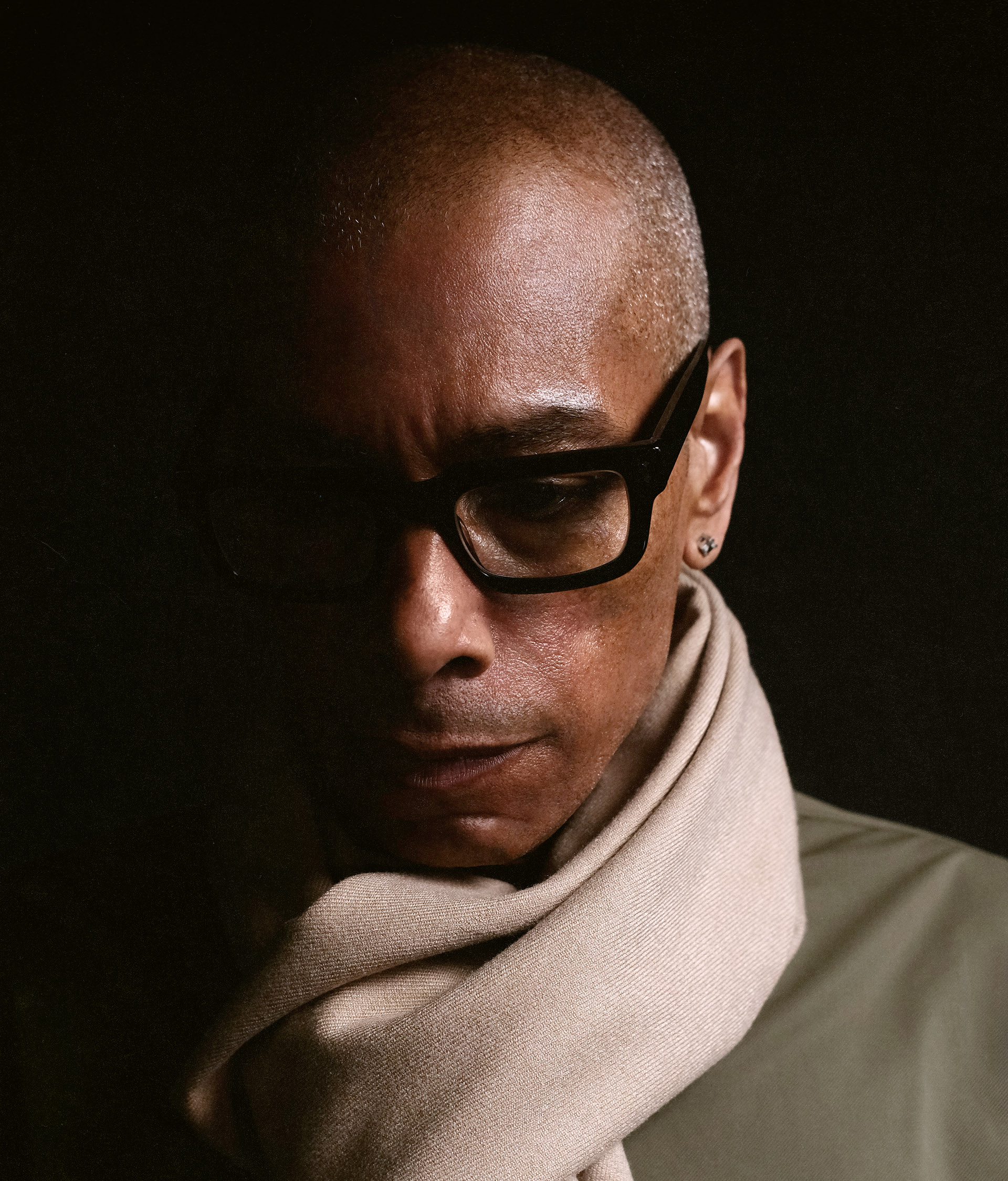
Dave Angel
Where does Dave Angel go next from here?
I don’t know. I really don’t know. We’ll have to wait and see. Knowing me, I’ll probably be back in the studio working on another album soon, and you know, as I said, R&S is a good home for me. I know that I’m loved. I know that Renaat loves my music, and yeah, I’ll just keep pushing forward, doing what I do, what I’ve always done. I’ll go off and DJ at the weekend, and the rest of the week I’m in the studio. There’s going to be more.
It’s a feeling, isn’t it? It’s an emotion. It’s how you feel at that time. You know, do I want to listen to down tempo music? Do I want to listen to house music? Do I want to make some techno music? You know, however I feel at that time when I wake up in the morning, or inspiration takes me while I’m out walking in the forest. All these little things. I’m like, yeah, I’ve got to get back into the studio. I’ve got this idea. I’ve got to do this, you know? That’s the beauty of technology.
Back in the day, before we had total recall, where you can totally recall everything that you made two weeks ago on your laptop or your studio computer or whatever, if I started a track in the studio with the desk, you know all my settings, everything you had to finish that track before you moved on to the next one. Whereas now, you can you can just be like okay, right, I think I’ve reached where I can with this right now. I need to shut it down and come back with a clean head. And whatever’s wrong, whatever’s right in the track, as soon as you hear it again, it will just jump straight at you and you know what to address at a particular moment.
Yeah. So that makes making music easier than it was back in the day. Not just from the technological point of view, but you’ve got you’ve got a lot more headspace to concentrate on music for a lot longer and live with it for a lot longer.
Absolutely. I mean, you know, I could pull up projects that I’ve made like five years ago. Now, you couldn’t do that back in the day. I mean, it would never sound the same as much as you tried because the desk, it’s been changed, all your settings, all your effects, everything is all changed. So, you’d be trying to get that sound back, but you couldn’t. It would never sound how it sounded when you left it.
How would you sum up your album in one sentence?
It’s a fruit of love.
Dave Angel – A Time and Place is out now on R&S Records. Grab it on Beatport HERE.
Check out The Night Bazaar full Beatportal archive HERE.