





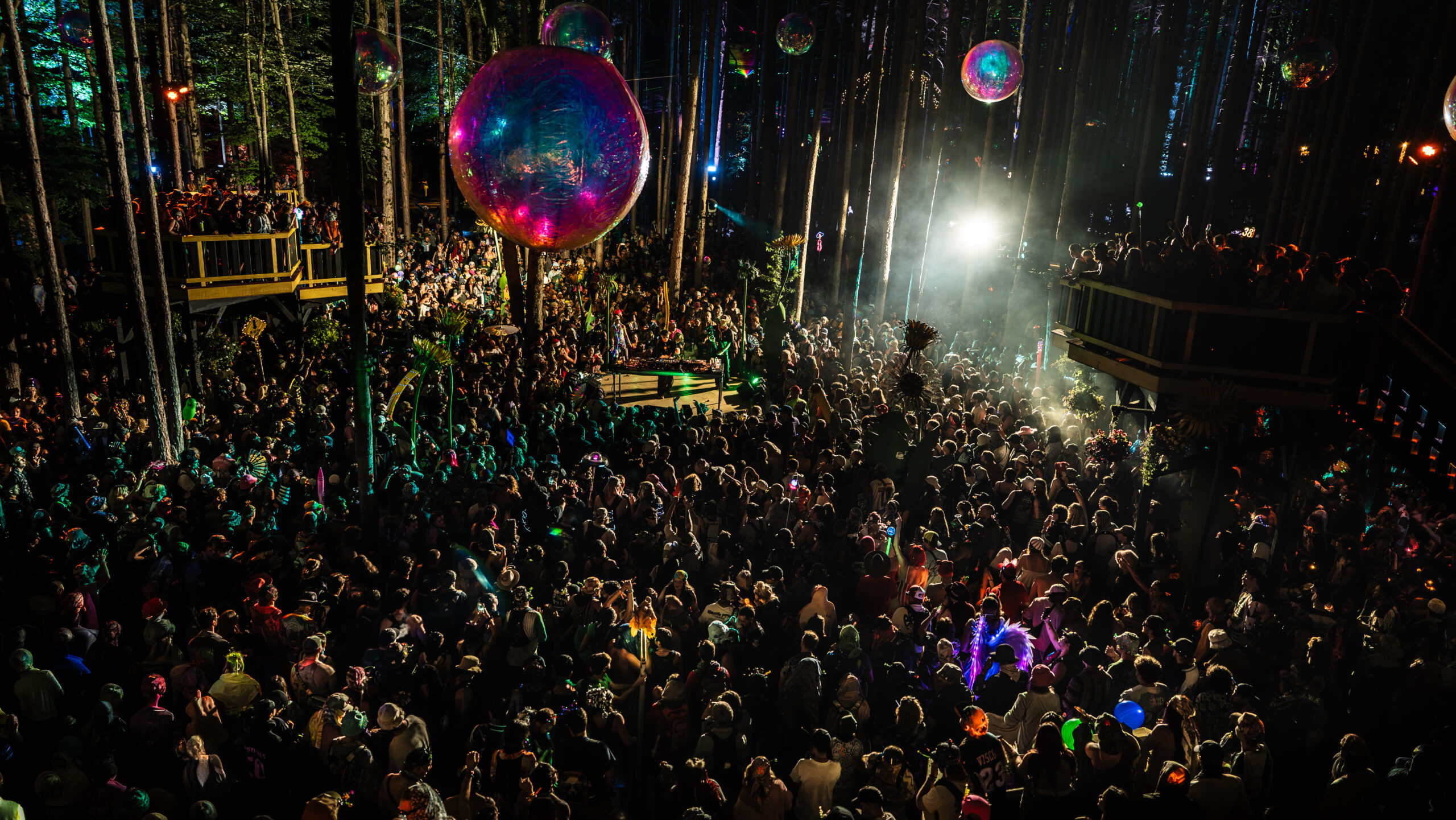
Drawing on his roots in underground hip-hop, Y2K pop and an instinctive understanding of what moves a dancefloor, COSTA has developed a distinctive sound that combines cinematic tension, explosive bass and unpredictable arrangements. With performances at Bonnaroo, Electric Forest and Forbidden Kingdom, alongside a rapidly expanding headline tour, his transition from bedroom producer to rising star has been remarkably swift.
Now, following his debut originals You Got Me and Dimension, COSTA reveals a more introspective side of his artistry with Siren Call, a collaboration with singer-songwriter Linney that explores self-doubt, vulnerability and the pressures of expectation.
We caught up with COSTA to discuss his unconventional musical beginnings, the influence of hip-hop on his production, the extraordinary experience of playing Red Rocks on graduation night, and how Siren Call represents the beginning of a new creative chapter.
Your journey into electronic music began in a rather unconventional place, working as a promoter and producer in the underground hip-hop scene. Can you take us back to those early days and explain how that experience shaped your understanding of music, crowds and what makes a record connect with people?
Music was always around me in one way or another, but by middle school it had taken over. I was the kid with headphones in during class. This was the heart of the SoundCloud hip-hop and rap era, and I was totally hooked.
The promoting started with a buddy of mine who could really rap. A few of us were convinced he was the next big thing and we wanted the world to hear him, so we figured we’d throw the show ourselves. That turned into underground shows in New York, New Jersey, and Connecticut, and nights in Brooklyn and Queens with talent coming through from across the tri-state. The first was a random spot in New Jersey with maybe 100 to 200 people. One in New York ended up selling out at five or six hundred tickets, which was wild for us at the time.
What really stuck with me was the intensity of those 200-cap rooms where the energy was so unfiltered, people were jumping off risers, the whole place would just erupt the second an artist was about to step onstage. It was chaos. It had almost a cult mentality, and I loved it. But that chaos isn’t random. There was a system underneath it all, and that was the real education—what makes a room move and how to actually move it. I learned how to feel a crowd shift in real time, how to sequence a night so the energy builds instead of stalling, and how to find talent before anyone else is looking. You can’t pick that up from the outside. You have to be in the room, fully immersed, to understand how each element catalyzes the next. Those experiences totally informed how I approach my own sets and production today, it’s an energy I still chase.
You’ve spoken about discovering bass music at a Tape B show in Washington DC in 2024, an experience that apparently changed the direction of your life. What do you remember about that night, and what was it about the music and atmosphere that made such a profound impression on you?
Honestly, the first thing that comes to mind is how random and unremarkable that night felt when it started. My friends convinced me to go. I’d never listened to bass music, it wasn’t part of what I was into at the time. I was still deep in hip-hop, making beats between coursework and sending them to rappers, hoping one would stick and I’d hear someone bring something I made to life. I think the closest I’d come to electronic music was the big-room dance tracks that were super popular in our college scene, you know, the emotive kind that makes you want to cry (in the best way). In short, I really had no idea what to expect, but I was down.
Then Tape B started his set, layering rap vocals over trap-inspired bass, and it cracked something open in me. It was everything I loved about hip-hop, hitting in a way I’d never experienced before. What struck me most was how familiar it felt. This was hip-hop production, the world I knew, but with the sound design on top that pushed it past anything I’d ever imagined, giving the genre a whole new ceiling.
The connection between his set and the crowd was entirely new to me, too. At a rap show, the crowd comes for the rapper, and the producer effectively fades into the background. Here, the room had come for the production itself, with other producers’ music worked into the set, turning the night into this shared exploration of sound. It felt like a community built around the craft, and I’d never seen that around beats before. I’d stumbled into a corner of music I never knew existed, and by the end of the night I knew I had to find my way into it.
I went straight home and started experimenting with the sound. My first attempt was a mix of a Speaker Knockers song, and it was terrible, but I dropped it anyway. Soon I was digging deeper into the artists around Tape B, and absorbing as much as I could about the sound. That night totally rewired how I thought about the genre, and it’s still the clearest line I can draw between who I was and who I’ve become as an artist.
At the time, you were studying biomedical engineering. Do you think your scientific background has influenced the way you approach sound design and production?
I think in some ways yes, but not necessarily in the way people would expect. I actually went into engineering as a science kid. I thought it was the right path forward for me, career-wise. In school I was really into space, chemistry, on the International Baccalaureate Diploma Programme track, and genuinely good at it. In college, I was studying stem cell therapeutics, the new frontier of medicine, and seeing how it could help people made me think, ‘Wow, I could see myself doing this with my life’.
But the deeper I got into the coursework, the more the distance between where I was and where I felt like I should be kept growing. I’ve always followed my instincts, and once that feeling takes hold, that this isn’t the right fit and there’s something else waiting, you can’t really unfeel it. So on the one hand, it definitely affirmed what I’ve always believed: listen to your gut.
What it really gave me though, was the ability to lock in. The courses were brutal. I’d procrastinate before exams, then sit at a desk for 10 to 15 hours and get it done. I called it my ‘three-foot world’you focus on the task in front of you, block out everything else, and you’re happy when it’s over because you worked through it. Biomedical engineering and music may be inherently different, but that mindset I applied to my coursework is the same one I bring into the studio.
It also taught me to solve problems systematically and let the data lead. For example, I’ll make version one of a record, then tweak it, then tweak it again, and the small changes add up. Some of my best moments are creative accidents. I’ll hit a button by mistake, think ‘hold on, what was that,’ and then figure out how to make it sound better. I do the same thing in my sets, reading the room and adjusting to how people react in real time, be it for my next show or back in the studio. That trial-and-error loop is straight from the lab.
Your early SoundCloud releases were predominantly flips and reworks, attracting more than five million streams within a year. What was your creative philosophy behind those tracks and at what point did you begin to realise that what started as an outlet for experimentation could become a serious career?
In the beginning, it was a lot of blind experimenting rather than a set creative philosophy. I’m entirely self-taught, I didn’t have a mentor and I never took lessons, it was just me, my imagination, a lot of trial, error, and YouTube tutorials. Basically, I was just running things back until they worked. I think I dropped something like 30 songs in 40 days with zero industry pressure attached, which might be the most creatively free I’ve ever felt.
Flipping other people’s records taught me the technical stuff: what makes a drop actually smack, how to treat a vocal, all of it. But more than that, it taught me what I actually gravitate toward in this space. There was this stretch early on where I pivoted hard into pop, I did five remixes in three weeks—stuff like Britney Spears and Timbaland hits and they all blew up pretty fast, most of those flips are over 500,000 streams now. But that was also when I really started to hone in on what my style actually was: something digestible that everyone could enjoy, but still completely unpredictable. Ultimately, the comments were my guiding light throughout. SoundCloud lets listeners comment at specific timestamps, so if a lot of people were reacting to the same spot, I knew we were connecting there, and if nothing happened, I’d reopen the project and rework it (never scrapping the whole vision, though).

COSTA
The idea that this could turn into something real definitely didn’t click all at once. The first spark was around my tenth remix, when one of my tracks hit a few thousand streams in its first week. That was probably one of the first moments that I realized what I thought was cool, other people also thought was cool. As you can imagine from my college dorm room, that was kind of insane to experience. Then, Subtronics downloaded my Flux Pavilion ‘Bass Cannon” flip and played it at a massive show. Everyone around me was like , ‘Do you understand what that means?’ It still didn’t feel like a career yet, by any stretch, but it legitimized what I was doing, and that’s when I really started locking in more seriously.
What made it feel really real was signing with my management team. They came in with a clear vision for how to grow the project, and that’s when I finally sat my parents down and told them this wasn’t just a hobby. They were on board, as long as it could actually sustain itself, which was fair, ha. Not long after, I got a support slot at Red Rocks. I’d figured that was years away, but everything I’d planned for the next five years started happening in about two months. If I’m being honest, it all still doesn’t feel real sometimes.
How would you describe the COSTA sound and how important is it to you to avoid being confined by conventional genre boundaries?
My sound can best be described as high-energy, cinematic and nostalgic, with a lot of range and plenty of ear candy. I never really know where I’m going to take a song once I start it. One idea cascades into the next, and it usually ends up somewhere I never planned. It’s intentional in an unintentional way, sort of like the butterfly effect. To me, every track is its own world, with a high and a low, a climax, and a plot-twist intended to wreck a room. I try to deliver something unexpected at every turn–basically, I want people to hear a COSTA track and never quite know what’s about to unfold, same as me, ha.
Not being boxed in is at the core of my artistry, both where I am now and where I want to take it down the line. I came into bass music without a fixed idea of the rules, so I learned the genre as I went and never developed a strong sense of what my music music should or shouldn’t sound like. I just take what I’ve learned from the new age of bass and bring in hip-hop, pop, and whatever else feels right for a given track, while keeping the essence and heart of bass intact. I like to think of my sound like growing a new branch on an existing tree. Instead of a whole new tree, it’s just a different colored apple.
My production approach for my early SoundCloud flips really reinforced all of that from the jump. The more I leaned in, the more I realized I wasn’t trying to fit into one genre or another. I wanted to take what I had learned from other sonic worlds and push it into bass music, through my own lens. Every remix became a kind of test, and not everything hit, which was fine. Not every song needs to. It was more about the range of what I was experimenting with than every single song landing every single time. By the time I released my originals, I had a clear picture of my sound, because I’d spent a year stress-testing it on other artists’ music.
Ultimately, I wanted my music to hit for bass heads who’ve been with me since the remix days, while having it feel like an easy point of entry for anyone just stepping into the bass side of what I do for the first time. That’s kind of always been the goal for me. Not picking a lane, just building my own and keeping it a little undefinable. That’s genuinely just what feels most authentic to me.
COSTA
Coming from a hip-hop background, how much of your approach to rhythm, sampling and arrangement still reflects those early influences? Are there particular producers or artists, inside or outside electronic music, whose work has fundamentally shaped your creative outlook?
A lot of it, the genre is foundational to my sound. I first started producing during quarantine, almost exclusively hip-hop & rap focused. I’d take a vocal from an artist I loved, like Sofaygo, Drake or Juice WRLD, strip it out, and build a complete sonic atmosphere around it from scratch, with no reference track. That didn’t quite take off, ha, but it’s where I learned that creativity doesn’t have a ceiling, and doesn’t need one. A freestyle can go anywhere. Ideas come out on the fly, and the beat can take it somewhere entirely new at any second. With hip-hop, everyone locks into something different—some people wait for the 808s to kick in, others follow the flow, or hang on the lyrics. I’ve always been able to hear all three at once and, to me, that intersection of chaos and synergy is what makes a track feel cohesive.
My process still almost always begins with a vocal. I call it putting my “A&R ears” on: I listen for a tonality, I connect with and a lyric that leans somber, emotional or celebratory, and I pay attention to the cadence. I’m drawn to minor melodies and that one-semitone jump, which creates tension all on its own. From there I lay down root notes and let the cinematic progression take over, holding the suspense until the drums come in, then the counter-lines.
Those drums end up driving everything. Once I have the initial bass and a rough arrangement, I go back and write a hip-hop drum pattern, because every kick should land like a thump in the chest. I treat the drop as an instrument of its own and listen for how the vocal’s flow plays against that groove. My version of sampling is taking an acapella, picturing how it would sit on a beat, and constructing a world around it, one layer at a time. Since I only ever know the starting point, a song usually lands nowhere near what I pictured, and that’s the best-case scenario.
To answer your second question, I’m a product of my influences, and they come from a lot of different worlds, which is reflected in my sound. Inside of electronic music, I feel really lucky to be surrounded by such an insane level of talent as my career has grown, Tape B of course, along with the likes of Subtronics, Crankdat, Levity, John Summit and more. Honestly, a lot of what I’ve learned in this industry has come from just watching and learning from the people around me, it’s an education in and of itself.
Outside of electronic music, my sound was shaped by hip-hop producers. I studied Southside for his drums, Tay Keith for how he makes sections flow into one another, Nick Mira for the way his melodies and counter-melodies interlock, and Metro Boomin for how he makes a single song feel like its own universe, with an identity all its own.
Even beyond the music, hip-hop shaped how I think about building a brand as an artist. A$AP Rocky, Travis Scott and Tyler, the Creator built whole ecosystems around their work, pushing into fashion, visuals, and culture, and they showed me that a record connects because of a moment and how the listener makes it their own–not just because of the sound. That’s changed how I think about my own artistry, and about what I want the experience around the music to be for my audience.

COSTA
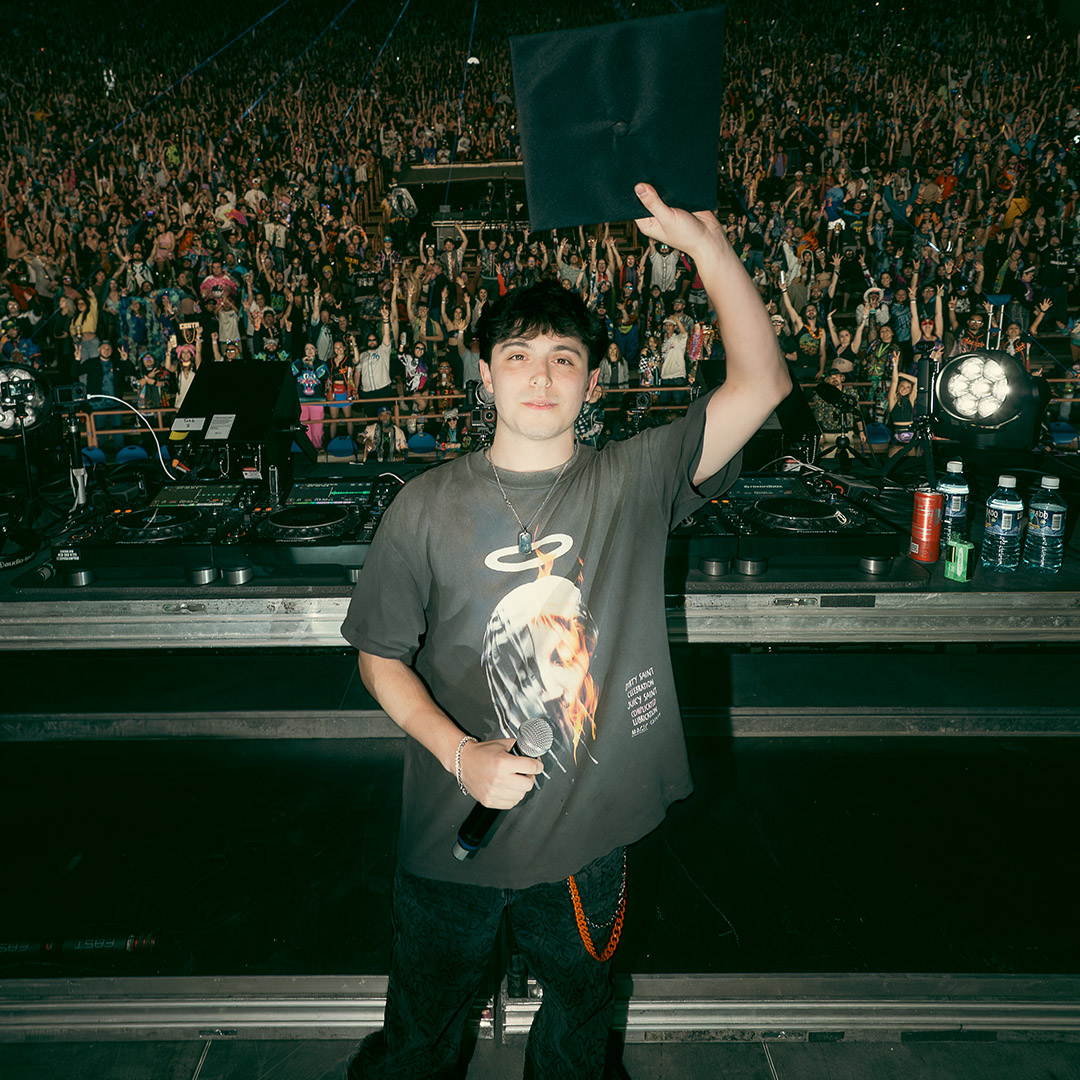
The speed of your rise has been remarkable, from making music in your dorm room to performing at Red Rocks on the very night of your graduation. Can you describe the emotions of that day and what playing such an iconic venue meant to you?
It’s still hard to put into words. The year leading up to it was a balancing act. I had professors and exam deadlines on one side and release deadlines on the other and there were plenty of moments where I wasn’t sure both would work. So, standing on that stage felt like proof that the balance had held. It was the first show I ever invited my family to, so I flew them out and my girlfriend came too. The whole night basically became my graduation party, it was sick.
I feed off the crowd’s energy at every set I play and that night the room gave it right back. Getting that reaction from fans, and from people in the industry I look up to, was incredibly validating. I was closing one chapter and opening another on one of the most iconic stages in the world, and I don’t think I’ll ever have another night quite like it.
Has there been a particular moment when you’ve been able to stop and appreciate everything that’s happened, or does the momentum make it difficult to process just how far you’ve come?
I’m still trying to wrap my head around it all. I am so unbelievably grateful, every day, that I get to call this my career, and I don’t take a second of it for granted. Between my “three-foot world” and the pace of the road, I feel like I’m constantly in the zone or on the go, but there are for sure those moments that ground me back in reality.
Bonnaroo was one of them. It was one of the toughest sets I’ve played, with technical difficulties and weather working against us, and people still showed up and the vibes were great. It reminded me what matters: everyone being there together, in the moment, no matter what that looks like, for the music and for each other. That was a really special one.
But truly, the moments that stay with me most are the everyday ones: watching people interact with my music, online and out on the road, especially since my headline tour began. It’s the small things, like when I drop a flip and everyone reaches for their phones, but they’re not filming me. They’re filming each other, because the moment means something to them. That’s when it lands for me, and I think, ‘Okay, this is real.’ It’s the feeling I always try to build into my own records and I love to see that come to life on the dancefloor.
COSTA
There’s something particularly interesting about an artist experiencing such rapid success creating a record that confronts self-doubt and vulnerability. Have the pressures and expectations surrounding your career intensified those feelings and was making new single Siren Call a way of confronting them?
In a way, yes. When you’re chasing something, the expectation attaches itself to everything, and that’s the feedback loop the song is built around: your own thoughts start turning against you. No matter how far you get, there’s always a little doubt waiting for an opening, and a year like this gives it more to work with. There are more eyes on you and bigger rooms to live up to.
Writing lyrics for the first time was its own kind of uncomfortable, but I’ve learned to lean into that. Making the song didn’t make the doubt disappear, but it gave it a voice outside my own head. Working with Linney on this one, who has felt the same pressure from a different corner of the industry, made the whole thing feel less isolating. The whole experience made me realize how universal that feeling is. If someone hears it and feels a little less alone with their own doubt, then the track’s done its job.
Linney’s vocal performance plays a central role in creating the track’s haunting atmosphere. What did she bring to the collaboration that you might not have achieved working alone and how did the relationship between her voice and your production develop during the creative process?
Linney is incredibly talented, and the collaborative process felt so natural. She brought a songwriter’s instincts, which is something I’m only just starting to lean into. I approach a track through a production lens: tension, drums, atmosphere to build a world around a vocal. Linney is a producer and a vocalist, so she understood both sides of the song and knew how to turn a feeling into words that could carry it. Left alone, I think I would have made a darker, more abstract record. Her perspective made it human and specific.
The track was unearthed in the studio, over a six-hour co-writing session, shaped by our conversations and shared experiences. We kept a running document of ideas, trading lines back and forth and working in double entendres, until the lyrics and the production were telling two sides of the same story, together. We kept returning to a few images: a cry from underwater, the fear of letting someone see every part of you, and what happens when you’re on fire and the people around you either put you out or let you burn. What you’ll hear on the final cut is Linney’s voice and my production twist around each other, hypnotic and almost submerged, resulting in an atmosphere that closes in like walls: claustrophobic, but impossible to tune out. It’s awful in the best way, cathartic really.

COSTA
Bass music continues to evolve, increasingly absorbing influences from hip-hop, pop, experimental electronica and other genres. Where do you see yourself fitting into that changing landscape and are there aspects of the scene that you would particularly like to challenge or push forward?
I see myself as a bridge between the worlds I come from and the one I’m in. I don’t want those worlds to feel like separate lanes. I want them in the same moment: a drop that hits hard and a lyric that leaves you a little exposed, without it ever feeling like I’m switching between the two.
What I really want to challenge is what a bass record can be about and what it can look like, quite literally. Nobody else is in the room when you write a song. A casual listener can catch the vibe without ever knowing why it exists, and that’s fine, but I want the experience to be total. The visuals, the creative direction, the world around the record all carry the emotion past the speakers, so the feeling that was once mine alone becomes something anyone can enter, and make their own. In a way, the listener becomes part of the creative process, experiencing each track with their own interpretation.
Nothing shows this better than the assets for Siren Call. Linney and I built two mirrored visualizers, one starring each of us, so the same spiral unfolds from two perspectives. Side by side, the films call and respond like a voice and its echo, because the feeling is both universal and deeply personal. That’s the kind of space I’m really striving to carve out in bass, a world anyone can walk into, but no one walks out the same.
You’ve achieved an extraordinary amount in a relatively short period, but you’ve also only recently begun releasing original material. Does that make this feel like the real beginning of COSTA as an artist and what creative ambitions are you most excited about pursuing next?
Honestly, yes. At the end of the day, remixing is reinterpreting one chapter of someone else’s story, and the originals are the first time the story is fully mine. “You Got Me”, “Dimension”, and now “Siren Call” are the first three chapters, each revealing a different side of what I can do, and I can’t wait to share more of it.
What excites me the most is how much room there is to keep evolving my artistry. I’m leaning into stuff that keeps me uncomfortable in a good way–trying new sounds, bending the rules a bit, and pulling from places most people don’t expect. I’ve been working on music with strictly pop influences, for example, and I’m having a lot of fun seeing how far I can take it. I’m also making more time to travel, meet new people, and soak up the scene, because the more I learn from the people around me, the more I have to say in my own music. It really doesn’t slow down from here, and I’m just excited to see where it takes me next.
For now, that story continues on stage. With the headline tour rolling full force, a third night added in Denver and a return to DC, I’m loading up every set with new edits, unexpected moments and new music, so every night is worthwhile for the people who showed up.
COSTA featuring Linney – Siren Call is out now Monstercat. Grab it on Beatport HERE.
Read The Night Bazaar interview archive on Beatportal HERE.