





Three decades into a career defined by musical experimentation and a refusal to conform to genre boundaries, Simon Shackleton is entering an exciting new chapter as Elite Force.
From his formative years exploring sampling and broken rhythms to pioneering the tech-funk sound alongside Meat Katie, Dylan Rhymes and Lee Coombs, Shackleton has established himself as one of electronic music’s most versatile and enduring creative forces. Along the way, he’s taken his sound around the world, enjoyed considerable success with his Revamped project, established U&A Recordings and explored more cinematic musical territory under his own name.
Now, with new single 4GET dropping, Shackleton is drawing upon his love of UK garage, bass music and rave culture while reconnecting with the euphoric dancefloor experiences that first inspired him. The release coincides with the return of his influential Strongarm Sessions after a sixteen-year absence, a series of Redux reconstructions of earlier material and preparations for his forthcoming eleven-track album Reverie in 2027.
In this extensive conversation with The Night Bazaar for Beatportal, Simon reflects on thirty years of electronic music, from the wild adventures of international touring and the creative freedom of The One Series to the changing relationship between DJs and their audiences. He also shares his frustrations with the smartphone dominated spectacle of contemporary club culture, explains why he’s finding fresh inspiration in a new generation of producers and reveals why, after more than 600 original tracks, his enthusiasm for making music remains as strong as ever.
What first drew you towards broken rhythms and how do you remember those formative years finding your identity as a producer?
I signed a development deal with MCA Publishing in 1992, which gave me enough money to buy my first semi-professional gear and set up a home studio. I was listening to Depth Charge, J Saul Kane’s alias, Renegade Soundwave and Meat Beat Manifesto, and loved those heavy beats being chopped up and pieced back together through samplers in new forms. Andrew Weatherall’s work, particularly his involvement in Screamadelica, was a huge influence because of the sampled beats and the fluidity of it, and how he gave the songwriting oceans of space to live inside of. Seeing the Young Gods live was another revelation: on record you heard these abrasive, industrial guitars, but onstage they were triggering them from samplers, and that really blew my mind.
Chopping up loops and samples was one of the first things I learnt when I got my samplers… I already had a few thousand records and was constantly digging through charity shops and bargain bins, filling DAT tapes with little passages I could use, building a library.
Howie Saunders, with whom I formed Flicker Noise and later Lunatic Calm, shared my curiosity about the point at which songwriting intersected with sampling. We spent a long time experimenting and finding our feet without ever coming close to finding a reusable songwriting template we could get behind. Later, hearing the Dust Brothers (aka the Chemical Brothers), at the Heavenly Social, I recognised the same spirit. Nobody was standing there thinking, “This is Big Beat.” Those labels came later. They always described their sets as Eclectic, and I felt at home among people who didn’t particularly want to belong to just one thing.
You’ve spent much of your career operating between genres rather than committing to one sound. Looking back, was that a conscious rejection of musical boundaries or simply a reflection of the different styles of electronic music that excited you?
It came from curiosity and a very low boredom threshold really. I got bored doing the same thing repeatedly, and there was always too much other music that excited me. In the late ’80s, I was just as likely to be listening to Big Black, Napalm Death, Philip Glass or Front 242 as anything purely electronic, and was particularly drawn to artists that combined those worlds, like NIN.
Albums were always the benchmark for creative expression for me, and I loved the room an album gave people to experiment, to stretch themselves. The context of where a track sat on an album could completely change how you heard it. As someone who was classically trained, playing in orchestras and singing in choirs, I was familiar with large-scale pieces that developed over time, but that extended into the world of rock and dance music. I remember buying Metallica’s Ride the Lightning on release day and playing it for weeks on end, fascinated by the changes in tempo and the way they injected light and shade across the record.
That appetite fed straight into DJing. My first set was to about 1,200 people at the biggest student night in the Southwest, and whilst I didn’t own a pair of decks, I had the confidence to wing it. In some ways I was ideally suited to those nights because I loved acid house as much as thrashy indie music, baggy Manchester stuff and early hardcore tunes. Putting an evening together from that range of music was a wonderfully complicated puzzle, and I’ve enjoyed working it out ever since.
The term tech-funk became synonymous with Elite Force, bringing together elements of breaks, house, techno and electro. How did that sound develop and did you feel you were helping establish a new musical direction at the time?
I always thought of ‘tech-funk’ as a term of resistance. It was meant to be inclusive, giving us room to move without having to declare ourselves house, techno or breaks DJs. It didn’t mean anything particularly fixed, which was its appeal – breaks, house, techno and electro were the cornerstones, but the balance could change enormously depending on the night or the city. If I’d committed to one style throughout my career, I’d have packed it in years ago.
The four main proponents were probably myself, Meat Katie, Dylan Rhymes and Lee Coombs. We played together, collaborated, made bootlegs and ran labels, so there was a lot of music passing between us, and over time, it did become a recognisable hybrid of those influences, and I probably got a little comfortable for a while making records that consciously brought them together… but I never felt I was establishing a ‘genre’, as such. I was mostly just satisfied to have carved out a DJ niche that let me go in several different directions on any given night.
You’ve witnessed countless changes in electronic music over the past three decades, from the evolution of club culture to the way music is produced, distributed and consumed. What do you consider the most significant changes and what do you miss most about the scene you first became involved with?
Honestly, what I miss most is being young, feeling indestructible and doing so many things for the first time… with wild abandon. I’ve been fortunate enough to experience all sorts of landmarks, and together they add up to quite an adventure.
By the mid-2000s I was regularly DJing in mainland China, for example, where an emerging middle class and these extraordinary new clubs were helping create an audience. My music seemed to spread from Hong Kong into southeastern China, and I remember arriving in Guangzhou, a city I knew very little about, to find a sold-out show with 700 people. People had made banners and I was floored that they knew who I was.
That brought home how far music could travel ahead of you, and I suspect file sharing had a lot to do with it. Someone with a computer could discover records that previously depended on access to imports and the money to buy them. For all the upheaval it caused, that opening up of access was enormous.
MySpace was another huge change. I put a lot of time into it and built an audience of around 60,000 followers. It remains the most musician-friendly social platform I’ve used, with your music, upcoming shows and audience in one place. Considering I’d been getting online since around 1992, dialling into local bulletin boards and hoping somebody might be there to talk to, it felt like an extraordinary, global leap.
I miss getting on a plane and heading into the unknown, having these ridiculous Lost in Translation-style adventures without thinking twice. I felt capable of going anywhere and kicking the shit out of a dancefloor and that took me to places like Kazakhstan, India, Finland, Mexico, New Zealand, Georgia, Ukraine and many more.
Your Revamped project in 2010 was an important moment, taking familiar records and completely rebuilding them for the dancefloor. It also brought considerable recognition, including a Beatport award and Breakspoll honours. What was the original thinking behind the project and how important was that period in establishing your reputation?
It started around 2008, when I was moving from Cubase to Ableton and doing an enormous amount of flying. I loved having ten hours on a plane to edit music, then landing, burning some CDs at the hotel and going to the club with a newly weaponised CD wallet.
I’d always organised my music by key, so I could easily find, say, 1,500 tracks in A and see what might fit together. There might be a vocal I loved in an otherwise uninteresting record, a bassline from somewhere else and a keyboard riff from another. Some versions contained six or seven tracks, so they sat somewhere between a remix and a mashup. “Revamp” seemed a good word at the time – it was new, hadn’t really been used and so I appropriated it.
The first was a Bar 9 dubstep track I edited on a flight to Spain, where I was playing back-to-back with Meat Katie. I loved it but found it too slow and sludgy for my sets, so I cut out the snares and moved them around to give it a double-time feel. I played it that night and the place went off. Then I tried approaching things from the other direction, filtering individual kicks out of techno records to change their rhythm. Every flight became an opportunity, and I quickly built a huge arsenal of tracks that no one else had.
For the album, my manager Tom Reed and I approached the artists and labels for permission. Those were unusual conversations: “There are seven records in this track, yours is one of them, and can we use that bit for free, or perhaps fifty quid?” We got the permissions, although I’m not sure everyone entirely understood the proposition. Crediting all the artists on Beatport also brought it to a much wider audience, and when ‘Revamped’ was released I held the top twelve positions in the breaks chart for what I remember being about a month, and finished the year with the best-selling breaks track and, I think, four of the top ten. It felt a bit like the great rock ’n’ roll swindle.
I even managed to miss the award ceremony in Miami because nobody had told me about it. After a couple of disappointing gigs, staying out by the airport because I couldn’t afford South Beach, I retreated to my hotel for three days and made eight more revamps. By the end I was completely fired up again. The project did a huge amount for my profile, but it began with wanting records I couldn’t wait to play that night.
Through U&A Recordings, you created a platform for your own productions and a particular musical philosophy. What were your ambitions when you established the label and how do you reflect on its contribution to the wider breaks and electronic music landscape?
U&A began because I needed a reliable way to release my music. Several labels I’d been signed to, including Whole Nine Yards, Kingsize and Adrift, had gone bust as UK distributors failed and vinyl sales declined. Fused & Bruised, my first label, had already closed around 2001, around the same time as Lunatic Calm folded, so I’d spent the following years working hard to build a career on my own.
The first three or four U&A releases came out on vinyl, but sales were plummeting and the distribution arrangement just made the whole thing far too risky. After that, I took it fully into the digital domain and ran the whole thing myself. I also wanted to give other people opportunities, and I’d come home from tours with bags of demo CDs and I found some great younger artists that way. Giving their music a home was satisfying, and it took the pressure off me to supply every release.
The label followed the same broad tastes as my DJ sets, including music that didn’t fit what people expected from Elite Force. Looking back, I think it was a really solid label: we put out good records and gave talented people a platform, as well as running some awesome club nights along the way. We resisted the purist approach that certain corners of those scenes might have preferred, but I hadn’t set it up to keep those people happy. It reflected the music I was finding and getting excited about.
The One Series became known for its extended, genre-crossing DJ sets. What appealed to you about the freedom of longer performances and how did those experiences shape your understanding of the relationship between a DJ, the music and the dancefloor?
For years I was booked almost exclusively as a headliner, playing an hour or two at the peak of the night. I could move between genres, but there was a whole range of music I loved that never got an airing. I’d also get frustrated arriving at clubs where the warm-up DJ was already redlining it. I have enormous respect for people who can start with an empty room and gradually build a floor, understanding their part in the evening rather than trying to steal it.
Burning Man opened things up for me again. After first going in 2009, I returned the following year and asked friends at a camp called Nutz if I could play a sunrise set. They had this lovely, relaxed camp on the edge of the city, looking out over the open playa, and I loved taking the energy down and playing slower, more reflective music that was in tune with the environment at that time of day.
That fed into the music I started releasing under my own name on a new label I set up called ‘Stereophoenix’, and in 2012 I decided to self-promote my own open-to-close night in San Francisco and ended up selling it out with over 600 people coming through the door. The One Series grew and grew from there, and at iconic venues like Public Works in San Francisco, I’d sometimes have 150 people dancing within ten minutes of the doors opening, and they’d still be there at four in the morning.
I loved playing those first records as people arrived. Music, at that point in the evening, should feel like an embrace, helping you relax and settle into a room that might still be empty, with sound rattling off the walls. Getting the first few people dancing was a bit like fishing: you’d notice who a record lit up, gently draw them towards the floor, then their friends would follow. Having the whole night to develop that relationship gave people a much fuller sense of my taste, and I loved being there for every part of it.
Alongside Elite Force, you’ve explored other creative identities, including Lunatic Calm and the music you’ve released under your own name. How do those different projects reflect distinct sides of your musical personality and have they influenced one another over the years?
Lunatic Calm was different because it was a two-person songwriting partnership. Howie and I shared similar tastes, and I thought of us as an album band, which explains the variety across both records. It’s been about twenty-five years since we made new music together, and knowing what I now know about the industry, I suspect the second album would have been different. People finding us through “Leave You Far Behind” might have understood us more easily if we’d given them a clearer thread to follow, although that breadth was who we were at the time.

Elite Force
I’d already recorded under five or six aliases on Fused & Bruised, including Phrack R for my drum-and-bass-oriented music and Futurecore for the odd downtempo tracks that my idol, John Peel, used to play. Later, Zodiac Cartel let me explore the raw, almost punkish house music I loved from Switch, Fake Blood, Lee Mortimer and Will Bailey. Trying that kind of style as Elite Force confused people, so I kept Zodiac Cartel completely anonymous for about two years – even Meat Katie, one of my closest mates, didn’t know it was me. I got a lot of traction with those records and remixes before eventually coming clean and playing some shows.
These days the distinction is more about tone. Simon Shackleton feels like a more intimate expression of myself, often cinematic and widescreen, while Elite Force satisfies the urge to make something bass-heavy and kinetic with a central groove. Saying one is for listening and the other for dancing would be convenient, except plenty of my earlier Simon Shackleton records were made for dancefloors too. Everything has become entangled over the years, and I worry much less now about where some marketing genius thinks I ought to position it.
Your recent Redux releases revisit earlier productions and reconstruct them from the ground up. What prompted you to return to that material and how different is your relationship with those records today compared with when you originally created them?
The new Elite Force material has moved closer to UK garage and UK bass in places, with more depth in the sound design and less emphasis on repeatedly punching people in the face on the dancefloor. After finishing my new album ‘Reverie’ earlier this year, I wanted to hear what that approach might bring out of the older music.
Revisiting records can be surprising. A track feels slower than you remember, or the snare seems enormous, or something you thought was energetic now sounds sluggish. With “Engine”, I’d always loved the pulsing bassline, but I had none of the original parts, so I rebuilt it from scratch. Speeding it up, making the drums less dominant and letting the bass overtones come through took it somewhere quite different.
Some sounds belong very clearly to their era, and I enjoyed finding a way to connect them with what I’m doing now. That became the purpose of the Redux releases: hearing how the older material could lead into the new music without the two feeling miles apart.
Elite Force
When revisiting your catalogue, how do you decide which elements are essential to its identity and which can be completely reimagined?
It usually begins with something I never felt was quite right, or an element that could come further forward. A remix might take one idea and discard everything else, but with these versions I’m listening for what still interests me and what I might do with it now. There aren’t fixed rules. It’s dealer’s choice, really; it’s just fascinating coming back to a track after many years and seeing what you still have to learn from it.
Some records I made twenty-five years ago have lasted remarkably well, while others belong to their moment, and that’s okay. With well over 600 original tracks behind me, I feel less pressure for each release to prove something. Records I was convinced would be huge have done nothing, while others have connected far beyond what I expected. When mentoring younger producers, I’ve always stressed finishing work, letting it go and accepting that you can’t second-guess the response. It then becomes part of a larger body of evolving work which kind of settles over time.
Releasing something doesn’t mean it’s carved in stone, either. I understand why people who discovered me in a particular period might want more of that sound, but spending my life playing the hits has never appealed. If I return to an older record, I want something to happen that interests me today.
Elite Force
Your contemporary productions appear to place greater emphasis on hooks, atmosphere and sound design while retaining the rhythmic energy associated with Elite Force. Has this been a deliberate shift in your production philosophy, or has your sound evolved naturally through the music you’re listening to and making?
It’s been a natural evolution, and making the Shadowmaker album in 2024 was a big part of it. That was a largely downtempo, introspective album of songs with full vocals. I wrote them over one period, then returned to finish the record almost as a traditional producer would, thinking about what each song wanted from the production and really focusing on bringing the song into the light.
Dance music has functional requirements that can shape it from the start: it needs to stand up against other records, drive a floor and make sense to DJs. Recently I’ve been thinking more about songwriting first, then finding the production that brings out those ideas. If the writing is strong, I don’t think the production needs to show off, and I have no interest in sacrificing musicality to make something louder or more complicated.
The new Elite Force tracks retain that kinetic energy, but the sound design and atmosphere leave more room for the hooks. Giving a musical idea space can make it hit much harder than surrounding it with things competing for attention.
Elite Force – 4GET
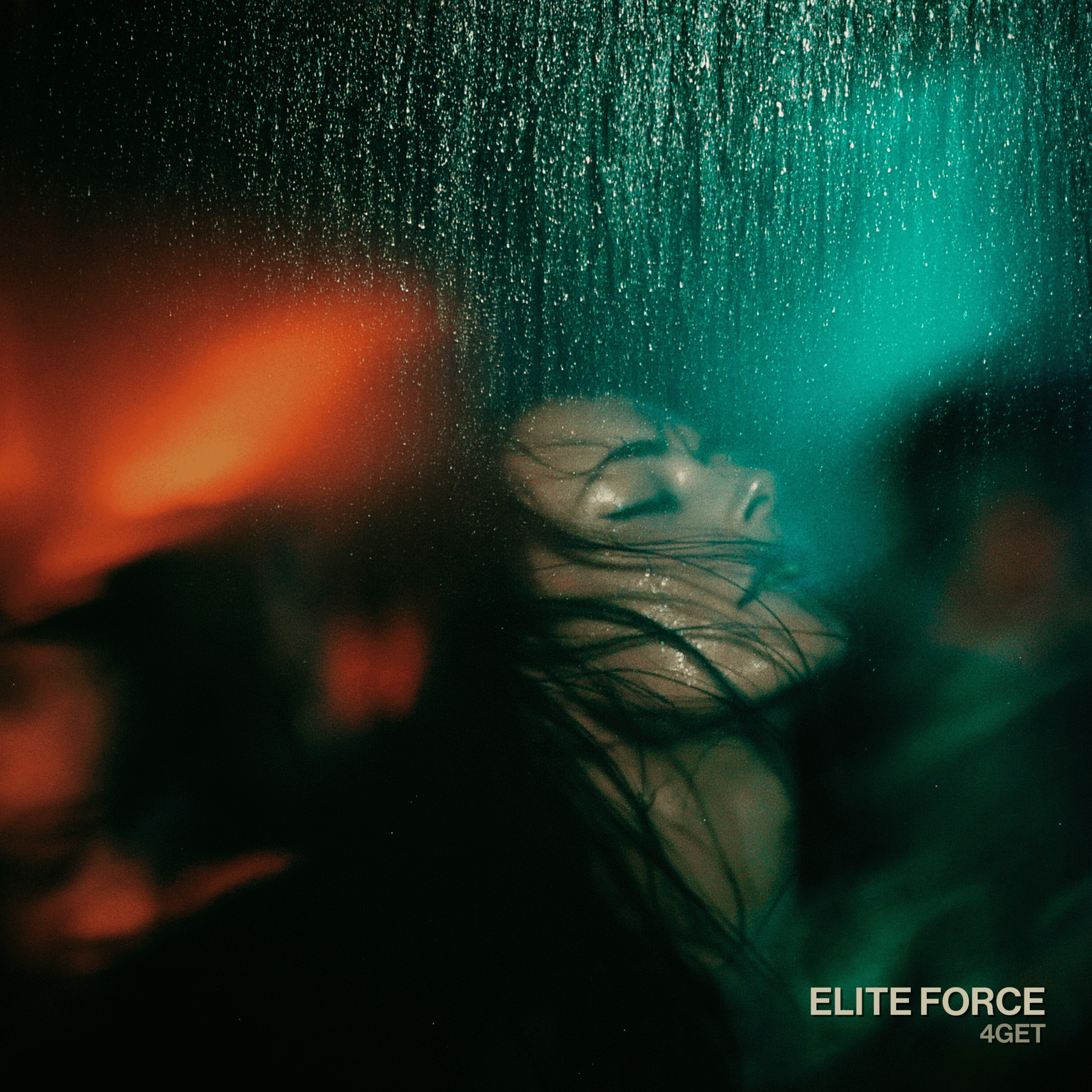
New single 4GET arrives on 20 October and draws together broken garage rhythms, heavyweight bass and the melodic sensibilities of rave culture. What was the initial creative spark behind the track?
4GET is about getting so lost in music that, for a while, whatever troubles you brought into the club fall away. I wanted a thread of rave DNA that people would recognise to run through the veins of this track without copying anything, and inevitably there are influences from all sorts of periods of my life in there.
When I wrote it, I was thinking particularly about the final tune of a long set, when you’ve been completely immersed and there’s a shared satisfaction in having stayed with it to the end. My closing records have often been euphoric because, whatever’s happened during the night, I want to send people off with that warm, collective feeling. I love music where nostalgia and euphoria meet without it feeling forced, and that was what I wanted to capture.
One of the most striking aspects of 4GET is the way the arrangement opens up in its second half, moving from a driving, bass-heavy groove towards something more spacious and euphoric. Was that contrast central to your original vision, and what were you hoping listeners would experience as the track developed?
It’s a game of two halves. I love tracks that evolve, but I also love tracks that don’t, because a record that stays with one idea invites the DJ to create that development over a longer mix. Then there are tracks that demand to be played in their entirety, and this is one of those.
The key change and the way the second half opens up are about creating ‘surprise and delight’. You’ve settled into the groove without necessarily expecting it to flower in that way. I can imagine comfortably mixing the first half into whatever came before it, then letting the second half change the dynamic and lift the energy. That unexpected opening out was a big part of the appeal for me.
You’ve described 4GET as being about losing yourself so completely in music that everything else temporarily disappears. After spending three decades immersed in dance music, do you still experience those moments of complete surrender on the dancefloor?
I still lose myself completely when I’m DJing, although you’re less likely to find me on the dancefloor these days, unless perhaps I’m at a festival and can’t find the exit! As long as I’m not dealing with unfamiliar equipment, the technology is second nature and I can feel my way through the mixes.
Sometimes I watch videos of myself and don’t entirely know what the fuck I’m doing, which I quite like. I’ll be making tiny fader cuts to introduce rhythmic elements, then feathering them in with the EQ, constantly active but doing so much of it instinctively. It feels like being inside this continuously moving stream of music.
I’m still looking up in the club, reading expressions and movement, noticing even a slight drift towards the bar, but when I’m completely absorbed and in that flow state, I can recognise the same feeling in people on the floor, so the surrender feels shared. I’ve always thought of myself as a member of the audience like everyone else. I just happen to have brought the music.
You’ve been collecting candid photographs from clubs and festivals taken before smartphones became ubiquitous, images that capture people completely absorbed in the music. What inspired you to begin collecting them and what do those photographs tell you about the culture and experiences that first drew you into electronic music?
The photographs reflect exactly what I was reaching for with “4GET”: faces caught in those moments of euphoria when someone is completely transported by the music. I started looking through pictures taken by photographer friends before smartphones were everywhere, wanting to pair the track with that feeling.
People were much more interested in enjoying what was happening than documenting it. Some of my favourite clubs were dark rooms where a camera could never have done the night justice, but occasionally someone caught an expression that told you how it felt to be there. That absorption is what draws me to those photographs and what I recognise from the experiences that made me love this music.
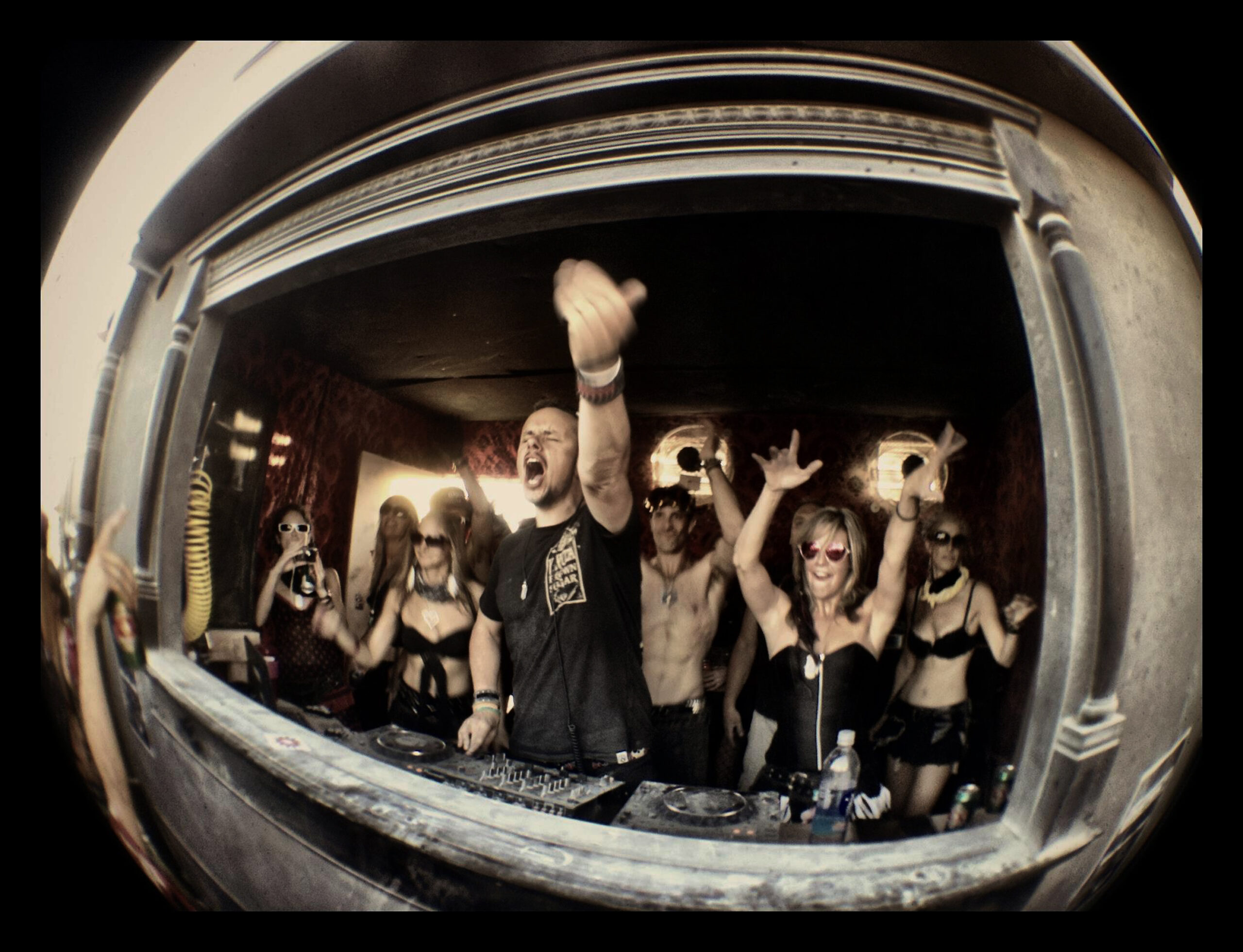
Elite Force
In an era when so much of the dancefloor experience is documented and shared online, do you think we’ve lost something of the freedom and anonymity that once defined raving?
Yes, I think the obsession with documenting everything diminishes the immediacy of being there. A shared experience becomes this strange exercise in mass documentation, and social media has also changed what clubs and festivals feel they need to offer. If footage of your night doesn’t look spectacular, it’s harder to get attention, so there’s pressure to make everything bigger and brighter… but it comes at the cost of engagement and immersion.
Some events look like being trapped inside a Vegas LED nightmare, with the music reduced to an underscore for the visuals. Then people watch this enormous spectacle through their tiny phones, and I cannot for the life of me understand the appeal. You’re there, but how much are you actually feeling?
When someone like Max Cooper builds a direct relationship between sound and image, that makes sense to me. When they’re disconnected, I struggle to see what some half-arsed sci-fi imagery adds to a DJ set. I hope we get back to more dancefloors where people are comfortable closing their eyes, feeling the frequencies and the people around them. So much of the main- stage spectacle now feels dead behind the eyes to me – but I guess that’s what happens when a scene explodes, but is intrinsically boring as fuck to watch.
You’ve seen musical trends emerge, disappear and return in new forms, and we’re currently hearing renewed interest in UK garage, breaks and bass-driven sounds. How do you interpret that resurgence and do you think younger producers are reconnecting with some of the creative principles that shaped the original scenes?
I find it really encouraging, and I’d add techno to that list. In some ways it feels like a modern equivalent of what excited me about tech-funk, with several genres melding together in a singular melting pot. A lot of the younger producers I’m hearing are making less rigid, less formulaic music, and what I’m drawn to has a liquid quality, almost as though it flows like water.
The space around the sounds is a big part of it. When you reduce how much sonic real estate individual elements occupy, you can do so much more with the sound design. If everything is big, nothing sounds big; you end up with a brick wall and a sledgehammer. I’ve watched new scenes repeatedly push their extremes until the music becomes unbearably loud and aggressive, with little room for nuance, so it’s refreshing to hear people allowing that room again. The other thing I love is how it’s the absolute antithesis of the lowest common denominator earworm-pop of main-stage EDM.
Some younger DJs also bring a punkish energy to their selection, worrying less about seamless blends. Jumping through dubstep, drum and bass, garage and breaks in fifteen minutes isn’t how I want to play, but I appreciate the freedom of expression it gives them.
Strongarm Sessions returned in September after a sixteen-year absence, broadcasting monthly from your studio in Colorado. What made this the right moment to revive the show and what does it mean to reconnect with that part of your musical history?
I’ve been finding so much music that excites me, and working out how it fits together has made me feel as though I’m finding a new voice as a DJ. Strongarm Sessions gives all that diversity somewhere to live within a single mix, which is what made this feel like the right time to return.
I love taking people through different rhythms and moods without them necessarily hearing the joins. On a recent show I played 45 tracks in two hours, navigating a way of telling a story that felt connected while still allowing for surprises. Playing in the high 130s opens up some lovely possibilities: a half-time track can ease your foot off the gas without losing its kinetic energy, then hypnotic techno can get everybody’s heads down for a while.
It’s exciting to reconnect with the show when I have so much I want to play. I’m enjoying finding a voice for that range of music and seeing how far I can take it.
The new Strongarm Sessions moves across bass, breaks, techno and more atmospheric territory. With the freedom to programme a show entirely around your own tastes, what excites you most about the music you’re discovering today, and what do you hope listeners will take away from the broadcasts?
There’s a lot of more esoteric electronica I love, and in the last show I used a Rival Consoles track at about 136 BPM with no beats whatsoever. It kept the propulsion going while giving the mix some breathing space, almost setting up a new chapter. I’m intrigued by how much further I can explore those possibilities as the shows develop.
A lot of this music is still relatively new to me, and its less predictable structures make me think on my feet. When I was DJing two or three times a week, I’d sometimes get stuck with runs of four or five records that worked so well they were difficult to break away from. This feels much less settled, which I’m enjoying.
I still love preparing a set and finding unlikely bedfellows, but I spend next to no time practising transitions. I want to trust my judgement and put myself on the spot when I’m actually mixing. Hopefully people can hear that excitement and enjoy discovering how these records work together as much as I do.
With 4GET, the Redux projects and the return of Strongarm Sessions, there seems to be renewed creative momentum around Elite Force. How do you see this next chapter developing and what ambitions or musical ideas are you particularly excited about exploring?
Get Me High comes out in December on 83 Records and feels like a natural follow-on from 4GET, perhaps a little more heads-down and less end-of-night euphoric. There’s a lot coming in the first half of 2027, culminating in Reverie, an eleven-track Elite Force album.
I’ve also started deconstructing some of those tracks into what I’m calling Nightshift Versions. I imagine them playing in the car on the way home with your mates after an absolutely fucking awesome night out somewhere. They aren’t really designed as comedown music, but the ideas are stretched out and taken somewhere less familiar. Each time I make one, I set myself the challenge of learning a technique or doing something I don’t already know how to do.
There’s an EP planned for around March on Faux Poly, whose releases I’ve loved for some time, so being part of their roster feels like a real honour. Those tracks have looser structures and all these little instabilities that are fun to make.
The other project is a live Elite Force audiovisual set with my good friend Gabe Ratliff, who’s an awesome drummer. We started exploring it earlier this year, then put it on hold until 2027, with the hope of bringing it to fruition in the second half of the year once Reverie is out. Who knows what else I’ll have made by then? The music I’ve been finding has lit me up so much that I can’t wait to get back into the studio and make more of it.
Elite Force – 4GET is out now. Grab it on Beatport HERE.
Read The Night Bazaar’s archive of interviews on Beatportal HERE.