




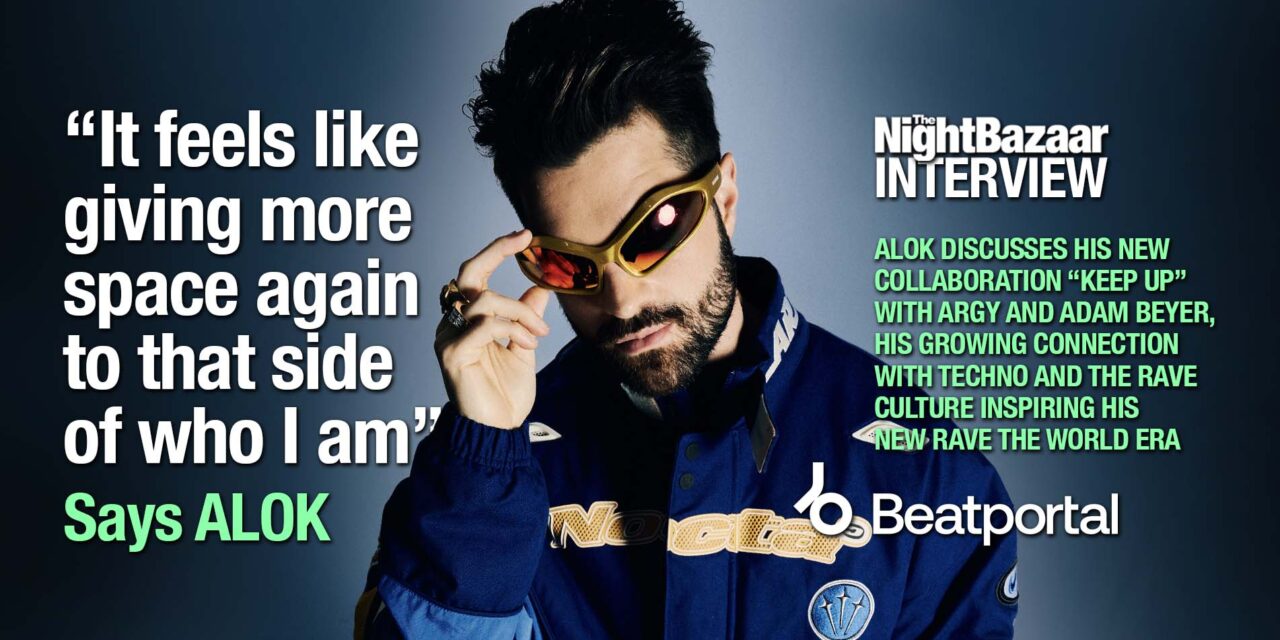
Alok is entering a particularly interesting chapter in his career. Having built a global profile capable of commanding some of the world’s biggest stages, the Brazilian DJ and producer is increasingly reconnecting with the harder, club-focused electronic music that helped shape him.
His latest single, Keep Up, brings that evolution into sharp focus, joining forces with Argy and Drumcode founder Adam Beyer for a driving collision of techno, house and melodic influences.
The track also represents another statement of intent for Alok’s Rave The World, a project rooted in the freedom, community and collective experience he first encountered growing up around rave culture and Universo Paralello. As techno becomes an increasingly prominent part of his sets and productions, ALOK sees the shift not as abandoning one version of himself for another but expanding what his music can represent.
The Night Bazaar caught up with him to discuss the creative chemistry behind Keep Up, what Argy and Adam Beyer brought to the collaboration, his growing relationship with techno, the importance of clubs and why the original values of rave culture still resonate in 2026.
You have been moving towards harder, more club-focused music recently. Does Keep Up, your new single with Adam Beyer and Argy, feel like another step in that evolution?
Yes, for sure. I think lately I’ve been reconnecting with a side of electronic music that has always been part of me. I grew up around rave culture and psy-trance, and even my early music was always mixing different things like electro, trance, techno and house. So for me, Keep Up doesn’t feel like suddenly becoming someone else. It feels like giving more space again to that side of who I am.
When you entered the studio together, what did each of them bring to the record that you wouldn’t necessarily have arrived at on your own?
What I like about collaborations is that everyone hears music in a different way. Adam has so much history with techno and a very strong instinct for groove and tension, and Argy brings this melodic and emotional side that is very recognisable. I bring my own energy and the way I like to connect different worlds of electronic music. And when those things meet you can arrive somewhere that none of us would necessarily go alone.
How important was it to retain the sonic elements of Alok, Argy and Adam Beyer within the track?
Very important. For me, the best collaborations are when you create something new, but you can still feel everybody inside the record. It shouldn’t sound like one artist featuring two other names. You need to find the balance where everybody’s identity has space and the sounds can interact freely.
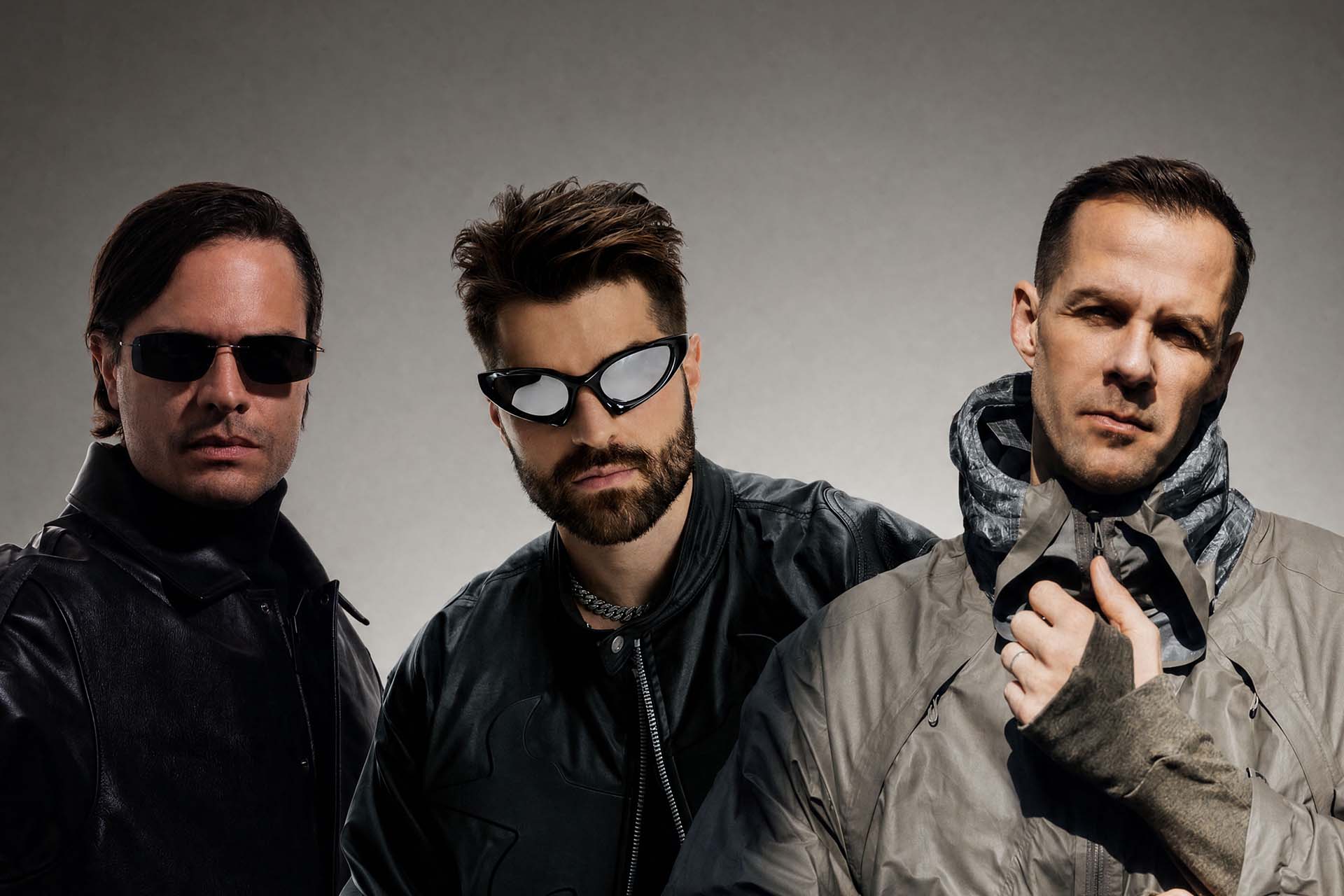
Argy, Alok and Adam Beyer
You have a history of collaborations in your discography. What do you like most about sharing the studio and your creative process?
I think collaboration makes you question your habits. When you work by yourself, sometimes you already know which direction you’re going to take. Another artist can hear something completely differently, and suddenly you have another possibility. I like that exchange because I’m always curious about what I can learn from somebody else. That’s one of the reasons I never want to stop collaborating.
With records such as the Rave The World EP, Mind Illuminate with SIDEPIECE and Victor Ruiz, and now Keep Up, what is attracting you to this harder-edged, underground energy at this stage of your career?
Honestly, it’s where I’m feeling most creative right now. I’ve been playing more club-focused sets and spending much more time with techno and house, and I wanted the music I’m releasing to reflect that side of what I’m doing as a DJ. With the Rave The World EP, “Mind Illuminate” and now “Keep Up,” you can hear that becoming more present. I am deliberately giving this side of my sound much more space.
We’ve seen you playing a lot more techno lately. What is drawing you toward that sound, and how do you see techno fitting into where you want to take Alok musically?
I’ve been playing a lot more techno because I’m genuinely very inspired by it right now. I love the hypnotic energy, the tension, and how much you can do with a groove without needing too many elements. It’s becoming a much bigger part of my sets and also the music I’m creating. I’ve never liked putting myself inside only one genre, and I don’t think that will change, but techno is definitely an important part of where I’m taking Alok musically right now.
Do you see this harder, more club-focused chapter as a departure from what you’ve done before, or as an expansion of what Alok can represent musically?
For me it’s an expansion. I don’t see it as leaving one version of Alok behind and becoming another one. The Alok you see today isn’t the same as five years ago, and I hope five years from now I’ve evolved again. I’ve always moved through different styles of electronic music, and this chapter is about giving more room to the harder side of what I do. I’m broadening the musical universe rather than replacing anything.
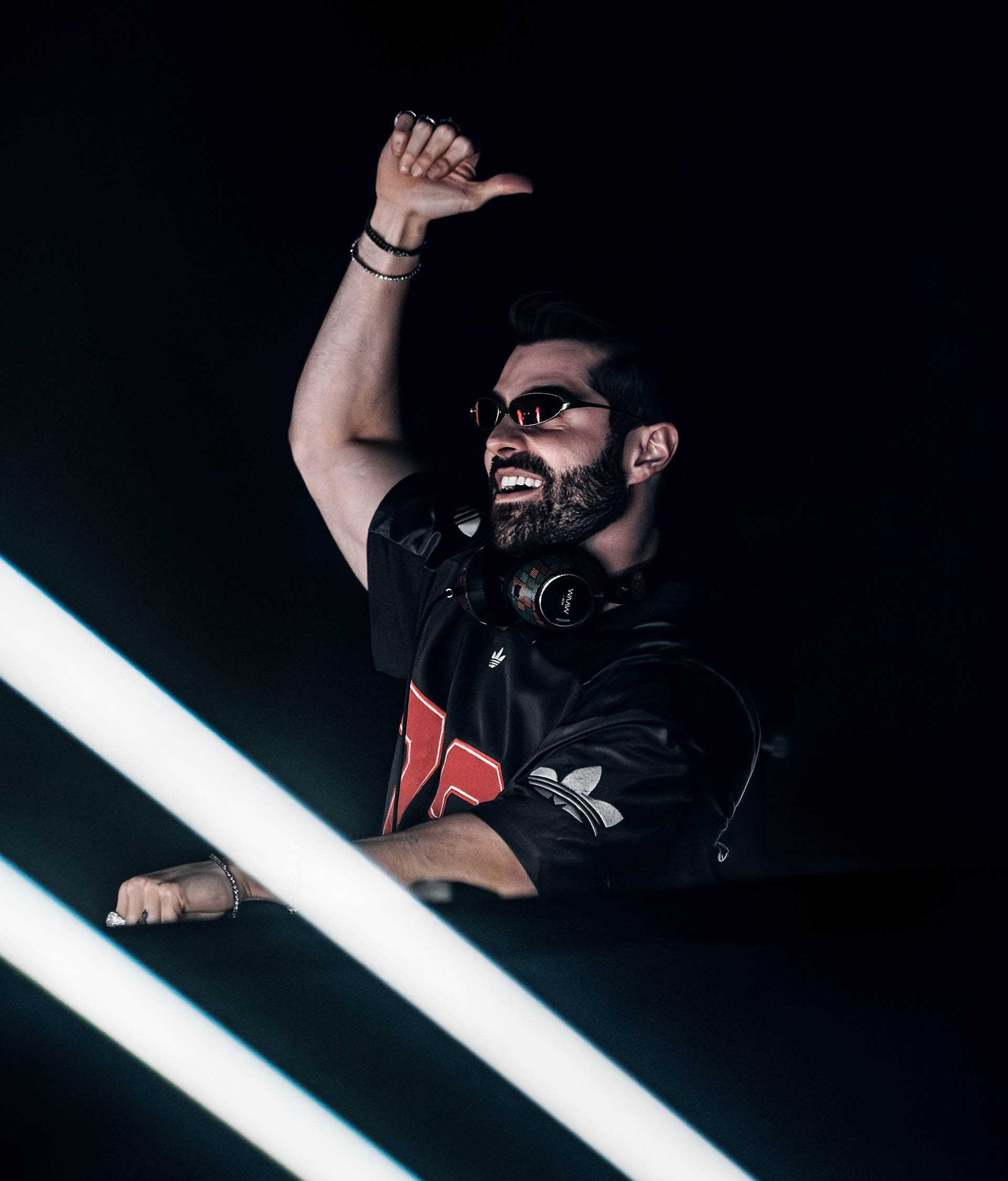
Alok
You regularly perform on an enormous scale, sometimes to hundreds of thousands of people, yet Keep Up is described very specifically as a club record. Does writing for a dark club require a different mindset from creating music for a huge festival audience?
Yes, because the relationship with the audience is different. When you’re playing for a million people, a lot of those people might not even be regular electronic music fans, so you have to understand that environment. In a dark club, you can go deeper and trust the groove for longer. You feel the room differently. For me, the important thing is always to respect where you are and read the room properly. That doesn’t mean that this track is not meant for big rooms or festivals – it was just created with a different mindset.
We’ve seen you play enormous stages like Coachella and Rock in Rio, but also very different environments recently, from the new Pacha New York to Robot Heart at Burning Man. How does your approach change when you’re performing for such different spaces and audiences, and what does each setting allow you to explore musically?
I’ve always worked from a simple principle: respect the place you’re in and read the room properly. I can’t play the same way at Rock in Rio that I would at Pacha New York or Robot Heart at Burning Man. Robot Heart especially gives you a very different kind of freedom as a DJ. You can go deeper, take more time, build tension differently and play music that people might not expect to hear from me on a huge main stage. I love having access to both worlds. The essence is still me, but every environment brings out something different in me as a DJ.
You’ve reached a position where you could arguably remain within a very successful musical formula, but instead you seem interested in pushing deeper into club culture. I have discussed this kind of creative pivot in interviews with David Guetta and Afrojack, who have done similar things. How important is this creative risk to you when operating at your level, or do you not see it as a risk at all?
I think the bigger risk for me would be becoming comfortable. If you find something that works and spend the rest of your life trying to repeat it, eventually you stop discovering who you are as an artist. I’ve had moments in my career where changing direction probably wasn’t the obvious decision commercially, but freedom has always been very important to me. I need to feel that I’m still curious.
Keep Up is also an important early release for Rave The World. What does signing a collaboration with Argy and Adam Beyer communicate about the musical territory you want the label to occupy?
It says a lot because these are artists with very strong identities. I don’t want Rave The World to be a label where everything has to sound the same, but I do want there to be a clear commitment to the dancefloor and to artists who have something real to say musically. Having Adam and Argy involved this early helps show that intention.
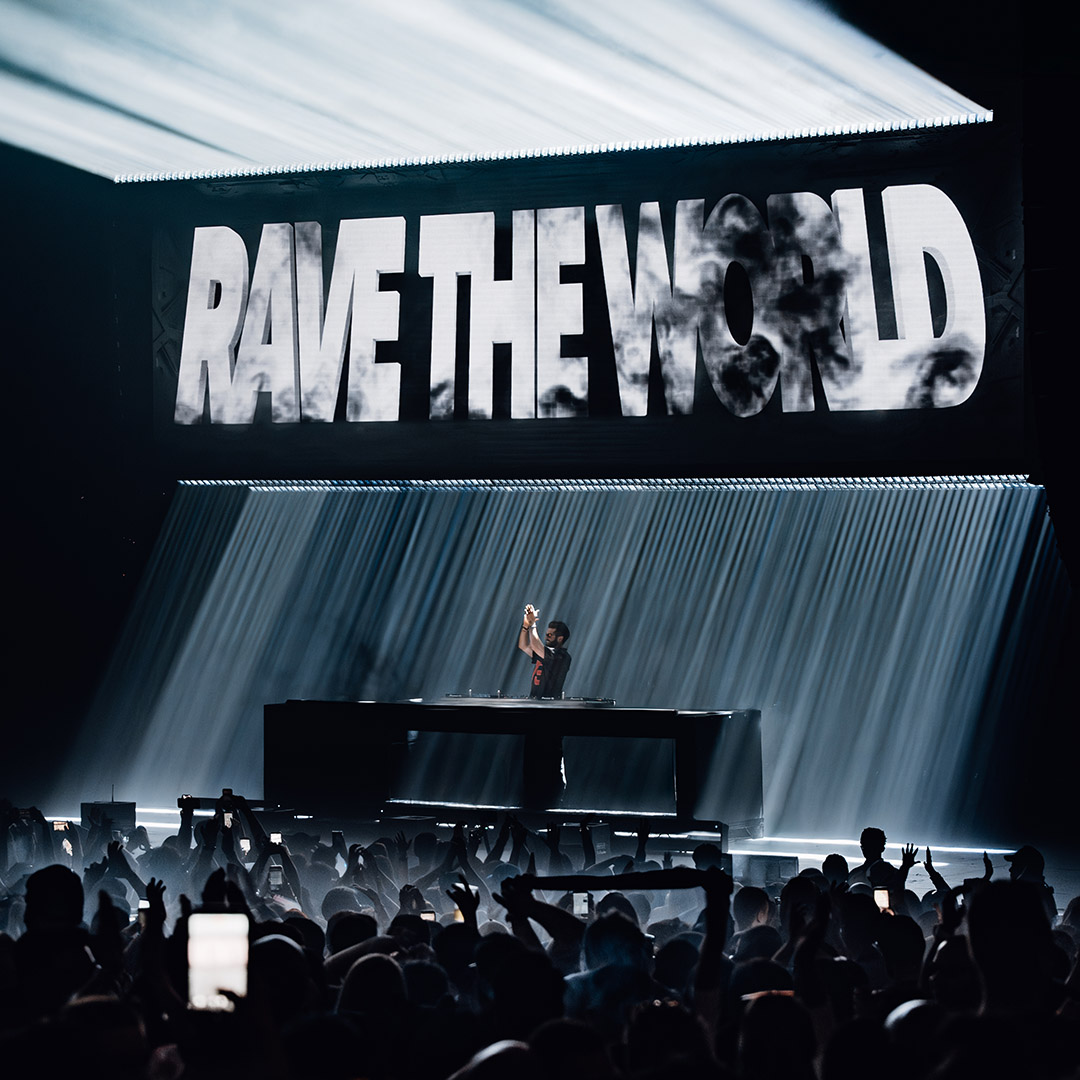
Alok – Rave The World
Rave The World talks about returning to ideas of unity, peace, love, respect, freedom and collective presence. Those principles have deep roots in rave culture, but the culture surrounding electronic music has changed dramatically. What do those values mean to you in 2026?
For me, those values are maybe even more important now. We live surrounded by screens, algorithms and things that are constantly trying to divide our attention. But when you’re really present on a dancefloor, there’s this moment where thousands of people can connect without even speaking. I experienced that when I was very young, and I think that feeling is one of the reasons I became a DJ in the first place.
Why is Rave The World so significant to you personally, and what do you ultimately want it to represent beyond the music itself?
For me it goes back to why I became a DJ in the first place. I grew up inside rave culture. Universo Paralello was my school. When I was very young, those spaces gave me freedom to express myself and to connect with people through music without needing to say anything. Rave The World is a way of reconnecting with that part of myself now and bringing those values into what I’m creating today. So for me it’s much more personal than simply starting another label.
You’ve described Rave The World as something bigger than a record label, encompassing music, artists, live experiences and the values of connection and collective experience. What is the long-term vision for where you can take the platform?
The music is the starting point, but the ambition is much bigger than releasing records. I see Rave The World connecting artists, the label, live experiences and this idea of collective presence. I want people to understand what it represents when they see the name, not only recognize a certain sound. At the same time, I don’t want to define every part of it too early. It needs freedom to evolve, because that’s part of the philosophy too.

Alok – Rave The World
There’s an interesting contradiction in electronic music right now: dance music is reaching enormous global audiences, while many grassroots clubs and venues are struggling, especially here in the UK. When you talk about reconnecting people through the dancefloor, how important is preserving actual club culture alongside the growth of electronic music as a global spectacle?
I think clubs are essential because that’s where artists have the freedom to experiment and where scenes really develop. A festival can introduce electronic music to hundreds of thousands of people, which is amazing, but the club gives you another kind of relationship with the audience. You have more time, more intimacy and sometimes more freedom to take risks. I don’t think one replaces the other. We need both.
At Rock in Rio this year, you’ll perform Keep Art Human on the main stage and also perform Rave The World on the electronic music stage. What does having those two very different platforms at the same festival allow you to show about the different sides of yourself as an artist?
For me it’s very special because in the same festival I can show two very different sides of what I’m doing right now. Keep Art Human on the main stage is a large-scale artistic statement, while the Rave The World show gives me a chance to focus much more directly on the music and this harder side of my sound. Having both at Rock in Rio shows where I am creatively right now. I don’t feel like I need to choose between those worlds. They’re both part of me.
Brazil has one of the most passionate electronic music audiences in the world, but your career now operates globally. Is there anything about Brazilian club and rave culture that you particularly want to carry into Rave The World as it expands internationally?
What I can really speak about is my own experience. I grew up around electronic music in Brazil and especially around Universo Paralello, so ideas of freedom, community and self-expression were part of my understanding of rave culture from a very young age. Those experiences shaped the DJ I became. As Rave The World grows, I want to carry that spirit with me, but I don’t want to define what Brazilian rave culture is for everybody. I can only share what it gave to me personally.
Working alongside someone with Adam Beyer’s history inevitably connects this record to techno’s lineage as well as its present. Did collaborating with him change or deepen the way you think about techno and your own relationship with the genre?
For sure. Adam has been doing this for more than 20 years, so there’s a level of instinct that comes from that experience. What I respect is how much power can come from subtle changes, repetition and tension. It reminds you that you don’t always need to add more to make a record bigger. Sometimes the discipline is knowing what not to add.
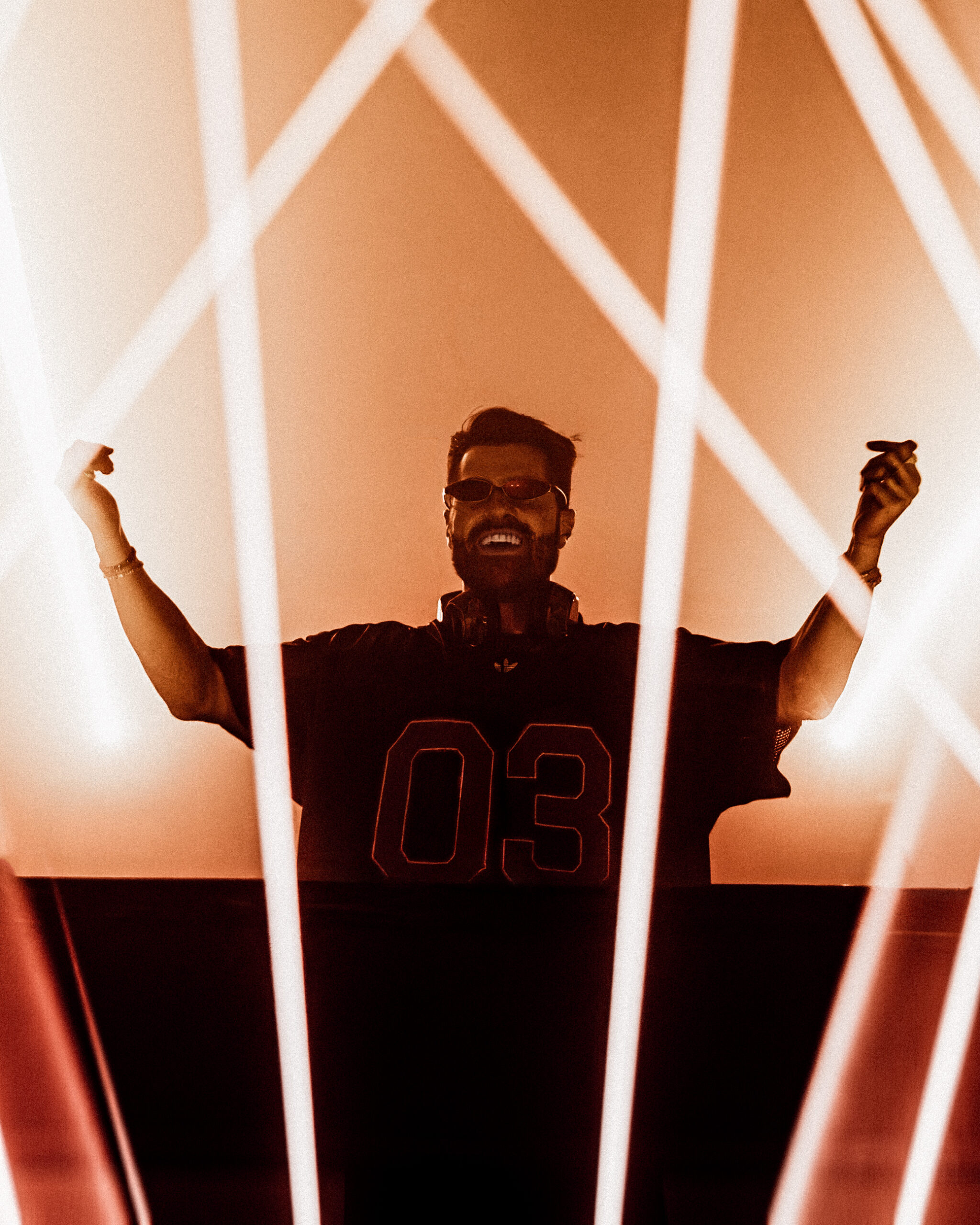
Alok
Argy represents a generation that has helped take melodic techno to an enormous new audience. What do you think he understands particularly well about combining underground club sensibilities with music that can communicate on a huge scale?
I think Argy understands emotion very well. His music can feel cinematic and melodic, but it still has the energy to work in a club. I think that balance is difficult because if you push too far in either direction you can lose something. He has found a very strong identity between those worlds.
Electronic music increasingly exists in a world of algorithms, phones, content and constant distraction, whereas Rave The World talks about “collective presence.” Do you think dance music needs to rediscover some of the escapism and human connection that originally made rave culture powerful?
Yes. I’m not against technology at all. Technology has been an incredible part of my career and my life. But I think there’s a difference between technology helping us and technology constantly pulling us away from the moment we’re actually living. There’s something very powerful when you look around a dancefloor and people aren’t thinking about what they’re going to post next. They’re just there together.
For years, mainstream perceptions of rave culture were often tied to excess and certain stereotypes. Do you think a new generation is redefining what rave culture can represent, with more emphasis on community, belonging, presence and shared experience?
I think those things were always there. Maybe people outside the culture didn’t always see them. I grew up around rave culture and what I remember most is freedom, community and people being able to express themselves outside of the expectations of normal society. What the new generations are doing is taking the principles of that culture to the mainstream. Maybe now there’s an opportunity for more people to understand that side of it.
You’ve achieved extraordinary mainstream reach, while Adam Beyer comes from an underground culture which has traditionally mattered enormously. Do you think those old divisions between commercial and underground electronic music still mean anything in 2026?
I think those borders are much less important now. For me, I can play for a million people one day and then go somewhere like Universo Paralello, where I know I can’t just play the same records. That doesn’t mean one version is more authentic than the other. It means you understand the environment and you have enough freedom in your music to move between them. I’m much more interested in whether something is honest than whether somebody calls it commercial or underground.
Can rave culture still retain the rebellious spirit and communal values of rave now it operates on such a massive global scale?
Yes, I think it can. For me, the rebellious spirit of rave has always been connected to freedom: freedom to express yourself, freedom to think differently, freedom to exist outside of what society expects from you. I don’t think that disappears because the audience gets bigger or the production becomes more ambitious. The challenge is making sure that even at that scale, people still feel that sense of connection, community and freedom that made rave culture powerful in the first place.
Alok, Argy & Adam Beyer – Keep Up is out now on Rave The World. Grab it on Beatport HERE.