




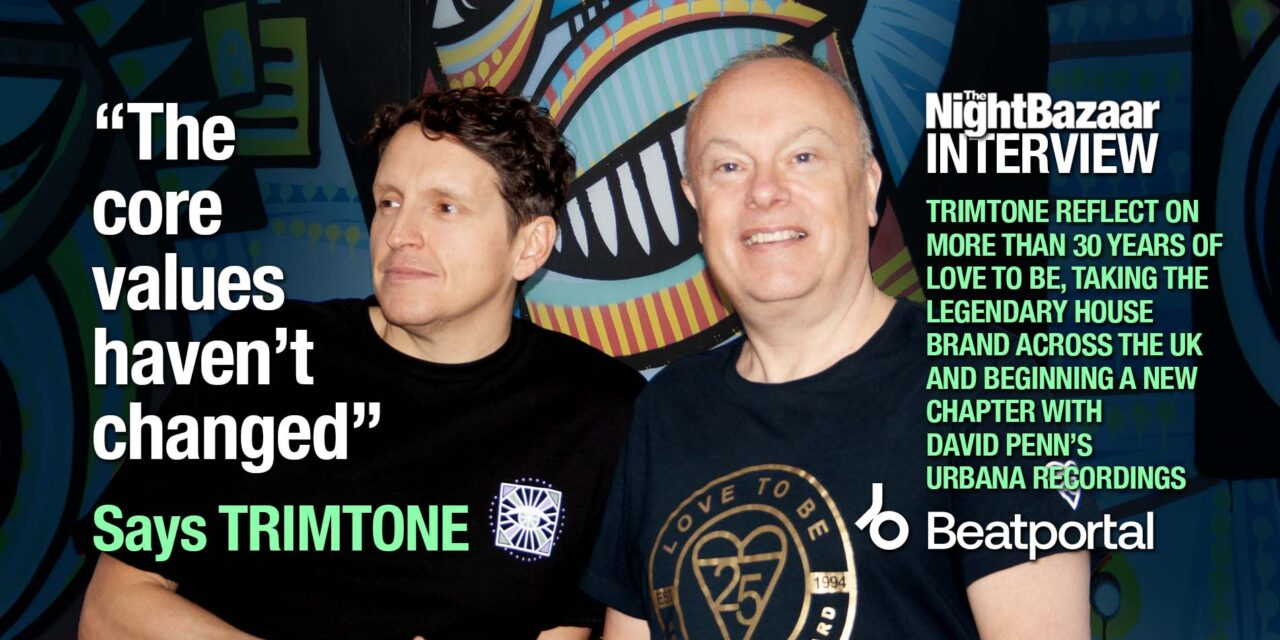
More than three decades after Love To Be first emerged from Sheffield’s Music Factory, Tony Walker and Marc Dennis remain far more interested in where house music is heading than simply celebrating where it has been.
Today, the Trimtone duo find themselves at the centre of one of the brand’s most ambitious periods yet, with its flagship festival continuing to bring generations together and a major UK tour preparing to take Love To Be into O2 Academy venues across the country.
That same connection between house music’s heritage and its future runs through Trimtone’s latest release, We Gonna Dance featuring Alexis Hall. Their debut on David Penn’s Urbana Recordings draws on the disco, soul and gospel influences that helped shape their musical identity while remaining firmly focused on contemporary dancefloors. It also brings their longstanding friendship and musical relationship with Penn full circle, after years spent sharing booths, radio shows and Love To Be events.
With Love To Be also using its growing platform to create opportunities for emerging talent through its Next Generation DJ Competition, Walker and Dennis are determined that longevity should be about more than nostalgia. The Night Bazaar caught up with Trimtone to discuss taking Love To Be into its next chapter, the forthcoming UK tour, supporting a new generation of DJs, their enduring creative partnership and why, after more than 30 years, they are still chasing the simple thrill of making people dance.
Love To Be has been part of UK house culture since 1994, but what does the brand represent to you guys personally in 2026 that perhaps it didn’t when you first started it?
For us, Love To Be represents just as much now as it did when we Tony first started it in 1994. Back then, it was really about the music, the energy, the people and that feeling you got when you walked into a club and knew you were part of something special. Love To Be was simply an expression of our affinity for house music and the whole uplifting vibe that surrounded it.
In 2026, We’ve realised that Love To Be isn’t just a brand or a series of events, it’s a community and a feeling that has connected generations over the past few year in particular. Seeing people who were with us in the ’90s now bringing their partners, kids, nieces and nephews to our events is pretty special.
The biggest thing for us is that the core values havn’t changed. It’s still about bringing people together, celebrating house music and creating an environment where everyone can switch off from everyday life and just enjoy the music that’s played with energy and a smile. The difference is that we now have the perspective of three decades behind us.
There’s also something quite powerful about still being here and still being relevant after all this time. Music and nightlife have changed massively, but that feeling of dancing together, meeting people and sharing a great moment is timeless.
So, personally, Love To Be now represents longevity, friendship, community and the belief that a great idea built around genuine passion can continue to evolve without losing its soul. That’s probably what makes us most proud of it today.
When you look at what you’re building with the festival today, does it feel like the culmination of everything Love To Be has become over those three decades?
Yes, absolutely. The festival definitely feels like the culmination of everything Love To Be has become over the last three decades.
The original ethos behind Love To Be, was simply about bringing people together through music — creating that feeling of being part of something, dancing with your friends, discovering great DJs, new music and sharing experiences that stay with you. Thirty years on, that’s still at the heart of everything we do and the scale and the community around it has definitely grown.
The festival feels like a chance to bring all of those years of experiences together. You’ve got the history, the music, the people who have been with us since the early days, and now a whole new generation discovering Love To Be for the first time. That’s really special to us.
It also feels like a celebration of the journey. We’ve evolved, the music has evolved, and the way people experience events has changed, but the values behind Love To Be haven’t. It’s still about good house music, great people and creating an atmosphere where everyone feels like they belong.
So yes, the festival feels like a natural progression of the Love To Be story but hopefully it’s not the final chapter. If anything, it feels like the beginning of a really exciting new one.
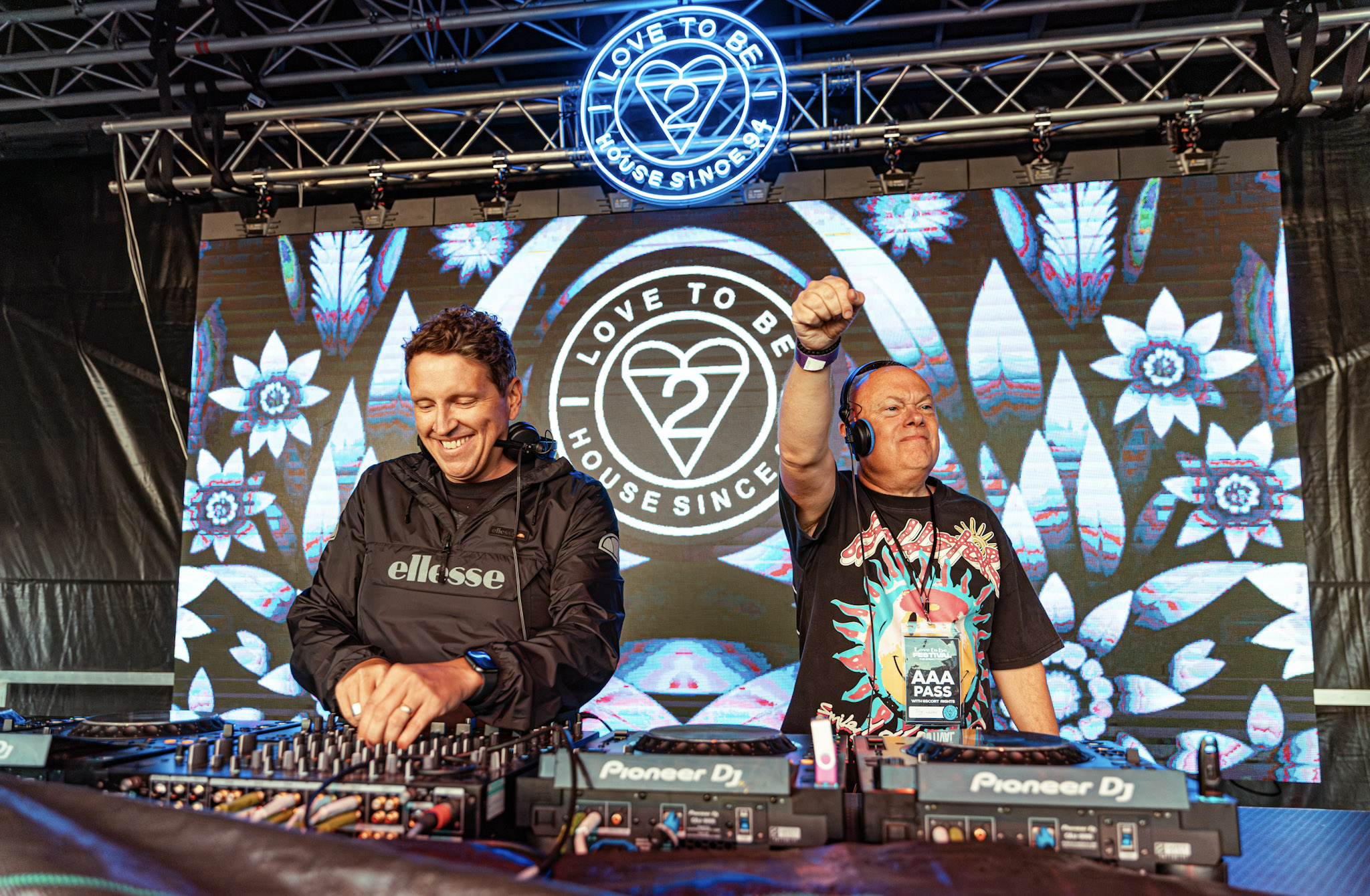
Love to be… Trimtone
Love To Be is embarking on its biggest UK venue tour from November, taking the brand into O2 Academy venues across Birmingham, Leeds, Bristol, Liverpool, Bournemouth, Manchester and London. After more than 30 years of parties, why does now feel like the right moment to undertake a tour on this scale?
The timing feels right because Love To Be has reached a really exciting point in its journey. After more than 30 years, we haven’t toured the U.K for some time and we felt it was the right moment to take that energy directly to people in cities across the UK.
The O2 Academy venues give us the opportunity to create that experience while still delivering the production, DJs and atmosphere people associate with the brand.
There’s also something really important about going back to the roots of what we do. Before the festivals and the bigger outdoor events, Love To Be was built in clubs and venues, so taking the brand on a UK venue tour feels like coming full circle, but at the same time pushing it forward with our current house sound.
Ultimately, after 30 years, we don’t want to simply look back and celebrate what we’ve achieved. We want to keep moving things forward and give people another reason to come together. This tour feels like the perfect move for the brand
Partnering with Academy Music Group represents a significant step for Love To Be. What does that partnership allow you to do with the experience that perhaps wouldn’t have been possible with a more traditional run of individual club shows?
Partnering with Academy Music Group gives us the opportunity to take Love To Be into a different space altogether. We’ve always believed Love To Be is more than just a series of festivals and working with AMG allows us to expand our events on a much bigger and more consistent scale through Autumn and Winter months when the festival season has wound down here in the UK.
With individual club shows, you’re naturally working within the identity, capacity and limitations of each venue. This partnership gives us the chance to create something that feels more in line with the Love To Be experience from start to finish, with the benefit of the infrastructure and reach of some of the UK’s best-known venues within the AMG estate.
It also allows us to think beyond simply putting on a series of nights. We can develop a real journey for the audience from the production and staging, to the artists, the atmosphere and the way the Love To Be brand comes to life in the room.
Ultimately, it gives us the platform to grow without losing what makes Love To Be special. We will reach new audiences, take the brand into new cities and spread the Love to be vibe around some of the best venues in the country.
Love To Be was born in Sheffield but has subsequently travelled around the world. How different is it taking the brand into cities across the UK, each with their own club histories, audiences and relationships with house music?
It’s one of the most exciting things about taking Love To Be around the UK. Sheffield will always be home and the place where the story started, but every city has its own relationship with house music, its own club culture and its own audience — and we really embrace that.
We never want to arrive in a city and simply transplant what we do elsewhere. There’s a real sense of listening to the local audience and understanding the history of that city which we have learnt from our years of djing and touring as Trimtone. House music means something slightly different in Sheffield, Manchester, London, Birmingham or Glasgow, for example, and that gives us an opportunity to adapt while still staying in the lane of what Love To Be represents. Even when we are touring internationally in the likes of Sydney, Chicago and beyond we pay homage to the local trends via our talent bookings, set selection and artwork.
The tour brings together genuine house music legends such as Todd Terry, Marshall Jefferson and Sandy Rivera with contemporary names including Sam Divine, Solardo, Belters Only and lau.ra. Is that cross-generational approach essentially the Love To Be philosophy in one line-up?
Absolutely. In many ways, that line-up sums up the Love To Be philosophy perfectly. We’ve always believed that house music isn’t defined by one particular era or generation, it’s a culture that continues to evolve while staying connected to its roots.
Having artists like you mention creates that bridge between generations. These are artists have each made their own mark on house music, but they all bring their own unique blend to the experience.
For us, it’s about celebrating the heritage of the music without being stuck in the past and embracing where house music is going without forgetting where it came from. We want someone who’s been going to house nights for 30 years standing next to someone who’s discovering the music for the first time, both having exactly the same feeling on the dancefloor.
That’s really what Love To Be is about, bringing people together through house music, regardless of age, background or when they first fell in love with it.
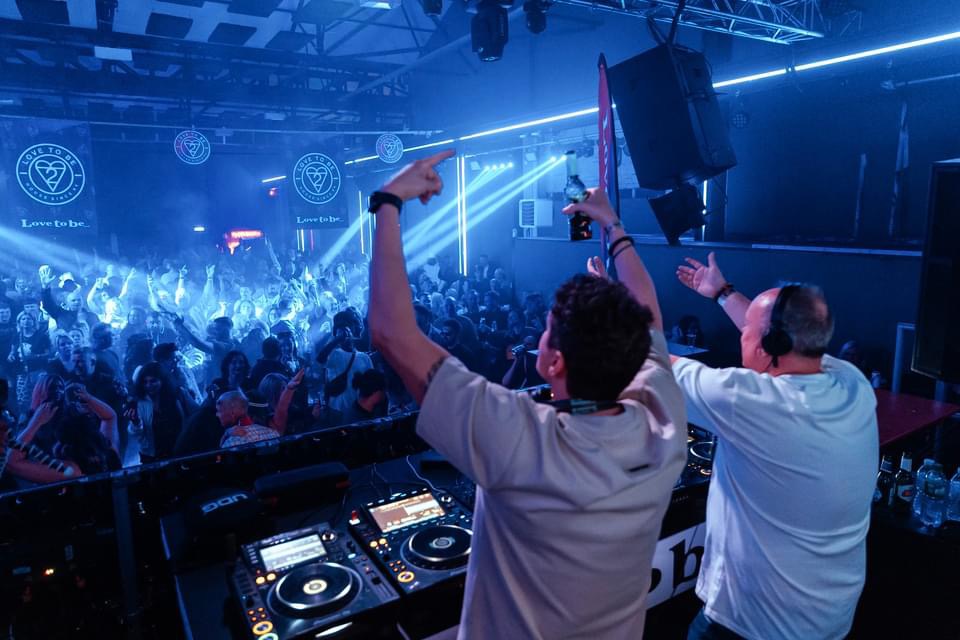
Love to be… Trimtone
You’re also launching The Next Generation DJ Competition, giving emerging DJs the opportunity to play at their nearest O2 Academy date. Having spent more than three decades in this industry yourselves, what do you hear in a young DJ that makes you think they have something beyond simply being technically good?
After more than 30 years in the industry, you quickly realise that technical ability is only one small part of being a great DJ. You can teach someone how to mix, but you can’t really teach them musical instinct, personality or that ability to read a dancefloor.
Both being DJs before brand owners, what we listen for is someone who has their own identity. Do they make interesting choices? Do they understand how to build a journey rather than just play a collection of great records? And, most importantly, do they understand the people in front of them? The best DJs have that instinct where they can read a room and know exactly when to push it, when to hold back and when to surprise people.
We also look for passion. You can hear when someone genuinely lives and breathes the music. They might not have the most technically polished set yet, but if there’s something distinctive about their sound and you can hear that they’re hungry to learn and develop, that really stands out to us.
That’s exactly why we wanted to create The Next Generation DJ Competition. We’re not looking for the finished article, we’re looking for those DJs who have that spark, that individuality and that connection with house music that makes you think, there’s something here. Giving them the opportunity to play at their local O2 Academy could be the start of something very special.
Grassroots clubs and emerging DJs are facing a very different landscape to the one you encountered when Love To Be began in 1994. Do established brands like yours now have a responsibility to create genuine opportunities for the next generation rather than simply talking about supporting new talent?
Absolutely. We think if you’ve been fortunate enough to have a career and build a brand that has lasted for more than 30 years, you have a responsibility to give something back to the culture that gave you so much.
When we started Love To Be in 1994, there was a very different pathway for young DJs. The club scene was incredibly important and there were lots of opportunities to learn your craft in front of a real crowd. The landscape has changed enormously since then, and we’re very conscious that talented young DJs can find it much harder to get that first meaningful opportunity.
For us, supporting the next generation has to be more than just saying the right things. It has to mean actually putting young DJs in front of audiences, giving them a platform and allowing them to gain the experience and confidence that comes from playing a proper venue.
That’s a big part of why The Next Generation DJ Competition is so important to us. We want to create a genuine pathway into the industry, not just a competition for the sake of it. Giving an emerging DJ the chance to play at their local O2 Academy, in front of a real Love To Be audience, is something that can genuinely make a difference.
We’ve been given opportunities throughout our careers, and we know how important those first breaks can be. If we can use the platform we’ve built over three decades to open a few more doors for the next generation, then we absolutely believe that’s part of our responsibility.
There’s a generation discovering house music now who weren’t even born when Love To Be started. Are you seeing younger crowds connecting with the same values and sounds that originally defined the parties in the ’90s?
Definitely. One of the most rewarding things for us is seeing people on the dancefloor who weren’t even born when Love To Be started, experiencing that same energy and vibe that we remember from the early days.
The music has obviously evolved over the last 30 years. House music is constantly moving forward, and we’ve always wanted Love To Be to evolve with it rather than simply recreate the past. But the fundamentals haven’t really changed, great music, good energy and a safe space for everyone to express their love for that music.
What’s interesting is that younger audiences don’t necessarily see the boundaries between generations in the way we sometimes do. They’ll listen to a classic Marshall Jefferson or Todd Terry record alongside a contemporary house track and appreciate both for what they are. When the right record comes on, it doesn’t matter whether it was released in 1992 or 2026, if it makes you want to dance, it works
That’s probably the biggest compliment we could receive. Love To Be has its roots in the ’90s, but it doesn’t belong to the ’90s. It belongs to everyone who loves house music and seeing a new generation embrace that, dancing and not stood in the crowd filming is incredibly exciting for us.
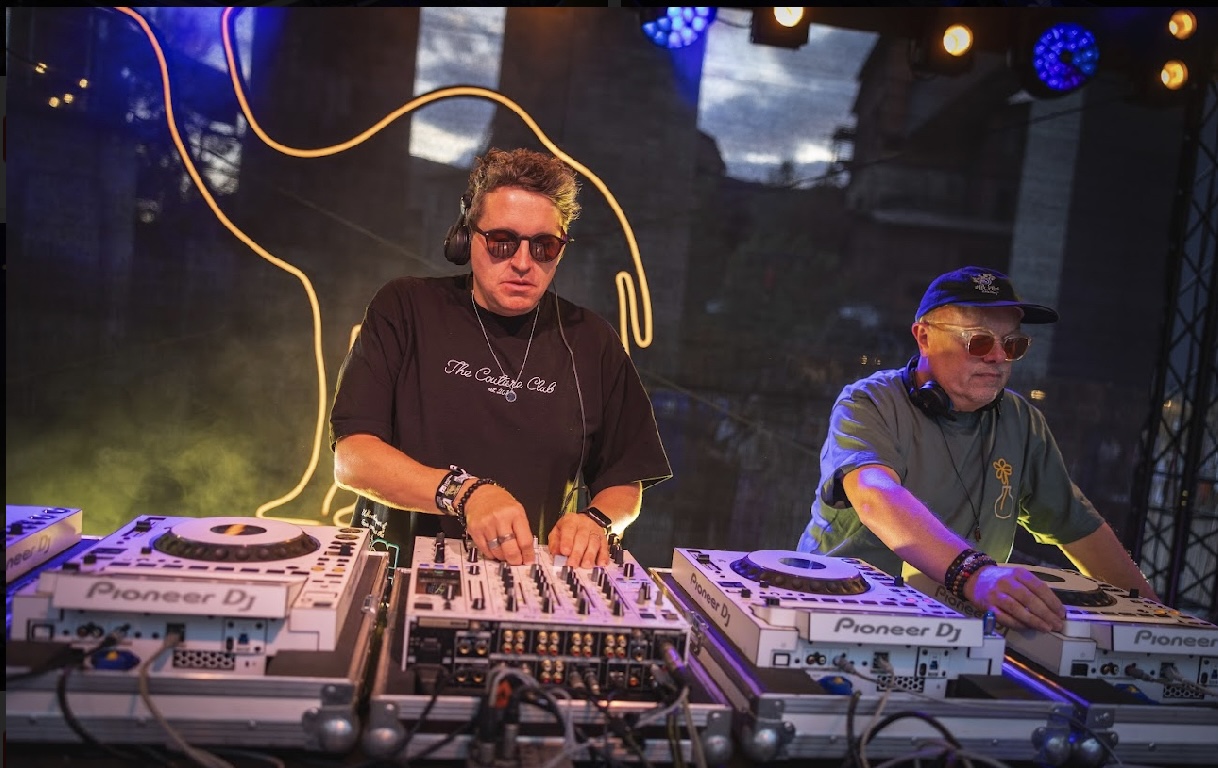
Love to be… Trimtone
We Gonna Dance feels like a record that celebrates house music without overcomplicating its purpose, a big vocal, piano, percussion and a groove made for a busy dancefloor. Where did the track begin and how quickly did you realise you had something special?
The track really started with the idea of creating something that captured the essence of Love To Be in a record. We didn’t want to overthink it or try to make something complicated for the sake of it. House music has always been about the feeling, and we wanted We Gonna Dance to have that immediate energy where you hear it and instinctively want to move.
We wanted it to feel uplifting and familiar, but at the same time contemporary enough to work on today’s dancefloors.
You always have that moment when you’re working on a track where you play it back and think, “This feels right.” With We Gonna Dance, that happened pretty early on. We could feel the reaction it would get in a room and ultimately, that’s the test for us. If you can imagine hundreds or thousands of people singing the vocal, hands in the air and dancing together, then you know you might have something special.
It’s also very much the Love To Be philosophy in record form: don’t overcomplicate things, bring people together and make people want to dance.
Alexis Hall’s vocal is such a dominant part of the record. What did she bring to We Gonna Dance, and did the production develop around her performance or was the musical framework already there?
We have worked with Alexis many times over the years and we live her energy. Alexis’ voice had exactly what the track needed, personality, energy and that unmistakable sense of celebration. The vocal was an old hook we found on a hard drive of Alexis’s vocals from one of our earlier sessions and it is such an important part of We Gonna Dance because it doesn’t just sit on top of the production; it drives the track and gives it its identity.
The musical idea was there first, but once we added Alexis’ hook the track really started to take shape. She has a great ability to make a vocal feel completely natural on a house record, while still giving it enough attitude and emotion to connect with a dancefloor.
We then built around the hook in new sessions creating a back-and-forth between the music tracks and the vocal. We’d make adjustments to give Alexis space, she’d bring something different to a line or phrase, and that would inspire us to change the music again. That process is what made the record come alive.
There are disco and gospel touches running through the track alongside a very contemporary club vibe. How much of that reflects the house music that shaped you originally and how do you reference those influences without simply recreating the past?
Those influences are definitely part of our DNA. We grew up listening to house music that was heavily influenced by disco, soul and gospel, so those sounds naturally find their way into what we make. There’s something about a big gospel-style vocal, a soulful chord progression or a disco-inspired groove that can instantly lift a dancefloor.
The important thing for us is that we’re not trying to recreate a particular era. We’re taking those ingredients and putting them through a modern production lens.
We’re big believers in the idea that house music is a connection between the past and the present. You can hear where a record has come from without it sounding like a throwback. With We Gonna Dance, we wanted those disco and gospel elements to give the track soul and warmth
Ultimately, those classic influences are there because they still work. Great grooves, great vocals and that feeling of uplift are timeless, it’s just about finding your own way of presenting them.
This is your debut on David Penn’s Urbana Recordings. Given your long relationship with David through house music and radio, why does Urbana feel like the right home for this record?
David actually heard a clip of it on our socials and reached out so Urbana feels like a very natural home for this record. We’ve known David for many years through gigs, presenting together on the Love to be…radio show and him performing for us at Love to be…, so there’s already a level of trust and understanding there. He knows where we’re coming from musically, and he understands what makes a record work on our dancefloors.
What really appealed to us about Urbana is that it has a strong identity, but it’s also forward-thinking. David has always had a great ear for house music and has that ability to champion records that have soul and musicality while still sounding fresh and relevant.
It also feels special to make our debut there with a record like this. Given our history with David, it feels less like simply signing to a label and more like working with a close friend. That makes Urbana feel like the right place for this chapter of Trimtone.
David Penn has spent decades championing that intersection between soulful house and records capable of working on big dancefloors. Is there a shared philosophy between what he has built with Urbana and what you have always tried to achieve with Trimtone and Love To Be?
Definitely. There’s a very strong shared philosophy between what David has built with Urbana and what we’ve always tried to achieve with Trimtone and Love To Be.
For us, great house music has to have soul, but it also has to work on a dancefloor. It’s that balance between musicality and energy that has always been important to us. You can have an incredible vocal, a beautiful chord progression or a great groove, but ultimately you want to hear that record played loud in a club and see people respond to it.
David has always understood that balance. He has a real appreciation for the heritage of house music, but he’s never been afraid of moving it forward. That’s very much how we approach our own music too. We’re influenced by the records and sounds that shaped us, but we want to create something that feels relevant now rather than simply looking backwards.
There’s also a shared belief in the importance of feeling. Whether it’s a Trimtone record, a Love To Be party or something coming through Urbana, it has to make you feel the urge to dance
So yes, there’s definitely a connection. It feels like we’re coming from the same place musically, even though we each have our own sound and identity.
After more than three decades around house music, does signing a new record to a label like Urbana still give you the same buzz it would have earlier in your careers, or has your definition of success changed?
Absolutely, the buzz is still there. If anything, after more than three decades around house music, you probably appreciate those moments even more because you understand how difficult it is to make a record that genuinely connects.
Having a new Trimtone record signed to a label like Urbana is still a great feeling. There’s something special about hearing a record you’ve spent time creating being supported by someone whose musical opinion you respect, particularly someone like David who has been such an important part of house music for so long.
I think our definition of success has definitely evolved, though. Earlier in our careers, success was naturally about the next release, the next gig, getting records played and building your profile. Now it’s much more about longevity and making music that we genuinely believe in.
And ultimately, after all these years, the biggest buzz is still very simple, making a track, playing it to people and seeing them react. That never gets old.
You’ve experienced an extraordinary amount of change together, vinyl to digital, clubs to festivals, pirate and FM radio to syndicated shows and streaming and huge shifts in how records are made and promoted. Has navigating all of that together strengthened your relationship?
Definitely. When you’ve been through that many changes together, it inevitably strengthens the relationship. We have effectively grown up alongside the evolution of house music, so we’ve had to constantly adapt while keeping sight of why we started making music in the first place.
We’ve gone from buying and playing vinyl, to CDs and digital, from recording radio shows on tape to streaming and syndicated broadcasts, and from building records in a very different studio environment to having an incredible range of technology at our fingertips. The way people discover and consume music has completely changed too.
There have been plenty of challenges along the way, but having someone beside you who understands the journey makes a huge difference. We’ve always been able to bounce ideas off each other, challenge each other and, importantly, know when something feels right. That trust comes from having spent so many years working together and ultimately being friends really helps
The industry will continue to change, and we’ll have to keep changing with it, but the core relationship hasn’t changed. We still get excited about finding a great record, making music and seeing people react to it. After all these years, we’re still genuinely passionate about what we do and having shared that journey together is a big part of why we’re still here.
There’s often a temptation for artists with your history to trade heavily on nostalgia, but you’re still releasing new music and developing Love To Be. What keeps the two of you ambitious rather than simply celebrating what you’ve already achieved?
I think the biggest thing that keeps us ambitious is that we genuinely still love what we do. We’re incredibly proud of what we’ve achieved with Love To Be, but we’ve never wanted it to become a museum piece or simply a celebration of the past.
Nostalgia is a great part of house music and we’re proud of our history but we’re much more interested in what happens next. We’re still excited about making new music, discovering new artists, playing to new audiences and finding new ways to bring the Love To Be experience to people.
After more than 30 years, you also realise that the landscape is constantly changing. The challenge, and the fun, is working out how you evolve with it without losing the identity that got you here in the first place. That keeps us motivated creatively and as promoters
There’s also a responsibility that comes with longevity. As DJs we have always pushed new music and developed as artists and we want Love To Be to mean as much to someone discovering it today as it did to someone who was there in the ’90s. That means continuing to take risks, developing the brand, supporting new talent and making sure we’re contributing to the future of house music rather than simply looking back at its history.
Ultimately, we’re still chasing that same feeling we had when we started. If anything, having been around for this long makes us want to achieve more, not less. We’re very proud of the past, but we’re much more excited about the future.
Trimtone – We Gonna Dance featuring Alexis Hall is out now on Urbana Records. Grab it on Beatport HERE.
Head to Beatportal to read The Night Bazaar exclusive interviews in partnership with Beatport HERE.