


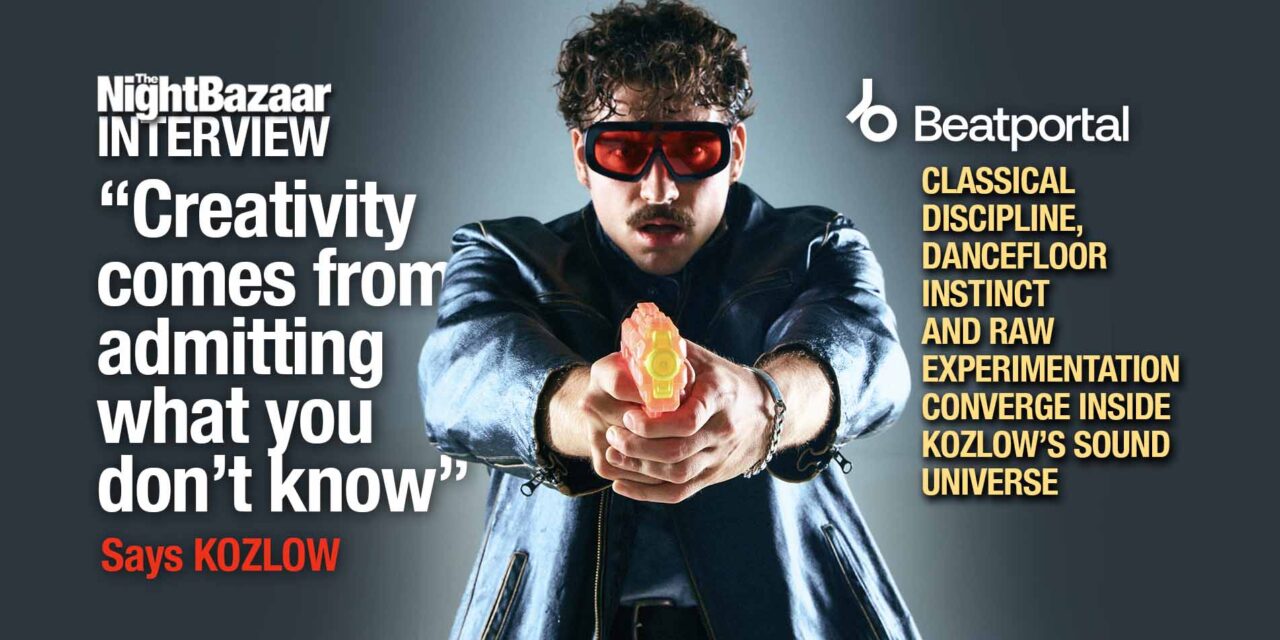
Brooklyn-based artist Kozlow has blurred the underground lines between artistry, curation and community in the Big Apple.
A classically trained electric violinist turned dancefloor architect, he has taken his ANTHR FCKNG PARTY (AFP) from a word-of-mouth monthly series into one of New York’s most talked-about cultural experiences and now, into a label amplifying its ethos worldwide.
He’s played electric violin alongside heavyweights including Carl Cox at Burning Man, Cedric Gervais and Alesso, even soundtracking a Kevin Hart party, while also supporting the likes of Diplo and John Summit on the decks. Known for AFP’s no-lineup, no-phones philosophy, Kozlow is building a movement rooted in spontaneity, connection and raw energy — and his debut AFP release, “Untitled,” is a stripped-back tech-house weapon that channels that exact spirit.

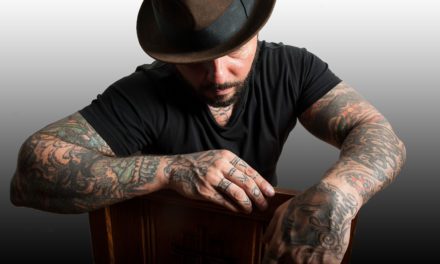
Kozlow – Picture: © Ola Wilk
We caught up with him to talk about violin, underground culture, chaos, New York nightlife, and the mindset behind it all.
You’ve gone from a classically trained electric violinist to a driving force in NYC’s underground scene. How does your violin background shape the emotional or melodic decisions you make in your tracks?
Thanks for having me!!! Long-time listener, first-time caller. Coming from violin, I always thought emotion lived in chords and textures. When I first started making house, I’d throw a kick, hat, and snare together and say, “Okay, it’s done!” As I went deeper, I realized the percussion shapes emotion just as much. That discovery was huge — et voilà… “New York Blues.”
When you blend live violin with left-field house selections in your sets, what reactions from the crowd tell you you’re on the right track?
Context. I can play violin over anything, but it only hits if the moment’s right. If I’ve been playing heavy, club-focused stuff for an hour and then open into a big melodic break and whip it out for the first time, that’s when the room goes big. Timing is so important.
AFP has grown from a no-phones, no-lineup DIY party into a label drawing over 10,000 people in 2025. What part of the original AFP DNA did you refuse to compromise as it expanded?
The party started as just another fckng party. The energy, the people, the chaos — that’s what made it special. Growth can make things feel less underground, but scale also gives you power to protect the culture: no phones, no lineups, and ideally a world where someone says they’re going to “anthr fckng party,” and no one even knows who’s playing — they just trust it’ll be good.
Your events revolve heavily around spontaneity, energy and community. How do you translate that ethos into the records you release through AFP?
AFP is about connection. A great party is strangers sharing one ecosystem on a dance floor. The records aim to recreate that, whether you’re in a warehouse or zoning out on the subway. Same heartbeat, different settings.
‘New York Blues’ builds on the momentum of your collaborations ‘Find A Way’ and ‘Cowboy Killers.’ What was the first spark for this track?
I wanted something warehouse-y, and I was working with my collaborator Kamino on heavier ideas. I’d also been obsessed with tracks where vocals scream over the drop. Separately, I find New York can be both communal and isolating. The track sits between rave intensity and weird urban melancholy.
Your recent tracks show a willingness to jump from hypnotic tech grooves to genre defying blends. What dictates your next creative direction? Is it instinct, crowd reaction to your sets or experimentation in the studio?
A willingness to be bad. Creativity comes from admitting what you don’t know and being willing to learn. You need bad ideas to get to good ones. I keep endless lists of concepts — most of them terrible — but trying is the point. And contrast is everything. My college professor once drew a circle and asked what it was; everyone guessed differently. Meaning comes from context. I think about that constantly.
What made ‘Find A Way’ with ForgiveMeTommy! special?
David and Tommy are like big brothers. I’ve worked with them for years, Montreal shows, LA gigs, the whole journey. They’re wildly creative. Working with them feels like hanging with family if your family happened to be producer-DJs.
You described them as “chaos merchants” who make everything sound hotter. What did the session with them look like?
These days it’s mostly Zoom because no one’s ever in the same city, but historically sessions have happened everywhere: boats in Croatia, Montreal studios, late nights in Tulum. They’re incredible at identifying “the moment” in a track and building everything around it. They’ve taught me a lot about stripping things down and amplifying impact.
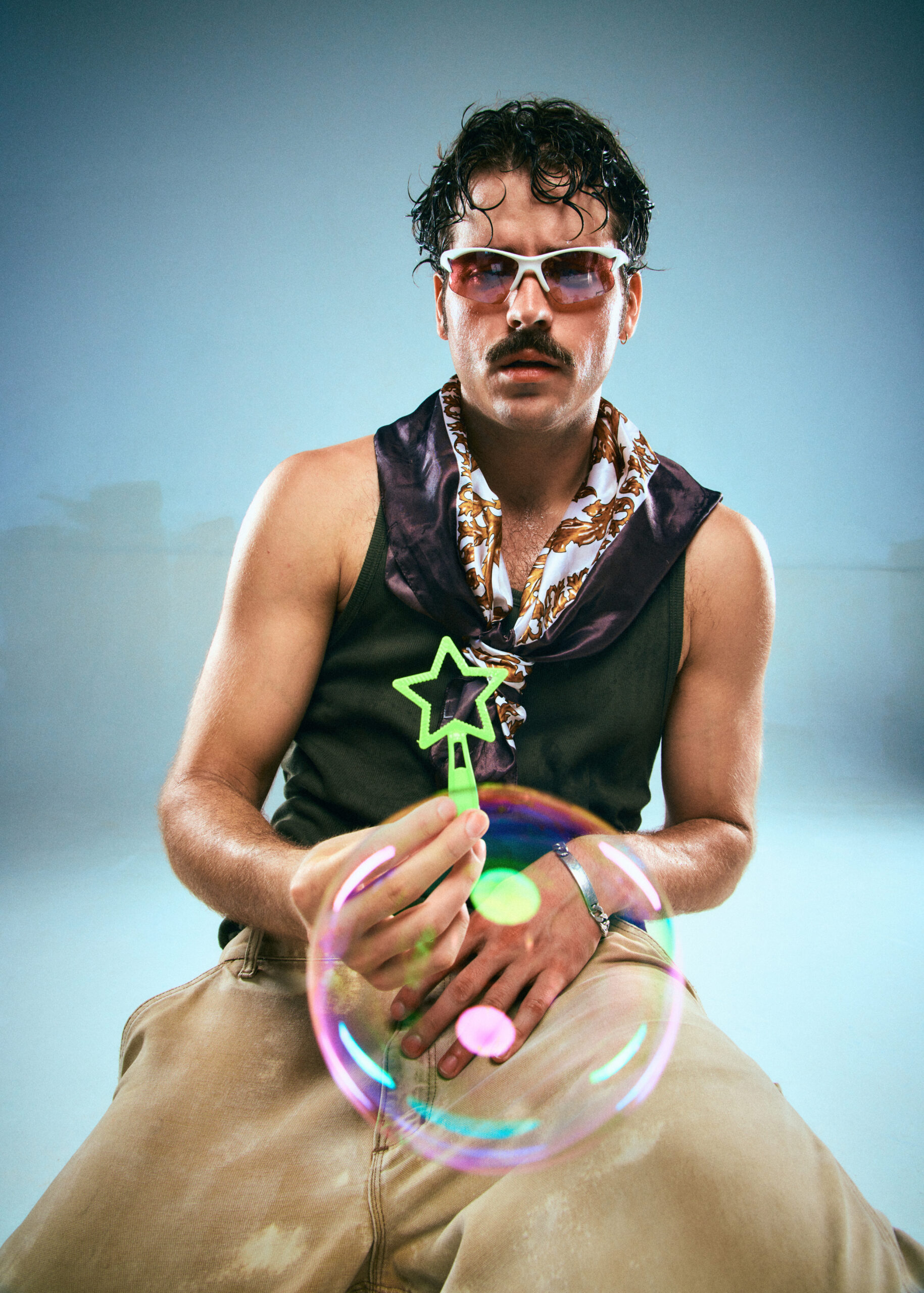
Kozlow – Picture: © Ola Wilk
You’ve worked with major names outside dance music (Scott Storch, FunkFlex, King Von, Burna Boy). How do those experiences influence your underground approach?
It’s been a long and winding road. Years ago, I was recording violin samples and sending them out without knowing if anything would come of it. Then suddenly I get a call: one of those samples ended up on a Funk Flex x King Von track dropping the next day. You never really know where anything leads.
It taught me to stay authentic and focused on the music itself. You can’t control how people react, but you can control being disciplined, creative, and locked in. There’s so much noise out there, blinders help.
You currently hold monthly residencies at Outer Heaven and Gospel in NYC. How have these rooms shaped your direction as a producer and curator?
They’re the two best rooms in Manhattan in totally different ways. Gospel feels like conducting a bacchanal — warm, organic, perfect for exploring melody and violin. Outer Heaven feels like flying a spaceship — intimate, powerful, insanely precise. Both let me test demos, take risks, and shape very different nights.
NYC nightlife goes through constant reinvention. What do you think defines the city’s underground sound right now, and where do you see it heading?
Honestly, Renegade. Their pop-ups and ability to mobilize thousands instantly are wild. The I Hate Models show at the Chinatown mall was the most fun I’ve had in years. Prices are up, kids drink less, attention spans are toast — but people still want connection. Renegade has built that tinderbox… and lit it.
What does “underground” mean to you in 2025, and how has that definition shifted since you started AFP?
Underground is slippery. The moment something becomes known, it stops being underground for someone. A track that feels played out to me might absolutely blow someone else’s mind. For me, underground in 2025 means “not pop”, music outside the commercial machine that still feels good, inspiring, danceable, or at least interesting. And sure, in a perfect world, everything would be free and endless, but it’s 2025 turning into 2026… rent is insane, drinks aren’t selling, and the math must work.
If you can land between underground and accessible while staying honest, that’s the sweet spot. Let the purists yell. I can take it.
Browse our vast archive of interviews with the world’s leading and emerging talent on The Night Bazaar HERE. Check out our archive on Beatportal HERE.