



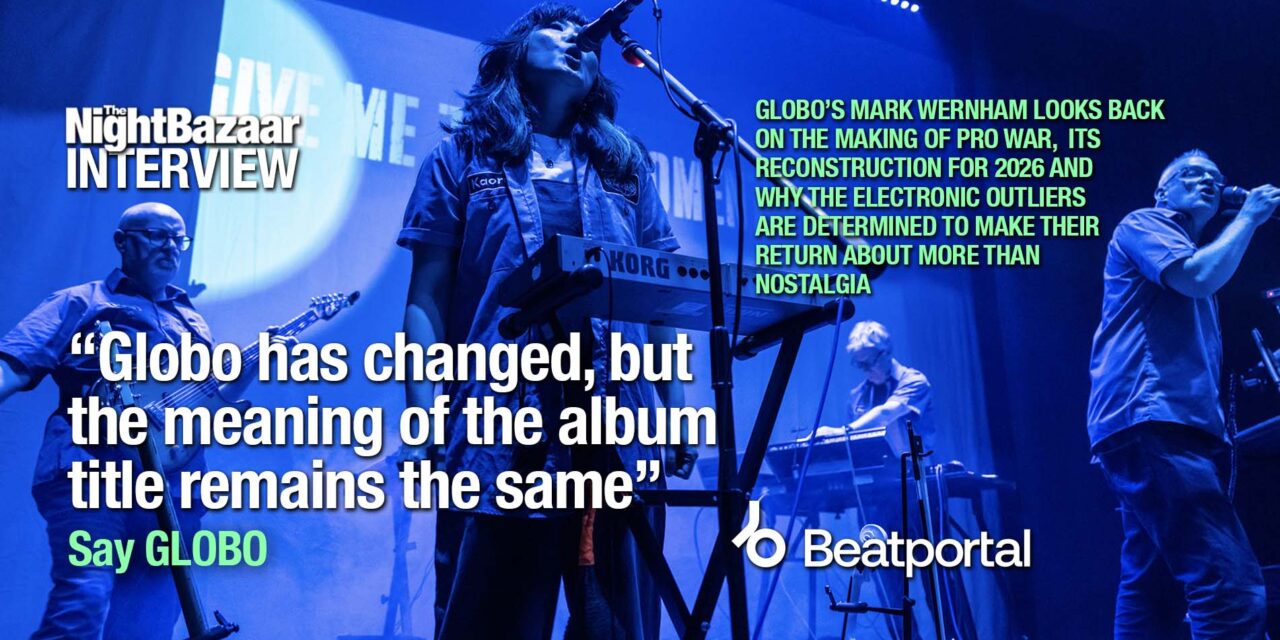
More than three decades after its original release, Globo’s Pro War has returned to a world that makes some of its once-dystopian ideas feel unnervingly contemporary.
Originally released through Hydrogen Dukebox in 1995, the album channelled war, media manipulation, surveillance and cultural noise into a fractured collision of electronics, samples, found voices and pop instincts. Now Paul Thompson, Mark Wernham and Steve Appleton have revisited that debut as Pro War (Redux), reshaping and resequencing the record for 2026 and bringing it to vinyl for the first time.
Far from being an exercise in nostalgia, the project has also helped reactivate Globo as a creative and live proposition, with new music already taking shape. The Night Bazaar caught up with Mark Wernham to discuss how Pro War connects 1995 with 2026, the changing nature of warfare and media, making music with floppy disks and DAT, rejecting AI in favour of making things by hand, reconstructing long-forgotten parts for the stage and why revisiting Globo’s past has unexpectedly opened the door to its future.
You’ve described the new version of your cult 1995 album Pro War as “the same amazing music, tweaked to fit current-day brains.” What exactly constitutes a 2026 brain to Globo and how did that idea influence the decisions you made when reconstructing the record?
That was the record label’s wording. It was Hydrogen Dukebox who decided to make the reissue and it led to a really interesting process of updating the album.
How does an album made in 1995 fit into 2026? Can it be relevant and not just an archive release or a curio? The biggest difference is that the sleeve was changed. The new artwork, which is by Studio Thomson, uses an image is taken from footage released by the US military of an American drone being disabled by a Russian fighter jet, it’s the splash screen when transmission was interrupted. That felt like an appropriate update from the colour negative image meant to represent the WW1 soldier on the 1995 release. It’s a 21st century image of warfare vs a 20th century one. A 2026 brain would recognise that image of digital war.
With the actual music, it was about editing the original album to fit on vinyl, because the 1995 release was CD only. So first up was the decision to lose tracks. There were a couple on the original release which we felt were more straight down the line club-oriented tracks like Intelligence Is Joy and Turn It Down Or Turn It Off, so they were cut. Then there was the decision to include the singles on the album, which hadn’t been the case in 1995. And then some judicious editing was done by the label of the tracks themselves. Hydrogen kept us in the loop throughout, and we signed it off, but we didn’t actually do any of it. We made the decision to be very relaxed about it and treat it as a collaboration. We were intrigued to see how other creative people would react to work we made 30 years ago.
Globo
The original album was built partly in response to Rwanda, Bosnia and the aftermath of the Gulf War, while the title inverted John Lennon and Yoko Ono’s War Is Over (If You Want It). Listening to Pro War against the world of 2026, has the meaning of that title changed for you?
No, the meaning hasn’t changed. We grew up in the Cold War, but we thought it was an era of post WWII peace. The Vietnam War was something we experienced through watching films after the fact, it was a fictional experience for us. The end of the track ‘Pro War’ has a sample from ‘Apocalypse Now’ – “Some day this war’s gonna end…”. It’s Robert Duvall, he sounds wistful, regretful about that fact. He loves war.
I know we did say that ‘Pro War’ is an inversion of John and Yoko’s ‘War Is Over (If You Want It’) statement, but it’s more the logical extension. What they were saying was that if we want war to be over, it will be. It’s so simple. But the sad reality is we don’t. Therefore, we must be pro war. John and Yoko were explicit that they were trying to use concepts from advertising to “sell” peace. They made ‘War Is Over’ a slogan and put it on billboards and in magazines and newspapers. A couple of years after John and Yoko did the Stop The War campaign, there was the Unsell The War campaign, which got hundreds of artists, writers, directors and ad agencies to make ads. We use one of them to open our gigs. It’s from 1971, but it feels as chilling and relevant as it must have done back then.
We didn’t know what was going in the world, not like now. Hardly anyone had internet access. There wasn’t even 24-hour rolling news, never mind social media. Two significant moments I remember: Watching The Sweeney on TV in the early 90s and it being broken into with a news bulletin that the USA had started bombing Baghdad. The other was in the early 2000s noticing how the UK media was starting to report on US general elections in way they hadn’t before. That was a post 9/11 phenomenon. The world has changed, music technology has changed, Globo has changed, but the meaning of the album title remains the same.
In your recent Quietus interview, Mark reflected that some of the dystopian ideas that once felt almost like science fiction now feel uncomfortably real. Does that change the emotional weight of performing and releasing this music now, compared with making it in your twenties?
Yes. Looking back now, exploring ideas of media manipulation and surveillance was more alluring back then, an exercise in future gazing. But it was as much to do with watching films like The Conversation and Videodrome, and a documentary about the Brazilian state broadcaster Globo TV (which is where the band name came from btw) as it was about commenting on political reality.
We were film obsessives and watched everything. There was Alex Cox’s Moviedrome on TV and there is an arthouse cinema here in Norwich called Cinema City, and back then if you were on dole you could go on a Tuesday or Thursday for 60p. ‘Man Bites Dog’ on Thursday, ‘Jean De Florette’ on Thursday. We lived in there and the local video shop in the late 80s and early 90s. Warnings about a future dystopia were in the realm of fiction.
So was war. We experienced it through TV and cinema screens. The wars after the collapse of Yugoslavia made it feel more real. We’ve watched the turbo charging of media manipulation in ways we could not have imagined. I mean, it’s interesting to see that those ideas that preoccupied us have become so real and threatening, but I think we’ll be glad to leave the themes behind once we move onto the next album.
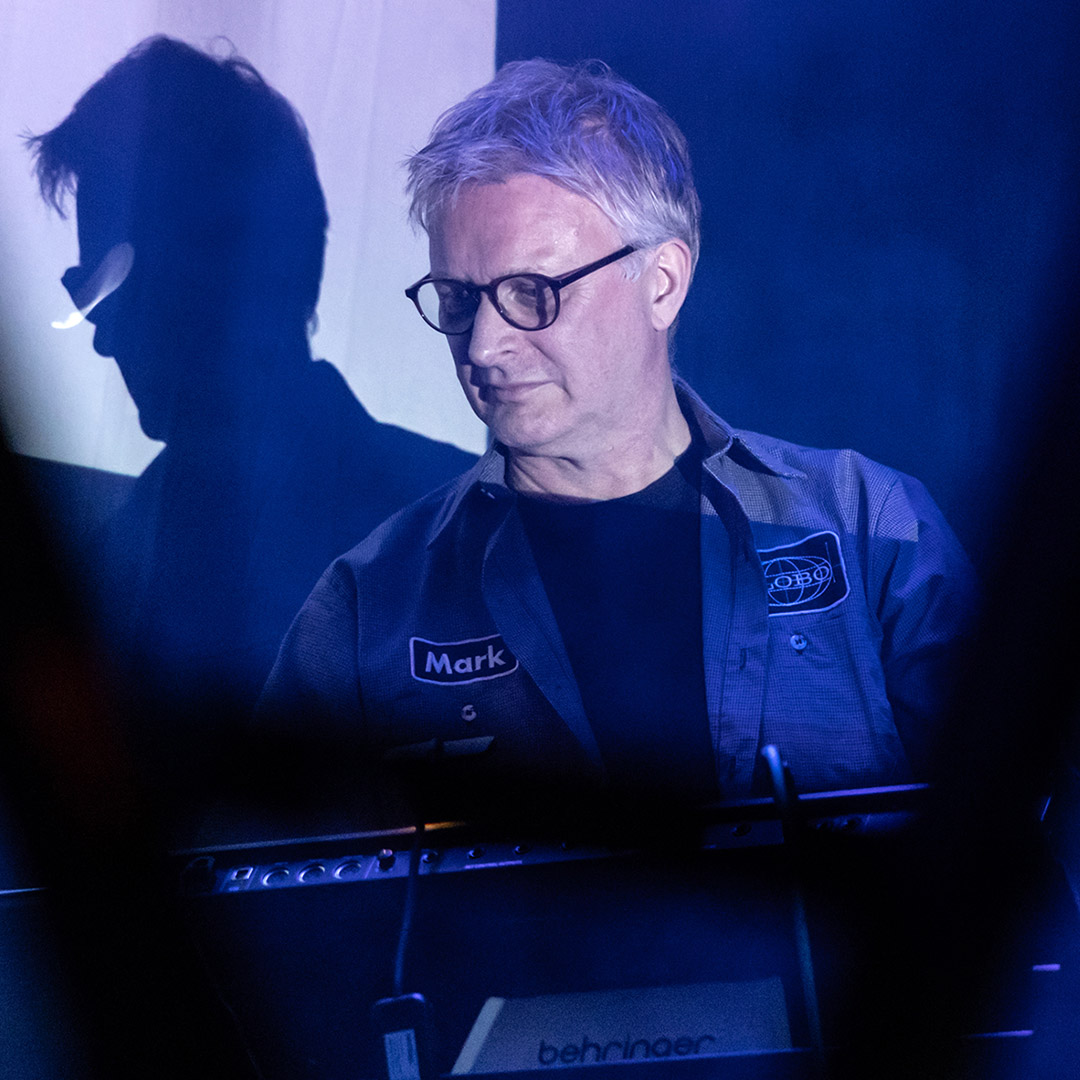
Mark Wernham – Globo – Picture: Davie Guttridge
Sampling and found voices were central to the original record. At the time, television, radio and newspapers provided much of the cultural noise you were cutting up. Today that noise is relentless, social media, algorithms, misinformation, rolling news, AI-generated content. If Globo were making Pro War completely from scratch in 2026, what would you be sampling?
I expect we’d be using the same sources: TV, radio, found audio, plus a load of YouTube. We looked at AI content generation last year and experimented with it, but we junked it. What we’re doing now is purposefully making everything by hand. So, all our video work, the visuals behind the band when we play live, it’s all made by us, or commissioned artists, like the videos for Pro War and Onward.
We’ve also put together an exhibition of artefacts to show at our album launch gig in Norwich. We made the exhibition boxes. We cut the wood, screwed it and glued it, spent days using wood filler and sandpaper to finish them and painted them.
Paul and Steve took a couple of boxes of old Top Trump cards of heavy artillery, tanks and fighter planes, and altered them with paint and ink to give away at the album launch gig. We’re very engaged in those kinds of processes now. It’s rewarding and expands the meaning of being a band. It’s messy though. Lots of hoovering and wiping required.
Onward has now been incorporated into the album and represents one of Globo’s most immediate, melodic moments. Why did it belong inside Pro War (Redux) when it wasn’t part of the original album, and what does its inclusion change about the journey of the record?
We wanted to make our singles back then as standalone items, rather than tracks just swiped off the forthcoming album. They were 12-inches and introduced Globo. ‘Onward’ was actually the B-side of Beautiful Feeling, but it took on a life of is own after it was used on the TV for Stewart Lee and Richard Herring’s Fist of Fun show.
You know, one thing about ‘Onward’ that I’m not sure anyone has commented on before, is that it’s referencing Get It On by T-Rex. I suppose people weren’t expecting a T-Rex reference on a mid-90s electronic music 12-inch. Putting Onward, Beautiful Feeling and Autosleeper on the album has probably made it feel a bit more focused perhaps. I’m not sure.
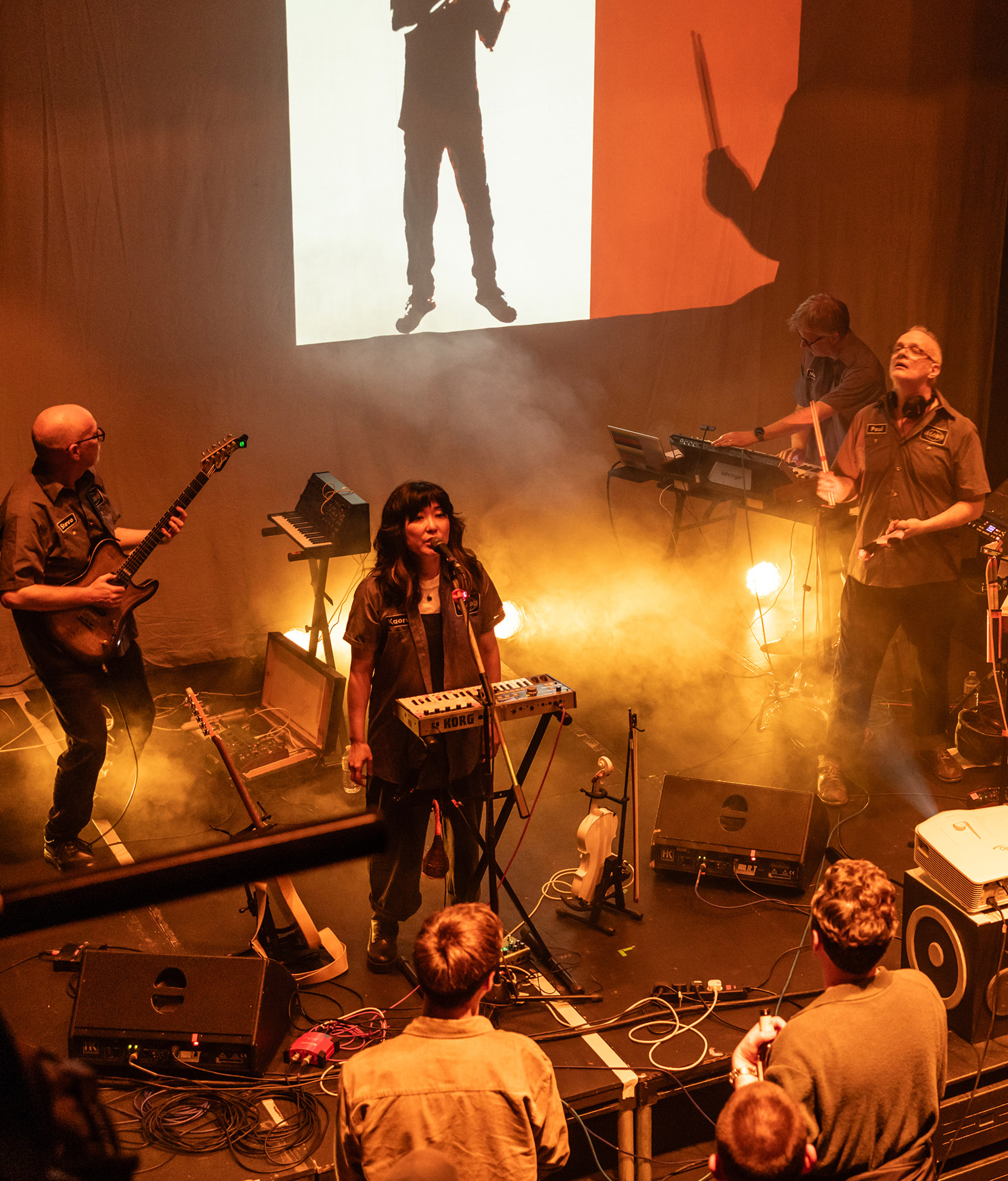
Globo – Picture: Davie Guttridge
The original music travelled between Norwich and London on floppy disks and was assembled using Akai samplers, digital synths and drum machines before mixes were committed directly to DAT. What did those technological limitations give Globo creatively?
We had to mix them in heat of the moment. It made the mixing process part of the writing process. It involved us all leaning over mixing desk and shifting faders. Swapping files using floppy disks seems so archaic now. It’s like trying to remember what life was like before we had mobile phones and social media. Maybe it’s like the romantic idea of shooting film instead of digital. I studied photography at college and learned on a film SLR with darkroom techniques and always used to process my own negatives and prints. A few years ago I thought it would be nice to work like that again and immediately realised that it was massive pain in the arse!
Recovering material from stereo DATs rather than returning to pristine multitrack sessions must have imposed its own limitations. Were there moments when you effectively had to become musical archaeologists, working out how the younger Globo had constructed something three decades earlier?
That was really interesting. A lot of the keyboard parts were originally recorded direct, so there was no MIDI data. We were able to use stem splitting technology to separate the tracks and then analyse the parts so we could re-learn them. A lot of the prettiest piano parts on the album were improvised there and then and forgotten, so I had to learn them in a way more disciplined manner so I can play them live. Stem splitting dense collages of samples and electronic sound and textures is not as easy as doing with a four-piece rock and roll band.

Globo
Globo originally emerged alongside the explosion of British electronic music around artists such as Underworld, Orbital, The Orb and labels including Warp and Hydrogen Dukebox, yet you never seemed particularly interested in belonging to a defined movement. Was being difficult to categorise something you consciously protected?
Not really. It just seems to come naturally. I remember the day we signed the record deal with Hydrogen Dukebox, we all went out for a bit of a celebration and wound up at a Megadog event somewhere in north London. I think Loop Guru were playing. We were friendly with them, but we weren’t never part of that scene either. People at that event looked at us like we were the drug squad or something because we had short hair and were wearing suits. We didn’t stay long.
Your early performances could blur gig, club and installation, even placing cassette players and found sound around venues so that entering the space became part of the experience. With the technology available today, how far could you take that idea now?
We liked doing that kind of thing. We enjoyed cooking up the ideas and then executing them. We still do. Technology has made so many leaps since those days that we’re way behind the curve now. That’s why we’re building things like cavemen. Using tools made of wood, painting and buying fixings from ironmongers. Art is a messy business.
The musical environment Globo returns to is very different from 1995. Electronic music is vastly bigger, but much of the way people encounter it is mediated by playlists, platforms and algorithms. Do you think genuinely awkward, uncategorisable electronic music has more opportunity to find an audience now or less?
People can discover more music for themselves now, but curation is still important. Back then it was the weekly music press, John Peel and a couple of TV programmes like Snub or Transmission, which was an Anglian TV late night music show we liked because they would show our videos.
I think now there are more opportunities to play live to audiences of interested people all over the UK and Europe. It’s a shame that popping over to France to play a couple of shows is now rather more challenging than it used to be. We played a festival in Italy in 1996 and I remember the food was excellent. We’re playing the Shadowlands Festival next year, which shows there’s an appetite for leftfield music with artists on the bill like Foetus, Test Dept, The Wolfgang Press, Negativland, Immersion, Hula… it reminds me of the post-punk Futurama festivals back in the late 1970s. Very encouraging that there’s a place for Globo in that.
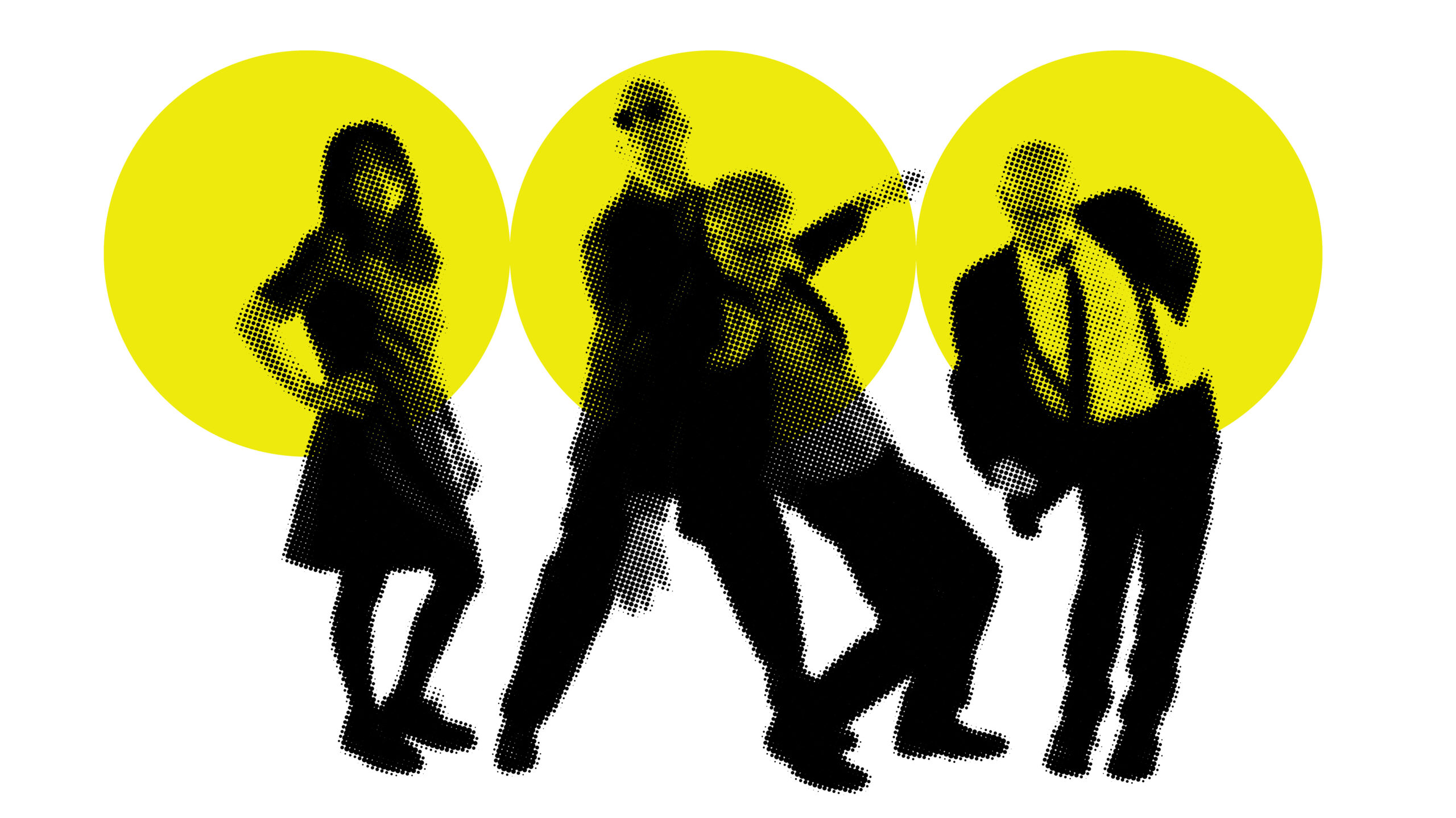
Globo
There is a cool irony in an album made using what was then cutting-edge digital technology becoming available on vinyl for the first time more than 30 years later. What does finally putting Pro War onto vinyl mean to you?
Paul is more interested in the CD. I’m delighted to have this album on vinyl. I’ve really enjoyed the resurgence in vinyl. Record sleeves are democratic art. Like posters. Beautiful things made out of paper, by combining text and images. I remember when the band we were in before Globo made an album and the label we were with said they were going to press it on vinyl and CD too, and we were all very impressed that it was going to be on CD, because that was the new exciting format. How times have changed.
Revisiting old work can easily become an exercise in nostalgia, yet you’ve been quite clear that this isn’t intended as a museum piece. Where did you draw the line between respecting what the younger Globo made and allowing the people you are now to interfere with it?
We’re not precious about our material in that way. There were always multiple versions of songs, we’d strip elements out and put new ideas in as they occurred to us. It could get a little out of hand sometimes and we could easily lose track of what we were up to. When we made an album that was supposed to be released in 1997 called This Is London, 1966, we ended with about four hours of music, and some of versions of the same songs that were completely unsuitable for anything really and bore no resemblance to the original idea.
That album ended up getting shelved and rejigged and played around with yet again and was released on the Burning Shed label a few years later as a very limited CD-R, so we’d already messed with our own history. Paul and Steve are both art school trained and Paul sees sound like he does paint. He piles it on and scrapes it off; he never throws anything away. Steve works constantly, drawing and recording an album’s worth of improvised guitar music every week and cataloguing everything in an ever-expanding body of work. Anything can get reused and redefined at any point. It’s all a part of a continuum.
Globo never formally disappeared, but this feels like considerably more than simply reopening the archive. Has working together on Pro War (Redux) generated new music or ideas?
It has. The process got us playing live together and we recruited Kaoru Sakurai to the live band. We’d worked with her before when we did The Fall album and the Devo single. We’re more of a live proposition now than we’ve ever been and we’re writing new material which we’re playing live. There will be a new album next year.
After spending so much time reconsidering an album about conflict, media, power and the possibility of a better future, what do you ultimately think Pro War says differently in 2026 than it did in 1995?
I’m not sure now whether the album is a historical artefact of a time and place or a statement about 2026 and how we got here. If you consider anything and try to trace back the series of events which led to the current situation, they will always join and intersect. We were saying much the same thing back then. We opened the album by saying that The Beatles led to Globo, that flirting with fascism leads to disaster, that humans can’t stop fighting, that media manipulation can make people do crazy things.
What is different now is that we feel that being together, as a band and being in room with people who have gathered to watch a band, is a positive force for good in very anxious era and we’re embracing that.
Globo – Pro War (Redux) is out now on Hydrogen Dukebox. Grab it on Beatport HERE.
Head to Beatportal to read The Night Bazaar exclusive interviews in partnership with Beatport HERE.