




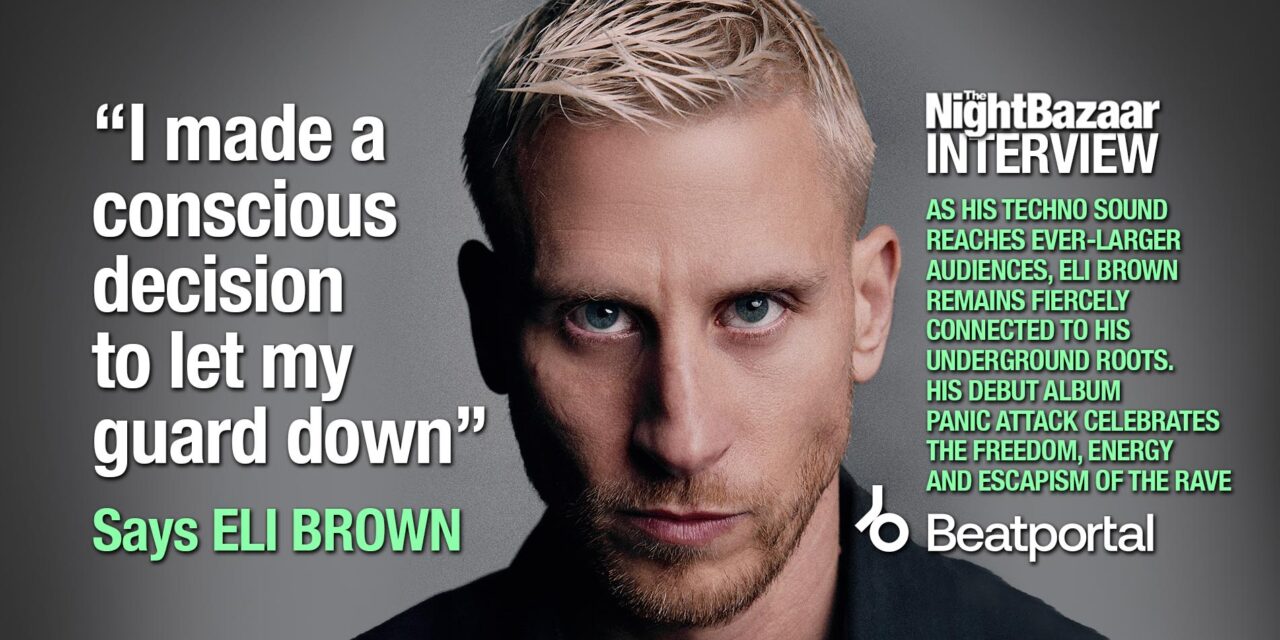
After more than two decades in electronic music, Eli Brown has finally arrived at his debut album, Panic Attack. From his early days immersed in Bristol’s rave culture to his success in drum & bass as Xample and one half of Loadstar, and his subsequent reinvention as one of techno’s biggest names, his career has been anything but conventional.
Drawing on jungle, drum & bass, ’90s trance and techno, Panic Attack brings those different chapters together in his most expansive work to date. It’s a remarkable milestone for an artist who, just a decade ago, came close to abandoning music altogether.
Following their previous conversation ahead of his Coachella debut, The Night Bazaar’s Mark Gwinnett reconnects with Eli Brown for Beatportal to discuss the making of Panic Attack, the creative freedom that transformed his career, his extraordinary rise to international success and why the spirit of the underground rave remains at the heart of everything he does.
You are preparing to release your debut album, Panic Attack. Why does now feel like the right moment to tell your story through a full-length body of work and what does the album represent to you personally?
Honestly, it’s been in the back of my mind for years, but I never wanted to make an album just for the sake of it. I’ve put out a lot of music over the years, singles and club tracks mostly, and I’d got to a point where I felt like I had more to say. I’m definitely not a one-trick pony, and an album gave me the room to show that range meaningfully.
The other side of it is more personal. My career has been a bit unconventional, to say the least. From my years in drum & bass under different aliases to this project, and everything in between. Every bit of that has made me who I am today, and it still comes through in my music. But for a long time I kept that side of my story pretty close to my chest, and let the tunes do the talking. Going into this year, I made a conscious decision to let my guard down a bit more, and the timing just felt right.
So for me, Panic Attack is a real showcase of my artistic heritage: my sound, my influences, and what keeps me coming back to the dancefloor after all these years. It’s about being a bit more exposed and letting people get to know me properly, as an artist, beyond even the music. More than anything, I wanted this record to take fans back to where it all started for me, that carefree feeling of losing yourself in a rave where nothing else matters. If it takes even one person back to that place, for just a few minutes, I’ve accomplished what I set out to do with this one.
How did you approach translating 20 years of experiences, influences and creative evolution into one cohesive record?
By not overthinking it, really. Rather than mapping out twenty years on paper, I let those influences find their way in naturally, and the thread holding it all together was the feeling. The concept was always escapism through music, which goes all the way back to my earliest days raving—so whether a track leans into jungle, trance or techno, it’s all chasing that same sensation.
And to be fair, drum & bass has never really left me, either. Merging different worlds with techno has always given me a lot of creative space. I’ve never fully shut the drawer on my roots, and I’ve actually tried to bring the two together over the years, but it never quite worked. They’re two very distinct genres that are built so differently, from the tempo to the drums, and how the bass sits. The key to making them work cohesively is finding the right sound palette, and as someone who is rarely satisfied, that can take a while to really nail down. The way I write music helps with that a bit, though.
I always get my samples together before I make a single tune, so I end up with a massive stash to dig through, an especially nice way to pass the time on flights. But that also means some of them sit there for ages, just waiting for that right moment. When I first embarked on this album, I already had a few I knew were going to be part of the record, and some of those ideas went back years. Take Damaged, for example. I’d had that sample sitting in a folder for five or six years, it’s straight out of my drum & bass days. When that cut and Badman Riddim finally came together, it really set the tone for everything else that would follow. Suddenly, all these different eras of my sound were sitting side by side, and they all made sense together.
Eli Brown
What’s the story behind the album title?
For me, Panic Attack it’s about finding a sense of freedom in chaos. The way I’ve come to see it, a panic attack can be a release of pain in its own way, everything you’ve been holding onto finally lifting. That idea really resonated with me, and I interpreted it through what the dancefloor has always been for me: escapism.
The best nights out always have this one moment. The energy keeps climbing, it gets really intense, and for a minute it’s almost too much. But then it breaks, and it’s just pure euphoria. The hairs on your arms stand up, you’ve got this massive grin on your face, and all you want to do is hug your mates. You’re fully present in the moment, and so is everyone around you. All the weight you walked in with just melts away, and you feel completely free, even only briefly. It’s a feeling I’ve been chasing since I first started raving, and it’s what I kept coming back to while making this record. It’s a bit of chaos, sure, but the best of its kind, the kind you can really only find on a dancefloor.
What can listeners expect to discover about Eli Brown through this album that they perhaps haven’t heard before?
Probably a more emotional side of my sound than people expect. Most fans know me for the big, hard-hitting techno tunes, and that’s definitely still in there, but this record has a lot of moments that are about feeling something beyond the drop. It’s really my artistry at its most expansive, and it shows a range I’ve never really shared until now.
That’s the beauty of an album compared to singles: it gives sound room to breathe, and it becomes something people can actually live with. I know not every track is going to hit everyone straight away, and that’s kind of the point. Some will be instant, and others you’ll come back to months, or years, later and suddenly they’ll click. Different tracks will mean different things depending on where you’re at, too, and that’s what I love about it. The music meets you wherever you are. I’d love for people to find their own moments in it, whether that’s one for the drive home, one for the dancefloor, or one for when you just need a bit of headspace. Hopefully, by the end, they feel like they know me a little better and feel a bit more connected to the music because of it.
Eli Brown
When we last spoke, you talked about growing up in Bristol, discovering rave tapes through your older sister’s friend and the enormous influence of Roni Size winning the Mercury Prize in 1997. Looking back now, how important were those formative experiences in shaping the musical identity that ultimately led to Panic Attack?
Massively important, probably more than I realised at the time. When you’re that age, you don’t think of it as formative. You’re just a kid completely consumed by the sound, the scene, and everything around it. But looking back, that’s where it all comes from for me, really. Those influences have been part of every record I’ve made since and none more than this one.
Bristol at that time had everything happening at once, with jungle, drum & bass, rave, house and techno all sharing the same city and it taught me early on not to box myself in. That’s really what ties Panic Attack together. You can hear the jungle, the trancey melodies and those sweaty warehouse breakbeats, all filtered through the techno I make today. It’s the most direct line I’ve ever drawn back to those days, a true full-circle moment.

Eli Brown
Before Eli Brown became synonymous with techno, you enjoyed considerable success in drum & bass through Xample and Loadstar. How do you reflect on those chapters of your career today and are there particular production techniques, musical philosophies or experiences from those years that have resurfaced during the making of this album?
With a lot of fondness, genuinely, those years are a huge part of my story as an artist. Drum & bass is where I learned my craft and found my feet, and it’s where I first experienced what it means to have people connect with something you’ve made. I’ll never not be grateful for that.
As for what’s resurfaced, honestly, all of it. My sonic history, so to speak, is intertwined with just about everything on this album. Even when a track sits firmly in techno, you can feel where it comes from, whether that’s in the rhythm, the breaks or the energy. It’s been a lot of fun to finally let my worlds exist together like that, and I think it’s what makes this record feel so personal.
There’s something interesting about how electronic music continually reinvents itself while drawing inspiration from its past. Having experienced several generations of UK dance music first-hand, what do you think today’s electronic music scene could learn from the attitude, freedom and rebellious spirit of the original rave movement?
Honestly, I think the biggest lesson is that it was never about anything other than the music and the people. A room full of strangers, completely locked into the same moment, all feeling the same thing. Nobody was overthinking it.
These days, we’re reachable every second of the day, with everyone documenting everything, all the time. It’s mad how much harder it’s become to escape the world than it used to be. The rave is one of the last places where you can genuinely do that and, to me, that’s what it’s all about. It’s also why I’ve recently been encouraging fans at my shows to keep their phones low and their energy high. I get it and I’m not against people capturing a moment by any means, but some of the best nights of my life I don’t have a single photo or video of, because I was too busy being totally in it. I know that is sometimes easier said than done, but trust me, when you really lean into it, the moment hits so much harder.
In our previous interview, you revealed that you were applying for jobs in 2015 and had come close to leaving music behind before the Eli Brown project emerged from a desire to experiment and have fun again. Looking back at that crossroads now, how close were you to walking away and how much did that experience change your relationship with making music?
I mean, close enough that I was sending out my CV! I’d been making music for years by that point, and there was a moment where I genuinely didn’t think it was ever going to amount to anything more than what it was at the time. I was properly looking at what else I could do with my life. Eli Brown started off as a side project, a way to really make music for just me again, no expectations, no pressure, just to see what would happen.
As you know, that changed the entire trajectory of my life, but it also changed a lot about how I approach making music. Not the mechanics, necessarily, but the mindset. It stripped it back to why I started in the first place, because I loved it. That’s still what drives me now and it’s how I go into every track. Honestly, some of my best tunes have come from just mucking about in the studio and not getting too in my head about it, just making what I love.
You’ve successfully reinvented yourself several times, something relatively few artists manage over such a long career. What do you think has allowed you to keep evolving creatively and have there been moments when abandoning an established musical identity felt particularly difficult?
I think it’s because I get bored easily, ha. As an artist, you’re always evolving in one way or another, and when you’re not, you get bored. That’s how I see it. I’ve never been overly precious about what came before, and every time I’ve reinvented myself, it’s started with the same feeling: curiosity outweighing the fear of starting again.
Starting over as Eli Brown was the big one, obviously. You’re walking away from something that’s working, with no guarantee anyone or anything will follow. But as I got going, I had a clear vision of what I wanted this to be, and I trusted my instincts, even when it would’ve been easier to stick with what I knew. Again, for me, it was about getting back to the music that really excited me. It was a calculated risk and I was fortunate to find the right people along the way who believed in that vision as much as I did. This project has been built really intentionally: establishing the brand, growing the rooms, growing the audience, letting the music and my artistry evolve along the way. It didn’t come from one viral moment. It came from a lot of nights, a lot of trust and refusing to compromise this time around.
You told me last year that you find conformity boring and have never been interested in chasing trends or fitting into categories. Now that your brand of techno has become so influential and commercially successful, how do you avoid becoming constrained by the expectations surrounding the Eli Brown sound?
By not paying too much attention to what’s expected, really. Right now in the category there’s the big tech house world and there’s hard techno, both of which are great, but I don’t really sit in either. I’m making the music I want to make within the techno realm, and doing it my way. It sounds simple, I know, but it’s what it all comes down to for me. Of course, there’s always a bit of nerves when you go in a different direction, because you never quite know how people are going to take it. But I just stick with what feels right, and so far, that’s served me pretty well.
The way I see it, my music isn’t about sticking to a formula. Never has been. It’s more about a certain energy that runs through everything I make. As long as that’s there, I can take a track pretty much anywhere and it will still sound like me. That’s what this album shows, I reckon. It covers a lot of ground sonically, but it all comes from the same place. I’m always experimenting, trying to push the sound somewhere new while keeping that core intact. That keeps it interesting for me, and hopefully everyone else.
Eli Brown
You also described yourself as your own toughest critic, admitting that you’re rarely completely satisfied with your productions. Did making Panic Attack intensify that perfectionism, and how did you ultimately decide when the album was finished?
It definitely intensified it a bit, ha, but I don’t know that it was much different than my usual process. As an artist, you’re forever second-guessing yourself, and an album just gives you more to pick apart. But the reality is, at some point you’ve got to push past that and get the music out there, or it’ll just sit on your hard drive forever. So once I knew it was an album, I gave myself a deadline of 12 months and that was a massive move. My sound is constantly evolving with whatever’s inspiring me at the time or making me want to dance in the moment, and it can change so quickly. I knew that if I dragged it out, I’d end up forever going round in circles. Keeping it on a timeline kept it focused and honestly made the whole thing a lot more fun.
I might be my own worst critic, but I can usually tell when something’s landed. If I’m buzzing off it, chances are the dancefloor will be too.
When we spoke ahead of your Coachella debut, you described playing the festival as something that had seemed like a pipe dream only a year earlier. Since then, your career has continued to reach extraordinary heights. How did the reality of Coachella compare with your expectations, and has that experience changed your perspective on what might be possible next?
That was definitely a big one for me. I think when we last spoke, I probably said something along the lines of having no idea what to expect going into, but I was ready to go all in—and that’s exactly what I did. The crowd absolutely went for it from the off, and the energy did not let up. Both weekends. It’s for sure up there with some of my favourite sets I’ve ever played.
I think it’s shifted my perspective in some ways, but every milestone like that does a bit, really. I still find myself in these places and getting these opportunities that genuinely surprise me. I mean, even if you’d told me at Coachella last year what would be happening now, with the album, the tour, the response to it all, I’m not sure I’d have even believed you right away. At the end of the day, I don’t take a second of it for granted. I just keep doing my thing in the studio. For me, that’s the whole point.
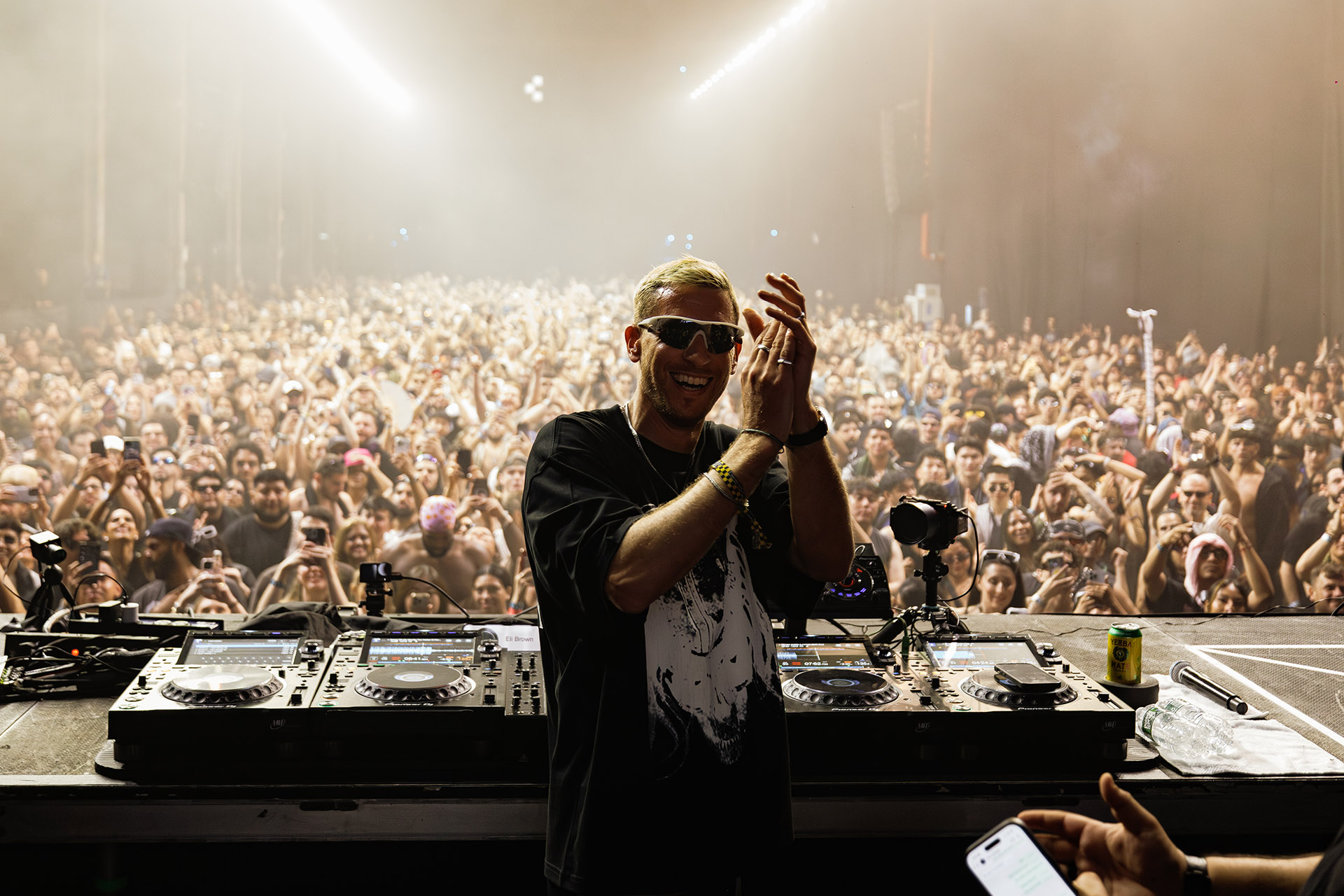
From Coachella and Tomorrowland to your historic Rockefeller Center performance, you’ve taken a sound rooted in underground rave culture to some of the world’s most recognisable stages. Is there ever a tension between the raw, rebellious spirit that inspired you and the scale of the events you’re now headlining?
Honestly, not really, because for me, the spirit was never about the size of the room. Moving between the underground and the mainstages has given me a pretty distinct perspective on what this culture is actually about, both as an artist and as someone who’s spent plenty of nights on the other side of the decks. Again, it’s about the people and how they connect with the music, and each other. Whether it’s a sweaty, dark warehouse or somewhere as monumental as Rockefeller Center, the size of the room might change, but the feeling never does.
Your Panic Attack World Tour includes a return to London’s Electric Brixton and your biggest headline show to date, transforming LA’s City Market into a warehouse-inspired rave for more than 10,000 people. What are your ambitions for these shows and how do you recreate the intimacy and intensity of an underground warehouse party on such an enormous scale?
Electric Brixton feels like a bit of a homecoming. Any time I play in London, really, it’s where so many of my early nights out happened, so coming back to those rooms never gets old. And City Market is something else entirely. LA has given me so much over the years and being able to give something back on such a massive scale is pretty cool. I wanted it to feel like a thank-you to and celebration of the city, just as much as it’s a major milestone for me.
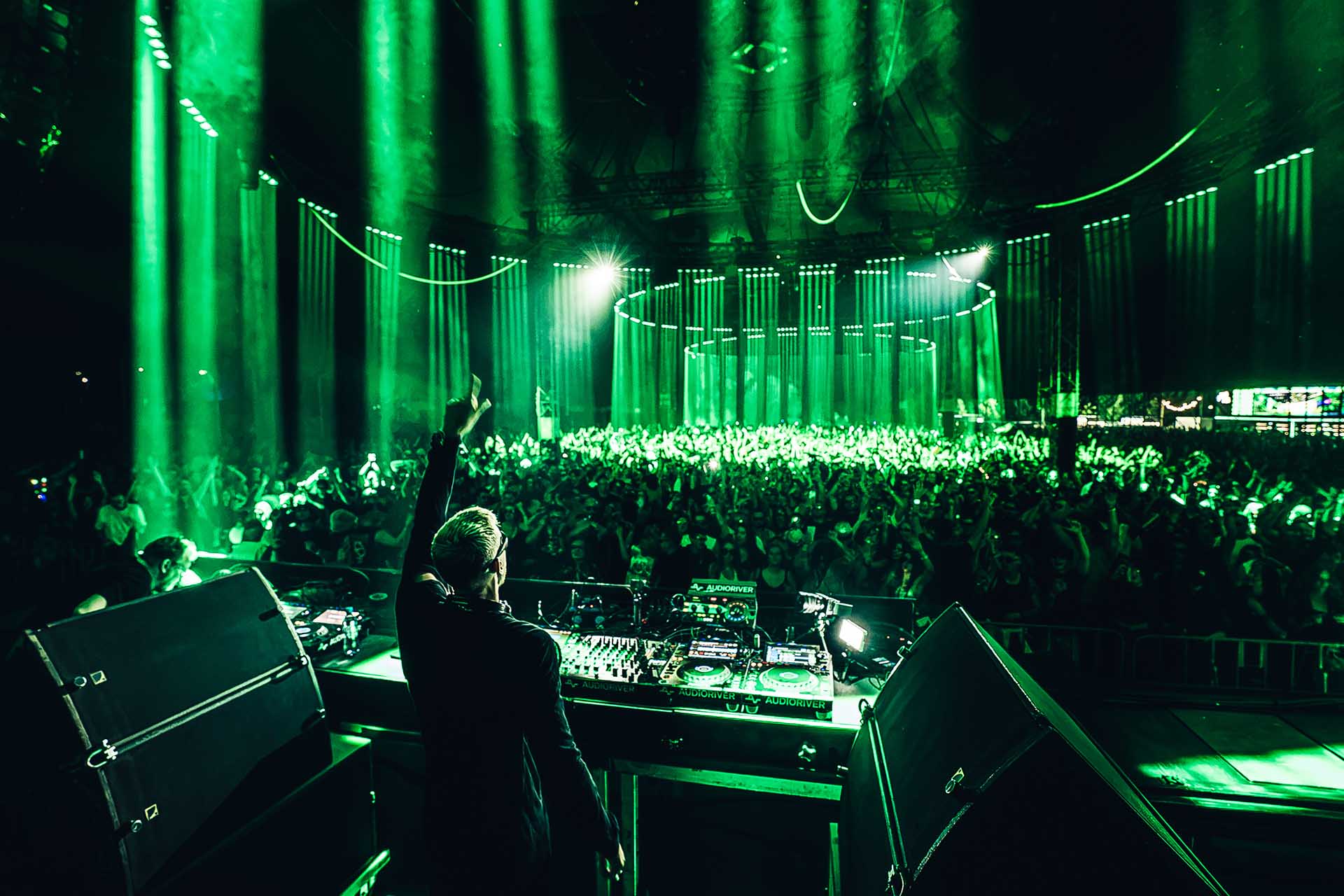
Specific to this tour, the ambition is the same across stops: to recreate the feeling of those early warehouse nights that I’ve mentioned. Some of my favorite nights ever have unfolded in dark, stripped back rooms where the music really sets the scene, so for City Market, we’re taking that same raw energy and building it out for over 10,000 people. Every element, from the lighting and visuals to how the room feels when you walk in, is designed to pull you into that world, that moment, and keep you there. The trick to keeping it intimate at that scale is not over complicating it. If you can really immerse everyone in the moment, even 10,000 people can feel as close as 200. It’s hard to explain if you’ve not experienced it, but I promise, it’ll be one to remember.
In our last conversation, you explained that your goal when performing is to transport audiences into another sonic realm where nothing matters except the music and the people around them. How has that philosophy influenced the creative direction of the Panic Attack tour and are you developing new ways of immersing audiences in the experience?
It’s shaped everything. The whole album is about escapism, stepping away from the noise of everyday life, losing yourself in the music and the people around you, so the tour had to deliver that same feeling. I’m about how involved as it gets in how the shows look and feel, but the goal is never production for the sake of it. It’s about creating a space where people can properly let go.
The immersion doesn’t stop when the night ends, either. Off of what I was saying earlier, I’ve been sharing a lot more with fans online lately—nostalgic stuff about how I remember raving, and the response has been so powerful. To read messages from fans about their own rave experiences and how my memories and music alike really resonate with them is just awesome. Hits me in the chest a bit. But it’s affirmed for me that people do want to hear the story behind the music, so letting them in more, on and off the dancefloor, has become a big part of this chapter and how I’m immersing fans into it.
Your music has been described as bridging the underground and mainstream worlds. Do you think that distinction still carries the same meaning it once did, particularly when harder, darker electronic music is now reaching audiences on such a massive scale?
At the end of the day, I think the underground will always be the underground. That’s what makes it special, and it’s not going anywhere. But what’s changed is how many people are finding their way to it. There’s a real curiosity out there right now, and I think that’s brilliant.
For a lot of people, a festival mainstage is their first taste of this music, and that’s really no different from me hearing my first rave tape. Everyone’s way in looks different, but the feeling once you’re there is the same. I take a lot of pride when people tell me that one of my tracks was their “gateway” to techno, that they didn’t even know they liked the sound until they heard it. That’s the best compliment I could get. So for me, it’s less about two separate worlds and more about one big door. The bigger the stages get, the more people walk through it and that’s ultimately what will continue to make the scene stronger.
You’ve witnessed electronic music evolve from the relatively fragmented scenes of the ’90s into today’s global, interconnected industry. What excites you most about the current generation of producers and ravers and is there anything you feel the culture risks losing as it continues to grow?
The category has evolved so much over the last years, but it’s been cool to see how more people are open to techno now, especially in the US. Ten years ago, it felt like a much smaller world, and now you’ve got these massive crowds who are genuinely curious and want to explore the sound. I’ve also loved seeing other artists begin to experiment more, blurring the lines between genres. Overall, I think people have become less precious about sticking to one lane and some of the most interesting music out right now is a byproduct of that. It’s something I’ve always felt was really important to my own productions, so to see others begin to open their horizons in that way is pretty exciting.
Where there’s definitely risk or room to grow is protecting the smaller venues and the underground spaces. Those clubs are where artists cut their teeth, and where the culture really is still its most potent. If we lose those venues, we risk losing the next generation of DJs and producers before they even get started–I know personally, owe a lot of my early success to those rooms. At the end of the day, we need to make sure there’s space for all of it, big and small. That balance is what keeps the scene moving forward as it was always intended to.
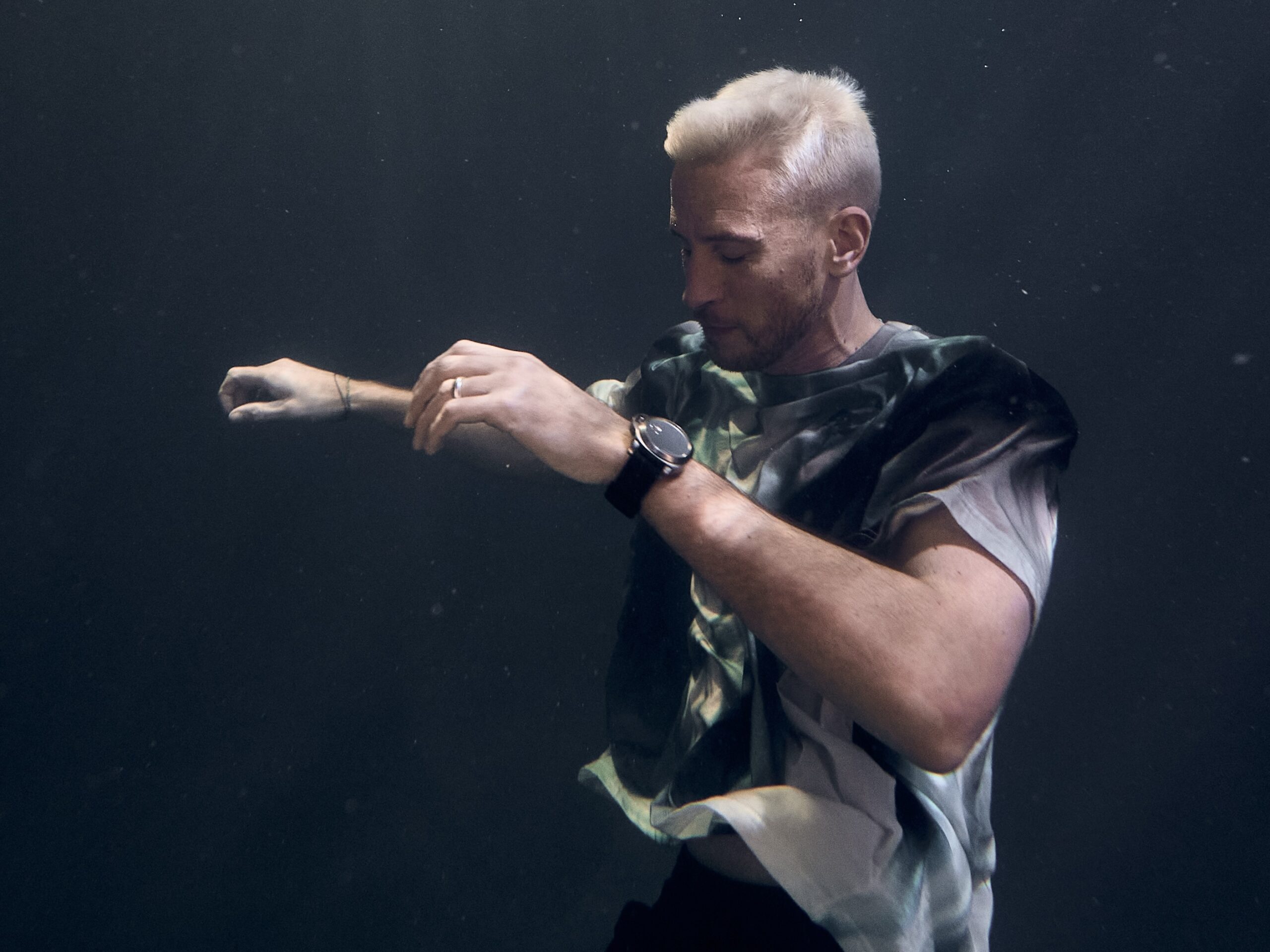
Eli Brown
Last time we spoke, you said you’d never really felt like you’d made it, despite everything you’d achieved. With your debut album arriving after 20 years, a global tour underway and your biggest headline performances ahead, has your definition of success changed at all?
Ha, and I’m still waiting for that feeling to kick in! Though, if I’m honest, I’m not sure it ever will. It’s just who I am, which I reckon goes kind of hand-in-hand with being a creative. That said, success does mean something a bit different to me now. It feels less about chasing the next big thing and more about the people. I’ve got an incredible core fan base and there are loads of new faces discovering the music all the time, and I wanted them to feel connected to who I am as an artist, not just one sound. Like I said earlier, that’s a big part of letting people into my world a bit more this year, with this album. I’ve always made exactly the music I wanted, and twenty years in, the fact I still get to do that, with more people coming along for the ride than ever before, that’s the real win for me.
My label Arcane is also building out brilliantly too, which I’m super happy about. That’s a whole different kind of success, being able to support the artists I believe in and watch them grow.
It’s been a really great year overall. Getting this album out into the world is the big one for me, and the tour is in full swing, so I’ve been getting to see how people react to the new music in real time, which has been fun. It’s been a long time coming and I’m super proud of how it’s turned out. I just can’t wait for everyone to finally hear the whole thing next week.
Eli Brown – Panic Attack is out now on Insomniac Records. Grab it on Beatport HERE.
Read more interviews from The Night Bazaar Beatportal archive HERE.