




FEW artists can claim to have shaped the global dance music landscape like Paul Oakenfold.
From trailblazing the Balearic beat in Ibiza to becoming one of the first true superstar DJs, his influence is etched deep into the DNA of electronic music. Across four decades, he has remixed everyone from U2 to Madonna, accompanying both artists on world tours, he was the DJ at The Stone Roses’ historic Spike Island concert, he’s composed film scores for Hollywood blockbusters including The Matrix Reloaded, The Bourne Identity and Swordfish and he’s helped pioneer the concept of DJing as a main stage, arena-filling art form.
His label Perfecto Records, founded in 1989, became a home for anthemic trance, genre-defying dance music. Perfecto has been not only a conduit for Paul’s own talents but also a platform for new talent, encouraging such DJ talents as Carl Cox, Sasha, John Digweed, Timo Maas and Hernan Cattaneo.
Through the Nineties, Oakenfold’s DJ reputation went into overdrive. He held DJ residencies at Cream in Liverpool and London’s Ministry of Sound for instance, while every summer returning to Ibiza where the strange little underground scene of the late-Eighties had become a pivotal part of dance culture. In 1995, he also became the first DJ to play on the main stage at the Glastonbury Festival and was the first DJ to hold a residency in Las Vegas.
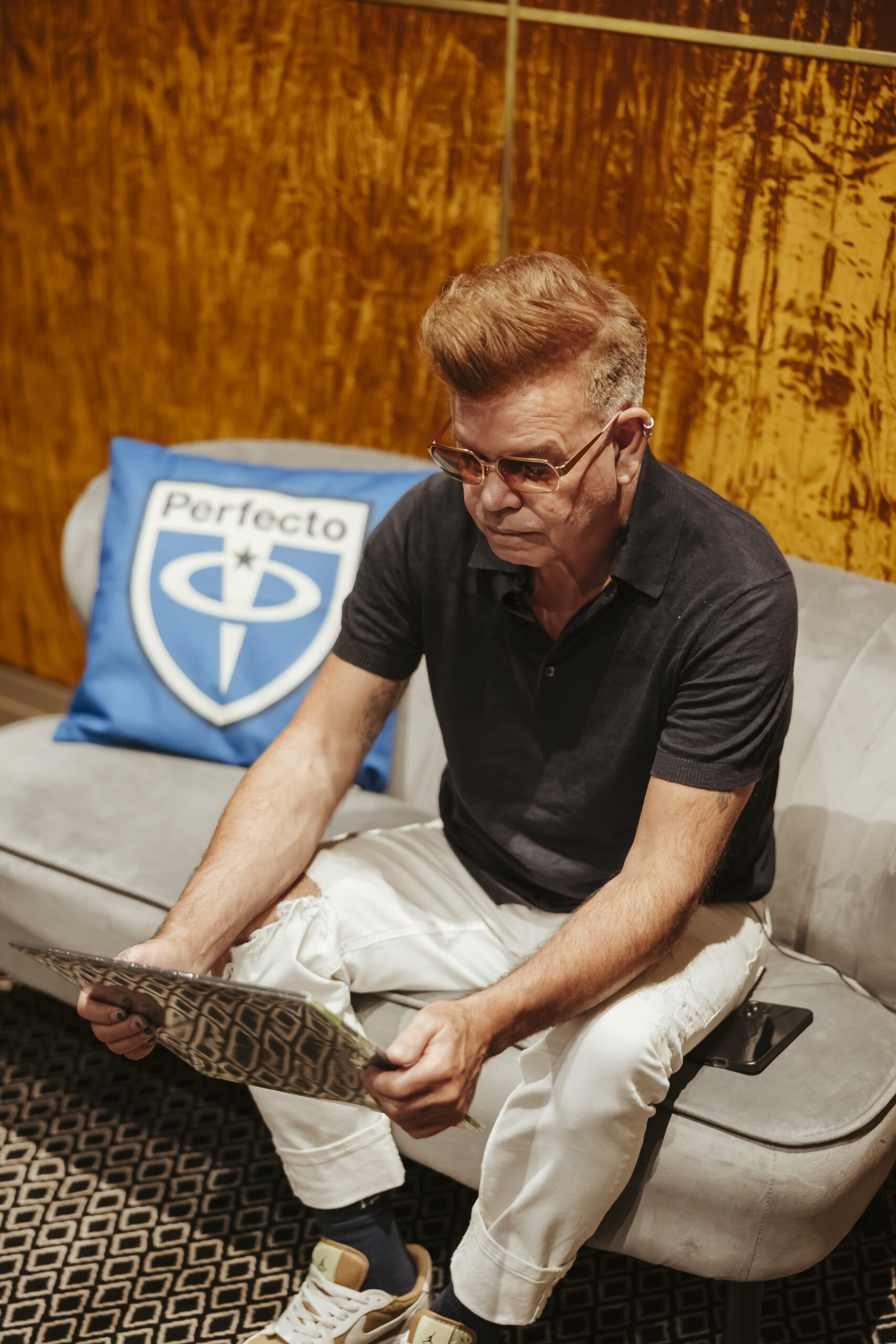
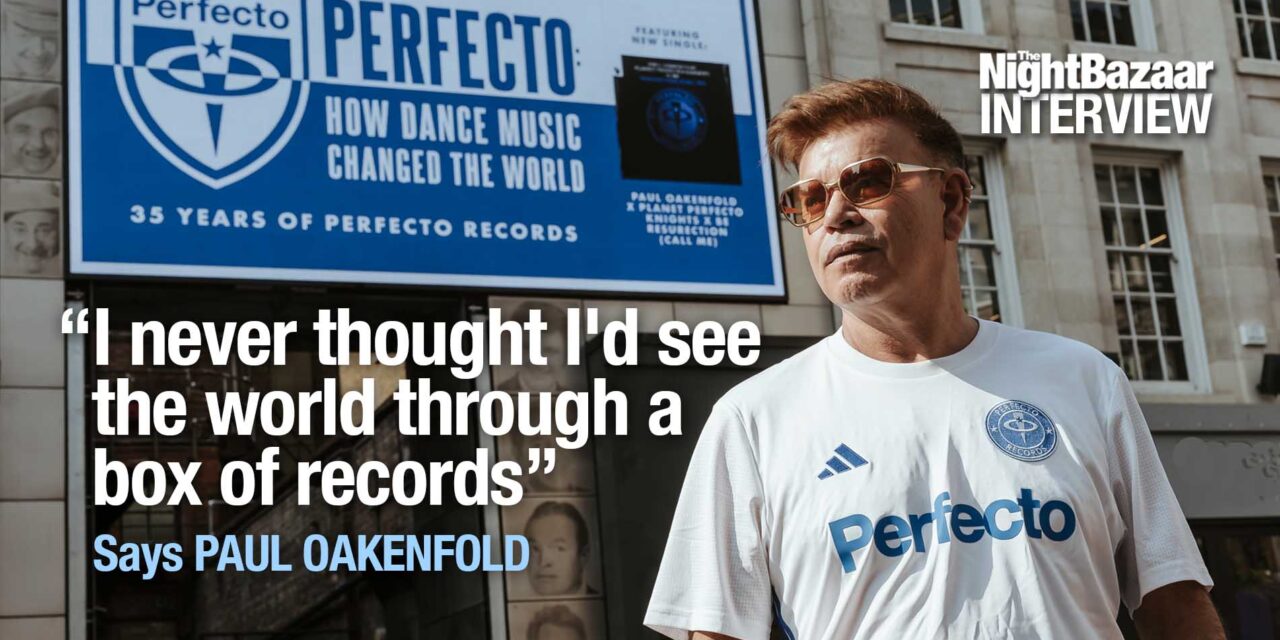
Paul Oakenfold – Pictured at the premiere of Paul Oakenfold presents Perfecto: How Dance Music Changed The World in London – Picture by Ryan Dinham
Paul’s story is one of constant evolution. From his formative years sneaking into Studio 54 and bringing hip-hop back to the UK, to his game-changing trip to Ibiza with Danny Rampling, Johnny Walker, and Nicky Holloway in 1987, the so-called “Second Summer of Love” moment, he’s always been at the centre of seismic shifts in music culture. His famed Goa Mix on BBC Radio 1 introduced cinematic soundscapes and psychedelic textures to a wider audience, while his 1998 album Tranceport remains a gold standard in progressive trance compilations.
Even as electronic music exploded into a billion-dollar industry, Oakenfold kept pushing boundaries. Whether playing the Great Wall of China, the Hollywood Bowl, or the base camp of Mount Everest, he’s brought dance music to places it had never gone before, physically, emotionally, and artistically.
Now, in 2025, Paul is marking 35 years of Perfecto Records, a monumental milestone for one of the most influential imprints in the history of dance music. In this candid and wide-ranging conversation for The Night Bazaar, he opens up about the label’s journey, the evolution of the scene, his hopes for the next generation, and some truly wild stories from dodging avalanches at high altitude to sharing absinthe with Hunter S. Thompson.
Paul, 35 years is a long time in any game, let alone dance music. Did you ever imagine Perfecto would have this kind of longevity when you started the label or the career that you still have at the very top of the DJ game?
I never thought I’d see the world through a box of records. I never thought I’d be booked to playing Kazakhstan which I did last year. I played in Kazakhstan and then I played in Cambodia this year. You don’t ever think that through music, dance music, our music, that you would go to these remote places. But that’s how popular dance music has become.
Did I ever think that the record company would be 35 years old and we’d have a documentary with a lot of my colleagues in it? No. But when we started Perfecto it became a home for dance music, you know? In the late 80s and early 90s I had just started playing around with making music. My dad was a musician, but I knew I wasn’t really that good! I still don’t really feel I’m that good now when it comes to producing music!
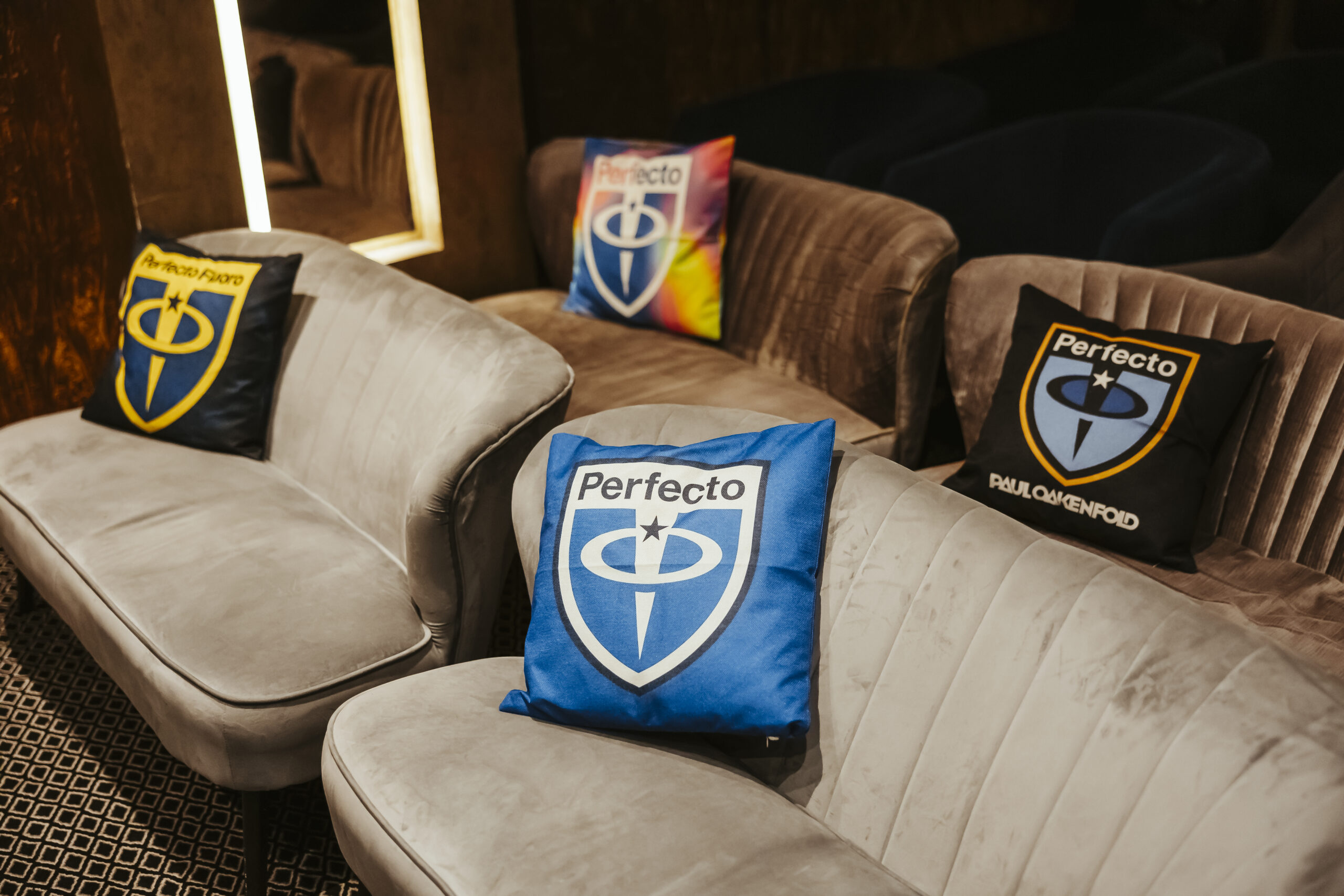
Perfecto – A comfortable legacy – Picture: Ryan Dinham
That sounds, with respect, like a serious case of imposter syndrome!
Ha ha! Well, I was lucky to partner with great, talented people. So, I learned from them. Steve Osborne, you know, he’s fantastic. I was lucky to be partnered with him and before that was Rob Davies. So over time I’ve learned there’s nothing better than being in a room with people who are better than you and to watch their every move and learn from them.
So, with Perfecto, Brian Reaser was my partner setting up the company and he had experience with running a record company. I was the A&R. So, with the label, I had a partner running it, Brian, and then when I went in the studio, I had Rob Davies and Steve Osborne who had that specific production experience. I was in a good position to make music, produce music and now I had the label to release it on too. Perfecto became a home that, whether it was producers, DJs or singer-songwriters, would come to.
Perfecto has always defied genres. Was that open-minded approach part of the plan from the start, or did it just evolve naturally as the scene shifted over the years?
I like to sign artists and develop artists. I’m not really into signing one-offs. We were at the forefront of dance music and there was no one we were learning from as we were going. There was no dance label that you’d look up to. We were one of the first. So, we were learning as you go in all aspects.
We signed many great artists that have done well in those early days. I signed international acts at certain key moments. I signed David Guetta in America for one album. I signed Mark Ronson in America for one album. I signed Carl Cox, we brought in Tiësto, we signed Paul van Dyk to do remixes, BT, Sasha and John Digweed, we even released a Fabio & Grooverider album. We released nearly every aspect of dance music. As a label, we’re right across the board and we’ve now got the experience and knowledge to help support, develop, and encourage new artists as we move into the future.
Perfecto has always been focused on more melodic music. People would say it’s Trance obviously. But in the Annexe at Cream, I remember when Goldie or Pete Tong gave me, I can’t remember, Goldie’s first tune. I would play it in the Annexe just because it was a beautiful piece of music. I remember the first two times I played it I lost the floor. But I was like, ‘I’ve got to figure out where and when to play it’, to get the most impact and for people to understand what I’m doing as a resident DJ.
In line with our genre defying approach to music we did a series of just breaks, Perfecto Breaks, there was also Perfecto Black for darker techier tracks and then Perfecto Fluoro where we signed the biggest Trance acts. Do you know, Perfecto is the only label ever to have a psytrance record in the top 40 pop chart because of that?
There were lots of records at that time which were crossing over into pop and that is happening again. I can reveal exclusively that we are doing a remake of my track with Grace, ‘Not Over Yet’ with London Grammar which I’m really excited about.
As we are looking ahead, I’ve just signed two new artists I’d like to mention, a female vocalist called Jessica Sweetman who I have collaborated with on new single Bang, Bang, inspired by the Nancy Sinatra classic and Velvet Cash, an incredibly talented artist and singer / songwriter out of Phoenix, Arizona.
Wow, that will be amazing! Love London Grammar. ‘Not Over Yet’ just takes me on a massive nostalgia trip just as your classic ‘Bullet In The Gun’ does.
I mean, we sold 1.2 million copies of ‘Not Over Yet’ originally, back when you used to actually sell records!
I feel like I’m a teenager again when I hear that record.
You know what I’m finding when I am doing all these shows all over the world, is that the kids may not know it, but they love it.
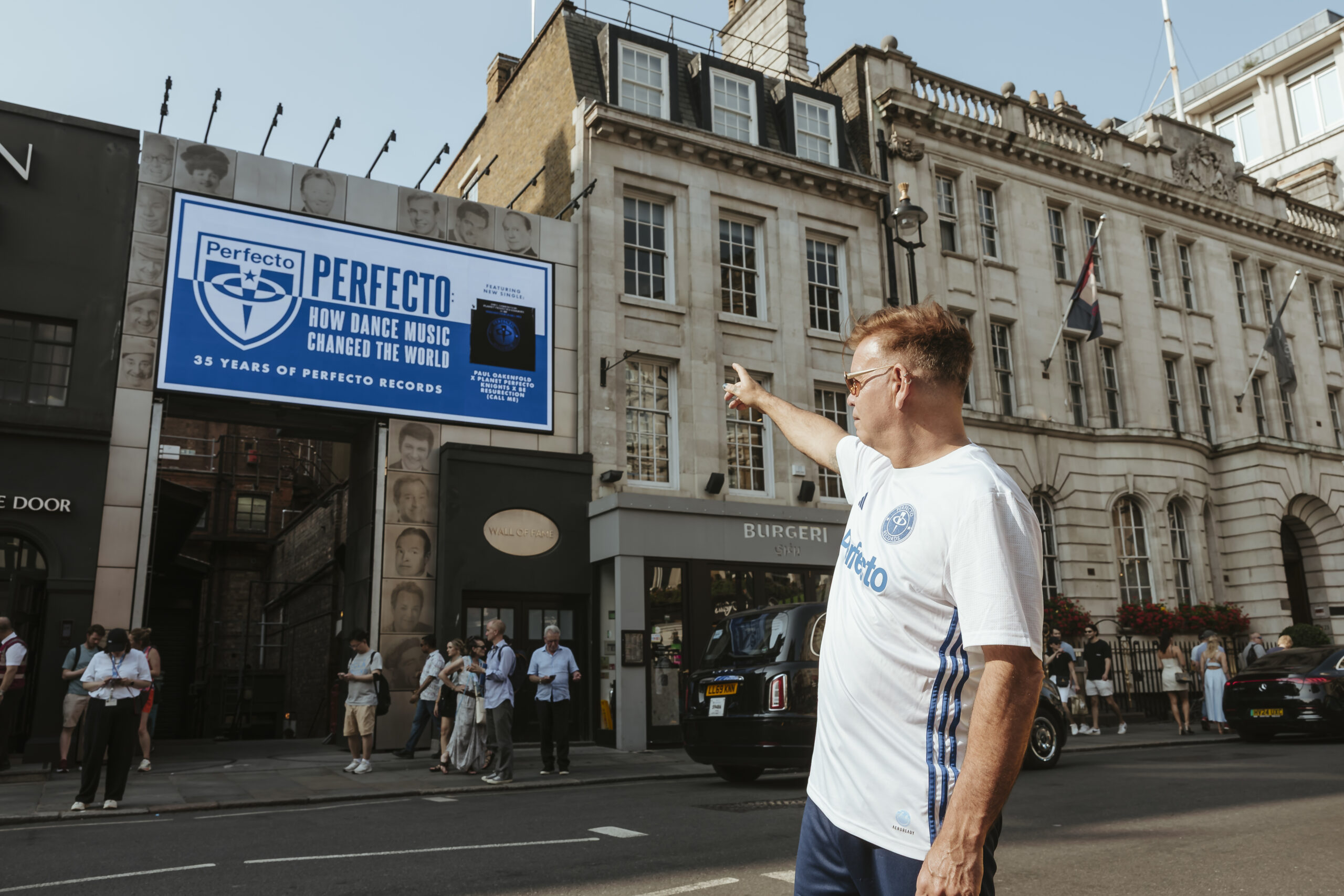
Paul Oakenfold – How Dance Music Changed The World – Picture: Ryan Dinham
Your new documentary ‘Paul Oakenfold presents Perfecto: How Dance Music Changed The World’ has some amazing insights from your colleagues David Guetta, Carl Cox, Pete Tong and Armin van Buuren among others. What a legacy and it’s amazing to watch and absorb your history with Perfecto and to see the huge respect your peers have for you and the label.
Perfecto is a badge of honour that people in dance music know and wear, which I think is good. When you get a Perfecto record, you know it’s quality. You may not like it, it may not be in your genre, but there’s tried and tested artists behind it and it’s amazing to have worked with them all.
We’re also very proud to be English, to be British and to be a dance label that has sold over 10 million records worldwide. We’ve done college tours, and we’ve found the next generation. We have this documentary marking an incredible 35 years.
We’ve also got a Perfecto Radio that’s reaching 16 million weekly listeners worldwide. We’re doing all of it with the same spirit and heart as we had all those years ago. At the end of the day, we’re just a label from South London that releases dance records to the world. We help support and we are still doing what we did then, right now. Nothing’s changed.
How does the modern era of Trance compare to the fabled golden era of the late 90s? You know, all that amazing music still resonates so much.
The kind of tracks I know you are talking about make the young crowds go absolutely mental just like we did 25 years ago. They’re totally timeless.
I do get a lot of requests from artists wanting to sample or remix tracks from the Perfecto back catalogue. Like these two lads from Scotland KIMMIC who recently came to us and said, look, we’ve done this version of PPK’s ResuRection and we want to put a vocal on it. So, I was like, okay, yeah, go ahead and do it. So, they came back with their version and I did some additional production to the track just to give it a bit more of a solid sound, and now we’ve released it. I’ve never met the lads in person, but we spoke on the phone and now we’ve done this collaboration. I’m finding where I am in my career and my life now is becoming more about this whole new generation and I enjoy working with them in terms of guidance, production and collaboration.

Paul Oakenfold’s infamous trip to Ibiza in 1987 with Danny Rampling, Nicky Holloway and Johnny Walker changed everything
We all know the fabled stories of your first trip to Ibiza in 1988 bringing that Balearic Beat back to the UK and helping spark the revolution! Is there anything you can add to the folklore which might not be so well known?
That phrase ‘Balearic Beat’ was coined because the four of us went to see Alfredo and at that time we were into all in genres across all kinds of pop music, soul, emerging house, everything. We just called it Balearic, but because we did a compilation album for Pete Tong at FFFR called Balearic Beat, that was where the phrase come from. It was all kinds of music and that trip everyone knows about certainly inspired so much of what came next in the UK.
I’d been previously a couple of years before that infamous trip. The first time I went there was when I was working for an independent promotion company in the UK called Rush Release. Rush Release would get all the promos sent by various record companies to give out to all the DJs. That was my job back then. I’d run around town going to gay clubs, straight clubs, black clubs, white clubs, whatever you want to call them, giving out these promos.
So, I went to Ibiza previously with a guy called Divine. Divine was a 22-stone transvestite who came from New York, who had a record that was popular in the UK. So, the Ku Club in Ibiza, before it was Privilege, wanted to book him. My job was to take this guy to Ibiza. He was such a sweet man. I was driving this little car and I had to take him to perform at Ku Club.
Then, the next month I’d be with emerging hip-hop artists like LL Cool J. Their record labels would hire the company that I worked for to do all these promo runs with them. One time I had Beastie Boys in my car before they were famous and another time guys like Run DMC. My job was to take them all over the country to do PA’s. Back in those days that’s how you used to promote records. That was before DJing. That’s what I used to do.
What do you think of Ibiza in 2025?
It’s a shame that the island’s been taken over by, you know, honestly, one company. They own Ushuaïa, they own Hï, they own [UNVRS]. They control the island. As soon as you get to the airport, you walk out the airport and you used to see Ibiza airport. It’s now billboards of all the DJs playing at these mega clubs. You can’t open anything new or do anything without them. And that’s really happened in the last 10 years. They have a tremendous monopoly. But I will always love Ibiza and it will always be part of my DNA as I’ve been going there for 35 years and it holds a legacy of memories.
You’ve taken dance music to places no one ever imagined – The Great Wall of China, Stonehenge, Everest Base Camp. What inspires you to take electronic music beyond the club and festival?
So, as I was moving into 2000, and I had scored a big movie called Swordfish with John Travolta and Halle Berry. I had moved out of clubs and festivals, and I was now living in Los Angeles, I was working more and more in Hollywood, working on scoring films like Matrix Reloaded and The Bourne Identity. I was being hired in Hollywood because of my efforts pioneering dance music in America, it’s as straight forward as that. They wanted my sound as it works well with movies, so I was being hired to do that and then I started getting hired to write the music for the James Bond game and others. Dance music was growing rapidly. So suddenly, dance music’s in movies, it’s in games, it’s on the radio, it’s dominating nightclubs and festivals.
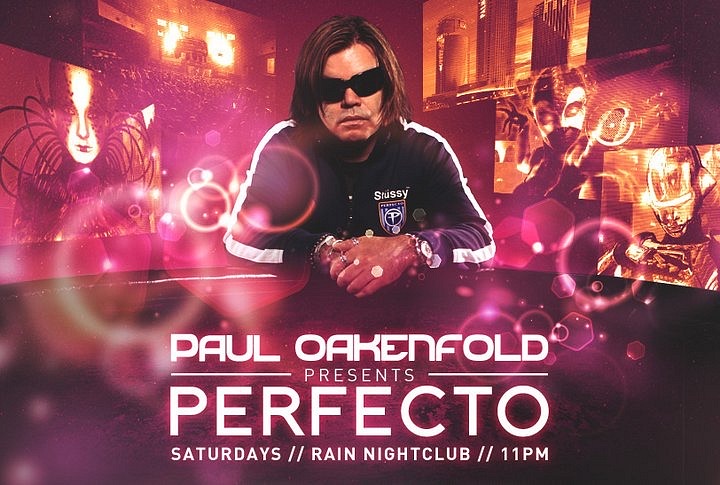
Paul Oakenfold – Las Vegas residency
Then I had my residency in Las Vegas and dance music was really starting to grow in America. I was the first DJ to hold a residency in Sin City. But I was looking at where we could go next? You know, what am I going to do next? And I was thinking, well, why does the next thing have to be in a club? Why does it have to be showcased just in these places? Why can’t we as a community make the statement? This wasn’t about me; it was about us as a community.
My grandad was a traveller, and so as a kid, he’d always be showing me travel magazines. He’d tell me that one day you’re going to go here and one day you’re going to go there. And I was in a position where I could travel the world. I can play music anywhere I want to play. So where can I go? Where can I go that fulfils a dream? Where can I go that is a statement for our community? Where can I go that brings change and does something? That says something, that leaves maybe a legacy for our kids?
So, I met a couple of like-minded people. Alan Shulman for one, who manages Carl. And he’s got very good connections with English Heritage. English Heritage was financed every year by the government. They gave them £3 million but then they pulled that plug. So English Heritage needs money. And they looked at my demographic, which is from 14 to 60 and went, okay, let’s do an official, proper media event at Stonehenge to showcase our music and that was when I played an exclusive set there with Carl Cox to a small, invited audience which was live streamed.
We then went to Everest and in doing so we raised $100,000 and made a documentary.
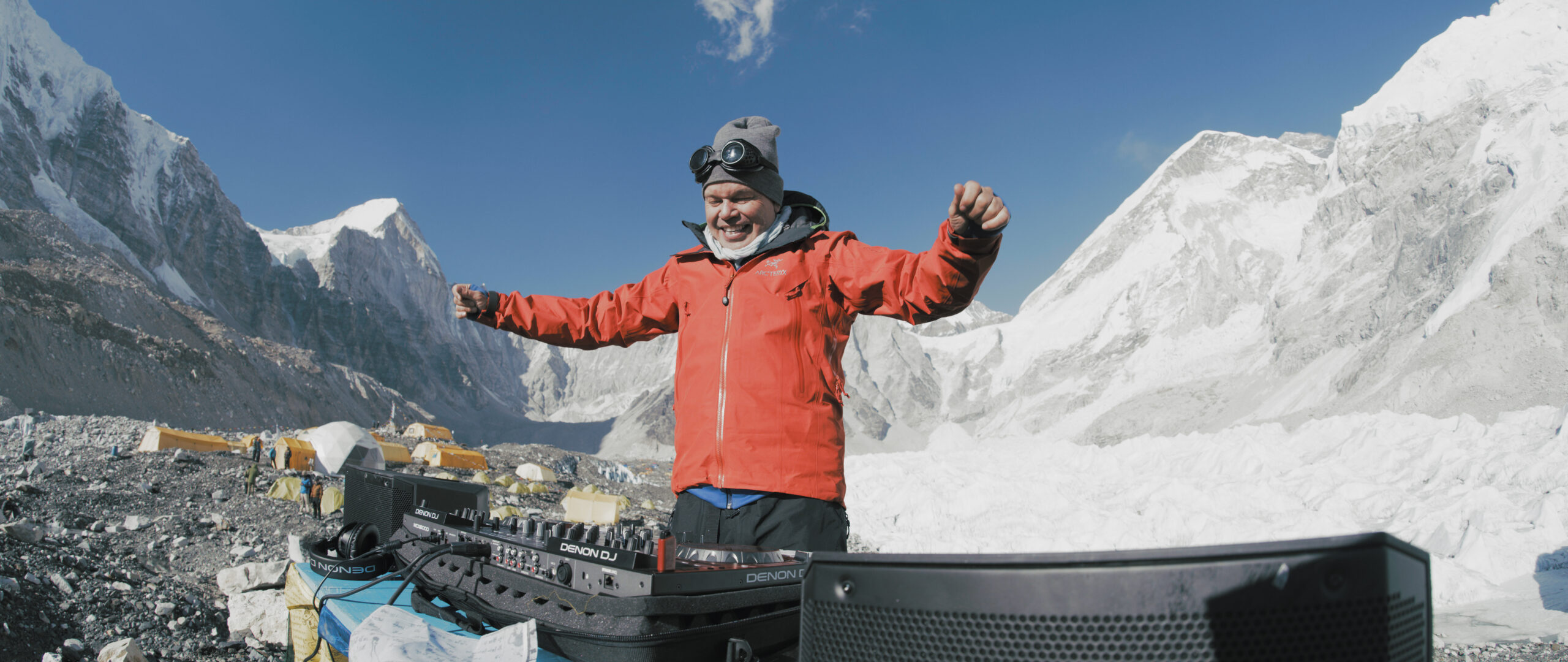
Paul Oakenfold playing at Everest Base Camp
How did you get all the gear up there? Was it brutal? Did you have to acclimatise?
The Sherpas carried it all. I mean, there were seven guys and they are legends. I had never fucking hiked or even slept in a sleeping bag. It was really difficult! You had to take pop Diamox pills to thin the blood. On the mountain I got the bug to do more shows like these and I’ve got a few more coming up, but they’re so difficult to pull off. First of all Mount Everest is a national park. Second of all, you can’t just turn up and do it. There’s rules and regulations. You must respect the climbers and you don’t want to turn up and the bass cause an avalanche. There was an avalanche there, a year before we got there. I spent six months getting fit. I didn’t drink. I worked out three hours a day. I was never as fit as I was preparing for Mount Everest. I was also worried, because you know it’s dangerous too!

Paul Oakenfold at Everest Base Camp – Picture: Anton Nelson
So, to do the Great Wall of China, we couldn’t just turn up and do that without permission either, they would have just cuffed you and carted you off. You’re fucking around with national, iconic locations. Also, when I went on that adventure, the Great Wall, it was during SARS. We turned up and then SARS happened.
Anyway, the point being, you must jump through a lot of hoops and obey a lot of rules and regulations to pull things like this off. I’ve got a few more I want to do. Why am I doing it? Because I want to raise money locally, I want to bring eyeballs on these fantastic locations and bring attention to important issues like climate change and I’m in a unique position to do this and continue spreading dance music around the world.
I never thought I’d be able to do stuff like this. If it’s a legacy that I’m leaving, great but if it’s helping kids or people in need then that’s amazing. But at the end of the day, also, it’s a challenge for me.
So, can you give me any idea of what you might do next or is that asking too much?
It’s so difficult to pull them off. It’s better to talk about them after. Because if you can’t pull them off, you’ve got egg on your face!
As a producer, what is the most unexpected collaboration you ever worked on?
I got introduced to Hunter S. Thompson and made a track using a 6 hour interview I recorded with him. The track is on my first artist album and is called Nixon’s Spirit.
I’ll tell you the story. A lot went on. Some wild stuff.
I’m the only artist Hunter ever worked with, right, and he told me he had a few people reach out to him over the years. But we collaborated on this track. It was a real moment. I reached out to him through a friend of mine.
At that time, I was playing God’s Kitchen, I was playing Ministry of Sound, I was playing Cream, I was playing all the big clubs and, in those days, we used to give flyers out outside the clubs. And a lot of those flyers at the time had quotes on them if you remember? And for some strange reason, some of these quotes I read on one of these flyers were from Hunter S Thompson.
I was in Birmingham one night and I came out the club and we were walking to our car and there were all these flyers on the windshields of cars as they used to do and I’d always pick them up and look at them just to see what was going on and I noticed this Hunter S Thompson quote on one of them. His quotes really appealed to all of us at that age and I was like ‘you know what? I should do a fucking thing; I should write some music and get him to write on my first artist album.’ I felt it would really relate to us kids at that time. So, I got in touch with him.
He didn’t know who the fuck I was. And I said, ‘oh, I’ve met you.’ I had met him briefly a year previously. So, I said,’ Okay. Greg gave me your number. I hope you don’t mind me calling. Um… Here’s the idea. I’ll come to Los Angeles as I’ve got a couple of shows. I’ll pay for your hotel,’ as he lived in Denver. And he goes, ‘I need to think about what I would need to do.’ I said, ‘I will record you and I will talk about certain things.’ And out of that recording, I have six hours of recording.
I bet that was a hell of a chat.
Yes! So, I met him at the hotel in LA, I walked in and he’s got his hat on, he’s got his stick and he wants to film the interview. I sat down and I’m like, ‘You know what? I’ve been to all fucking kinds of clubs, right?’ I was thinking to myself, ‘you don’t intimidate me mate by sitting there with lipstick all over your head.’ It wasn’t just on his lips. You know, I’m going, I’m all right with this. I’ve done my research. So, I had, like you, a list of questions but again, like you, I was prepared to go off piste! I was really prepared. I spoke to him about the Hell’s Angels, I spoke to him about the trial with the President, I spoke to him about the football as he was a big football fan. We chatted over two nights.
On the second night, Sean Penn turned up with Jack Nicholson as they heard he was in town and of course Hunter was the man! So, I met Sean Penn and Jack Nicholson, all through him, right? Neither of them knew who the fuck I was. Sean Penn walked in, completely ignored me and was talking to Hunter and I was like, ‘Oh, my god it’s Sean Penn!’ And he put a video in of his movie.
Sean Penn’s a brilliant actor. I mean to say, there’s no disrespect. But he put a video in of his new movie on and then he suddenly looks at me and he went, ‘Who are you?’ And Hunter turned around and said, “don’t worry, this is Paul Oakenfold. He’s a big DJ.”
After chatting to Hunter, I understood the American dream. What is the American dream? Why do people want to come to America with a pound note in their pocket and end up with a thousand pounds? How does that work? It’s called Nixon Spirit. And it’s about how America isn’t a country, it’s a business.
So, when you hear him, he’s like, ‘Whoa.’ It’s how he sounds. He’s got a growling voice. I have six hours of that. And I thought, this is gold and it sounds incredible on the track Nixon’s Spirit.
You really have met some amazing people!
I know, right? I played at Nelson Mandela’s house once and then sat at a dinner table with him. I met the Queen of England. I’m just a bloke from South London really… But yeah, I suppose I’m a pioneer in Britain… I’m a British pioneer in terms of electronic music, I guess. Getting that award from Queen Elizabeth as a pioneer representing the nation was mind blowing.
You get this letter through the post, and I was like, ‘Someone’s fucking winding me up! It’s a wind-up!’ Then I looked at the stamp. And you see it’s real. So, then you get a number and I’m like, I wanted to bring someone with me. You can’t bring anyone. So, then you turn up at Buckingham Palace on your own, you’ve got name tag on and then you meet other pioneers of Britain. I found myself talking to a celebrated doctor and to the guy who invented the transistor radio. You get to meet all these pioneers who’ve brought something to the world from Britain.
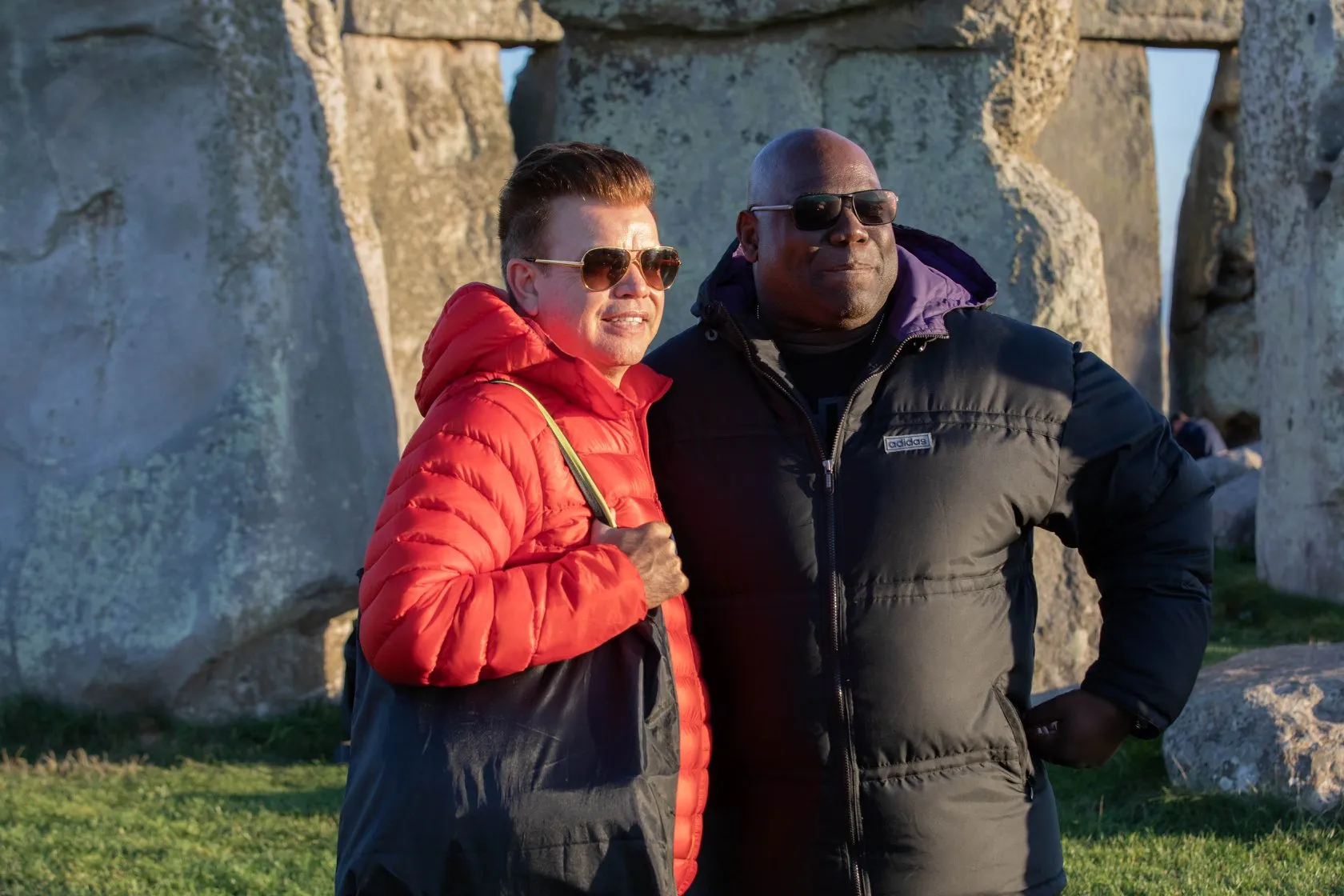
Paul Oakenfold and Carl Cox at Stonehenge
The thing is, guys like you and Coxy are truly ambassadors for the UK, going out there into the world, showcasing your country and a big part of our culture and saying ‘this is Britain. We are British and we are proud.’
We’re fucking great, man. I mean, we really are fucking great in Britain. We might have lost the ‘great’ at the moment so let’s just call us Britain for now. But I’m on the front lines around the world and I’ve got that flag fucking planted for our culture and reminding everyone what we have given to the world.
Is there a pioneering spirit still for what could be next? Will there be another great youth culture movement like the explosion of creativity we saw with electronic dance music?
It’s a great question because um, it’s saturated; there is nothing. So, what is there to take it from here? It’s going and playing in territories that we’ve never played in like Kazakhstan, Vietnam, Cambodia, Saudi Arabia or Iran. The Middle East is opening. There are countries that haven’t touched on it yet.
Did I ever think that dance music would become this big? No. Did I ever think you’d be able to see the world through a box of records? No. But those of us in this period of our careers are now in a position where we can help and support and guide it in the right way. But to answer the question, where is it going? It’s one of the most popular new kinds of music, what I mean by that is it’s growing faster than blues. It’s growing faster than jazz. It’s growing faster in America than hip-hop now. It’s growing faster than rock. After pop music, dance music is the most popular music in America. We’re also only 35, 36 years old. We are young compared to Reggae and Rock n’ Roll.
Do you think AI is a threat to music, not just dance music?
AI, anything with technology, I think you should embrace. I use AI. You embrace and you figure out what to use. If you don’t move with change, whether you like it or not, you will get left behind. We don’t always like change. You can’t push it under the rug though because you will become that old person. And we’re all young at heart. I will use AI sometimes for vocal snippets and things like that.
So you can get AI to sing the vocal for you.
I write it and AI will sing it. Yeah.
And then you find an amazing human vocalist like Jessica Sweetman to collaborate with on a full song like your new single with her Bang, Bang?
Yes. So, with all the traveling I do, I watch a lot of film. I’m a big fan of film and documentaries. And I was on a British Airways flight in November of last year and I’ve seen everything. When you’re doing regular 11-hour flights, believe me, you watch every film out there! So I’m flicking through films and I came across the Quentin Tarantino movie Kill Bill, and I went, ‘Okay, I’ve seen that first time around. Let me revisit it.’ In the film is this moment where there’s a scene with the original Nancy Sinatra track. I love that tune. And I used to play that tune when all the old boys did it back in the 90s. I was also inspired by the old Audio Bullies version which I used to play. So then, I thought, what about if I get Jessica, who I’m trying to help, to sing on a new version. She’s a lovely girl, she’s a singer-songwriter, if I take it to her to sing it it will help her career. So that’s how it came about.
Lastly, with your new documentary and the next generation discovering the story, what do you hope the legacy of Perfecto Records is 35 years from now?
I think Perfecto was started all those years ago as a label for people who make dance music, to help support and release their music. That’s why we started the label. That’s never changed. We are much wiser. We’re much better. I’d like to think we’re getting stronger. There was no label before us, that we’re finding our way in the dark and we’d go to radio one and say we’ve got a dance record and they’d be like but now we’re accepted. We’re a community.
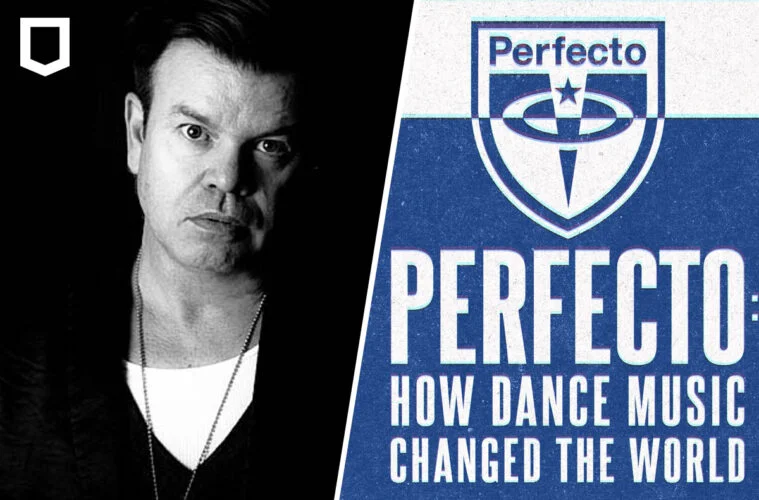
Paul Oakenfold – Perfecto: How Dance Music Changed The World