




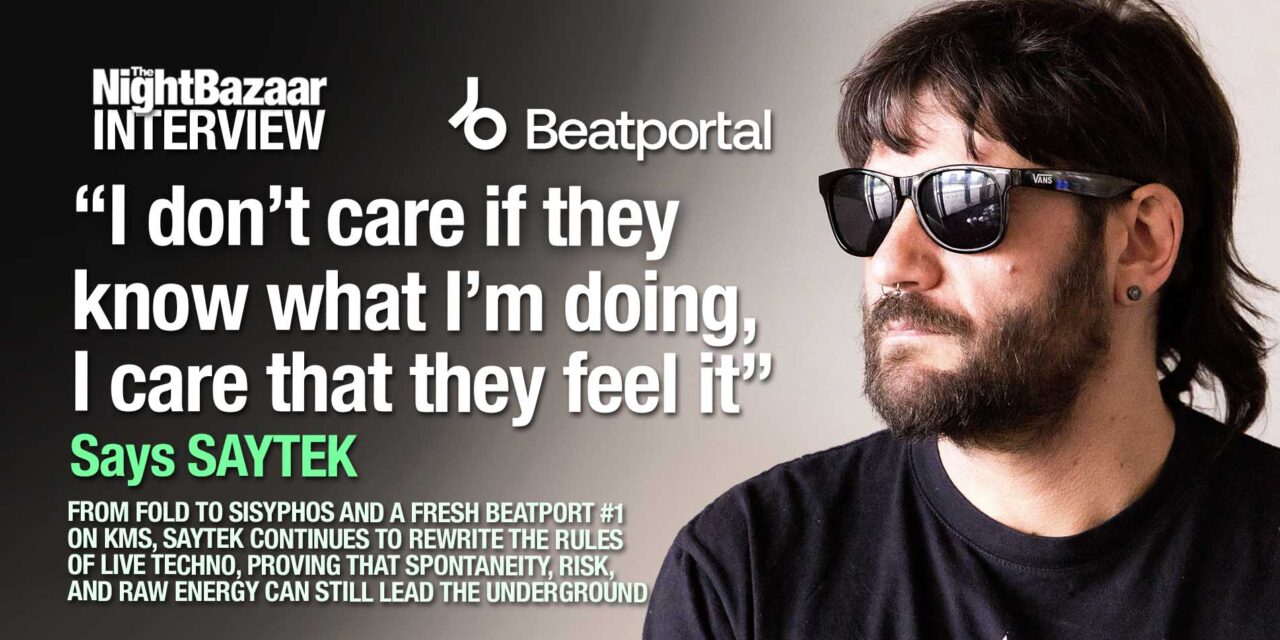
Saytek has built a reputation as one of the most innovative live techno artists of his generation.
Repeatedly voted among FAZE Mag’s Top 10 Live Acts, nominated by DJ Mag for Best Live Act and consistently landing Beatport Top 10 records, including a recent #1 in the Raw Deep Hypnotic chart with Deep Inside (Live) and he has carved out a unique and powerful lane in modern club culture.
Known for an approach that sees almost all his music created and recorded live, Saytek’s sprawling catalogue spans heavyweight labels such as Soma, Fabric, Bedrock, R&S, TRAX, Cod3Q, Kevin Saunderson’s KMS and his own Cubism imprint. Now, he returns to KMS with a run of improvised recordings captured at London’s FOLD, a release that marks a full-circle moment for the hardware specialist.
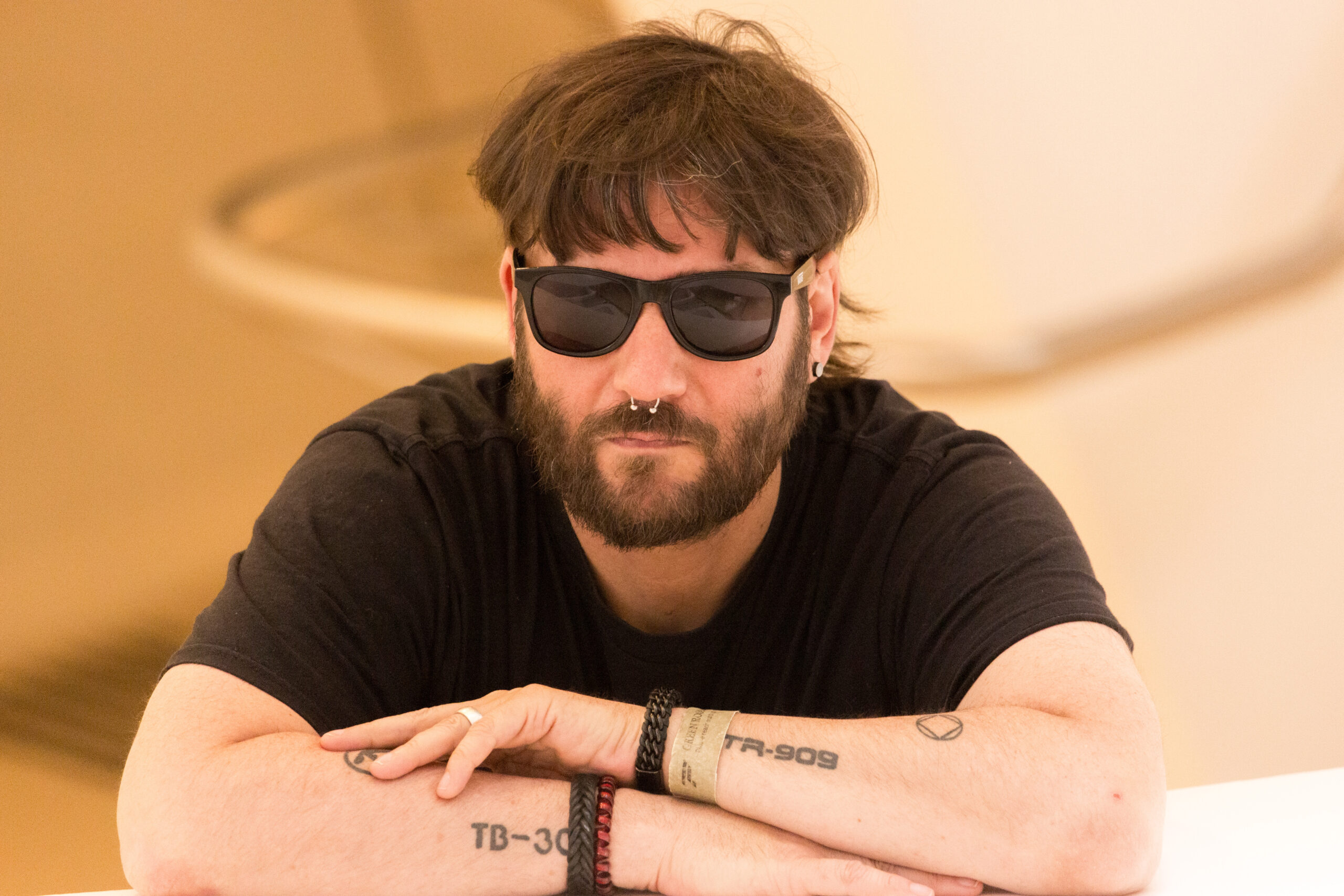
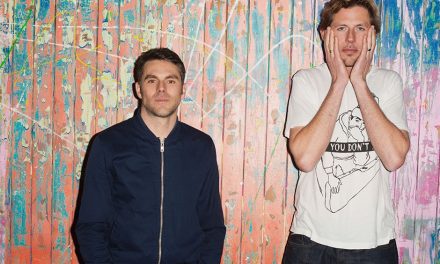
Saytek aka Joseph Keevill Picture: Kay Barton
Your new live recordings are being released on Kevin Saunderson’s legendary KMS. What does it mean to you to be returning to KMS?
It means a lot to be returning to such an amazing label. It’s one of the original Detroit techno labels and has been going since ’87. Kevin has been a huge influence on me, especially his E-Dancer material. I’ve just remixed E-Dancer & DJ Minx’s “Detroit,” which will also be coming out on KMS.
How do you feel these tracks represent where you are at artistically right now?
They were recorded at Rebel Union at FOLD in London, which in my opinion is the city’s best techno club right now. They definitely represent the tougher side of my sound.
Your tracks are recorded live and then edited to make them DJ-friendly. How does it feel to have your raw tracks standing shoulder to shoulder with highly polished studio tracks in playlists and charts alike?
It feels great. My philosophy is: if they work when I’m jamming them live in a club, then they’re good enough to release. It’s taught me to ignore that perfectionism that used to stop me being creative. A lot of DJs play my music in clubs and on the radio, and most of what I’ve released recently has hit the Beatport Top 10 charts, including a 1, 2, and 3 spot in the Raw Techno chart this year, plus many tracks in the Top 10.
The KMS release was recorded at Rebel Union at FOLD. How do you approach playing at a club like FOLD in London differently than a festival environment?
The way I perform live means I’m in total control of the arrangement and intensity of each element. The same raw material can sound very different depending on the circumstances.
When you’re performing fully improvised hardware sets, how much is instinct versus preparation?
Preparation is key to letting instinct take over. You don’t want to be thinking when you’re performing live—you just want to be in the zone and doing. That means organising everything so you always know where things are, and knowing the equipment like the back of your hand.
How do you decide which live moments are worth turning into official releases?
I release pretty much everything.
How healthy is the scene in the UK right now, in your opinion?
I’ve played some amazing parties in the UK this year—FOLD and The Cause in London, and venues across the country. My kind of techno is a bit more niche here compared to, say, Germany, but the crowds have been brilliant—everyone from 18-year-olds to people in their 60s. Proper techno lovers.
You have a huge fanbase in Germany and have been voted a Top 10 Live Act by FAZE Mag for two consecutive years. Having rocked many clubs there and also Rave The Planet in Berlin, where is your favourite place to play and why?
They’re all so different. Sisyphos is one of my favourite clubs ever, and playing live techno at Rave The Planet to hundreds of thousands of people is an unbeatable experience. I’ve played many clubs and festivals across Germany, my sound fits into the scene very naturally there.
How does Berlin’s techno scene compare to London in terms of energy, openness to live performance, and crowd reaction?
In some ways they’re similar—there are definitely a few places in London that feel like Berlin in terms of music and vibes—but the scale of Berlin is on another level. I played at Rave The Planet with 380,000 techno fans, then went to play Sisyphos while the parade was still happening and it was totally packed. The number of venues focusing on techno is like nowhere else on earth. That said, the scene there is suffering recently—same problems as everywhere: gentrification and cost of living. But even now, the overall size of the scene is unmatched.
Has Berlin influenced your sound or approach to live sets in any way?
Techno is such a huge part of Germany’s culture, and Berlin is the epicentre of that. I love this music so much and have spent many hours dancing in clubs in Berlin, getting lost in the music. That has definitely had a huge influence on me.
You’ve been touring extensively this year. What has stood out as the most memorable show so far? Has touring shaped or evolved your live sound from the start of the year to now?
It’s been one of my favourite years, not because it’s been the busiest or because of the biggest shows, but because of the people who are dancing. It feels like a new generation is out now, mingling with the old timers, and the vibe is amazing. It’s like PLUR all over again. So many great shows, from FOLD and The Cause in London, to clubs and festivals across Europe, to warehouse parties in LA and proper techno parties in Canada.
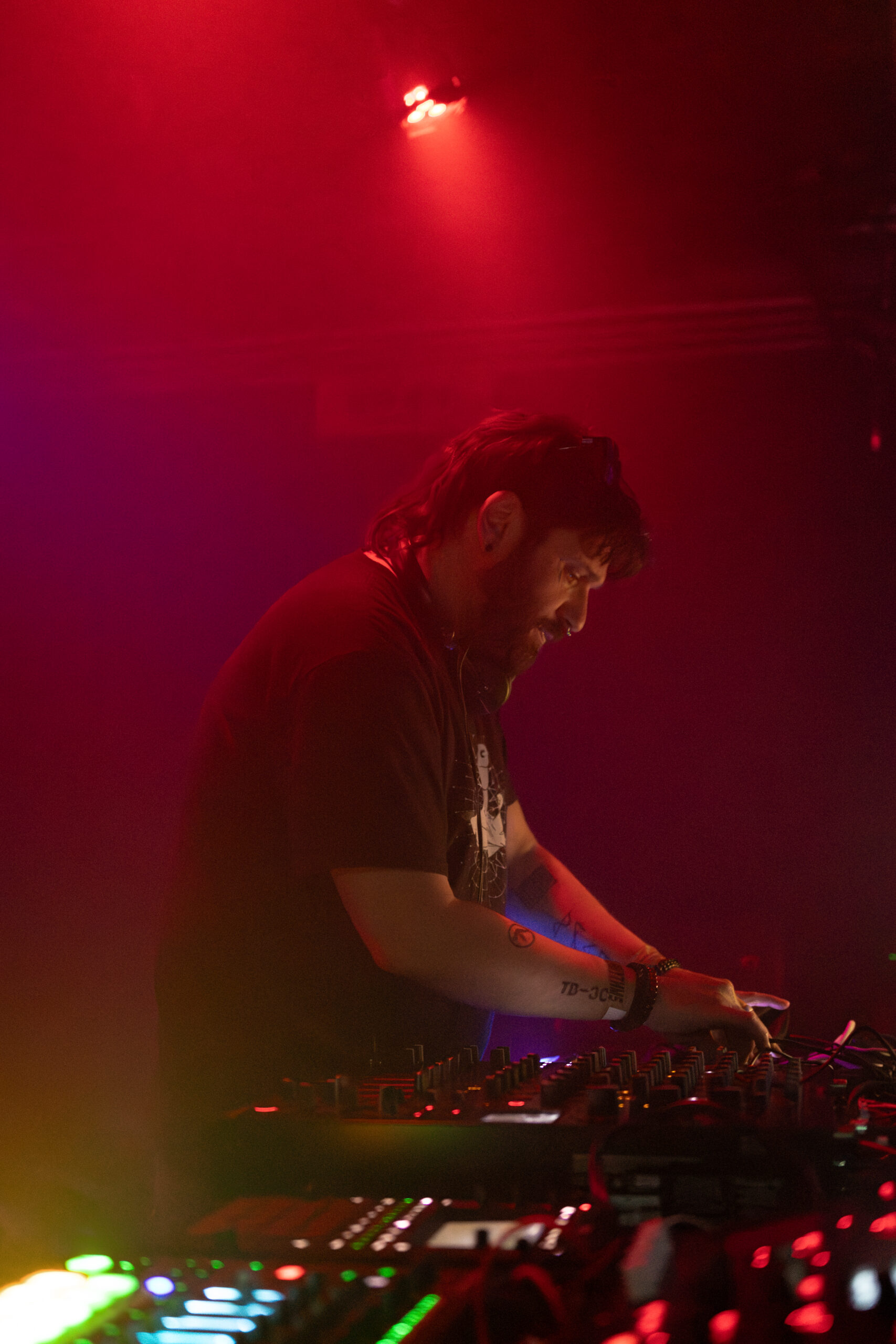
Saytek aka Joseph Keevill – Picture: Nils Ant
Beyond the current KMS release, what else can fans expect from you as we approach the end of 2025?
I’ve been taking some time off touring to work on new live material, so expect many releases in 2026. I’m playing at Tanzhaus West in Frankfurt on NYE and Sisyphos on January 2nd, starting the year as I mean to go on.
You’ve had strong Beatport chart success. Do you pay attention to charts, or is it more about the underground response?
I never make music for the charts—my tracks are literally just chopped out of my live sets. But is it nice when they chart? Yes, it’s amazing seeing so many people playing my music everywhere.
In your view, what makes a track connect in both club culture and on platforms like Beatport?
For me, music is about feeling, dancing, and losing yourself. I always try to make what I love, and I think that resonates with people.
Do you feel that live electronic performance is finally getting the recognition it deserves in club culture?
Yes and no. It’s certainly becoming more common and a lot of people are doing it, but it’s still a bit of a dark art and misunderstood by most ravers. I used to really care that everyone knew I was performing live, but now it’s all about moving a crowd and connecting. I don’t care if they know what I’m doing, I care that they feel it.
What do you think sets your live shows apart from traditional DJ sets in the eyes of fans and the industry?
I think it allows for a higher level of connection and interaction between the artist and the crowd when it’s done right. You have much more control over everything, so creating a feedback loop between you and the people is important.
Read more exclusive interviews on The Night Bazaar HERE and on Beatportal HERE.