




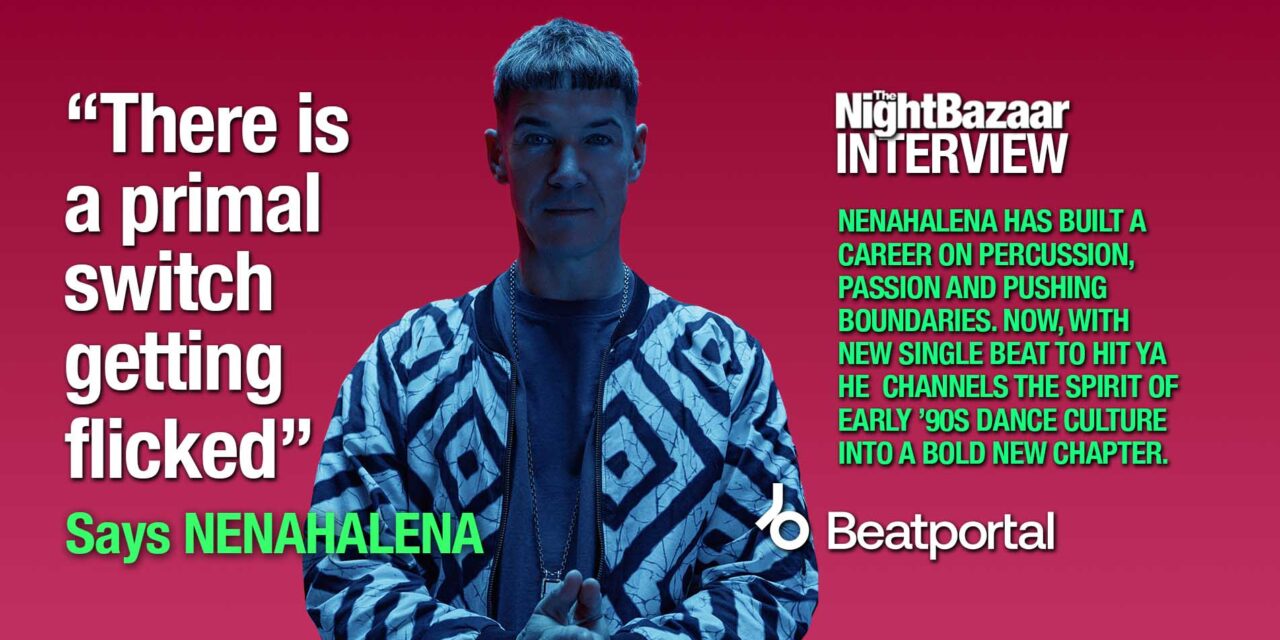
From the warehouse energy of the North West rave scene to major releases on internationally respected labels, Nena Halena has carved out a unique path through electronic music.
A producer, DJ and live performer with roots in synth-pop, house and global percussion, his sound blends driving club rhythms with rich organic influences drawn from years of musical exploration.
Now, with the release of Beat To Hit Ya alongside MC Flipside on Make The Girls Dance, he looks back on the culture that shaped him, the evolution of his sound and why there is still a hunger for something more than the standard DJ set.
You emerged from the northwest of England in the mid-’90s, what first pulled you into electronic music during that era?
It was actually the decade before which hooked me in, you can thank Depeche Mode and other Synth Pop titans. I was hearing it all fresh a decade after being released, but having already been given a piano keyboard by my parents, those synth hooks and chords were prime material for me to learn and emulate. By the time the Rave culture was starting to really take hold in the UK I was already on the path to producing music. Once I heard the bouncy ‘Piano House’ being played at the likes of Bowlers in Manchester I was 1000% on board.
NenaHalena
The ’90s were such a defining time for rave and club culture. What memories from those early years still shape the artist you are today?
Memories? Er, I think I had a great time! People often talk about the sense of unity, how everyone was in one room, on one beat. It was friendly, it was open, it was fresh. And, it’s all true, for the most part. But it’s actually the coming together of various walks of life, the erosion of differences and this sense of unity and humanity which I intend for my music. Given the influences and elements cross electronic with organic, folkloric and contemporary with east and west. It’s this diversity of sound that we celebrate together while experiencing and celebrating the diversity in each other.
You mastered the legendary Technics 1210 turntables early on. What did learning on vinyl teach you that still influences your performances now?
Knowing the best place to mix each record was essential. Obviously with no way to loop, skip or hot-cue, thinking hard about cue points and getting two tracks to really complement each other in the mix made impactful transitions, minimised harmonic clashing and spiked the energy on the dance floor. The CDJs have eliminated a lot of this skill requirement. But the understanding of how the music interacts together, looking at harmonics, dance floor energy momentum, space in the music and arrangement. This mindset is still just as important.
At what point did you realise you wanted to go beyond DJing and become a producer too?
Production actually came before my DJing. It was an evolution from getting my first piano keyboard. Then being able to connect them to a computer, my school introducing a more advanced setup. I was using Cubase Version 2.5 two years before touching a set of turntables. My diet of Synth Pop and Piano House was fuelling my creativity and exploration. Somewhat so that they used to have to ask me to leave school to lock up at the end of the day!

NenaHalena – KOKO, London, 2025
You have worked in various guises over the years playing and producing a variety of electronic music before arriving at your sound. How have your various incarnations influenced the sound of NenaHalena?
It’s all chapters of the same book. Each era threaded through. Although stylistically I make and perform different music. What I am doing now is ultimately because of everything I’ve made in the past, I can hark back and suggest feelings and flavours and all the sub genres I’ve lived. This is also one of my strong points for when I’m acting as a producer for other artists too.
Your music blends Afro-Brazilian rhythms with house and techno in a distinctive way. How did that fusion first come about?
Songs like ‘Give It Up’ by The Goodmen, and ‘Capricorn’ by 20HZ. They were my initial seed. First hearing this on the sound system at the legendary ’Cream’ club in Liverpool blew me away. Those loud carnival drums under a pounding Kick drum!! It was literally organic techno.
What is it about Brazilian street rhythms that resonates so deeply with you?
Those two tracks primed me. But it was actually being invited to a Samba School workshop where I was like; “oh this is where those drums sounds come from”. I was instinctually good at comprehending and playing all of the different drum parts, so my local arts council sponsored me to go and learn everything I could from various other Brazilian Samba School teachers, but I was tasked with passing down the knowledge and skills to my local community. Before I knew it, I was the leader of my own Samba School in a small town in the northwest of the UK. It’s such an unlikely story.
You’ve created a signature sound rooted in percussion. Do rhythms come to you before melodies when producing a track?
Yes! Absolutely. Often my melodies will form from percussion. I will for sure create percussion from melodies. But what I really like is melodies in percussion. Conversations in pitched drum tones. It’s not always apparent, but when you hear the drums ‘singing’ it supercharges a groove.
How do you balance staying true to your sound while still evolving with modern club culture?
‘Being true to your sound’ does that mean sticking to what you are currently doing and never deviating? Or does it mean, creating and playing music that genuinely resonates with YOU. I’m gonna assume the latter. There are always many producers who are regurgitating “what the big guys are playing”. The pressure is real. We need our peers and consumers to play and support our music, so we need to make music that people want to play. It can be difficult to be innovative and forward thinking, without being too different and self alienating. Chasing the numbers and flip-flopping between what’s currently hot can lead to success but possibly not sustainable. Building reputation and fanbase comes from consistency. But we have to evolve, I guess the balance comes from awareness. The awareness of, am I playing what I’m producing. Am I enjoying producing what I’m playing. When that becomes a no, then you are not being true to YOUR sound.
Your hybrid live show combines DJing with electronic hand drumming, how did that concept develop?
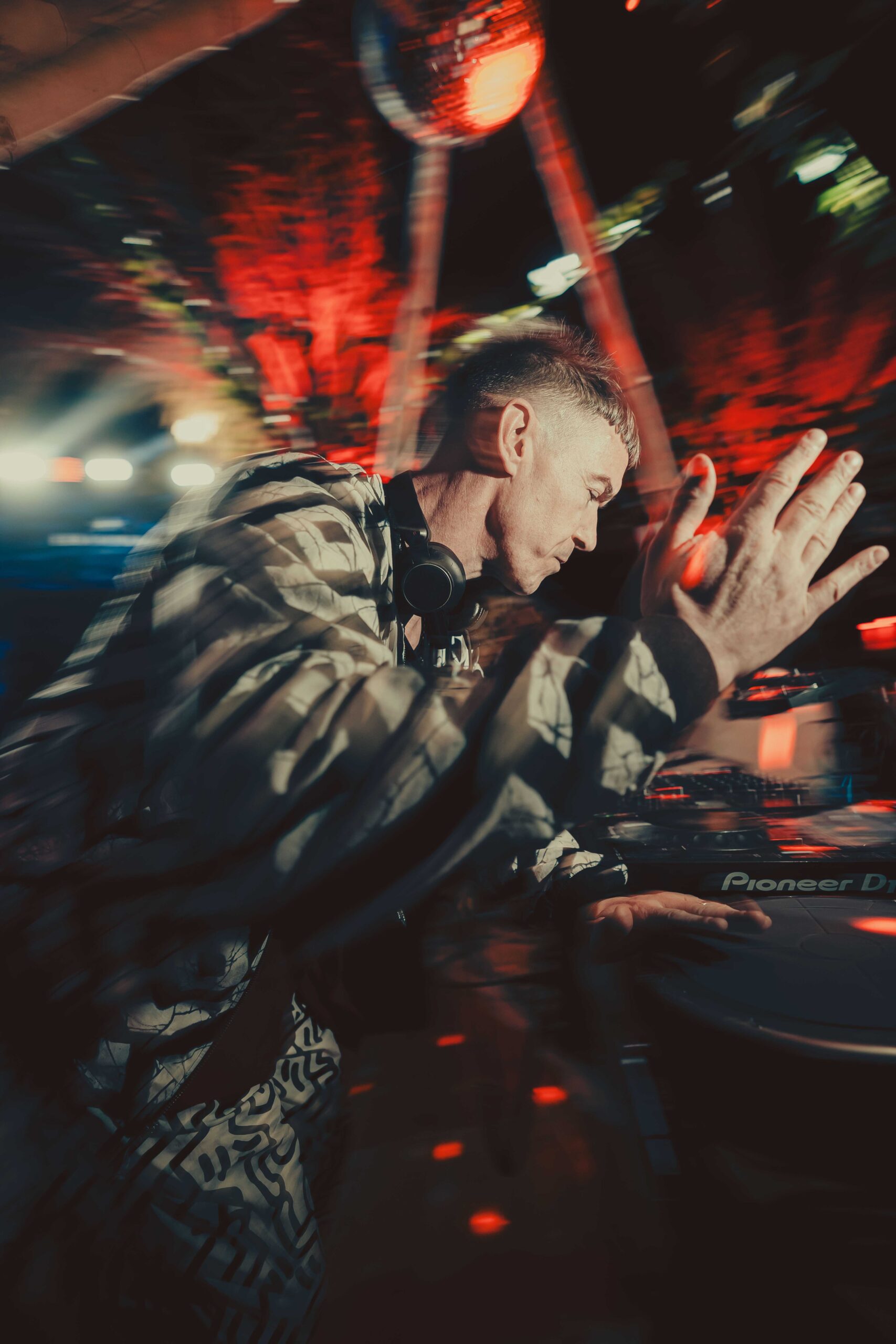
Initially it started when I had a gig where there was a percussionist set up next to me in the booth. He went off for a break and I started to play his Congas, when it came time to mix the track I found I could hold the rhythm with one hand and control the players and mixer at the same time! So after that I started to use an electronic drum called a Wave Drum by KORG. These days it’s my Roland Handsonic HPD20 which takes the beating at my shows.
What can audiences expect from a NenaHalena set that they won’t get from a standard DJ performance?
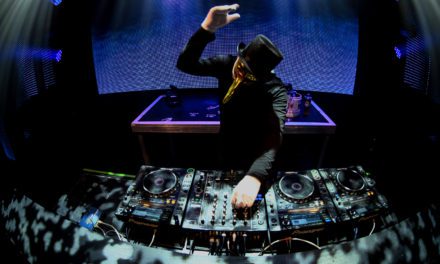
I have an electronic drum. I’m often slapping the s**t out of it or using sticks to hit it. I get very into it and spend a lot of energy, this energy transfers to the floors almost instantly, it’s like there is a primal switch getting flicked. It’s a hybrid live show, meaning I play the drums live alongside music from the CDJs but because it plays into the DJ Mixer I can complement the tracks I’m playing with the additional drumming and effects. We can lock into hypnotic grooves or snare roll into fever pitch drops. It’s dynamic and visually stimulating.
Your shows are described as “carnival-like atmospheres with the sweat of a Berlin backroom.” That’s such a vivid image, how would you describe the energy you aim to create live?
Brightly coloured, visually stimulating, and lots of fun. But also constant propulsive rhythms that keep you locked in like a techno floor.
Over the last decade you’ve worked on music for numerous artists. What do you enjoy most about collaborating and helping shape other people’s careers?
I really enjoy working on music with people. It’s so much more direct, there’s no over thinking if either party are unsure of an element, it’s gone, super simple. So ideas come to fruition quickly, and it’s really satisfying.
 NenaHalena
How has producing for others influenced your own solo releases?
Cross-pollination is a blessing and a curse!! I really need to be careful not to be overly influenced and be carried away from my core aesthetics.
You’ve released on respected labels like Armada Music, Stil vor Talent and Sol Selectas. What does it mean to have your sound embraced by such established imprints?
When labels you respect and aspire to, value your work and ultimately put their name to it, it reaffirms the belief that you are indeed on the right track. For instance with Get Physical Music the level of support for my collaboration with the guys from Mali was outstanding. Just got what we wanted to do and made it happen. Chris Lake, with a recent release of mine on Black Book Records, practically road-tested blind at UNVRS playing B2B with Fisher. That was a big show of faith in my production. This means a lot.
Let’s talk about your new track Beat To Hit Ya with MC Flipside, how did that collaboration come together?
So a special mention to Juanny Bravo, who is managing the Make The Girls Dance label. I sent him an early demo which had a vocal placeholder from a seminal early 90’s track. I was inspired by some phrases within the vocal, but I wanted an original recording. It was at this point Juanny matched me up with MC Flipside from Toronto. Having lived the scene for decades he understood exactly the vibe, took it and ran with it and passed it back. No fuss just boom, done!
The track pays homage to early ’90s rave culture while carrying your Afro-Latin flair. How did you blend those two worlds in the studio?
Well, the track actually started life in a hotel room in Goa India, not a studio. It was the day that I had made my first Djembe drum! Under the guidance of a really kind and helpful vendor called Suleman who I had met on a previous tour of India. We had spent the day making a drum from the wooden shell and stitching the skin. It was now quite late but I was feeling pleased with my new baby and was inspired to use it. The phrase “people punching out in the air” had been popping in and out my creative consciousness for sometime. So I decided to act on it and lay down the foundation for the track. Simply recording the drum line in a hotel room directly into the MacBook microphone. It worked out great, but I definitely annoyed a lot of people in the hotel this night!
NenaHalena
What made HUGEL and his label Make The Girls Dance the right home for this release?
The combination of vocal swagger and upfront drums! Urbanisms and Latin flair. Right up their Rue! I play a lot of their releases, there’s a strong affinity to big percussion and vocals that cross that bridge between Hip Hop and House Music.
Where do you feel most creative, in the studio, behind the decks or performing live percussion?
I think ultimately all stems from the studio. This is where the visions and feelings are honed. But it’s on stage where it all comes together. I would struggle to function without the feedback loop of studio to stage and back.
After everything you’ve achieved so far, what excites you most about the next chapter of NenaHalena?
Developing my live aspect more. People have been watching DJ’s for decades, and I believe there is a hunger for more. And not just someone wearing a novel mask or costume. I mean a hunger to see talented people doing what they love.
I’m also excited for this summers Ibiza residency with AMÉMÉ for One Tribe at Cova Santa on Thursdays from July 30th, the parties will be all about the Afro rooted house and tech.
The curation has been brilliant. Pulling together well gender-balanced mix of global artists each with a unique flair. It’s the perfect breading ground to showcase what I love to do and be inspired by artists that I respect and admire. To name few Do Capo, Jamiie, Kilimanjaro, Awen Kasango Honeyluv and of course the honcho Amémé. (Grab tickets HERE).
Head to Beatportal to read The Night Bazaar exclusive interviews in partnership with Beatport HERE.