




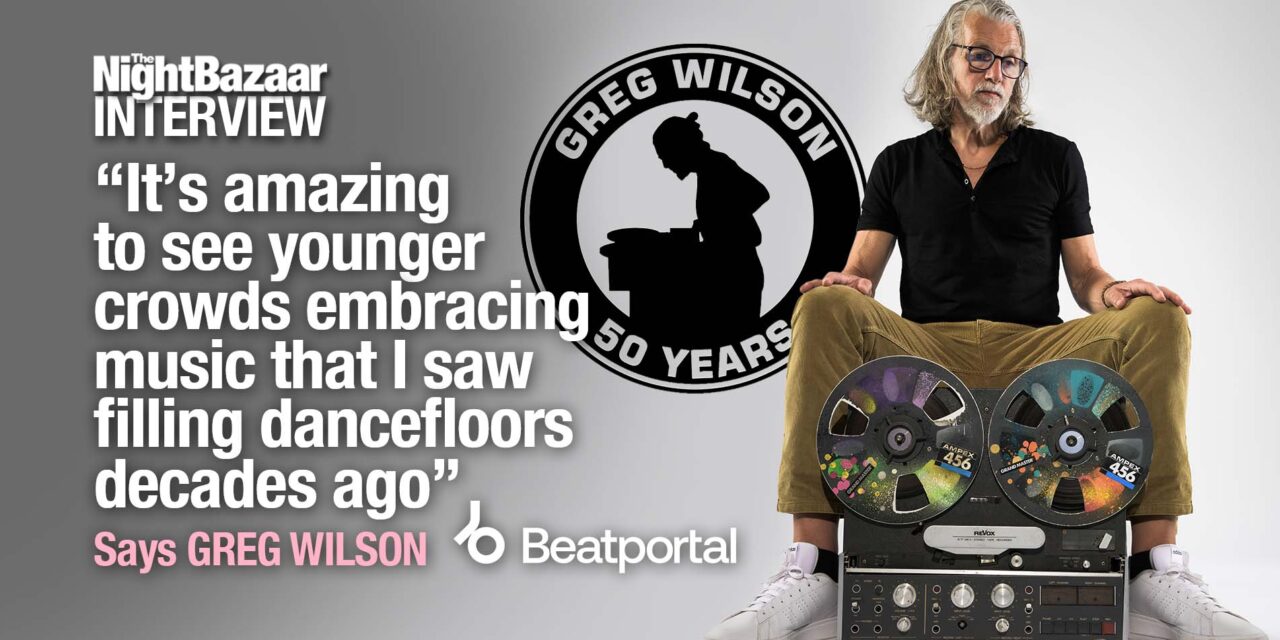
Greg Wilson stands as one of the UK’s most prolific DJs, record label owners and dance music historians and is now marking his 50th year behind the decks. Renowned as a leading figure in disco, electro-funk, and soul, Greg showcases his unique sound at sell out Festivals and clubs across the world.
Beginning his career at the tender age of 15, becoming the youngest working DJ at the time. His influence has been instrumental in shaping the current disco revival, through his groundbreaking sets during the 1980s at legendary venues such as Wigan Pier, Legend, and The Haçienda, as well as on Manchester’s Piccadilly Radio. Credited as the first DJ to mix live on British television (The Tube, 1983), and the artist that created the first UK DJ re-edit of which he has now become synonymous. Not forgetting he famously taught Norman Cook aka Fatboy Slim how to scratch.

Greg Wilson
Greg’s Radio 1 Essential Mix is regarded as a landmark moment in dance music, with Rolling Stone magazine listing it among the ‘25 greatest internet DJ mixes of all time’. Additionally, his extensive catalogue of online mixes has been streamed millions of times worldwide.
From September 2025, and through into 2026, Greg will play a series of special gigs both in the UK and overseas to celebrate the anniversary, covering a spectrum of dance music that spans this past half-century and more.
Check out The Night Bazaar’s in-depth interview with Greg Wilson here.

Greg Wilson
Back in 1983, you made history as the first person to mix two records live on British television during ‘The Tube’. How did other DJs and the general public respond to this at the time?
When I mixed two records live on ‘The Tube’ in 1983, it was quite unplanned and happened quickly after David Joseph’s appearance at Legend. The Tyne Tees TV team noticed my double-up mix and invited me to demonstrate it live. At the time, the studio audience showed little reaction since mixing wasn’t widely understood, but the impact was clear when I returned to my Manchester residency, lots of congratulations and a raised profile among DJs. Over time, many DJs have told me the broadcast inspired them. Personally, I found it nerve-racking, especially with the pressure of live TV and a cameraman nearly disrupting things. The anxiety of live scrutiny probably explains why I later preferred DJing in traditional settings rather than live streams, enjoying the days when DJs were less the focus than the dancers.
Your distinctive mixing approach features the use of 8-track mixing reels, which have become a signature element of your performances. What inspired you to incorporate this technique, and how do you integrate vintage equipment with modern DJ technology?
The reels I use are stereo, allowing me to layer samples and effects over CDJ tracks, adding a spontaneous element and enabling dub effects, a technique inspired by Jamaican studios. I started with the Revox B77 in 1982 for radio mixes and editing. It’s still a core part of my set-up, bridging old techniques with new tech. The reel-to-reel lets me blend analogue creativity with digital flexibility, supplementing live sets in a way that feels both classic and fresh.
You are recognised for pioneering the DJ Edit, which remain widely used by DJs today. How did you edit tracks before digital technology was available, and do you believe you established a lasting influence?
Before digital tools, I edited tracks for Piccadilly Radio in 1984 using turntables, tape, and cassette decks—cutting, reversing tape, dropping in samples, and adding dub effects. Later, I made tapes of samples from various sources to layer over tracks. This approach led naturally into the re-edit movement, where I pressed my own edits and connected with international editors. My ‘Credit To The Edit’ album in 2005 was a milestone, expanding my reach globally. Influence came from being first, trying new things, and embracing change. Returning to DJing in 2003, I was a bit of a forgotten figure, but it’s been rewarding to inspire DJs worldwide, sometimes in places I never expected to reach.
The 2009 Essential Mix was a turning point, gaining acclaim from the BBC and Rolling Stone, and many DJs have credited it as shaping their style. It’s gratifying to know that early innovations continue to resonate.

Greg Wilson
How are you marking this special 50th year DJ milestone? How do you envisage showcasing your sound and style to younger audiences?
The music I play, mostly re-edited tracks from the ‘70s and ‘80s and they still connect with younger audiences, seen in the popularity of DJs like Kirollus. I enjoy working with young promoters and playing at festivals, where new enthusiasts often discover me. While there’s a heritage aspect to my work, I realised early on that I needed to keep my sound relevant. The re-edits movement was crucial, letting me present older tracks in a contemporary way with mix-friendly intros and outros. I blend classics with current tracks that fit the vibe, and it’s amazing to see younger crowds embracing music I saw fill dancefloors decades ago.

Greg Wilson
The re-edit movement also reflects how the 20th-century is now seen through a 21st-century lens, with technology allowing DJs to separate stems and remix tracks in ways that were impossible with tape editing. AI now makes it even easier to reinterpret old tracks, opening endless possibilities for creative mixing.
Your label, Super Weird Science, supports a multitude of creative endeavours for you not just music, including publishing books such as James Hamilton’s “Disco Pages 1975-82.” Why was Hamilton so significant, and what should people know about his contributions?
James Hamilton was a pivotal figure in pre-rave dance culture, though his influence faded with the rise of rave music. His Record Mirror columns were essential reading for DJs, championing mixing long before it became mainstream. He was meticulous with his charts and reviews, providing a comprehensive record of British DJ history. Pete Tong is considered his successor in terms of influence, but Hamilton’s impact is still felt. We’re publishing a companion book, ‘James Hamilton’s Dance Pages 1983-1989,’ with an introduction by Pete Tong, to highlight Hamilton’s legacy and celebrate his essential contributions to DJ culture.
Read more on The Night Bazaar’s Beatportal page HERE.