




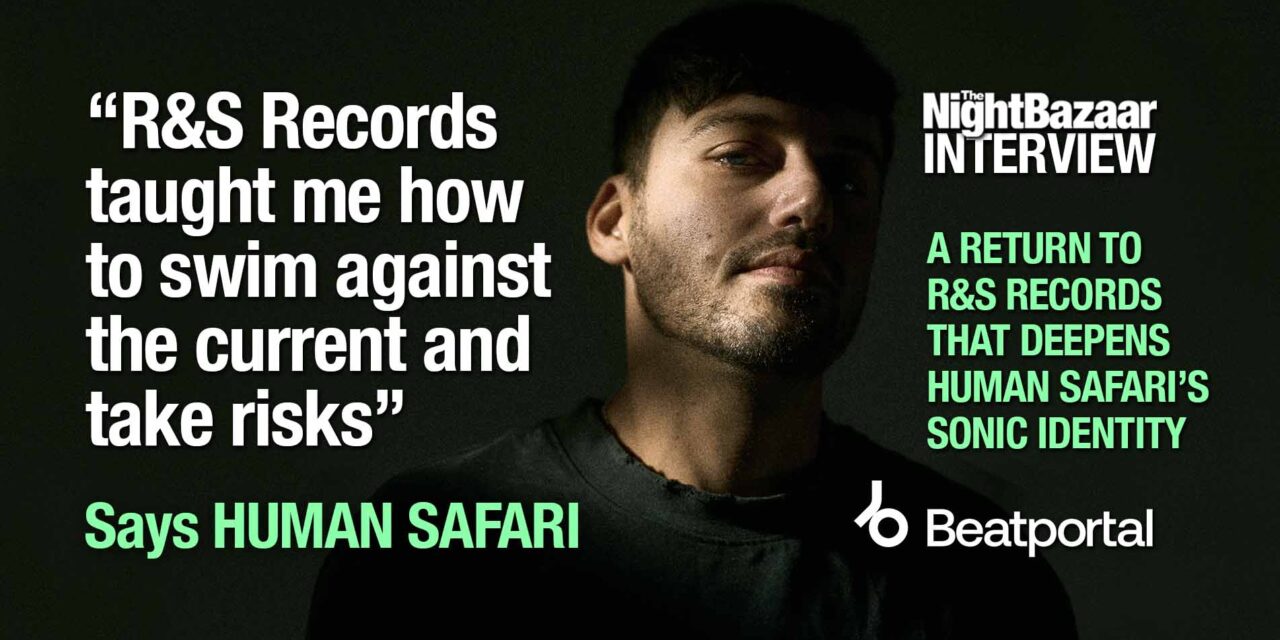
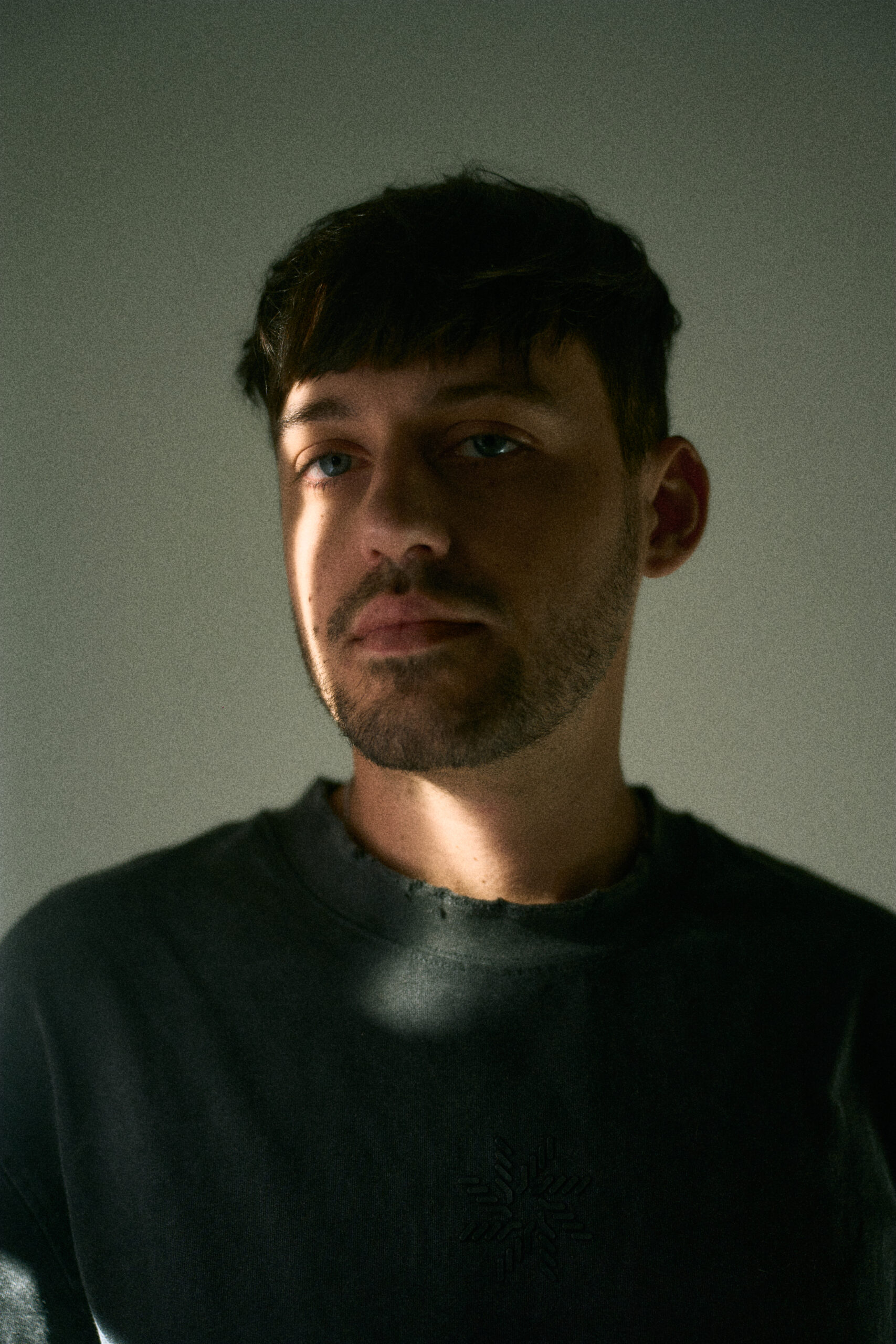
Emerging from Malta’s close-knit but fast-rising electronic scene, Human Safari has steadily built a reputation as a producer and DJ who refuses to be boxed into a single lane.
His sound, a fluid blend of jazz-leaning musicality and driving techno energy, has carried him from island club nights to some of Europe’s most respected stages, while releases on labels such as R&S Records and Mutual Rytm have positioned him as an artist equally comfortable in the studio and behind the decks.
Whether performing high-impact DJ sets or weaving live instrumentation into hypnotic arrangements, Human Safari’s approach is guided less by genre and more by instinct, atmosphere, and physical connection with the dancefloor. With the release of Children Of The Sea, a project deeply rooted in his Maltese upbringing and evolving artistic identity, he finds himself at a moment of both reflection and momentum.
In this conversation, he speaks about growth, improvisation, label relationships and why community, emotion, and movement remain at the heart of everything he creates.
Children Of The Sea marks your return to R&S Records after your 2023 debut ‘Sax Paradiso’. How did this new EP build on, respond to, or evolve from that first release?
Sax Paradiso was very well received by the electronic community when it was released digitally in 2023, so I was really happy to follow it up with another meaningful project on R&S Records. That EP marked my introduction not only to the label, but also to my true artistic identity. Without fully realising it at the time, I stepped into a whole new world of jazz influences and more unconventional approaches to electronic music. Since then, I’ve been fine- tuning my sound, focusing on growth and evolution, and shaping something that feels authentic and resonant.
Where did the visual or thematic idea of Children of the Sea come from?
Being born and based in Malta, we’re surrounded by the sea and blessed with long, warm summers. A lot of our childhood is spent by the sea or at the beach, so in many ways we quite literally grow up as children of the sea. All my music has to be appropriate for beautiful sunsets.
Jazz appears again as a structural part of the EP, especially on ‘Jazz Affair’. What role does improvisation play during your production process versus in your live performances?
Jazz Affair returns after many requests for a vinyl version, so it felt only right to include it for the fans and collectors. In the studio, my process varies a lot… sometimes I work fully in the box, sometimes with external equipment, and sometimes through sampling.
Regardless of the approach, I’m always searching for a specific sound or musical element that can carry the track. Once I find it, I build everything else around it so it really shines. You can hear this clearly on Children of the Sea with the cello bassline, without it, the track simply wouldn’t work. The same goes for Jazz Affair: without the chords, the track wouldn’t exist in the same way.
In live performances, improvisation takes on a different role. My focus is on creating energy and strong hooks, keeping a steady flow throughout the set. There’s always an underlying groove and melodies that coexist, but the priority is the dance floor. It’s less about exploring every mood, as in the studio, and more about maintaining momentum and connection with the crowd.
Human Safari
Turbulence At The Orchestra leans into ’90s warehouse textures and samples sensationalist rave news coverage. What drew you to that era, and what did you want to comment on?
Right now, the music industry is facing many challenges I would say. Clubs are closing, promoters are struggling, and the system feels increasingly fragile and in some ways, it feels like history repeating itself.
Looking back at the ’90s warehouse era, people always found ways to keep the scene alive, creating spaces where they felt free and protected. The culture has always been about the same things: a sound system, real music lovers, and a sense of community. The location doesn’t matter. The scene always find it’s way.
R&S has a long legacy of boundary-pushing techno and electronica. Did the label’s history influence how you approached the project creatively?
R&S is very special to me on a personal level. It taught me how to swim against the current and take risks that others might hesitate to take. There is one thing in common in R&S’s iconic tracks which is they are timeless and way ahead of their time. So I always keep in mind to produce tracks which stand on their own with a story to tell.
Apart from the amazing music that inspired me, I invited Renaat to play in Malta and his set was life changing in many ways, the music selection he was playing out was just incredible. I think my DJ sets changed after that too. Since then, he’s been like a second set of ears and a mentor to me. His honesty and decades of experience set the standard I hold myself to. Receiving approval from someone like Renaat, having heard and released some of the most important music in the world was insanely hard but the most rewarding feeling.
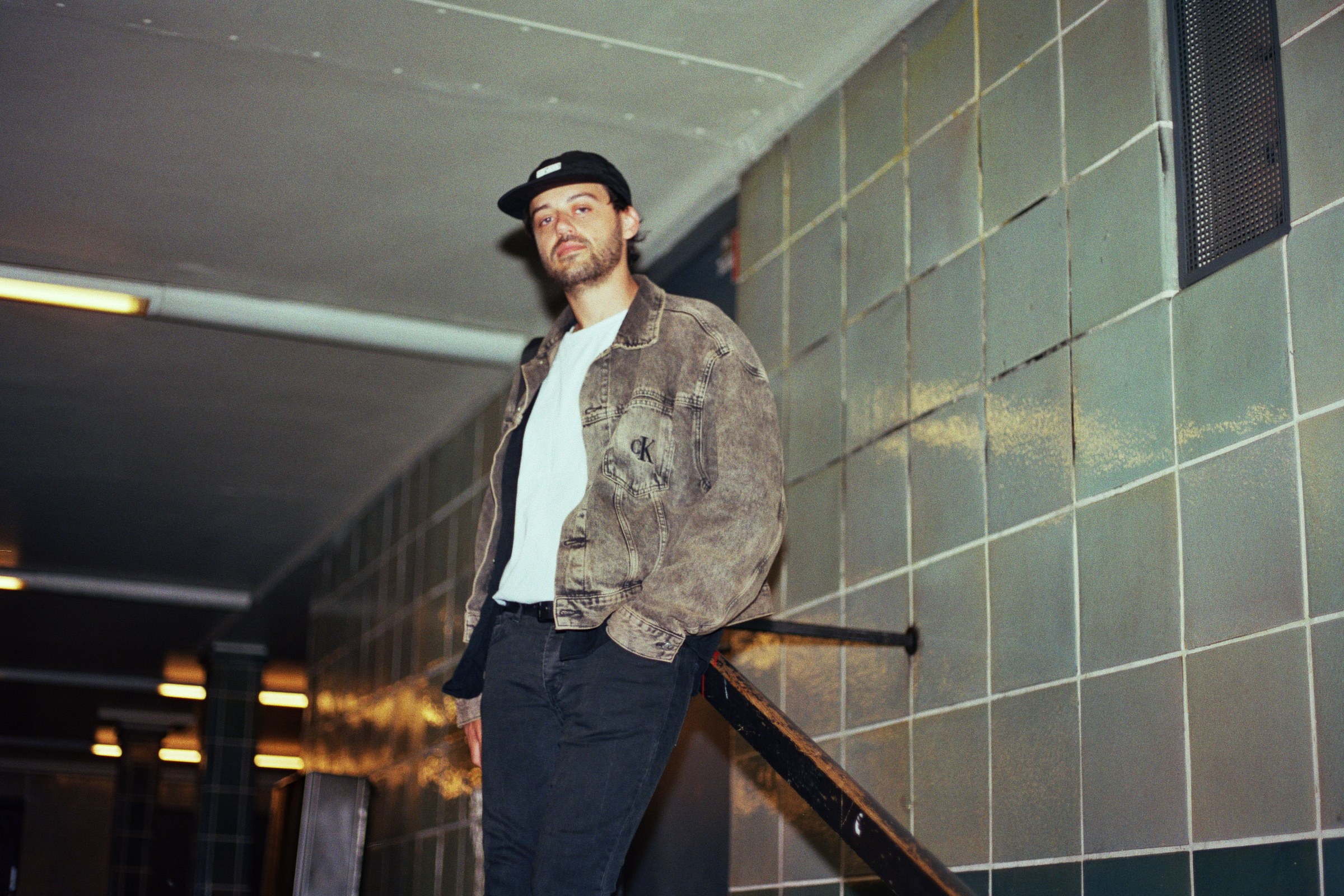
Human Safari
Your sets are described as “fast-paced, hypnotic, and deeply physical.What does physicality mean to you in the context of club music?
It has to make you move. My ethos is to make the entire club feel sexy. Once I’ve warmed up the crowd, I want to take them to different places and make them move in different ways. I’m not the kind of DJ who plays on multiple CDJs at once, I’m old school in that sense, working with two CDJs and letting the selection be the star of the show.
Different moments call for different levels of energy, and sometimes that means moving between genres to keep the flow alive.You’ve had standout shows at festivals like Stone Techno, RSO, and Unfold, and you’re a resident at Glitch Festival. Has performing internationally changed the way you produce music?
I think that, even without realising it, every trip carries some kind of influence or spark of inspiration. So yes, travel definitely affects my openness to trying new things. That said, my sound isn’t only jazz-influenced, I release across different sub-genres of techno because I don’t want to limit myself to one lane. I never go into the studio telling myself, “Today I’m making this specific style.” That approach doesn’t work for me. I follow whatever flow shows up that day and let the music lead. At the end of the day, I believe a good track is defined by the feeling it gives you, not the genre. A good track is a good track.
When you bring instrumentation into techno on stage, how much room do you leave for things to go wrong or for magic to happen?
Speaking from my personal live setup, I mainly work with live arrangements built around multiple melodies. One of the main challenges with this approach is pacing, if you get a bit too excited and move through loops and ideas too quickly, you have to remind yourself to slow down. Otherwise, you risk stretching the final section into something random just to fill time.
That said, this method gives me a lot of freedom. I can make every set different by starting from different sections of the live arrangement like either opening slowly, or something into the more energetic and groove-driven.
Do you see a future where your live show becomes the primary format of Human Safari, or is DJing still the main engine?
Maybe! I do love to perform live shows but right now, we are keeping the live set in the places I will feel comfortable to play. Having said that, DJing is a big part of me which I have been doing for the past 14 years and I love the freedom it gives me to play exciting music that I had been searching for at 4am at home. There are so many great producers making incredible music right now, and being able to play and showcase their new tracks is something that genuinely brings me joy.
You’re part of a wave of Maltese electronic artists gaining momentum globally. How would you describe the current moment for Malta’s scene?
Malta’s electronic scene is at a really exciting point right now. The island may be small, but that intimacy creates a tight-knit, collaborative community where ideas are shared freely and artists constantly push each other to take risks.
Support from events like Glitch Festival has been crucial, putting local artists on lineups alongside some of the most respected names in the scene. These connections are opening doors to international gigs, releases, and new friendships, helping the scene grow beyond the island.
The local clubbing community is also incredibly supportive of both artists and promoters, creating the perfect recipe for a thriving and sustainable electronic scene in Malta.
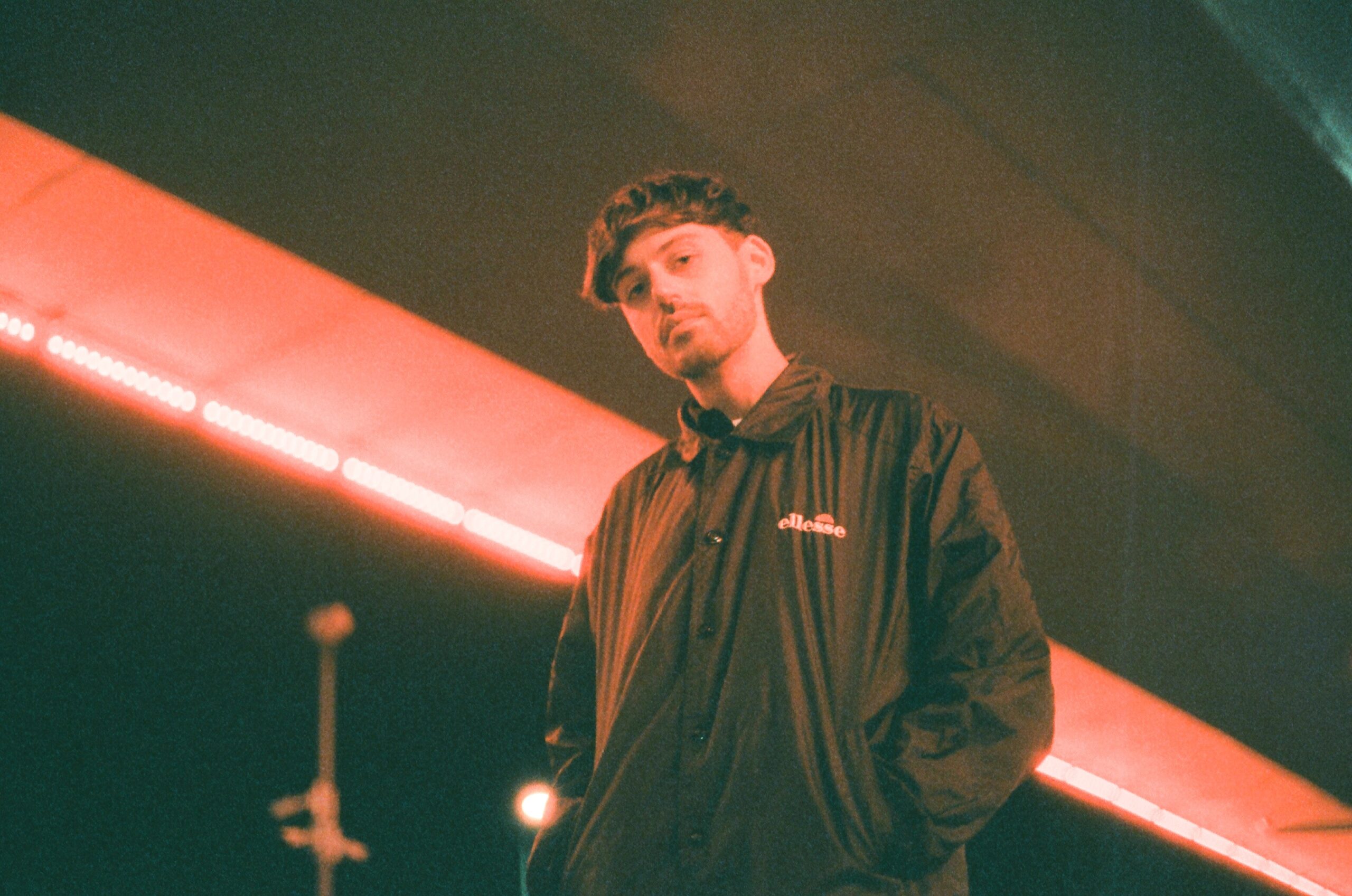
Human Safari
You’ve now released on both Mutual Rytm and R&S. How important are your relationships with labels such as these?
Incredibly important. I have the utmost respect for Renaat and Marco. Being a relatively new artist to the scene, R&S and Mutual Rytm gave me a platform and trusted in my vision. They allowed me to fit in and be part of something very beautiful, for that, I am eternally grateful.
I think also what makes it work so well is that we were friends before working together with the label so the progression seamed natural and visions aligned. I am only working with both these labels for E.P releases for the time being. I feel we have a nice thing going on and I want to keep contributing to our momentum.
How do you want Children Of The Sea to be remembered within your back catalogue?
I hope Children Of The Sea is remembered as a timeless part of my back catalogue and stands on its own regardless of trends. I hope it continues to resonate long after its release.
Human Safari – Children Of The Sea is out on 13th March on Beatport. Pre-order it now.
Browse our archive of interviews HERE and visit our Beatportal page HERE.