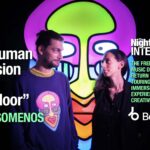





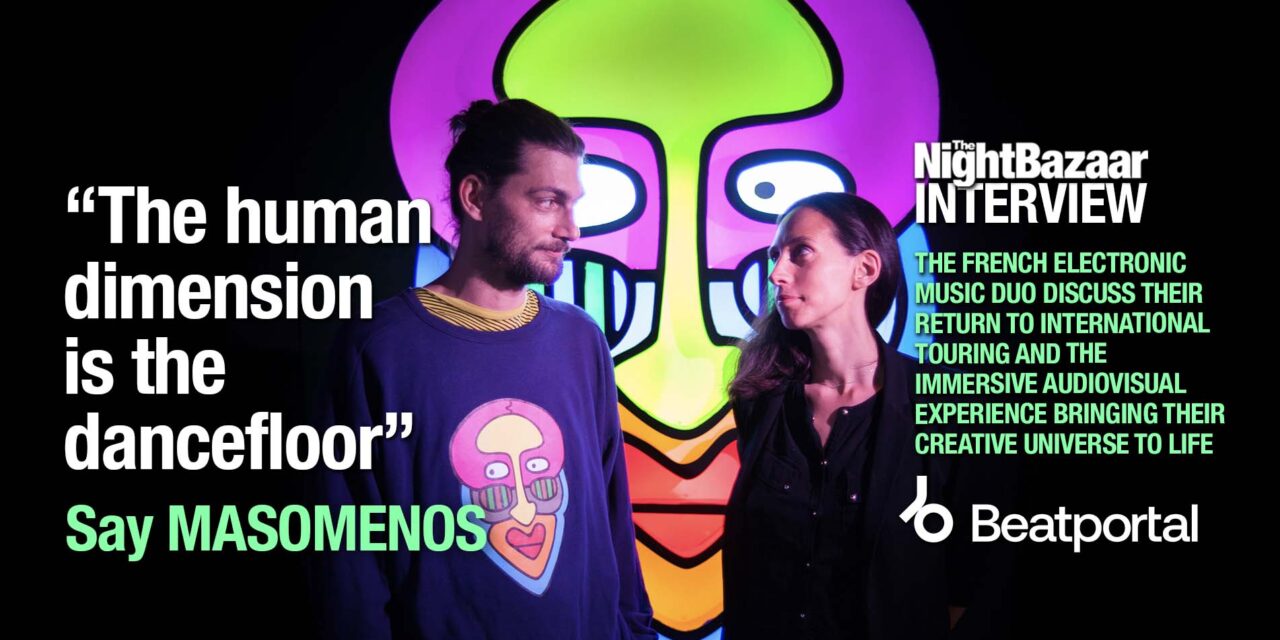
Now, with Masomenos & Beyond, the duo are bringing these creative strands together in an immersive audiovisual live show that made its debut in New York on October 31. Combining their own productions with real-time, music-triggered visuals, the performance marks an exciting return to international touring and a renewed focus on the dancefloor.
We caught up with Joan and Adrien to discuss the evolution of Masomenos, the technology and inspiration behind their new live experience, rediscovering their passion for music production and their ambitious creative plans at Châteaumoulin in the South of France. Along the way, we explore selections from their musical catalogue, providing a soundtrack to twenty years of artistic curiosity, experimentation and imagination.
After almost two decades of building your own creative universe, you’ve launched Masomenos & Beyond, an ambitious new audiovisual live experience. What inspired you to bring all these different strands of your work together now and what does this new chapter represent for you both?
It’s been quite a natural process. It’s not something we planned as if we wanted to make a show. It’s more something that appeared along the way, as we kept exploring the principle of See The Music, which we had developed for installations with more ambient music and for the whole Studio HC project.
As we kept developing that, we started producing music again, in a different way. There was that whole period when the studio wasn’t there yet and the music was happening anyway, with a laptop, the laptop’s microphone, and our daughter singing lyrics over it.
It all happened organically, a bit like a gestation. And one day the project was there, clear, obvious. We didn’t design it: it revealed itself to us.
The show debuted in New York on October 31. How did that first performance unfold, and what was it like finally seeing the concept come to life in front of an audience? Were there any moments that surprised you?
We first spoke with the Resolute crew over a year ago. As we said, the show appeared more than we built it, but knowing we would have the opportunity to play there, on that date, gave us a point of focus that made it real.
The most important thing for us was that we would both be relaxed and enjoy the experience. We hadn’t played in a while, and coming back with something new, that also needed to be technically tight, could have brought some stress. And after such a long break, there might have been expectations at different levels.
But we felt nothing but a great welcome. It was like gathering with long-missed family, happy to see and hear us again, curious but trusting in what we would bring. That felt very warm and comforting. Everything seemed fluid and natural. Of course, being our first show, it left room for improvement, things we could only realise by putting ourselves out there. We were lucky to do it with such a welcoming crowd.
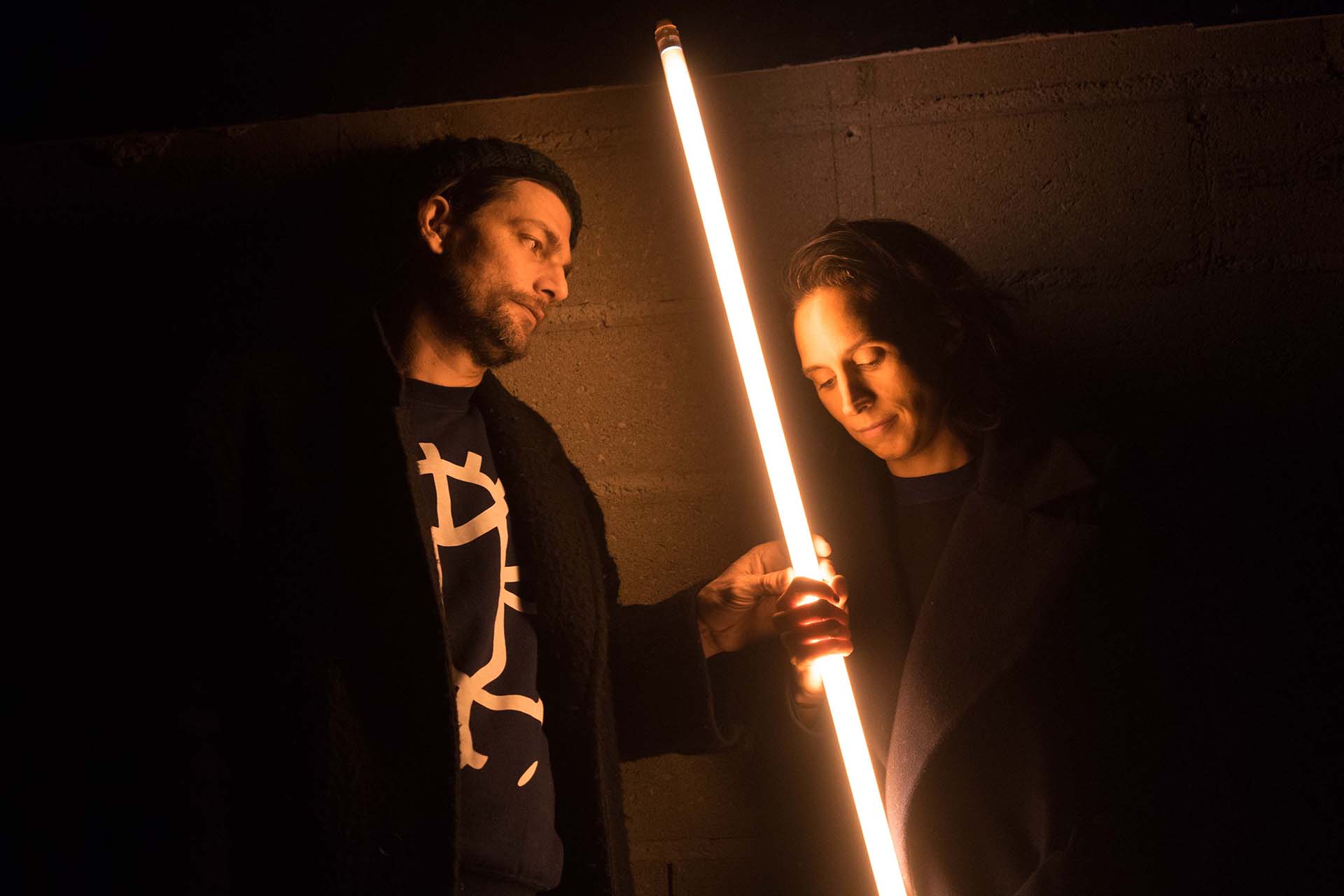
Masomenos
Masomenos & Beyond combines a DJ set of your own productions with a two hour-long, fully synchronised audiovisual performance. Can you explain how the show works creatively and technically, and how the music interacts with the visual elements in real time?
During this performance, the DJ part wasn’t synchronised with the visuals in the same way as the live part. But we now have a way to do it, to be tested at the next date! For the live part too, we already have a V2, technically far more advanced than the one we presented in New York.
The principle remains the same. It’s a system we’ve been working on for more than eight years, called See The Music, which lets us read the score in light, real or 3D. Every note triggers a light. Our work consists of ‘painting’ the music. We build the show so that the music can express itself and shape the whole experience, while our own part in it feels seamless and natural.
When developing the performance, did the music dictate the imagery, did the visuals inspire the music or was it a completely collaborative process between the two?
Fairly collaborative. A good part of the tracks didn’t exist yet when the visual framework was already in place. What also changed is the way we approach the live set: none of the tracks is finished, the live performance composes them. So every audiovisual performance is unique.
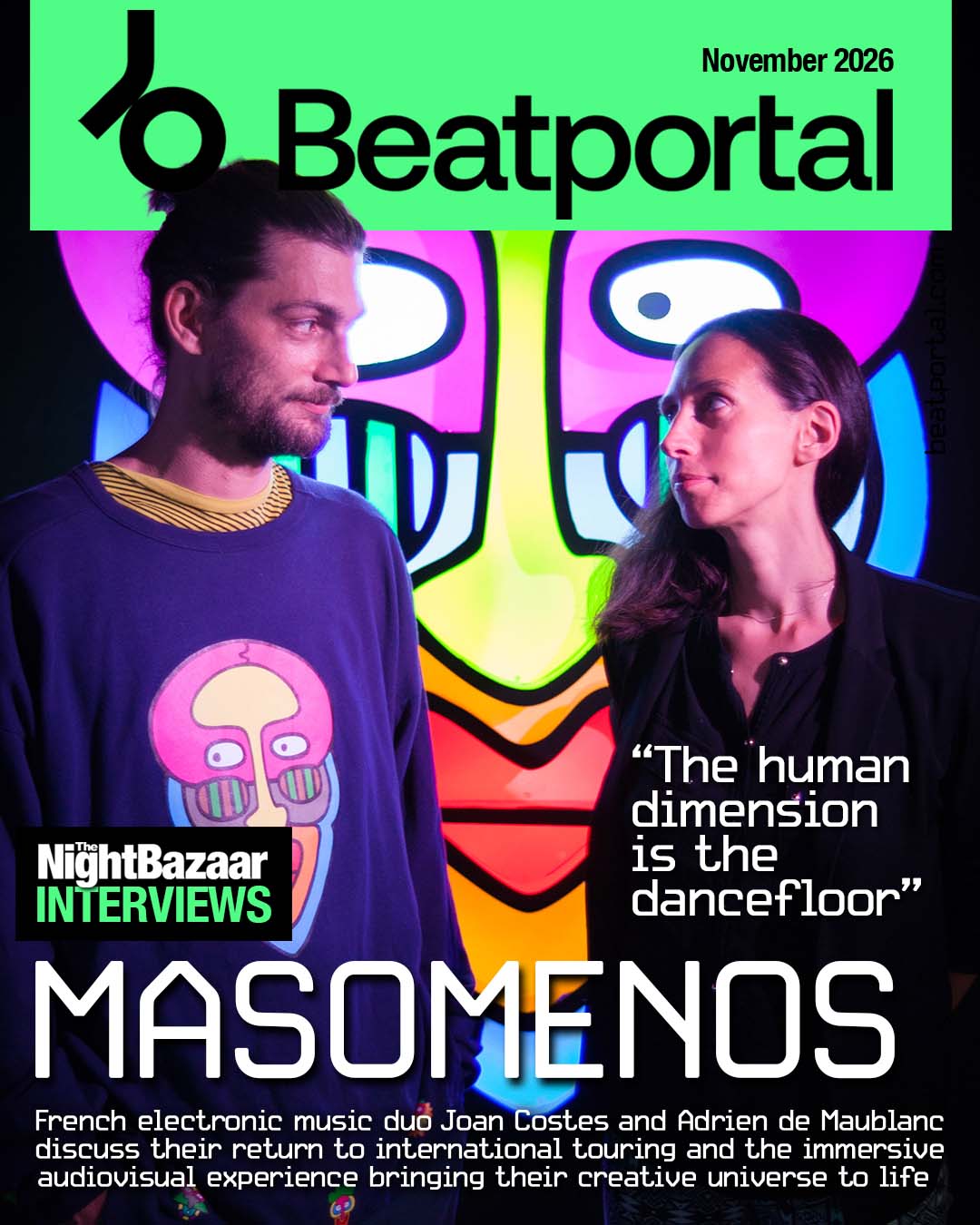
Masomenos – Click image to head to Beatportal
The show uses immersive projections across multiple surfaces and can adapt to different architectural environments. How important is the physical space to the experience, and how might Masomenos & Beyond evolve as you take it to different clubs, festivals and unconventional venues around the world?
Yes, that’s exactly it. Since New York, we have further developed the staging and the tool which, thanks to AI, lets us adapt the show in advance to each venue where it will be presented.
Looking back, how did your creative partnership first develop and at what point did you realise Masomenos could become something much bigger than a conventional electronic music project?
When we met, it was a bit of a big bang, and Masomenos appeared right away, even if it took us a few months to name the entity we had created. It wasn’t necessarily only about music at first: our first clients described us as ‘multimedia visual artists’, which, looking back, suits us rather well.
But it’s in the underground electronic scene that Masomenos flourished, all around the world. What happens on a dancefloor, the travels, the encounters, the sensory and emotional experience: how lucky we were to express ourselves artistically in that context! Those years nourished us enormously, personally and artistically, and that’s part of what inspired Châteaumoulin, our estate in the South of France.
How would you describe the evolution of your musical identity over the past twenty years, and what elements have remained constant?
In terms of identity, what we produce today sounds just as Masomenos as our first EP. That dense, organic, intriguing and fairly underground touch is still very present.
The musical styles, though, have evolved with the seasons of our life. The club years were more dancefloor-oriented. Then the Studio HC period allowed us to experiment, to compose with classical and jazz musicians, to work more on texture than on dynamics. At other times, having our daughter Athena sing led us towards more pop productions. The Aka Pellaman project sounded more hip-hop, and we’ve also been greatly nourished by our curation work for Hôtel Costes and its lounge style.
Your label Welcome to Masomenos has provided an independent home for your music and visual identity. How important has maintaining that creative independence been?
More than independence, it was the integrity of Masomenos that was at stake the day we realised we had everything we needed to set up our own label, as an artistic project even more than as a label. At the time, we were sending a few tracks out to labels, but our sound, being quite unusual, would have ended up fragmented and hard to understand. So we sent a series of 8 EPs and a mixed CD, as a project in its own right, to Intergroove, who agreed to distribute us.
The characters on the artworks made access much easier, in both directions. Their joyful personalities sometimes caught the eye before the ear understood what was going on. Masomenos has often been a ‘gateway’ for listeners discovering minimal or tech house.
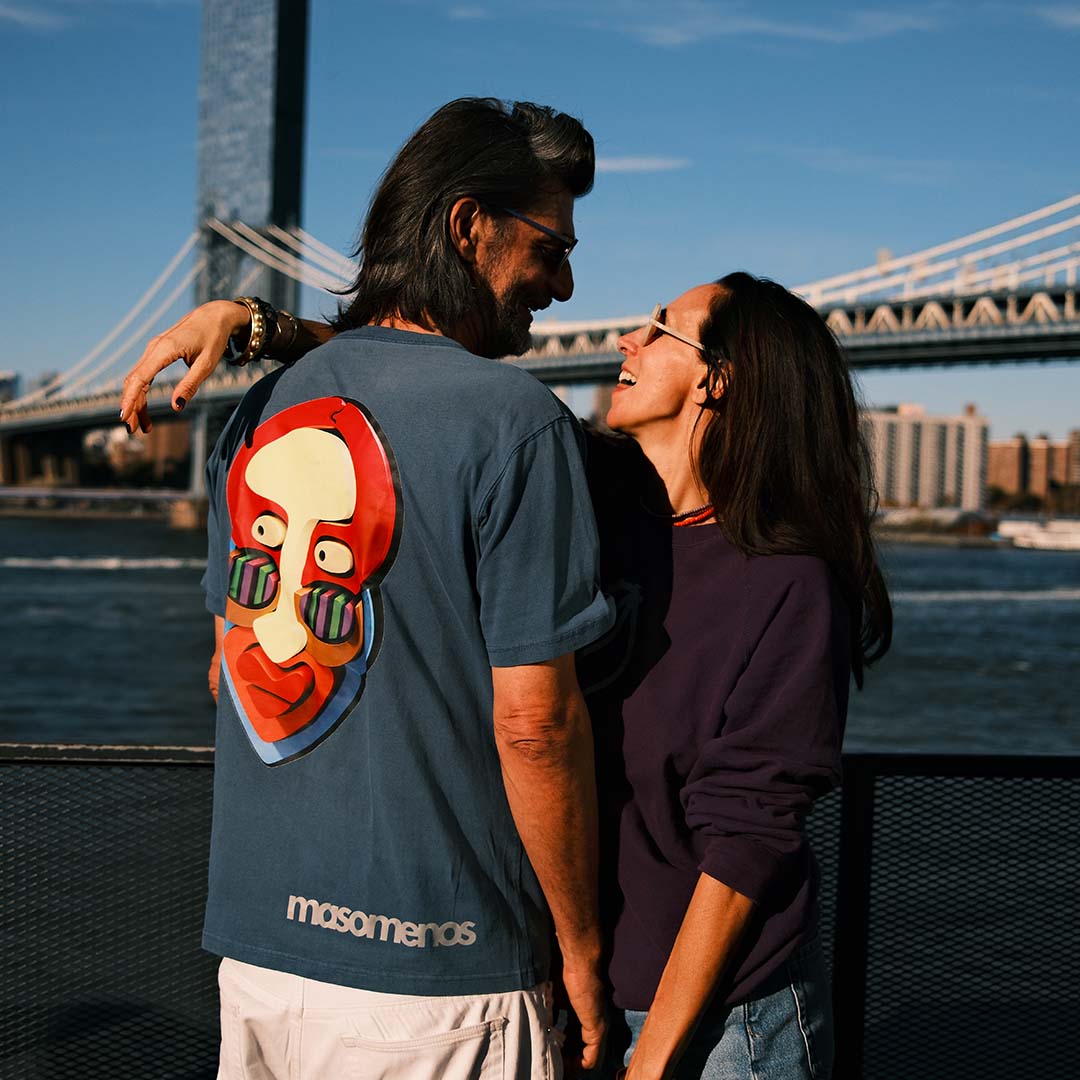
Masomenos
Your 2016 project Totem & Tabou combined an interactive installation with a digital album, while M7TH explored the relationship between music and video. Do you see Masomenos & Beyond as the culmination of those earlier experiment or the beginning of something entirely new?
& Beyond is continuity, totally. Neither a culmination nor a creation ex nihilo. For us, everything is woven between past and future, physical and digital, real and virtual, personal and professional. That’s how things make sense.
Technology has opened up extraordinary possibilities for audiovisual performance, but it can sometimes overshadow the human element. How do you balance technical innovation with spontaneity, emotion and the connection between yourselves and the audience?
The human dimension is the dancefloor, again and always.
Are you revisiting and reinterpreting older productions, incorporating previously unreleased material or creating entirely new compositions specifically for the show?
The whole show is built on new sounds, to which we sometimes add nods to tracks we’ve already released. And for the DJ part, we dig into our catalogue.
How has your approach to production changed in recent years and has developing the new live show influenced the direction of the music you’re making now?
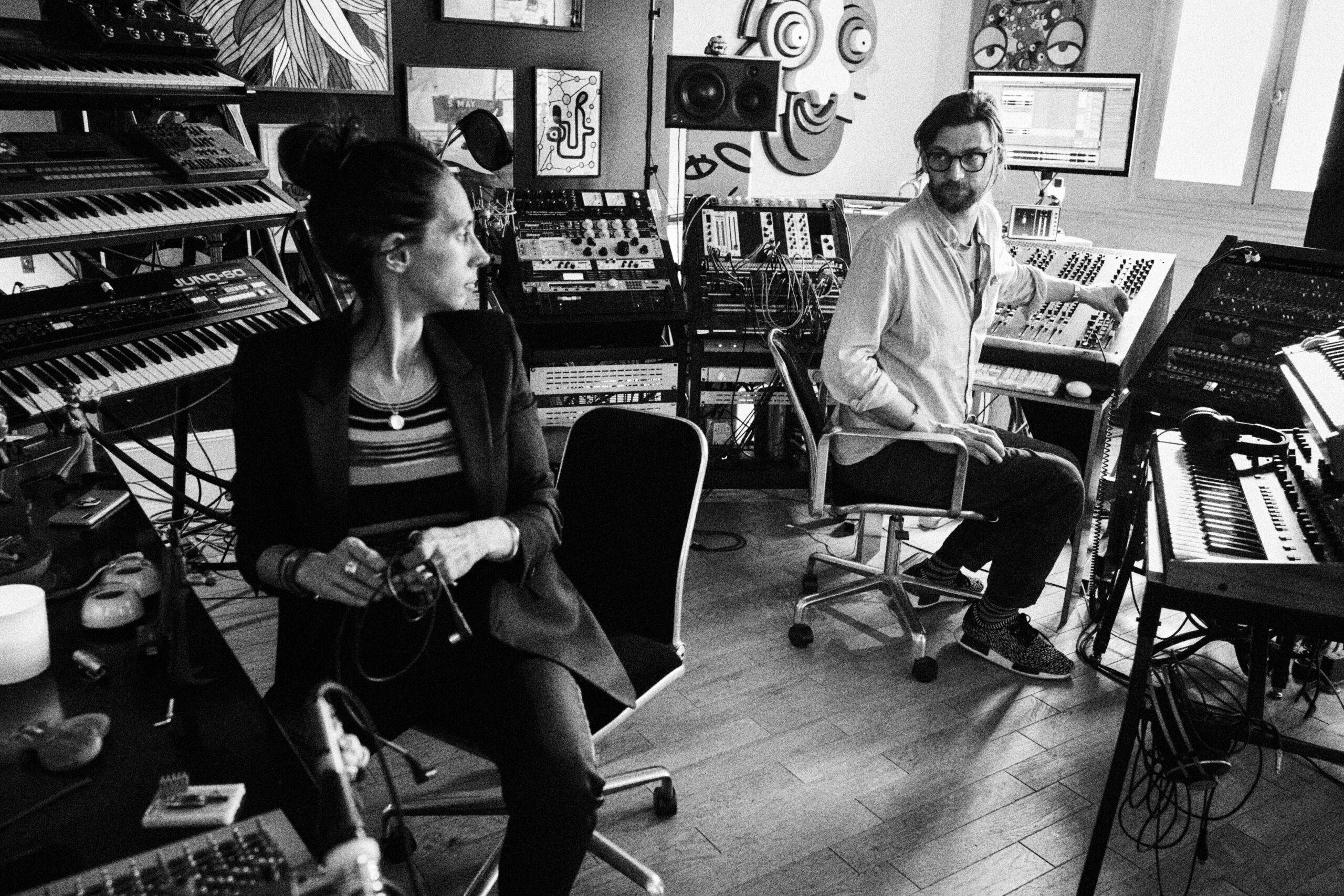
Our way of making music has always evolved with the people we met and with the studio. We started out very analog, with a sampler and a simple 8-track mixer, and grew over the years into a bigger console and a large modular synthesizer. M7TH was the peak of that direction.
Five years ago, we packed up the studio to move to Châteaumoulin, and building the site took far longer than expected: almost three and a half years without making music. When we opened the laptop again, about a year and a half ago, the studio wasn’t finished and none of our gear was available. So we started over with just a laptop and a new version of Ableton, excited like teenagers by the new tools, such as converting stems into MIDI.
The approach is the same: being creative, never really knowing where it will lead, and staying sincere. The tools were simply lighter and more spontaneous. And AI then helped us wrap it all up into the show, much faster than we imagined. It was challenging but incredibly interesting to start with just our computers and end up with a fully immersive show.
Masomenos
Beyond the productions themselves, your music has always seemed designed to create a particular atmosphere or emotional response. When someone experiences a Masomenos performance, what do you hope they take away from it beyond simply having danced to the music?
I think the most fundamental emotion in the Masomenos universe is hope. But also joy, sharing, spending a moment together. Those simple but magical things.
During a period when international touring became less frequent, you continued developing other creative projects, including Chateaumoulin, your purpose-built music production studio in the South of France. How has that environment influenced your work, and what does having a dedicated space for artistic experimentation offer that a conventional studio might not?
Châteaumoulin is at once a family, artistic and professional project, and that’s what makes it unique. It’s the quality of the studio that sets the tone, though. After such a long building process, taking care of every detail and requirement we felt was important, the studio is finally coming to life. It will not only serve us creatively but also allow us to host other artists and projects that resonate with the spirit of the place. And 2027 will be the first year we get to run the tool as we dreamed it. It’s exciting, and simply magical!
Masomenos
After working together for so long, how do you keep challenging and surprising each other creatively? Do you have clearly defined roles within Masomenos or has your collaboration become more fluid as the project has evolved?
Even though our first years were very fusional, from the start we had different and complementary personalities and specialities (Joan, graphic designer and DJ; Adrien, director and music producer). When we had children, our dynamics shifted, because we had to make room for other kinds of relationships and interactions.
Joan: I often say that I work in 2D and Adrien in 3D. Not on the same planes, not in the same dimensions. We are very different, and often in agreement.
Our evolution is nothing more than a human evolution: as partners, as a family, and as two creative minds that complement each other while seeing life in a very funky way.
Looking ahead, how do you envisage the show developing and what else can we expect from Masomenos in terms of new music, collaborations and creative projects?
Yes, of course. The show will be presented in a few other cities, giving us the opportunity to keep developing the experience and improving on everything we learned in New York. It is also connected to Masomenos World, our new community platform, the digital expression of everything we’ve created over the past twenty years and everything still to come. We’re currently working on how one exists within the other, and vice versa. Between the official opening of the studio, the upcoming dates of the show, and the evolution of Masomenos World and Châteaumoulin, we can only be excited about what’s coming!
Check out Masomenos back catalogue on Beatport HERE.
Read more from The Night Bazaar on Beatportal HERE.